
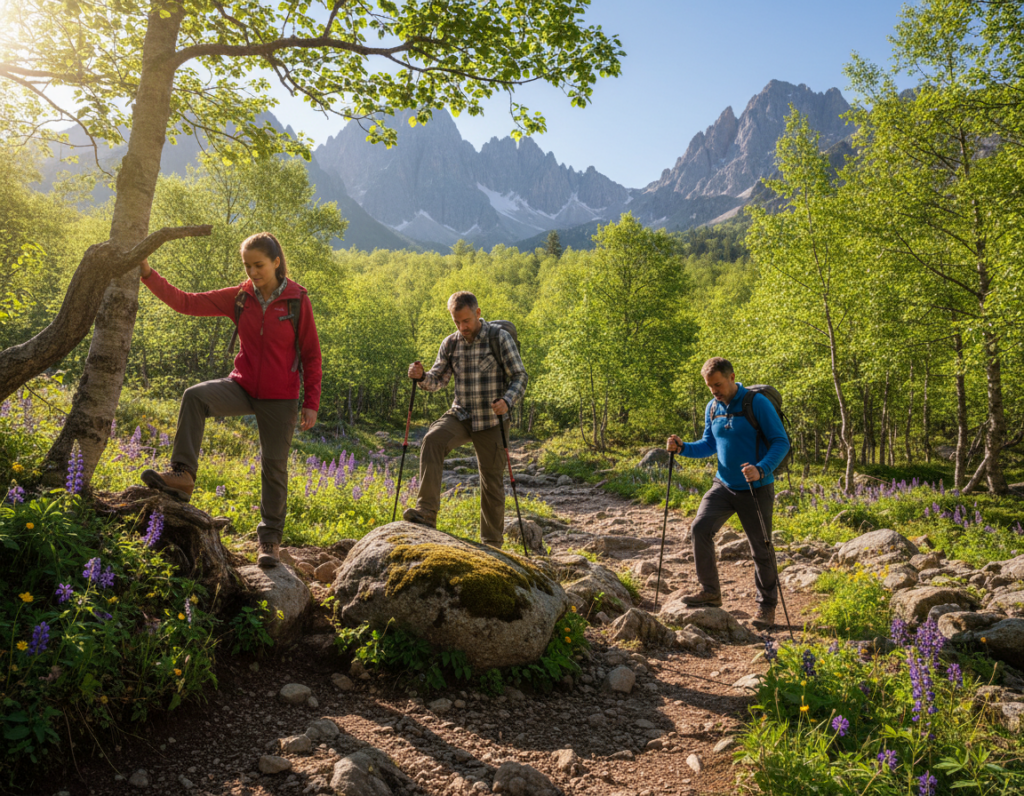
Imagine your foot landing on a loose rock, feeling it shift beneath you. Your entire body instantly reacts—a symphony of muscle contractions and adjustments—to keep you upright and moving forward. That split-second response is the heart of staying stable on unpredictable terrain. It’s what separates a confident stride from a stumble.
Uneven ground challenges your body differently than a flat sidewalk. Every step requires tiny, constant corrections that can drain your energy if you’re not prepared. This isn’t just about standing still; it’s about dynamic stability—moving with assurance even when the surface beneath you changes.
Mastering these skills helps prevent fatigue and common injuries. Whether you’re a weekend explorer or a seasoned backpacker, understanding how your body maintains equilibrium empowers you to hike longer, safer, and with more enjoyment. The following guidance will build that confidence from the ground up.
Key Takeaways
- Dynamic stability is your body’s ability to adjust to shifting surfaces while in motion.
- Uneven terrain demands constant micro-adjustments, which can lead to fatigue.
- Improved footing reduces the risk of tumbles and common trail injuries.
- These methods are effective for adventurers at any experience level.
- Building stability involves body awareness, specific movements, and strength.
- Confident movement on unpredictable ground makes hiking more enjoyable.
Understanding the Role of Balance in Hiking
The way your legs, core, and arms coordinate on rough terrain is the secret to confident movement. It’s a full-body effort where every part plays a specific role.
Your legs absorb the shock of each step. Your core muscles stabilize your torso. Your arms help with momentum and can catch you if you slip. This teamwork happens without conscious thought.
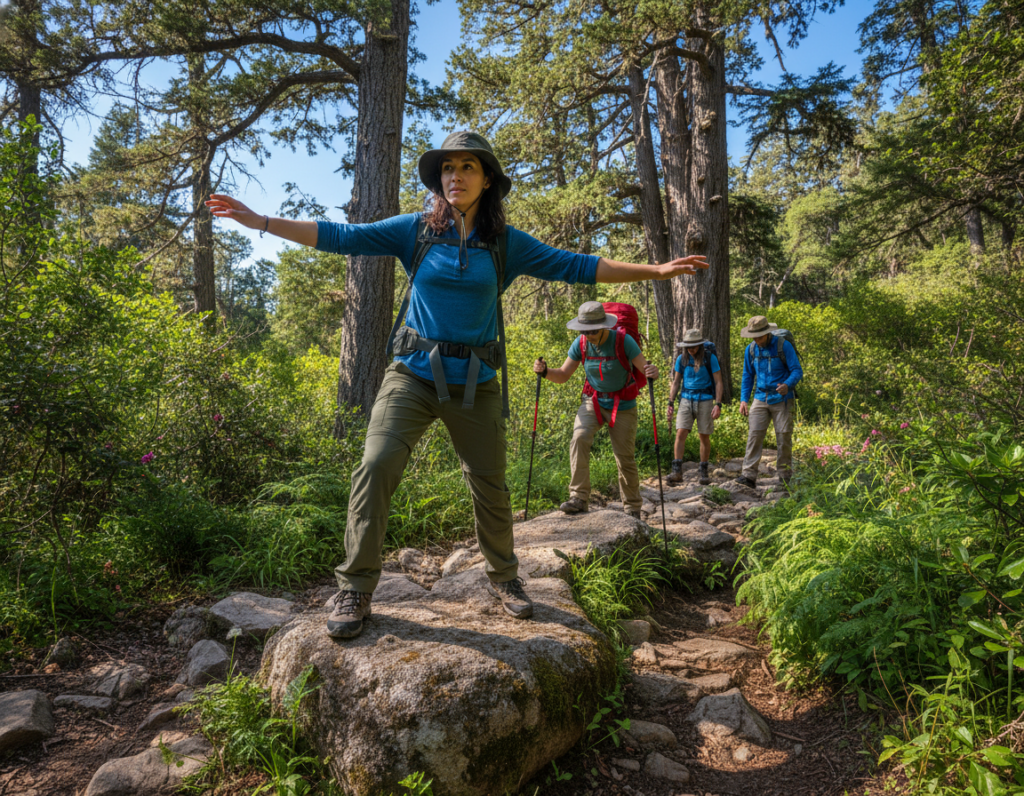
Body Coordination on Uneven Terrain
Each footfall on a rocky path demands instant communication between your muscles and brain. You make tiny adjustments to stay upright when the ground shifts.
Poor coordination forces your body to overcompensate. You tense up and waste energy fighting for stability instead of moving smoothly. This tension leads to fatigue much faster.
Preventing Injuries with Proper Stability
Good stability is your best defense against common trail injuries. A strong sense of body awareness helps your muscles react quickly to prevent a twisted ankle or knee strain.
This protective effect means you can enjoy longer adventures. You conserve energy and move with less risk of a fall. It turns a challenging path into an enjoyable journey.
Hiking Balance Techniques for Improved Stability
Developing a keen awareness of your body’s position in space is the foundation for navigating unpredictable terrain with confidence. This internal sense, called proprioception, acts like your personal GPS system.
Developing Proprioception and Self-Sensing
Start by awakening the nerve endings in your feet. Sit comfortably and grasp one foot with both hands. Gently move the bones, tug each toe base, and press around the ankle area.
Squeeze the tissue on the bottom of your foot with your thumb and first finger. Explore the entire surface with both thumbs. The worked foot will feel more connected to the ground.
This simple massage improves your foot’s sensitivity to subtle changes. You’ll feel terrain variations without constantly looking down.
Adjusting to Shifting Surfaces and Rocks
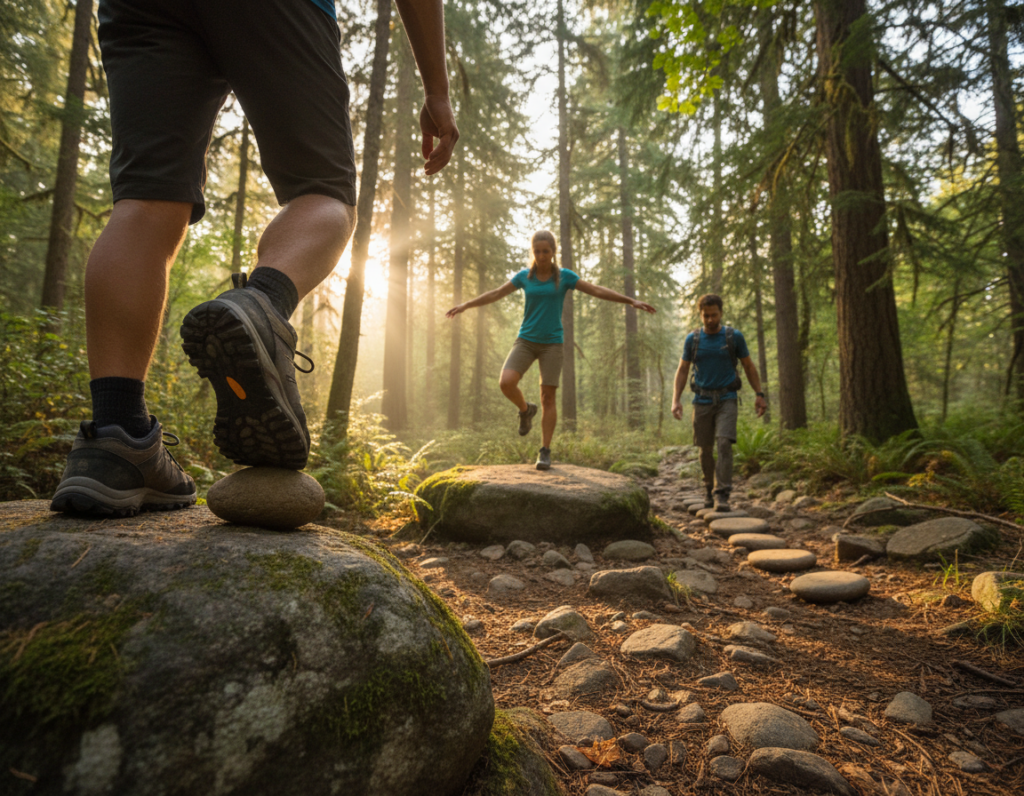
Practice on intentionally unstable surfaces to prepare for trail surprises. Begin with a stable rock, flat side down, while holding onto something for support.
Progress to turning the rock over for more instability. Then create two staggered rows of rocks about two feet apart. Walk across them without pausing.
The goal isn’t perfect stillness but continuous movement. Momentum helps you flow over obstacles, just like on actual trails.
| Training Method | Beginner Level | Intermediate Level | Advanced Level |
|---|---|---|---|
| Foot Awareness | Basic foot massage | Walking barefoot on grass | Walking on varied surfaces eyes closed |
| Rock Exercises | Stable rock with support | Unstable rock with poles | Rock line walking without stopping |
| Surface Adaptation | Flat, even ground | Slightly uneven terrain | Highly variable surfaces |
Trekking poles provide extra points of contact during practice. They help without reducing the balance benefits. Start in safe environments before challenging trails.
Exercises to Strengthen the Body for Hiking
The best exercises for navigating rough ground mimic the dynamic, unpredictable nature of the trail itself. Isolated gym machines fall short because they don’t teach your muscle groups to cooperate. You need functional strength that transfers directly to scrambling over obstacles.
This approach builds the kind of power that keeps you upright when a foot slips. It trains your entire lower body and core to act as a single, responsive unit.
Compound Movements for Lower Body and Core Strength
Compound exercises are far more effective than isolated work. They combine movements, making multiple muscles fire together. This synergy is exactly what your body uses on uneven paths.
Think of a squat. It engages your glutes, hips, and knees all at once. Adding a weight, like a medicine ball, increases the challenge. Your core must brace hard to maintain good form.
Single-leg exercises are especially valuable. Standing on one leg forces the stabilizing muscles in your ankle, knee, and hip to activate. This directly mimics the action of taking a step with a loaded pack.
Using Unstable Surfaces to Enhance Joint Control
Introducing instability forces your body to work smarter. A Bosu Ball or a soft mat creates a wobbly platform. Doing a simple squat on it engages tiny muscles from your feet to your core.
Joint mobility drills are also crucial. They improve control and place your joints on your “sensory map.” This strengthens the reflexes that protect you from twists and sprains.
Try these simple movements to build joint awareness:
- Pelvic Circles: Imagine tracing a circle with your hips, moving them in every direction.
- Leg Circles: Lift your knee and slowly swing your leg forward, out to the side, and behind you.
- Ankle Rotations: Draw circles with your toes, both on the floor and while standing.
These exercises build the integrated strength that makes every step on the trail more secure and powerful.
Integrating Cardio and Strength Training for Better Endurance
The real secret to lasting trail endurance isn’t just strong legs—it’s the smart combination of heart-pumping cardio and targeted strength work. This approach builds the stamina for long days and the power to carry a pack over tough ground.
Begin each session with a 10 to 20-minute warm-up. Jog, cycle, or walk briskly until you break a sweat. This preps your body for the work ahead.
Combining Cardio Warm-Ups with Strength Exercises
After your warm-up, move into specific exercises. Organize them into groups of three, focusing on different areas like your glutes, core, and shoulders.
Pre-stage your equipment—a Bosu ball, weights, a bench. This lets you move from one exercise to the next without rest, keeping your heart rate up.
This method blends cardio and strength benefits efficiently. You build endurance while also strengthening the muscles you rely on most.
Here is a sample structure for an effective workout session:
| Exercise Group | Primary Focus | Sample Exercises | Sets & Reps |
|---|---|---|---|
| Group 1 | Glutes & Hips | Glute Bridges, Side Steps | 3 sets, 8-12 reps |
| Group 2 | Core Stability | Plank, Mountain Climbers | 3 sets, 30-60 sec hold |
| Group 3 | Lower Body Power | Step-Ups, Bosu Ball Squats | 3 sets, 8-10 reps |
Aim for about 20 total sets per workout. This builds the integrated strength your body needs.
Always finish with a cooldown. Stretch your calves, hip flexors, and hamstrings. This aids recovery and keeps you flexible for your next adventure.
Training with a weighted backpack mimics real trail conditions. It prepares your entire body for the challenge, making every step more secure.
Conclusion
Mastering stability on unpredictable paths lets you focus on the journey rather than your footing. Better stability transforms your outdoor experience—you’ll move with confidence, conserve energy, and enjoy the scenery instead of staring at your feet.
This confidence comes from three areas working together: body awareness, specific methods for unstable surfaces, and strength training that builds stability. The foot exercises can be done at home in minutes and make a noticeable difference in how connected you feel to the ground.
Progress gradually with rock training—start stable, add movement, then challenge yourself. The strength exercises serve double duty, building endurance for long days while training the muscles that keep you upright.
Combine gym work with actual trail time—nothing replaces real-world practice. Start with foot massage and joint mobility this week, then schedule a training hike to put it all together. These approaches work for adventurers at any level, whether you’re just getting started or tackling more technical routes.
FAQ
What are the best exercises to improve my stability on the trail?
How can I prevent a twisted ankle or other common trail injuries?
Why is core strength so important for staying upright on rocky paths?
Should I use trekking poles for better balance?
How does training on an unstable surface help with hiking?
Related: Rocky Trail Footwork: Techniques That Beat Expensive Gear
Related: Best Exercises to Strengthen Legs for Steep Hiking Trails
Related: 10 Tips to Avoid Fatigue During Long Hikes
Related: How to Descend Steep Trails Without Injury
Related: How to Walk More Efficiently on Long Trails
Related: Why Trails Use Switchbacks and How to Hike Them
Related: How to Pace Yourself on Long Hiking Trails
Related: How to use trekking poles correctly
Related: Top Cardio Exercises to Boost Your Hiking Endurance
Related: How to Prevent Knee Pain on Steep Hikes
Related: How to Create a Training Schedule for Your Next Thru-Hike
Related: A Complete Guide on How to Train for a Thru-Hike
Related: How to Treat Hypothermia While Hiking: A Step-by-Step Guide
Related: How to Manage Different Paces in a Hiking Group
Related: Signs of Trail Fatigue and When to Take a Break
Related: How to Prevent Sprained Ankles While Hiking Rocky Trails
