
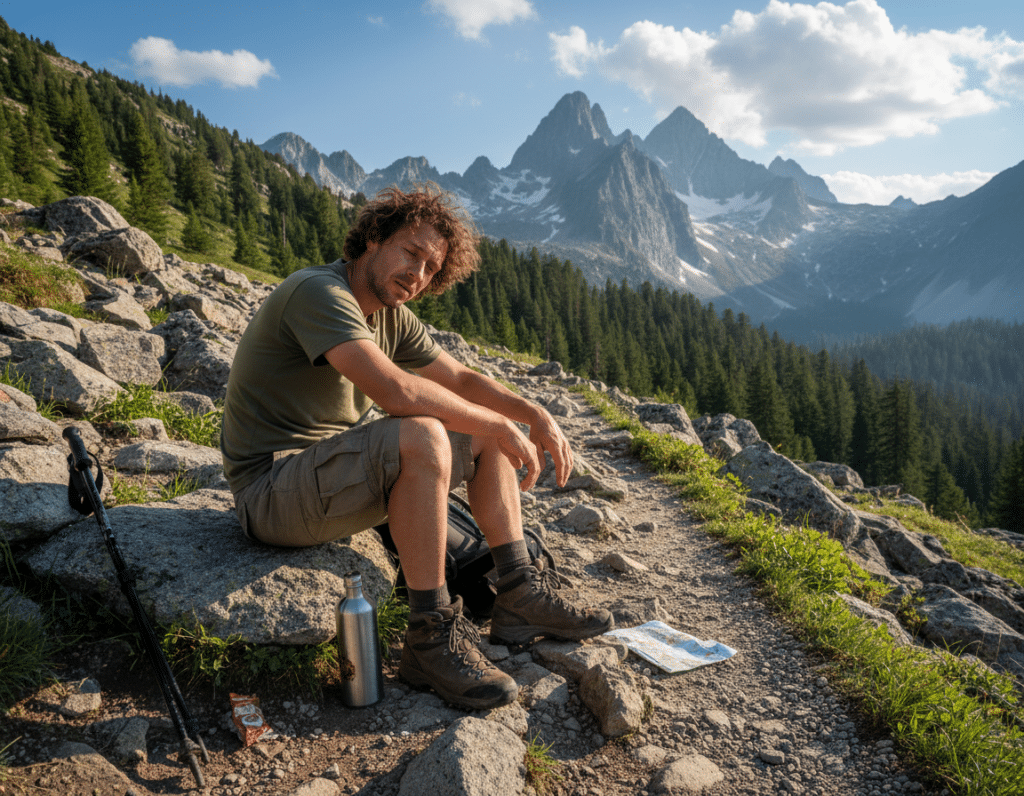
Have you ever hit the path and suddenly your pace slows, your steps feel clumsy, and your choices start to wobble—what just changed in your body?
I name what this looks like in real life: your hike pace drops, your hands shake on steep sections, or you start misjudging simple creek crossings. These are clear trail fatigue symptoms that matter for safety on any hike, from quick local outings to a long mountain day.
Some tiredness is normal. But when tiredness shifts how you think and move, it becomes risky. Often the build comes from poor pacing, heat or cold, low food, and not enough fluids.
My goal in this guide is simple: help you spot early signs, run quick self-checks, and act fast so a small issue doesn’t become a rescue. I keep the tone calm and practical—because confident hikers make better decisions as the day wears on.
Key Takeaways
- Recognize slowed pace and sloppy choices as warning signs.
- Drink before thirst and eat before hunger to reduce risk.
- Use quick self-checks to confirm what’s happening and why.
- Decide early: take a short break or turn around if mental sharpness drops.
- Learn simple on-the-spot recovery steps for the rest of your hike.
- For heat-related guidance, see tips to avoid heat stroke while hiking: avoid heat stroke.
Trail fatigue symptoms that show up on the trail
Halfway up a ridge you notice your pace slips and walking feels harder than a minute ago. I call this the first “uh-oh” moment: energy drops even though the route hasn’t changed.
Energy drop and pace changes you can’t maintain
What it feels like: you surge to keep up, then have to stop and breathe. Your rhythm breaks and your breathing gets uneven.
Why it matters: repeated surges burn energy fast and raise the chance of making poor decisions on the move.
Heavy legs, muscle cramping, and new soreness in the calves or quads
What it feels like: legs feel leaden, calves twitch, or a sharp ache shows up where you didn’t have it before.
Why it matters: sudden muscle soreness changes stride and load on joints, increasing injury risk.
Foot hot spots, blisters, and ankle instability on uneven ground
What it feels like: a hot spot, rubbing, or a roll at the ankle that wasn’t there at the trailhead.
Why it matters: pain shifts how you step. Supportive boots or hiking boots with ankle support help reduce blisters and sprains.
Dehydration signs that can look like tiredness
What it feels like: dry mouth, lightheadedness, slow thinking, and tight muscles.
Why it matters: low fluids mimic tiredness but respond fast to water and electrolytes—don’t assume it’s just “being tired.”
| Sign | What it feels like | Quick check | Immediate action |
|---|---|---|---|
| Energy drop | Stops, uneven pace | Note recent food/water | Drink, eat a small snack, ease pace |
| Muscle soreness/cramp | Sharp or tightening in calves/quads | Test a few steady steps | Stretch, hydrate, rest briefly |
| Hot spot / blister | Localized rubbing or heat | Inspect sock and boot fit | Stop, apply padding, change socks |
| Ankle wobble | Unsteady on uneven ground | Try a slow turn in place | Tighten laces or switch to higher-support boots |
Quick self-checks to confirm fatigue before it becomes a safety problem
I give you three fast checks I use when I feel off on a hike. Each one takes under two minutes and tells you whether to keep moving or pause and recover.
Water check: drink before you feel thirsty
Action: take five steady sips now, then walk at an easy pace for two minutes. Note whether breathing and focus improve.
Outcome: if clarity and rhythm return, dehydration was likely the cause. If not, move to the food check.
Food check: eat before hunger hits
Action: eat a small snack with carbs plus a bit of protein or fat—half an energy bar or a handful of nuts and dried fruit. Wait two minutes and reassess mood and steadiness.
Outcome: better energy and steadier steps mean your nutrients were low. Frequent small intakes work better than rare large stops.
Gear check: pack weight, boot fit, and pressure points
Action: loosen the hip belt, redistribute load, then tighten shoulder straps. Inspect socks and boots for hot spots or pinching.
Outcome: if posture feels easier and pressure spots disappear, load or fit was adding strain. If problems persist, consider a longer break or heading back down the trail.
- Drink—sip now.
- Eat—small portion.
- Adjust—redistribute gear and check boots.
| Check | Steps (under 2 min) | Quick result |
|---|---|---|
| Water | Sip x5, walk 2 min | Improved focus = hydrated |
| Food | Eat small carb+protein snack | Energy rises = low nutrients fixed |
| Gear | Redistribute pack, check boots | Posture eases = load or fit issue |
When to take a break vs when to turn around
If walking gets harder by the minute, use this simple rule set to pick the right action. Slow down first. Moving at a steadier pace often keeps you warmer and makes restarting easier.
Then run a two-minute reassessment: drink five sips, eat a small snack, and test steady steps on uneven ground. If coordination and speech clear, a short break is usually enough. Tighten laces and redistribute your pack before moving on.
Turn-around triggers you must respect
Stop the hike and head back if you get persistent dizziness, severe cramping that won’t relax, or mental fog that doesn’t clear after water and food. These signs can escalate quickly and raise the chance of injury or poor choices.
Pain rules to prevent injury
If you feel sharp, joint-specific pain—especially in your knees or ankles—or pain that worsens with each step, treat it as an injury. Don’t push through. Change your plan and seek rest or help as needed.
Weather and group considerations
In cold, windy conditions avoid long standing breaks; your body temperature can drop fast. For groups, agree early: slowing the pace or turning back as a unit keeps options open and keeps everyone safer.
- Slow down and reassess for two minutes: water, snack, steady steps.
- If clarity returns, take a short break and adjust gear, then continue slowly.
- If dizziness, severe cramp, or deep mental fog persists, turn around now.
| Situation | Quick check (2 min) | Action |
|---|---|---|
| Slowed pace, mild tiredness | Drink + snack, walk steady | Short break, adjust pace |
| Dizziness or mental fog | Repeat water/snack, note change | Turn around and descend |
| Sharp joint pain (knees/ankles) | Test a few slow steps | Stop hiking; rest and change plan |
How to take an effective break during a hike
When your legs feel heavy and your mind drifts, a short, focused break can reset more than you expect. Use a clear order so the body and gear recover quickly and you avoid extra strain.
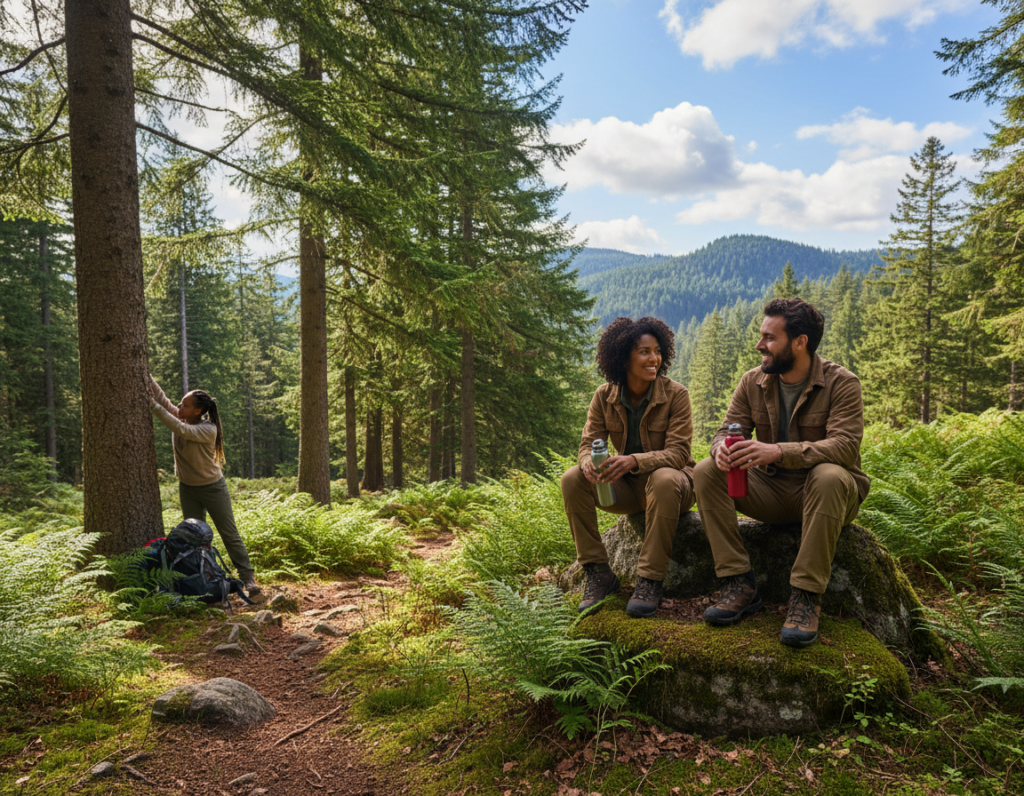
Hydrate with water and electrolyte-friendly foods
First, sip plain water right away. Follow with an electrolyte option: a slice of orange, grapes, or a small cup of coconut water. This tackles low fluids before energy drops worsen.
Eat a small snack with carbs plus protein or fat
Next, eat a compact snack: half an energy bar, nuts with dried fruit, or cheese and crackers. Carbs restore quick energy; the protein or fat steadies it so you don’t crash.
Let your feet relax: remove boots, dry socks, and treat hot spots
Then, take off your boots and air your feet for a minute. Swap to dry socks if you can and pad any hot spots. Foot care in the middle prevents limping, which adds strain up your legs and back.
Reset your body with light stretching for calves, hamstrings, hips, and back
Finish with gentle stretches and short yoga-style moves: calf stretch on a step, seated hamstring reach, a light hip opener, and a standing back twist. Keep each move easy and pain-free.
- Hydrate: water + fruit or coconut water.
- Eat: small carb + protein/fat snack.
- Feet: remove boots, dry socks, treat hot spots.
- Stretch: 5–10 minutes of light mobility and yoga moves.
- Pack up, tighten gear, and test a few steady steps.
| Step | Action | Time |
|---|---|---|
| Hydrate | Water + electrolyte fruit or coconut water | 1–2 minutes |
| Snack | Carb + protein/fat small portion | 1–2 minutes |
| Feet & stretch | Remove boots, change socks, gentle stretches | 5–10 minutes |
Keep the break short and practical so you avoid getting chilled. If you want more tips for longer outings, check these avoid fatigue tips for planning and recovery.
Hydration tactics to prevent fatigue throughout the day
Ever notice your pace drop hours into a day hike even when the weather seems fine? I keep hydration simple so your body stays steady from start to finish.
How much to drink in moderate conditions
Rule of thumb: about 1 liter of water per 3 hours for most adults in moderate temperatures. Adjust up for heat, harder effort, or the season.
Even a 2% fluid loss can cut your capacity by roughly 20%. Prevention is easier than trying to recover later.
Drink options to vary fluids on longer days
Water is your base. Mix in tea, diluted sports drinks, or a warm cup of broth or soup for variety and electrolytes.
Sip steadily—small, regular amounts—rather than chugging at stops. Your body absorbs fluid better that way.
Signs you need to increase fluids after the hike
Check yourself after you finish: dry mouth, muscle cramping, dizziness, low energy, or mental fog mean you should boost fluids during recovery.
Follow with water plus an electrolyte-rich drink and a salty snack to restore balance before bed.
- Baseline: 1 L / 3 hours in moderate conditions.
- Sip every 15–30 minutes on the move.
- Use tea or soup when weather or appetite calls for it.
| Situation | Action | Why it helps |
|---|---|---|
| Moderate day, steady pace | 1 L per 3 hours; sip often | Keeps energy and coordination stable |
| Hot or hard effort | Increase intake; include electrolyte drink | Replaces salts lost in sweat |
| Post-hike signs present | Drink water + electrolytes; rest | Speeds recovery and cuts after-day drop |
Food and snacks that support steady energy on the trail
Pack food that keeps your energy steady so you can move confidently all day. I aim for steady energy, stable mood, and fewer bonks—not a perfect diet.
Pre-hike meal for sustained energy
Eat a plate of whole-grain oatmeal with almonds and berries plus a hard-boiled egg before you start. Why it works: oats provide slow-release carbohydrates, almonds add healthy fats, and the egg gives protein for muscle support.
On-hike snack ideas that pack well
Choose items that survive heat and a long day: dried dates, trail mix, whole-grain crackers with peanut butter, aged cheese, and sliced apples.
Why these work: dates and trail mix give quick carbs; crackers with peanut butter add protein and fat to keep you full; aged cheese resists spoilage; apples add moisture and vitamins.
Carbohydrates for working muscles and stable energy
Carbohydrates refill working muscles and steady your brain so you keep a consistent pace without sudden crashes.
Protein and healthy fats that help you stay full longer
Protein supports muscle repair; healthy fats slow digestion so energy releases evenly and you avoid late-day hunger.
- Easy recipe — “oats + nut butter + fruit”: pack instant oats, a spoon of nut butter, and dried fruit to mix with hot water or eat dry for quick carbs and protein.
- Simple combo — “crackers + peanut butter + apple”: crackers for carbs, peanut butter for protein and fat, apple for hydration and vitamins.
| Item | What it gives | Why pack it |
|---|---|---|
| Oatmeal + egg | Complex carbs + protein | Long-lasting fuel for body and brain |
| Trail mix | Carbs, protein, fats | Compact and durable in heat |
| Crackers + peanut butter | Quick carbs + sustained protein/fat | Easy to eat on the move |
| Aged cheese + apple | Protein + hydration | Resists spoilage and refreshes |
Timing tip: eat small snacks on a schedule—every 45–60 minutes—instead of waiting until you feel shaky. This keeps energy steady and helps you enjoy the hike.
Gear and pacing choices that reduce fatigue and lower injury risk
A consistent walking rhythm beats short bursts every time when you want to protect your body and enjoy the view. Pick a speed you can hold without surging to catch up. That simple shift saves energy and keeps your muscles steady.
Adjust pace for climbs and descents: slow on the up, control your stride on the down. Tight calves or tired knees show up fast on long descents, so keep steps short and deliberate.
Choose supportive hiking boots and fit them right
Fit beats fashion: roomy toe box, snug heel, and firm ankle support on uneven ground. Proper hiking boots reduce ankle rolls and cut stress through knees and hips.
Avoid overly heavy boots on easy routes — they can wear your foot strength down through the day.
Pack light and bring prevention items
Audit gear: bring essentials only. Every extra pound costs energy and adds strain to your joints.
Include blister bandages, a compact knee brace if you need one, and warmers for cold seasons. These things weigh little but prevent big problems.
A quick pre-hike routine (takes minutes)
- Check boots and lace pattern; warm up calves and hips for 3–4 minutes.
- Load essentials into hip belt and tighten; leave extras at home.
- Set a conversational pace and note one easy goal per hour for the trip.
| Focus | What to check | Why it matters |
|---|---|---|
| Pace | Sustainable speed you can talk at | Saves energy and protects muscles |
| Boots | Fit, ankle support, weight | Reduces ankle rolls and knee stress |
| Pack | Essentials only; distribute weight | Lighter load = less energy drain |
| Pre-hike routine | Warm-up, lace check, plan breaks | Prevents injury and keeps you comfortable |
Conclusion
A quick recap helps you spot trouble early and act with confidence on any trip. On a long hike, watch for slowed pace, sharp muscle or joint pain, foot hot spots, and changes in focus or balance.
Manage risk the easy way: drink before you feel thirsty, eat small snacks on schedule, steady your pace, and fix gear issues fast. In cold or windy conditions avoid long standing breaks that cool the body too much.
Protect feet and boots first—healthy feet keep knees and muscles working well. If dizziness, severe cramp, mental fog, or sharp pain in knees or ankles appears, turn back and seek help.
Post-hike recovery checklist: fluids and balanced food, gentle stretching and light yoga for muscle relief, short relaxation and rest. Use these tips each time and you’ll hike with more confidence and fewer problems.
