
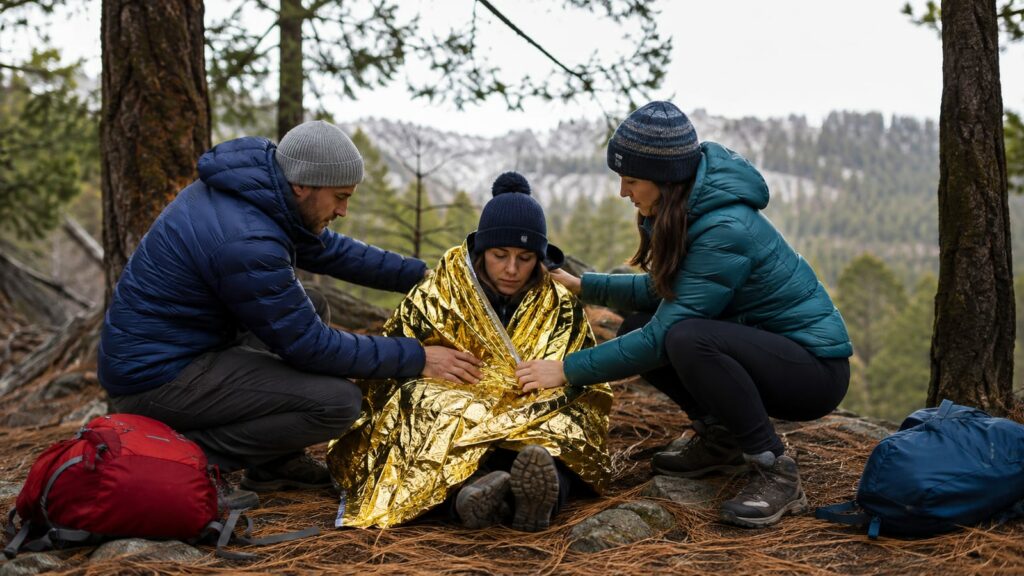
Treat hypothermia as an emergency, not a problem you hike through. For how to treat hypothermia while hiking, follow this step-by-step guide: stop the outing, call for help, shelter the person from wind and rain, remove wet clothing, insulate them from the ground, and add dry layers. Give warm, sweet fluids only if they’re fully alert and can swallow normally. Confusion, stopped shivering, abnormal breathing, or unconsciousness means immediate evacuation and professional care.
Last updated: 2026-08-13
Prevention before a hike starts
Good prevention starts before you leave the trailhead. Check the forecast, wind, rain, storms, and temperature changes for the whole route. A clear morning forecast won’t help much if the return hike crosses an exposed ridge in cold rain.
The National Weather Service explains how cold exposure affects the body and why wind and wet conditions raise the risk. Treat the forecast as planning information, not a promise.
Pack for the slowest, wettest version of the trip:
- Wear a moisture-managing base layer made from synthetic fabric or wool.
- Add an insulating layer such as fleece or a synthetic jacket.
- Carry rain protection that covers your torso and pack.
- Pack dry socks, gloves, and a warm hat in a waterproof bag.
- Bring an emergency shelter, such as a bivy sack or large shelter tarp.
- Carry fire-starting gear that works in wet conditions.
- Pack enough food and water for delays.
- Tell someone your route, parking spot, and expected return.
Cotton clothing is a poor choice for cold, wet hikes because it holds water against your skin and dries slowly. That sounds harmless at the car. After hours of rain, sweat, and wind, it becomes a heat-loss problem.
Also, don’t overdress at the first switchback. Open vents, remove a layer, and control sweat before your shirt is soaked. Sweat management is easier than trying to dry wet clothes inside a storm pitch.
For more planning detail, see this guide to preventing hypothermia on cold hikes.
Early signs of hypothermia
Early hypothermia often looks like ordinary trail fatigue. That’s why groups miss it. A hiker may insist they’re fine while stumbling, fumbling with a zipper, or snapping at everyone who asks them to stop.
Watch for:
- Shivering
- Cold or numb skin
- Tiredness that seems out of proportion to the hike
- Clumsy hands
- Stumbling or poor balance
- Slurred speech
- Confusion
- Unusual irritability
- Slow responses
- Trouble making simple decisions
Shivering is a useful warning, but it isn’t a safety signal. It means the body is still trying to produce heat. If the person worsens or stops shivering while remaining cold, treat that as a serious change.
Ask simple questions. Have the person name the trail, explain where they’re going, or show how to adjust a layer. Wrong answers and slow, tangled responses matter more than a confident “I’m okay.”
Start treatment at the first signs. Waiting for dramatic symptoms wastes the easiest window to turn the situation around.
How severe can hypothermia become?
Hypothermia can move from mild to life-threatening without a clean break between stages. Use the person’s behavior, coordination, alertness, and breathing to judge the trend.
| Stage | What you may see | What it means |
|---|---|---|
| Early | Shivering, cold skin, fatigue, poor focus, clumsy movement | Stop hiking and start warming |
| Worsening | Confusion, slurred speech, stumbling, unusual behavior, slower responses | Call for help and prepare evacuation |
| Severe | Little or no shivering, inability to walk, extreme drowsiness, weak or abnormal breathing, unresponsiveness | Treat as an emergency and handle gently |
The common mistake is treating shivering as the dividing line. A person can be in serious trouble while still shaking. Loss of shivering is worse, because it may show that the body is running out of useful heat-producing responses.
Confusion also changes the plan. A confused hiker can’t reliably judge distance, follow directions, or protect themselves from a fall. Don’t send them ahead to “warm up at the car.” Keep them with the group.
How do you treat hypothermia on the trail?
Follow this sequence. Keep it simple, because cold hands and a stressed group are bad places for a complicated plan.
- Stop hiking. Keep the person still and out of unnecessary wind.
- Check responsiveness. Speak clearly and ask simple questions.
- Check breathing. Look for normal chest movement and listen for regular breathing.
- Call emergency services or activate your rescue plan. Use a phone, satellite communicator, personal locator beacon, or nearby help.
- Assign jobs. One person handles communication, one builds shelter, and one gathers dry insulation.
- Stay with the person. Don’t leave them alone to find the trailhead.
- Start protecting body heat. Shelter, dry clothing, ground insulation, and gentle warming come next.
The person may say they can keep walking. Don’t let that settle the matter. Hypothermia affects judgment before it takes away movement.
You can also review this broader guide to what to do in a hiking emergency. The same basic rule applies here: protect the person, communicate early, and keep a clear bailout point.
Shelter from wind and precipitation
Get the person behind a barrier before you spend time sorting gear. Wind strips heat quickly, and rain keeps adding to the problem.
Use the safest nearby option:
- A tent or emergency shelter
- A vehicle
- A trail shelter
- A rock overhang, if it’s stable and dry
- A tarp tied as a windbreak
- A pack or foam pad held between the person and the wind
Move them only as far as needed. If they can walk safely and stay alert, support them into shelter without making them rush. If they’re confused, weak, or unable to walk, carry or drag them only when necessary and use several people if available.
Avoid unnecessary handling, especially in severe cases. A cold person’s heart may be irritable, and rough movement adds risk. Don’t make them climb over rocks, cross a stream, or descend a technical trail just to reach a better campsite.
A tent can block rain but still trap condensation. Vent it enough to prevent the inside from becoming wet while keeping the person covered. A storm shelter is useful only if it stays dry inside.
Removing wet clothing
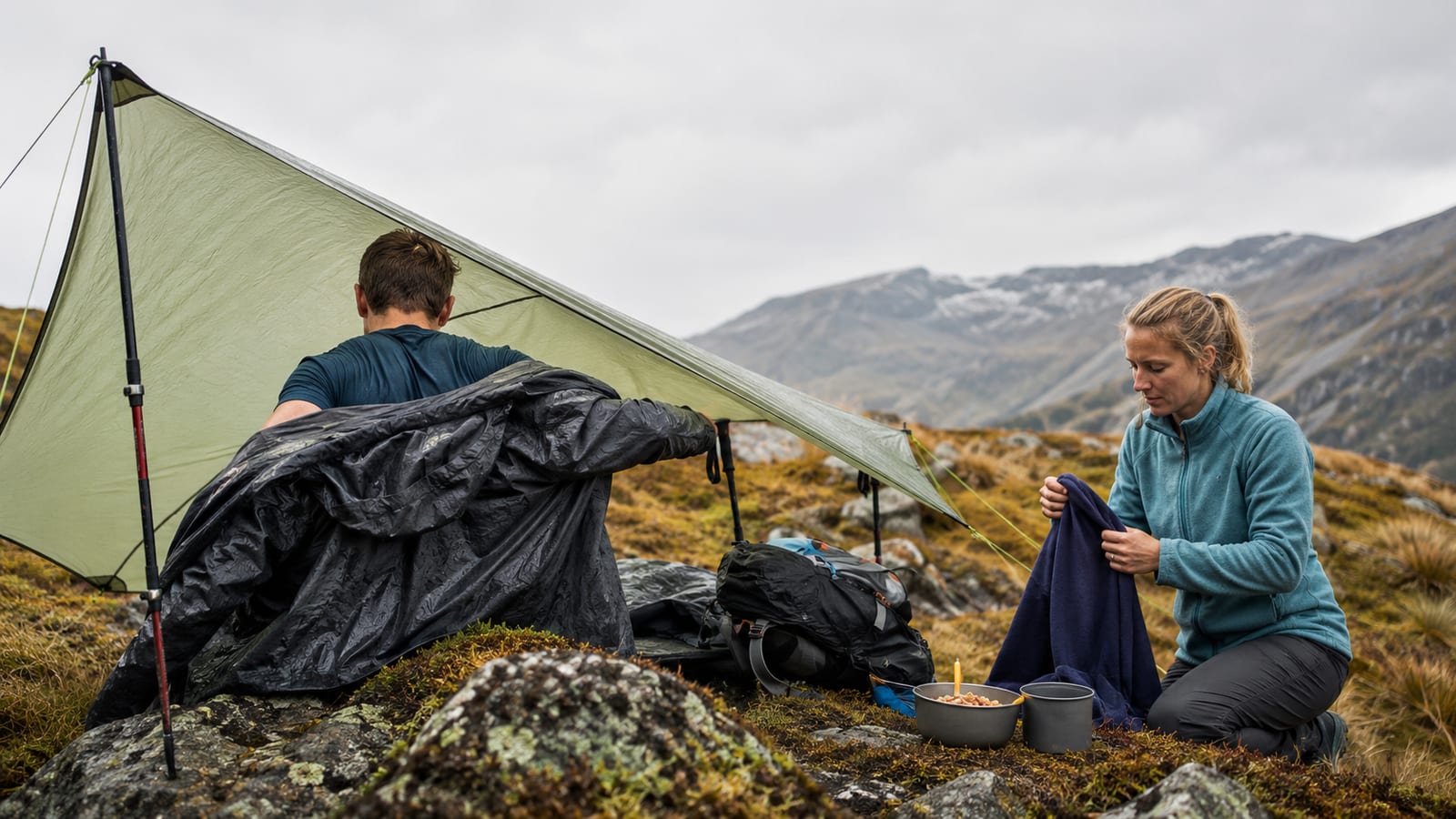
Remove wet clothing as soon as you have shelter and dry replacements ready. Don’t strip someone in open wind while you search for a jacket. Prepare the dry layers first, then make the change quickly.
Use this order:
- Get the person under cover.
- Put a sleeping bag, blanket, or dry layer around them.
- Remove wet outer layers.
- Replace wet base layers with dry ones.
- Add insulation over the dry clothing.
- Cover the head, hands, feet, and torso.
If clothing is stuck, frozen, or painful to remove, cut it away with scissors or a knife. Cut one layer at a time and protect the skin underneath. Don’t wrestle a sleeve off a person who can barely move.
Pat the skin dry if you can. Don’t rub cold skin hard. Rubbing won’t create useful core heat, and it can damage numb skin without the person noticing.
Keep exposure brief. The goal is dry clothing, not a full campsite changing room.
Ground insulation
Put insulation beneath the person before adding more insulation on top. The ground pulls heat from the body even when the air doesn’t feel extreme.
Use whatever creates a dry barrier:
- Sleeping pad
- Backpack
- Foam sit pad
- Dry clothing
- Rope coiled beneath the torso and legs
- Closed-cell foam
- Empty pack liner filled with clothing
- Folded emergency shelter
Cover the shoulders, hips, and legs. A thin layer under only the upper back leaves the rest of the body losing heat.
Keep the person off wet soil, snow, rock, and the floor of a damp shelter. A sleeping bag on bare ground is still losing heat underneath. That is a common packing mistake with a predictable result.
If you have a tent, put the groundsheet and pad beneath the person. If the person must wait outside, build the barrier first, then add a windbreak and top insulation.
Gentle rewarming
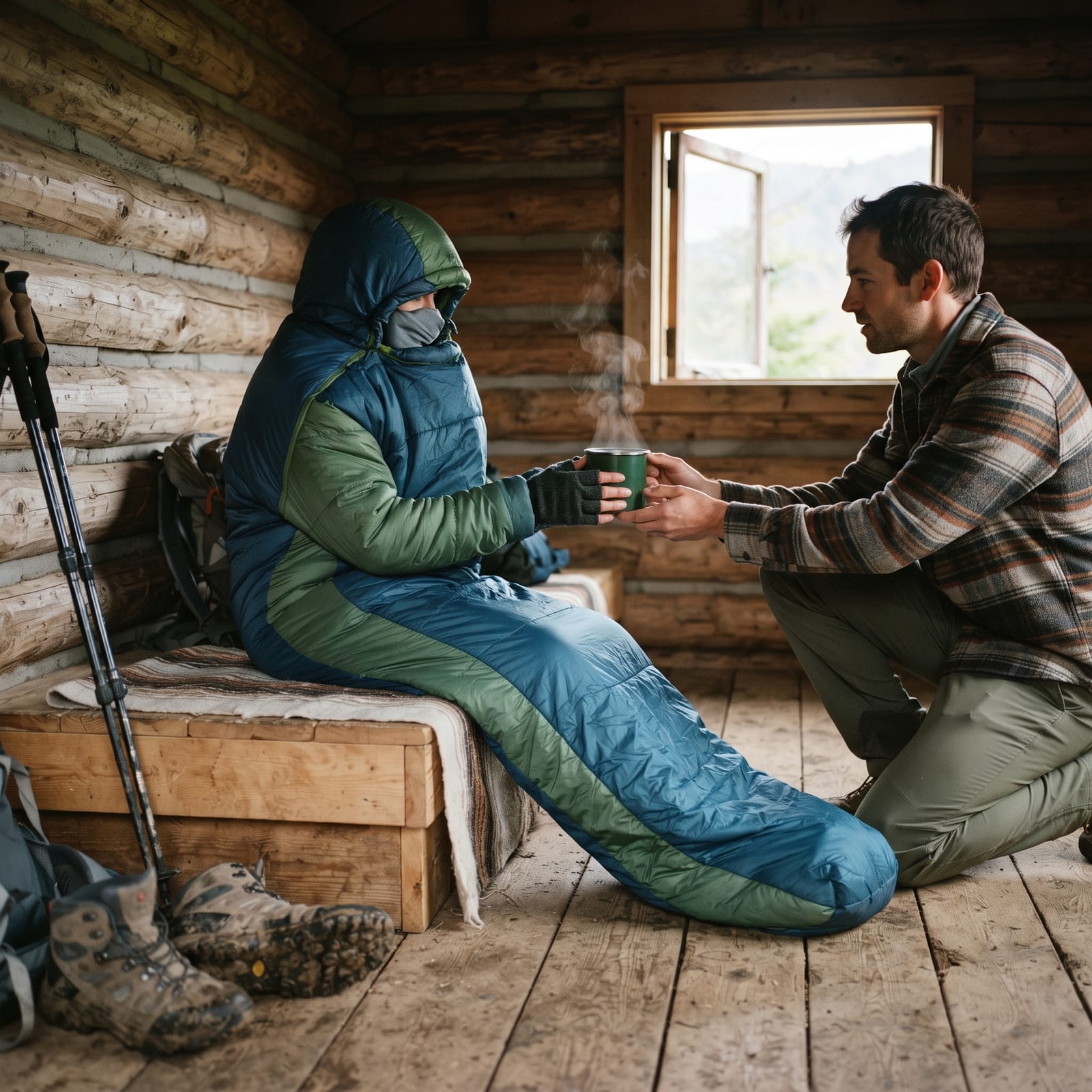
Rewarm the torso first and keep the process gentle. Add dry base layers, fleece or other insulation, a hat, gloves, a sleeping bag, and a blanket. Focus available gentle warmth around the chest, back, and armpits.
Warm packs can help if you have them. Wrap them in clothing or fabric so they warm the torso without burning numb skin. Check the skin often because the person may not feel excessive heat.
Avoid these common wrong turns:
- Don’t rub the arms, legs, hands, or feet.
- Don’t place very hot objects directly against skin.
- Don’t use a fire so close that clothing or shelter can scorch.
- Don’t give alcohol.
- Don’t force the person to walk.
- Don’t put a severely confused person in a hot bath.
- Don’t rely on another person’s body heat as the main treatment.
A fire can warm the shelter, but it creates burns, smoke, and carbon monoxide risks. Use it carefully and keep ventilation open. A dry sleeping bag and a barrier from the ground usually do more useful work than standing beside a smoky fire.
The American Red Cross hypothermia guidance also stresses gentle warming and emergency care for serious symptoms. Field treatment is a bridge to rescue, not a replacement for it.
Warm, sweet fluids
Give a warm, sweet drink only to an alert, cooperative person who can swallow normally. Small sips are safer than making them gulp. Warm water with sugar, a sweet drink, or a warm sports drink can provide fluid and quick energy.
Do not give food or drink to someone who is:
- Confused
- Drowsy
- Vomiting
- Unconscious
- Unable to sit up safely
- Coughing or choking when they swallow
Food or fluid can enter the airway if swallowing is impaired. That adds a choking problem to the hypothermia emergency.
Don’t make a cold, confused hiker cook, walk, or manage a stove. The work may seem minor, but it uses coordination and heat they don’t have. Assign the task to someone else.
Severe hypothermia and unresponsiveness
Severe hypothermia needs immediate professional help. Treat any of these signs as an emergency:
- Worsening confusion
- Inability to walk
- Stopped shivering while still cold
- Unconsciousness
- Weak or abnormal breathing
- No normal breathing
- Collapse
Call emergency services or send a rescue message as soon as possible. Give your location, trail name, nearest landmark, parking area, weather, symptoms, and whether the person is breathing normally.
Handle the person gently. Keep them horizontal if practical, prevent falls, and avoid sudden lifting or jostling. Move them only to reach shelter, protect the airway, or provide lifesaving care.
If the person is unresponsive, check for normal breathing. If they aren’t breathing normally, begin cardiopulmonary resuscitation, or CPR, and follow the dispatcher’s instructions. Use an automated external defibrillator, or AED, if one is available and the device directs you to do so.
If they are breathing, keep the airway open and monitor them continuously. Don’t leave them alone to gather wood, find a signal, or walk for help. Rotate those jobs among the group while one person stays beside the hiker.
A person who appears dead may still be cold and alive. Don’t assume the emergency has ended because they stopped moving or shivering.
Evacuation and the decision to stop
Suspected hypothermia ends the hike. Arrange evacuation, keep monitoring the person, and continue sheltering and rewarming while you wait for rescuers.
Do not continue toward the trailhead because the person feels slightly better. Improvement can be temporary, and the return route may expose them to more wind, rain, elevation, mud, or rock. A person who needed help earlier may not have enough reserve for the next switchback.
Choose the safest waiting location, then protect it from:
- Wind
- Rain or snow
- Ground contact
- Condensation
- Falling temperatures
- Water exposure
- Fire hazards
Keep communication open. If the location changes, update rescuers. If the person becomes less alert, stops shivering, vomits, or breathes abnormally, report the change immediately.
There’s no prize for dragging a deteriorating hiker downhill. The trailhead is not safer if you can’t get there without making the emergency worse.
FAQ
Can hypothermia happen during warm-weather hiking?
Yes. Rain, wind, cold water, sweat, and long delays can cool a hiker even when the air feels mild. Carry dry insulation and rain protection on exposed routes, shoulder-season trips, and hikes with unreliable crossings.
Should you give a hypothermic hiker caffeine?
Caffeine isn’t the main treatment. If the person is alert and can swallow, give a warm, sweet, nonalcoholic drink and focus on shelter, dry clothing, insulation, and rescue communication.
Is shivering always a sign that the person is improving?
No. Shivering shows the body is trying to make heat, but it doesn’t prove the person is safe. Watch alertness, coordination, breathing, and behavior instead of using shivering alone as your guide.
Can you treat hypothermia by putting the person in a sleeping bag?
A sleeping bag helps only if the person is protected from wind, dry enough, and insulated from the ground. Add dry layers first and keep checking their breathing and alertness while arranging evacuation.
What if the person refuses to stop hiking?
Treat refusal as a warning if the person is confused, slurring speech, stumbling, or acting unlike themselves. Keep them with the group, stop the outing, and call for help rather than trusting impaired judgment.
