
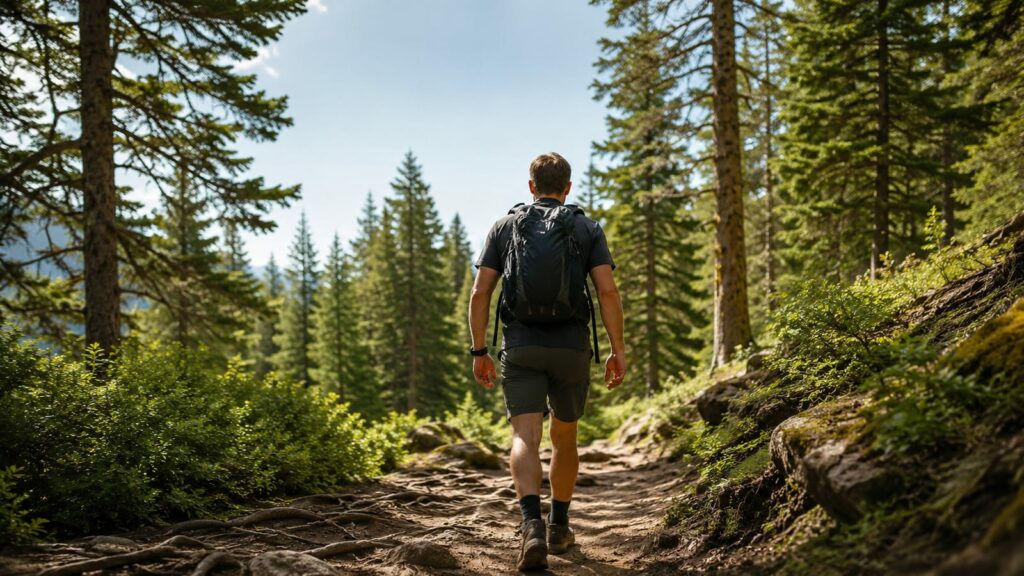
Short trails are often the smarter hiking choice. Pick an easy waterfall loop, a flat river path, a quick overlook, or a quiet stretch of woods when you want trail time without giving up your whole day. They suit tired legs, tight schedules, kids, dogs, recovery days after a hard climb, and anyone testing new boots before committing to real miles. The trade-off is honest: less solitude, less summit payoff, and more people at the trailhead. Still, a good short trail gives you moving water, a view, or a quiet stretch of woods without eating your whole day.
How do you define a short trail?
Most hikers call a route you can walk in a brief outing a short trail, though distance alone is a bad way to judge one. A flat, easy loop and the same distance up loose rock are not the same afternoon. Elevation, footing, and heat matter more than the number on the sign.
So read the trail by effort, not just length. A short trail with a steep, sustained climb will humble people who expected a stroll. Meanwhile, a longer flat path along a river can feel easier than a short one full of roots and mud.
The useful definition is simple. If you can hike it, catch your breath at the view, and be back before you need a real meal, it's a short trail.
Who these trails actually suit
Short trails are the right call more often than gear culture admits. They fit real life, not the highlight reel.
- Beginners who need to learn how their feet, socks, and pace behave before a big day. Our guide to easy and scenic beginner hikes is built around exactly this.
- Families with kids who move at the speed of the most interesting rock.
- Dog owners on a hot day, when a long water carry and hot pavement are a bad idea for paws.
- Recovery days after a hard summit, when your knees want motion but not punishment.
- Gear testing. Break in boots, test a new pack, or check whether a rain jacket wets out before you trust it on a remote route.
- Short daylight, like shoulder-season afternoons when the sun quits early.
If your free window ends before dark, a short trail is not a consolation prize. It's the smart use of the time you have.
Where these routes fall short
The honest downside is people. Short trails near cities and famous parks get crowded, and the parking lot fills first. If solitude is the point of your hike, a busy loop will disappoint you no matter how pretty the map looks.
You also trade away the slow build that makes long hikes feel earned. Some views only open up after a long stretch of work, and no short trail can fake that. A short trail gives you a taste, not the full meal.
Trail conditions bite harder here too. A muddy, eroded short trail sees heavy traffic, so the tread gets chewed up fast after rain. Popular does not mean well maintained.
Short route vs long hike: which should you pick?
Pick the short trail when time, weather, company, or your body says so, and stop treating it as the lesser option. Here's the plain trade-off.
| Factor | Short trail | Long hike |
|---|---|---|
| Time needed | Brief outing | Longer commitment |
| Crowds | Often busy near trailheads | Thins out with distance |
| Payoff | Quick view or water | Bigger, earned scenery |
| Risk | Low, easy bailout | More exposure and commitment |
| Best for | Kids, dogs, testing, recovery | Solitude, big objectives |
The mistake is thinking every hike needs to be long to count. Serious hiking is the hike you actually finish, feeling good, on the time you had.
Packing for a short hike
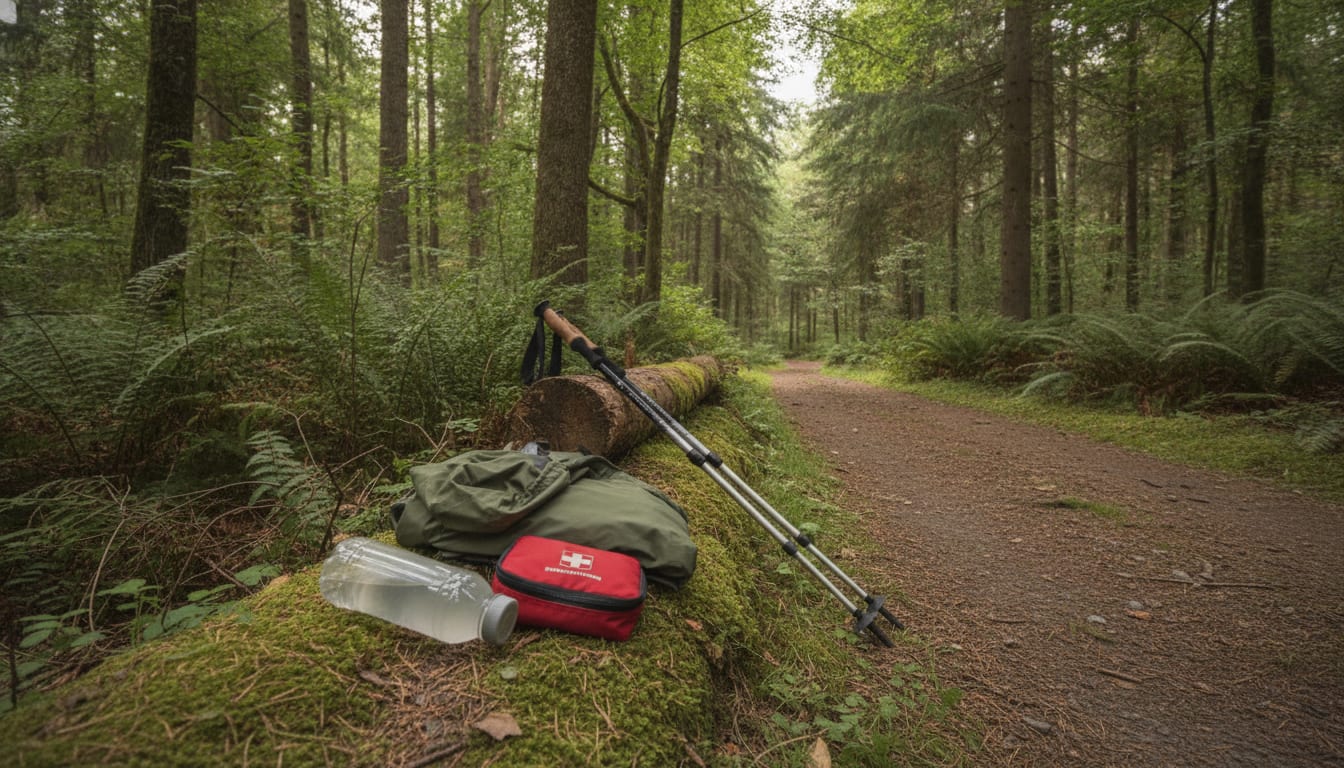
Pack light, but do not pack nothing, because short trails are where people get careless and then get caught out. Weather turns and ankles roll on quick loops the same as on all-day routes.
- Water. More than you think, especially in heat. A short trail in full sun still dries you out.
- A layer. A thin wind or rain shell weighs almost nothing and saves a cold, wet walk back.
- Real shoes. Trail runners are plenty for smooth short trails. Save the stiff boots for rough ground and heavy loads.
- Snack and phone. For you, the kids, and the just-in-case.
- A headlamp if you're anywhere near dusk. Your phone light is not a plan.
Skip the heavy pack, the extra fuel, and the just-in-case gear you'd bring on an overnight. That's weight you'll carry for no reason on a short route with an easy walk back.
How do you make a short trail worth the drive?
Go early or late, and pick the trail for a specific feature instead of a name. Short trails reward timing more than any other kind of hiking. The same busy loop early in the morning can feel like a different trail than it does at noon.
Chase one good thing: a waterfall, an overlook, a slot of cool forest, a stretch of coast. A short trail built around a real feature beats a longer walk through nothing memorable.
Stack a few short trails in one area if you want more trail time without one big commitment. This is how places like the trails around Garden of the Gods work well: several short loops you can mix by how you feel that day. And where drama beats distance, short can be the whole point, which is the case across much of the Faroe Islands.
Read the signs on the way in, too. The most ignored trail signs still apply on a short loop, and closures or reroutes are easy to miss when you assume a quick hike needs no attention.
Staying safe and low-impact on a busy short trail
Stay on the tread and pack out everything, because heavy foot traffic is exactly where trails erode and trash piles up. The Leave No Trace principles matter more on a popular short loop, not less. A shortcut across a switchback on a busy trail does real damage fast.
Yield with sense. Uphill hikers have the right of way, and a crowded short trail needs that courtesy or it turns into a traffic jam.
Watch the weather even on an easy walk. A short trail gives you a quick bailout, so use it. Turning around early on a quick loop costs you almost nothing.
FAQ
How long is a short trail?
Usually a brief outing, but effort matters more than distance. A steep, rocky route can wear you out faster than a longer flat path along a river. Judge by climbing and footing, not just the mileage on the sign.
Are short trails good for beginners?
Yes, and they're the best place to start. You learn how your feet, pace, and gear behave without committing to a long day where mistakes get expensive. Finish a few short trails feeling good before you sign up for something big.
Do I still need a map on a short trail?
Bring one or a downloaded map on your phone, even for a quick loop. Popular short trails have junctions and side paths that are easy to take by accident, and getting turned around close to a busy trailhead is more common than people admit.
What shoes should I wear on short trails?
Trail runners handle most short, smooth trails fine and dry faster than boots. Save stiff boots for rough, rocky ground or heavier loads. Do not buy heavy boots for an easy park loop just because they look like serious hiking gear.
Can I bring my dog on a short trail?
Often, if the trail allows it and the day isn't too hot. Short trails keep the water carry and paw exposure manageable, which is safer for dogs than a long, sun-baked route. Check the rules first and carry water for the dog too.
