
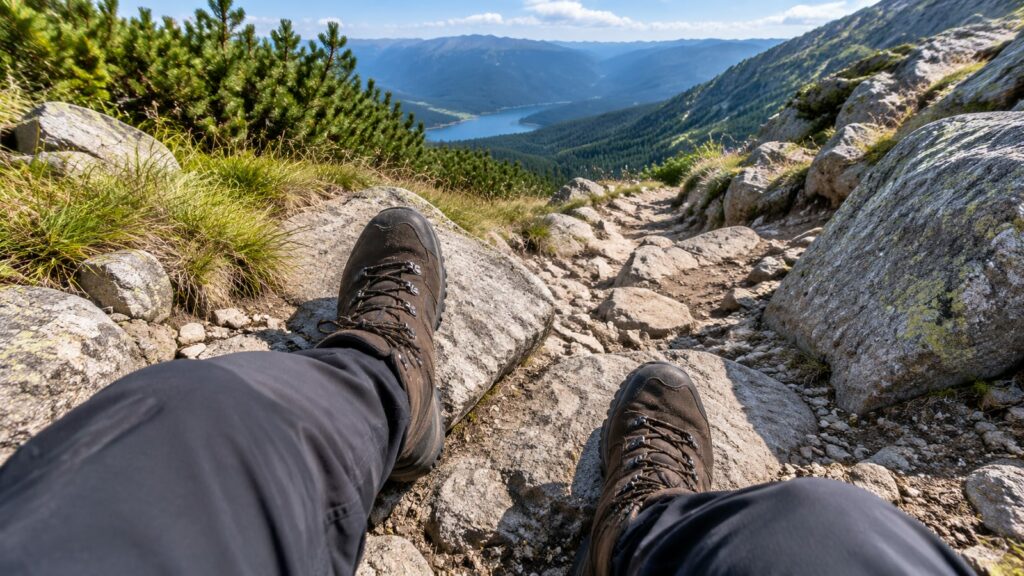
For rough, uneven, and rocky terrain, the best foot placement is deliberate flat-footing on stable contact points, with short, controlled steps and a slightly bent knee. That is what makes roughfooted technique effective, and it beats toe-balancing on edges or long confident strides, which is what causes most rolled ankles and slips on the trail. Rough ground rewards good footwork more than good gear. Read the ground a few steps ahead, set your full sole flat on solid rock, and keep your weight centered so you can bail to your back foot when a stone shifts. Poles and the rest step help on climbs, but they support that core habit, not replace it.
Last updated: 2026-07-27
What does roughfooted technique actually mean?
It means moving over broken ground on purpose instead of muscling through it. The word sounds fancier than the skill. In plain terms, you pick a line, place each foot deliberately, and let your legs work less by lifting less.
Most of these methods come from mountaineering, where snow and ice punish sloppy steps. They carry over to dry rock, talus, and root-tangled forest trail. So the technique is old and boring. That is a compliment. Boring means it works after mile 10, when you stop paying attention and your feet have to know the job.
Anyone who finishes rocky hikes with sore knees, tired quads, or a near-miss slip they still think about gets something here. Beginners get the biggest gains. Experienced hikers usually already do half of this without naming it.
What does good foot placement look like on a hike?
Scan ahead, then trust the plan. Staring straight down at your boots is the most common mistake on rock. You see one step and get ambushed by the next three.
Look 8 to 10 feet ahead on rocky trails and map a rough line. Your eyes feed your feet a route, and your feet execute it while your eyes are already reading what comes next. It feels like driving. You watch the road, not the hood.
Think of the ground as a puzzle where you want the path of least resistance. Do not climb over every rock. Look for the flat gaps between them and thread through. A useful trick: picture water running down the slope and follow where it would go. That line usually dodges the worst obstacles and holds a steadier height.
Slope changes the plan too. On gentle ground you can walk a normal stride. Once the grade gets steep, a normal stride stops working and you need shorter, more deliberate steps. Steep pitches need the rest step, covered below.
How should you place your feet on rocky, uneven ground?
Set your whole sole down and keep your weight low. Your boot is a platform. You want as much rubber on the rock as possible, not a toe-tip or a heel edge that can roll.
A few habits do most of the work:
- Step flat, not on edges. Aim for stable rock large enough for your foot. Skip the wobblers.
- Angle your feet slightly out on slopes. This duck-footed stance widens your base and eases ankle strain.
- Keep knees soft and stay light. Bent knees let you react when a stone tips.
- Test suspect rocks first. Set your foot down gently, add pressure slow, and keep your weight on your back foot until the rock proves solid.
- Take smaller steps than feel natural. Short, frequent steps save your legs. Long lunges make you haul your whole body up with every stride.
Moss and lichen are a mixed signal. Heavy growth often means a rock has sat still for years, so it is likely stable. Wet moss is also slick as soap. Stable and slippery at once, so test it anyway.
When the trail turns to mud or ruts, stay on the worn path. Walking around the puddle widens the trail and chews up plants. Slow down and go through, not around. Your boots will dry. The hillside takes longer.
For more on shifting your footwork as the ground changes, see our notes on staying stable on uneven trails.
Where should your foot land when running downhill on rocky terrain?
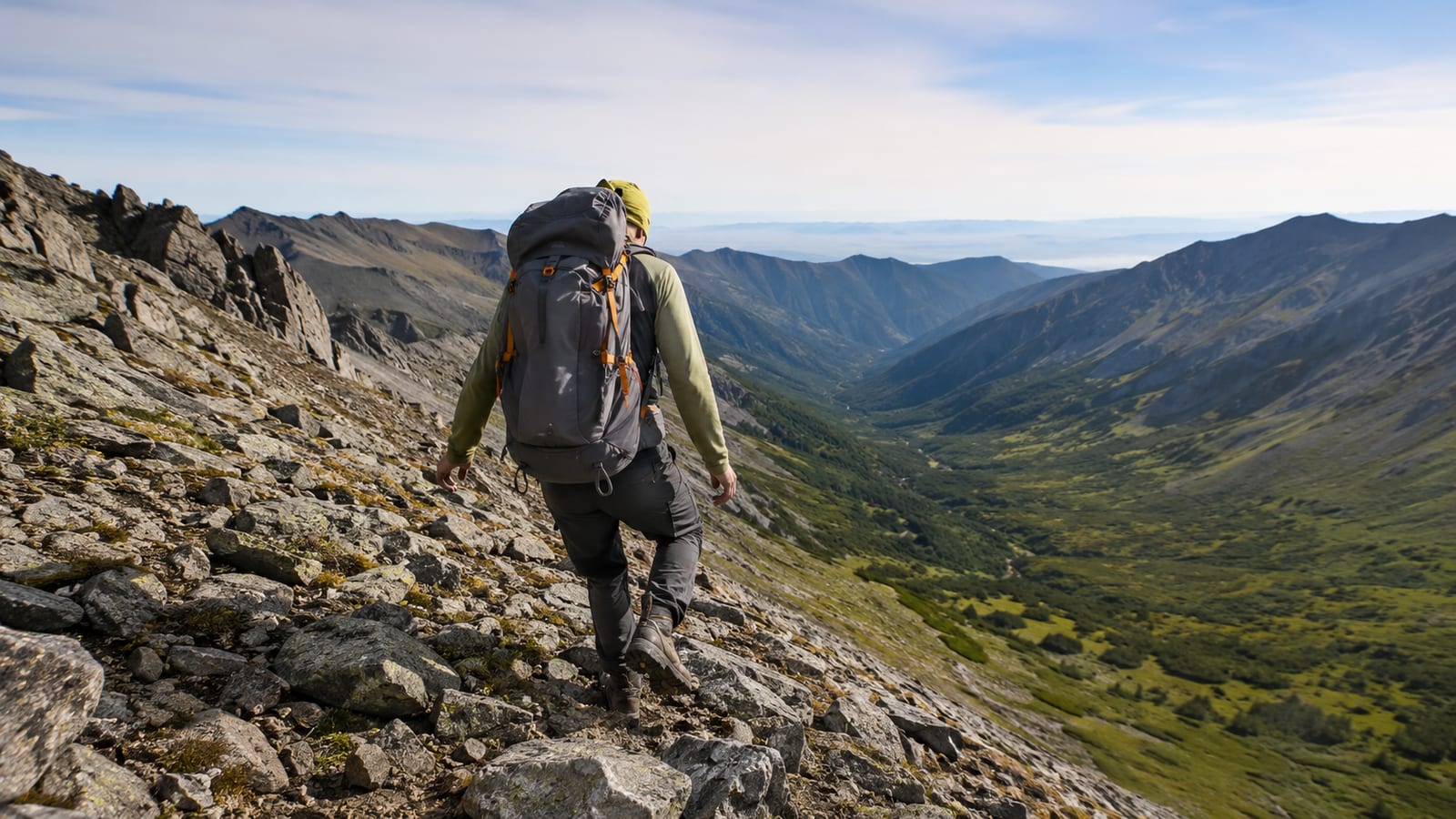
Land midfoot and flat under your hips, not out ahead on your heel. Reaching forward with a heel-strike on scree is how runners skate out from under themselves. You want each foot to touch down already under your center of mass, so the contact absorbs instead of brakes.
Keep the strides short and quick. On steep rocky descents, scan three or four meters ahead instead of the eight to ten feet that works at a walk. You are moving faster, so your eyes need to buy the same amount of reaction time.
Pick your landing zone before your foot arrives. Aim for flat, stable stone and let the quick cadence carry you across the junk you would rather not commit to. Do not lean back to slow down. That unweights your feet right when you need grip. Brake with cadence and line choice, not by sitting into the hill.
Is the rest step worth learning?
Yes, on any sustained climb. The rest step is the one technique here that feels like a cheat once it clicks. It gives each leg a tiny break with every single step up.
Here is the move. Plant your uphill foot, but keep your weight on the downhill leg. Let the downhill knee lock straight for a beat. With the knee locked, your bones carry the load instead of your thigh muscles. Then shift up, and repeat on the other side.
That short pause is the whole point. It stops the constant burn that builds when you never let a muscle rest. Your pace will drop at first. Good. Do not let faster partners talk you out of it, because they are usually the ones stopped and gasping while you keep grinding upward.
| Steady climbing | Rest step | |
|---|---|---|
| Energy use | High | Low |
| Knee strain | Moderate to high | Low |
| How long you can hold it | Short bursts | Hours |
Practice it on stairs at home. Even steps let you drill the weight transfer without worrying about loose rock. It pays off most under a heavy pack, when the locked-knee pause spares your quads for the miles still ahead. There is more in our guide to hiking steep terrain without wrecking your knees.
Which hiking techniques improve foot placement over time?
Slow, deliberate reps on real ground beat any drill you can do on a gym floor. You do not need a training program. You need miles where you pay attention instead of zoning out.
Start with the scan-ahead habit, because it is free and it sticks fast. Pick a line three or four steps out, hit it, then look further. After a few rocky hikes your eyes and feet stop needing a conversation about it.
For the harder moves, go slow on purpose. Find a short technical stretch and walk it twice at half speed, placing each foot like it matters. Slow controlled reps build the skill that shows up later when you are tired and rushing. Speed comes on its own once the placement is clean.
Drill the rest step on stairs so the weight transfer is automatic before you need it under load. Small, regular practice beats one big grind. The goal is simple. After enough trail miles it stops being a technique and turns into how you walk.
Does footwear change how you should place your feet?
Grip and fit matter more than any label on the box. Grippy rubber and a heel that stays locked beat a minimalist or maximal badge every time. That said, sole stiffness does change your footwork.
A stiff-soled boot bridges gaps and edges on rock, so you can trust smaller contact points and worry less about a single sharp stone. A soft trail runner flexes around the rock, which means more feel but more work from your foot on long talus.
- Stiff boots and burly soles: better for loaded packs, sharp talus, and off-trail rock. You can place with less precision because the sole does some of the bridging.
- Trail runners and soft soles: lighter, dry faster, and give you feedback through the sole. You have to place more carefully, but your feet stay fresher on long miles.
Neither is the "serious" choice. Buying stiff boots for a smooth park loop is trophy hunting, not hiking. For the how of fit, our piece on walking more efficiently on long trails covers lacing that locks your heel.
Foot placement also can't fix shoes that don't fit. If your toes slam the front on every descent, no amount of clever stepping saves them. That is a lacing and sizing problem first.
What foot placement mistakes lead to injury on the trail?
Most trail injuries trace back to a handful of repeatable errors, and all of them are fixable without new gear. Downhill is where the worst ones show up, because that is where speed and gravity gang up on sloppy feet.
- Heel-striking on scree. Reaching out ahead onto your heel gives loose rock nothing to grip. Land flatter and under your hips instead.
- Overstriding downhill. Long lunges load your knee at the worst angle. Shorten up, land soft with a bent knee, and let poles take the shock.
- Leaning into the slope. Keep your weight stacked over your feet rather than leaning into the slope, since leaning is what sends boots skating out.
- Trusting wet rock. Wet stone, film, and slick moss all read as solid until they aren't. Slow down and shorten your steps before the slick section, not during it.
- Staring at your boots. Watch your feet and you get ambushed by the next three steps. Scan ahead, then trust the plan.
Technique buys you margin. It does not make wet granite grippy or turn a scree slope safe in the dark. And smaller steps save your legs but cost you time, so on a long flat mile you can open the stride back up.
If your hikes are smooth, packed-dirt park loops, you do not need most of this. Walk normally and enjoy it. The scan-ahead habit is still worth keeping, because it is free and it becomes automatic. The rest step and both-poles-planted routine are tools for steep, loose, or long days.
FAQ
Should I look at every foot placement or just the tricky ones?
Once the pattern is smooth, you only need to lock eyes on the hard moves: a high step, a wobbler, a gap over a drop. On easy stretches your feet handle it while your eyes read ahead. The skill is knowing which steps deserve a real look.
Do trekking poles fix bad foot placement?
No, but they buy you a wider margin on loose ground. On steep descents they turn two points of contact into four and take real load off your knees. They will not save a foot placed on a wobbler, and they get in the way the second you need your hands for a scramble, so clip or stash them. Our notes on using trekking poles correctly cover grip and length.
How long until this feels natural?
A few rocky hikes for the scan-ahead habit, longer for the rest step under load. Drilling the rest step on stairs speeds it up a lot. After enough trail miles it stops being something you think about.
Is running downhill on rock ever a good idea?
For fit runners on trail they know, yes, with short quick strides and eyes reading three or four meters out. For most hikers on unfamiliar rock, a controlled fast walk gets you down safer with knees intact. Speed on descent is where the steep-descent injuries pile up.
Do I need special shoes for rocky trails?
No. Grippy rubber and a fit that locks your heel matter far more than a minimalist or maximal label. Barefoot-style shoes can build foot strength over time, but that is a slow project, not a fix for a rocky trail this weekend. Pick shoes that fit and grip, then let the footwork do the rest.
