
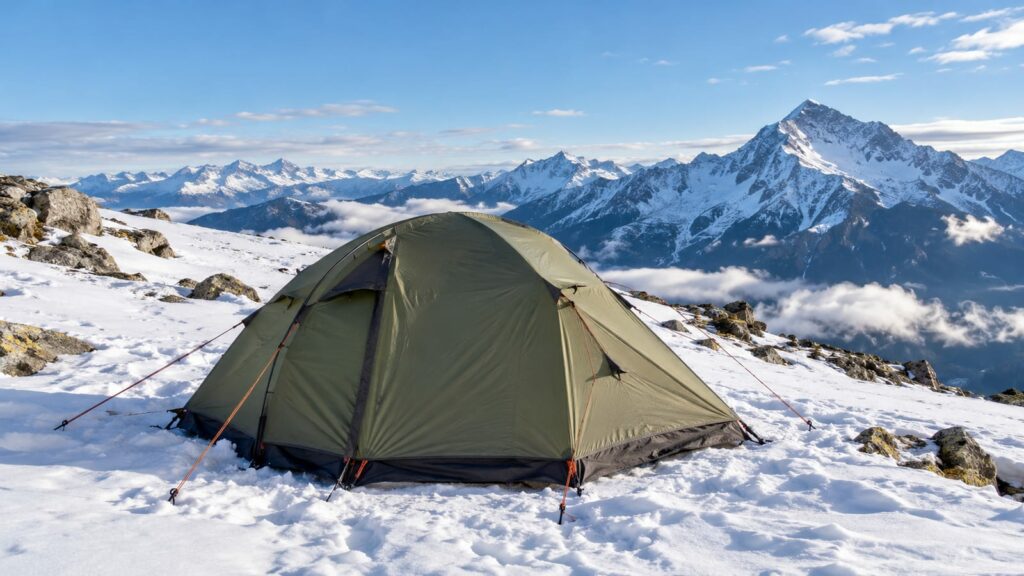
The Hilleberg Nammatj 2 GT is the tunnel-design option among these 4-season tents for extreme weather camping, for campers who can pitch it end-on to the wind and anchor it well. The Mountain Hardwear Trango 2 is a dependable alternative for demanding winter trips, while the MSR Remote 2 is easier to live with when you want freestanding setup and a proper vestibule.
Last updated: 2026-10-19
A four-season tent still won’t fix a bad site, poor anchors, or a storm that exceeds its design. Pick the shelter for the weather you’ll face and the miles you’ll carry it.
The four best 4-season tents for extreme weather camping
These four tents cover different jobs. The Nammatj 2 GT favors storm protection and long-term durability. The Trango 2 favors dependable winter shelter. The Remote 2 makes setup and daily use easier, while the NEMO Kunai 2 saves weight for less severe conditions.
| Tent | Best use | Design | Interior space | Setup | Packability | Verdict |
|---|---|---|---|---|---|---|
| Hilleberg Nammatj 2 GT | Serious winter backpacking and exposed storms | Tunnel, needs guying | Good | Moderate | Moderate | Tunnel option |
| Mountain Hardwear Trango 2 | Snow camping and alpine trips | Expedition dome | Very good | Moderate | Heavy | Dependable alpine pick |
| MSR Remote 2 | Harsh weather with easy setup | Freestanding | Very good | Easy for a four-season tent | Heavy | Best freestanding option |
| NEMO Kunai 2 | Shoulder-season storms and moderate winter trips | Lighter four-season | Compact | Easy | Lighter | Best lighter option |
The Nammatj 2 GT is worth the money if you’ll camp in exposed places and keep the tent for years. Its tunnel design handles wind well when pitched correctly, but it needs a sensible site and solid anchors.
The Trango 2 is a strong choice for many winter campers. It gives you serious snow and wind protection in a proven alpine design. You’ll carry more weight, though, and its bulk is obvious after a long approach.
The Remote 2 earns its place through livability. Its freestanding design simplifies setup on rocky ground, and the vestibule gives wet boots and bulky packs somewhere to go. That comfort comes with extra pack weight.
The NEMO Kunai 2 is the one to choose when shoulder-season storms are the main concern. It is lighter and easier to carry than the heavier expedition shelters here. Still, it is not built for sustained high-alpine abuse or deep, prolonged snow loading.
What makes a four-season tent different
A four-season tent uses a stronger structure and a more weather-focused inner than a standard three-season shelter. You get fewer mesh panels, sturdier poles, stronger fabrics, and better control of wind-driven snow.
That design helps in several ways:
- Wind: Stronger pole systems and lower profiles reduce movement in gusts.
- Snow: The roof and pole structure are built to carry more snow before sagging becomes a problem.
- Spindrift: Tighter inner fabric and lower openings keep fine snow from blowing through the shelter.
- Cold: Less mesh blocks drafts and helps the tent hold warmth from your sleeping system.
- Rough ground: Stronger anchors and poles cope better with rocky camps where perfect stakes are unavailable.
- Storm pitching: Tents whose inner and fly go up together, like the Hilleberg, keep the inner dry during setup. Inner-first tents do not.
A three-season tent can survive winter on a calm night. That does not make it a winter shelter. The first hard wind often exposes the difference through flapping fabric, bent poles, and snow blowing through the mesh.
Four-season construction also creates costs. The tent may weigh more, pack larger, vent less freely, and feel warmer than you want during mild weather. You’re buying a wider safety margin, not free comfort.
How these extreme weather tents were judged
The useful question is not which tent has the most impressive product copy. It’s which shelter keeps working when your hands are cold, the ground is frozen, and the forecast has stopped being polite.
These tents are compared on six practical areas:
- Safety: Can the structure handle serious wind and snow when pitched properly?
- Weather resistance: Does the design limit drafts, wet-out, spindrift, and snow buildup?
- Livability: Can two people change clothes, manage wet gear, and sleep without fighting the walls?
- Packability: Is the shelter worth its weight on the approach?
- Repairability: Can you manage a damaged pole, torn fabric, or broken anchor in the field?
- Total cost: Does the extra money buy useful protection, or just a nicer hang tag?
Setup on bad ground matters too. A tent that pitches beautifully on soft soil may become irritating on rock, hard snow, or a cramped ledge.
For lighter shelters, carry distance and shoulder-season use count for more. Heavier alpine tents should deliver stronger storm handling and more interior room. That’s only fair. A tent that weighs like a small shed should do more than look serious beside the car.
What do the published specs say?
Mountain Hardwear lists the Trango 2 at a regular price of $1,050, with a minimum weight of 8 lb 7.3 oz, a 40 sq ft floor area, and a 38 in interior height. Its packed size is 8 x 24 in, which is the bulk you’ll notice on a long approach.
The Hilleberg Nammatj 2 GT is listed with a product weight of 3.3 kg by PriceSpy. The retailer Soellaart gives a height of 95 cm and a packed size of 51 x 18 cm.
For the NEMO Kunai 2, CleverHiker lists dimensions of 82 x 50 x 41 in (length, width, height). Its reviewers found the 82-inch floor length and single door a little cramped when sharing the tent with a partner and bulky cold-weather gear.
These figures come from different sellers, and a minimum weight is not the same measure as a full product weight. Use them to size up each tent, not to rank the four against each other.
Hilleberg Nammatj 2 GT: the tunnel-design option
The Hilleberg Nammatj 2 GT is our pick for exposed, stormy camps because it puts storm security first without becoming useless for real backpacking. Its tunnel design sheds wind well when you orient it correctly, and the extended vestibule gives you room for packs, boots, and cooking tasks that don’t involve open flames.
The Nammatj 2 GT is a good fit for:
- Exposed winter routes
- Windy alpine camps
- Long-distance trips where the same tent must earn its weight
- Two hikers carrying moderate gear
- People who value durability over the lightest possible load
The tunnel setup is the main tradeoff. You need usable anchors at both ends, and the tent depends on correct orientation. Pitch it across the wind and you’ve made the storm do extra work for you.
Site selection matters more here than many buyers expect. A tunnel tent can handle ugly weather, but it still needs a protected pitch with solid anchor points. On bare rock or thin snow, setup takes more thought than dropping a freestanding tent into place.
The extended vestibule is a real field advantage. It gives you somewhere to strip wet layers and store a pack without blocking the sleeping area. That space earns its keep after a long day in sleet.
The Nammatj 2 GT is not the pick for fast, light summer miles. It is also too much tent for casual winter camping near the car. For serious hikers who expect wind, snow, and repeated field use, keep it high on the list.
Mountain Hardwear Trango 2: the dependable alpine shelter
The Mountain Hardwear Trango 2 is a dependable four-season tent for demanding snow and alpine trips. It has the sturdy, enclosed design winter camping requires.
The Trango 2 suits you if:
- You camp in deep snow or harsh winter weather
- You want a proven alpine shelter
- You can accept a heavier carry
- You spend more time at winter camps or basecamps than on fast traverses
- You want a tent that feels substantial in rough conditions
Its main weakness is simple: you’ll notice the weight before you notice almost anything else. On a short approach, that may be a fair trade. After several miles with food and water, your shoulders may offer a less generous review.
The interior gives two people enough room for winter layers and bulky sleeping bags. It is more practical for storm days than a compact climbing shelter, especially when you’re stuck inside waiting for wind to ease.
Setup is not the reason to buy it. The structure is dependable, but winter gloves and frozen ground make every pole and anchor more annoying. Practice at home before your first storm pitch.
Mountain Hardwear lists the Trango 2 at a regular price of $1,050. You’re still paying for serious gear, but this is not a false economy. Skip it only if the carry is long enough to make its bulk a daily problem.
MSR Remote 2: the practical freestanding shelter
The MSR Remote 2 is the best freestanding tent for harsh weather when setup speed, wind resistance, and vestibule space matter more than pack weight. The Wise Adventurer found the MSR Remote 2 “the best winter tent currently available for pretty much anything,” and that matches its practical design strengths.
The Remote 2 works well for:
- Rocky camps where stakes are awkward
- Winter trips with frequent setup and breakdown
- Two people carrying bulky cold-weather gear
- Campers who want a useful vestibule
- Hikers who dislike wrestling a tunnel tent into position
Freestanding setup is the big advantage. You can position the tent before committing to anchors, and you can lift or shift it when the ground choice turns out to be poor. That saves time when wind is building.
The vestibule also makes daily life easier. Wet footwear, snow-covered packs, and cooking equipment need somewhere to go. A small vestibule turns every task into a shuffle, which gets old before the weather improves.
The catch is weight. The Remote 2 is a poor fit for a long approach where every item gets counted after mile 10. It makes more sense when the route is short, the conditions are rough, or the extra room keeps two people from fighting their gear.
Use the Remote 2 when convenience has safety value. A tent you can pitch correctly in bad weather is worth more than a lighter tent that leaves you guessing.
NEMO Kunai 2: the lighter shoulder-season specialist
The NEMO Kunai 2 is the best lighter four-season camping tent for shoulder-season storms and moderate winter trips. It gives you more weather protection than a summer shelter without demanding the bulk of a full expedition tent.
Choose it for:
- Cold rain and early winter storms
- Shoulder-season backpacking
- Moderate snow conditions
- Short winter trips
- Hikers who care about pack weight
The Kunai 2 can feel cramped for two people with winter gear, so manage gear carefully. Keep wet layers organized, use the vestibule well, and don’t expect palatial living when the storm keeps you inside.
Its lighter construction also sets a limit: it is not a first choice for sustained high-alpine storms, heavy snow loading, or exposed camps where the weather may stay violent for a long period.
That doesn’t make the tent weak. It makes the job narrower. A lighter shelter can be the right tool when the forecast, route, and bailout options support it.
The Kunai 2 is worth considering for hikers who want one tent for cold shoulder-season trips and occasional winter use. It is a poor choice if you’re buying it as a substitute for an expedition shelter.
The best all weather tents for different trips
Each of these shelters makes more sense for a different trip. Match the tent to the exposure, carry, and time you’ll spend inside.
For exposed alpine missions
Choose the Hilleberg Nammatj 2 GT when wind security and long-term durability matter most. Its tunnel structure rewards careful site selection and correct orientation.
If you need more detail on shelters for high-altitude wind, read our guide to wind-resistant tents for high-altitude camping.
For winter backpacking
Choose the Mountain Hardwear Trango 2 when you need serious protection and can carry a heavier shelter. It suits slower winter trips better than fast-and-light missions.
For basecamp use
Choose the MSR Remote 2 when you’ll spend several nights in one place. The freestanding setup and usable vestibule matter more as living space becomes part of the trip.
For shoulder-season storms
Choose the NEMO Kunai 2 when cold rain, wind, and moderate snow are likely. It keeps pack weight under control without pretending to be an expedition shelter.
If price decides it
Mountain Hardwear lists the Trango 2 at $1,050. If price decides it, compare current prices on the Hilleberg Nammatj 2 GT, MSR Remote 2, and NEMO Kunai 2 against that figure before you buy.
A low price is not the only cost. Replacement poles, damaged fabric, missing anchors, and a tent you stop carrying all count too.
Four-season tent tradeoffs that matter after the miles
The biggest mistake is comparing tents only by weather claims. After a long approach, small design choices become the whole trip.
Packed size
A tent that fits poorly inside your pack can steal room from food, insulation, or extra layers. That matters on winter trips, where your sleep system and clothing already take more space.
Condensation
Four-season tents often use less mesh, which helps block spindrift and drafts. It can also trap more moisture from breathing, wet clothing, and melting snow.
Vent early. Keep vents open when conditions allow, and dry wet gear before bringing it into the sleeping area. Condensation is not a product defect every time. Sometimes the tent is doing exactly what a sealed shelter does.
The basic process behind this is condensation, where water vapor turns into liquid on a colder surface.
Interior room
A two-person tent needs to hold two people, winter bags, clothing, and some water bottles. If the walls brush your sleeping bag, moisture can transfer into the insulation.
Extra room also helps when wind keeps you inside. A cramped tent feels smaller every hour.
Ventilation
A tent with excellent snow protection can still become unpleasant if airflow is poor. Open vents before the inner walls become wet, even if that means wearing another layer.
You can’t remove all condensation during a cold storm. You can keep it from becoming a soaked sleeping bag.
Pitching difficulty
Tunnel tents can be excellent in wind but need proper anchors and orientation. Freestanding tents are easier to reposition and often simpler on rocky ground.
Practice in calm weather first. You don’t want your first look at the pole layout to happen with numb fingers.
Durability
Strong fabrics and poles add weight, but repairs in a remote camp are not free. A broken pole can turn a comfortable shelter into a forced bailout.
Carry repair tape, a pole sleeve, spare cord, and enough knowledge to use them. Expensive fabric still tears when a sharp rock gets involved.
Buying advice for an extreme weather tent
Start with the conditions you’ll face, then check the details that affect safety and comfort.
Use this checklist:
- Poles: Look for a strong, well-supported structure with enough crossing and attachment points for the expected wind and snow.
- Fabric: Check whether the shelter uses a durable fly, a protected inner, and a floor suited to frozen or rough ground.
- Anchors: Make sure the design gives you useful anchor points for soil, rock, and snow. A tent that depends on perfect stakes has a narrow field life.
- Vestibules: You need room for wet boots, a pack, and basic sorting. Tiny vestibules save weight but create clutter.
- Snow handling: Check how the roof shape, pole layout, and fabric tension deal with snow buildup.
- Ventilation: Look for vents you can adjust from inside. Storm mode should not mean sealing yourself into a damp bag.
- Repair parts: Confirm that replacement poles, clips, and fabric repair options exist before a trip.
- Packed size: Make sure the shelter fits your pack beside your cold-weather sleep system.
- Use case: Decide if you need an alpine tent, a winter backpacking tent, or a basecamp shelter.
Don’t pay extra for a claim you can’t connect to trail conditions. “Expedition” sounds useful on a hang tag. What matters is whether the structure stays stable, the vestibule holds your gear, and the tent can be repaired far from a shop.
If you’re comparing lighter shelters, our guide to ultralight tents for backpacking covers the packability tradeoff. Just remember that a lighter tent may give up snow capacity, interior space, or ease of pitching.
How to use a four-season tent safely in severe conditions
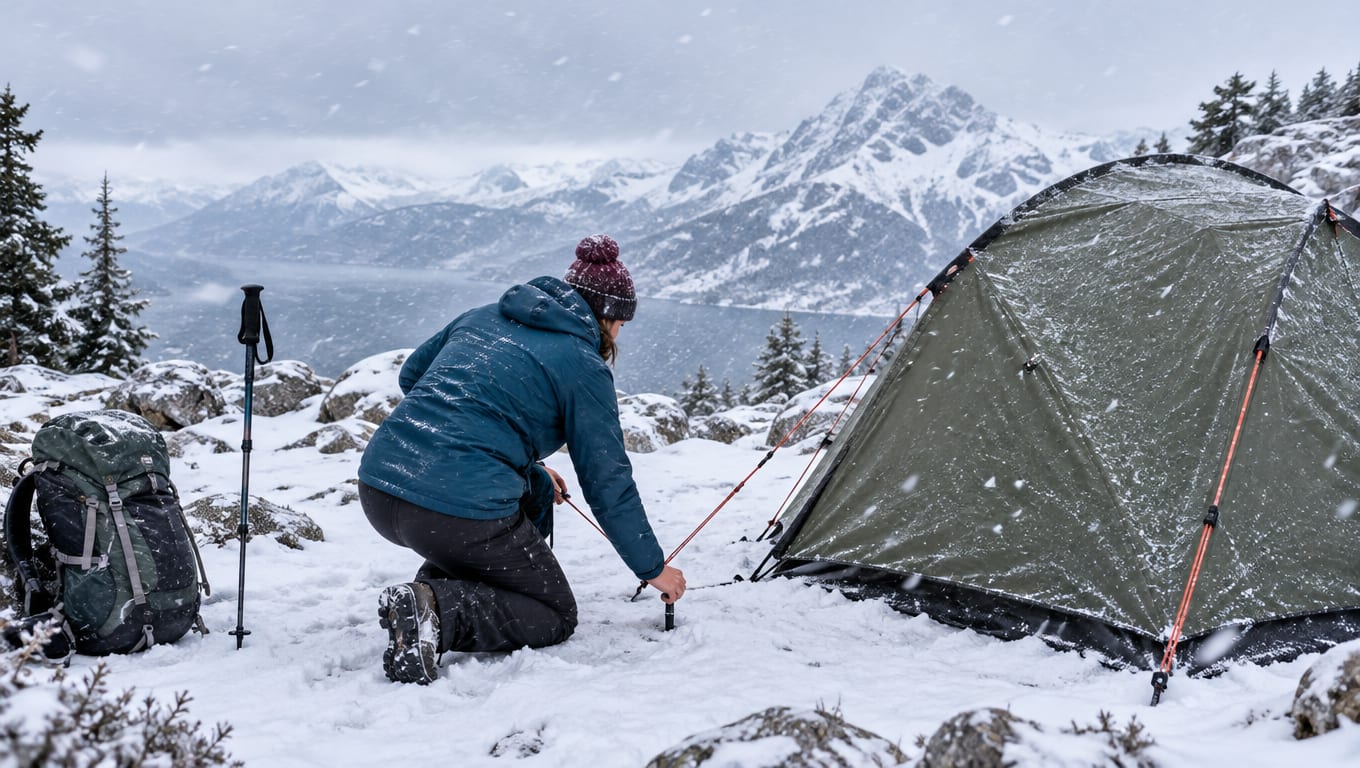
A strong tent needs a strong setup. Most storm problems begin with the site, the anchors, or the decision to stay too long.
Choose the site before the storm arrives
Avoid avalanche paths, cornice zones, gullies, exposed ridgelines, and places where falling ice or rock can reach camp. Look for wind shelter without choosing a depression that collects cold air or blowing snow.
A safe site should give you:
- Stable ground
- Reliable anchors
- Drainage if snow melts or rain arrives
- Protection from falling debris
- Enough room to pitch without stretching the fabric
Check the National Weather Service winter safety guidance before heading into severe conditions. A tent is shelter, not permission to ignore the forecast.
Anchor everything properly
Use all major guy points when wind is expected. In snow, bury anchors deeply and pack the snow firmly around them. In rock, use cord around stable features rather than trusting a loose stone.
Tension the lines evenly. Over-tightening one side can distort the structure and pull doors out of alignment.
Manage snow loading
Brush snow from the fly before it builds into a heavy, sagging layer. Use a soft tool or your gloved hand. Don’t stab the fabric with a pole tip or trekking pole.
If the storm is long and heavy, clear the roof regularly. A four-season tent is built for snow, but “built for snow” does not mean “ignore the snow until morning.”
Ventilate during the storm
Keep vents open when the wind and snow allow it. Dry wet layers outside the sleeping bag when possible. Shake frost from the inner before it melts into your insulation.
Two people breathing inside a closed tent can create a damp morning. That’s physics, not a personal failure, but your sleeping bag still gets wet.
Pitch before conditions turn bad
Set up while you can still see the anchor points and handle the poles. Put on your shell before your base layers are soaked. Keep the tent body and fly secured as they come out of the pack.
A rushed storm pitch is where gear gets lost. Put every small item in one place so a gust doesn’t carry it downhill.
Know when to leave
If poles deform, anchors fail repeatedly, water enters faster than you can manage, or the site becomes unsafe, stop treating the tent as the solution. Move to a safer location or use your bailout plan.
No shelter is designed for every storm. The best four-season tent buys time and protection. It does not cancel terrain, avalanche risk, or a worsening forecast.
Final verdict: which tent should you buy
Buy the Hilleberg Nammatj 2 GT if you face exposed wind, serious winter conditions, and repeated use. Its tunnel design suits exposed camps when you can anchor and orient it well.
Buy the Mountain Hardwear Trango 2 if you want proven protection for demanding snow and alpine trips. It is heavier, but the protection is worth the carry when winter shelter matters more than speed.
Buy the MSR Remote 2 if you want a freestanding tent with easier setup and a vestibule you’ll actually use. It is the practical choice for rocky camps, short approaches, and harsh weather where livability matters.
Buy the NEMO Kunai 2 if your trips center on shoulder-season storms and moderate winter conditions. It keeps weight under control, but don’t mistake a lighter four-season tent for an expedition shelter.
Skip all four if you only camp in warm, mild weather. A three-season tent will usually ventilate better and carry easier. Four-season protection is worth its weight when the forecast, route, and consequences justify it.
FAQ
Can a four-season tent replace a three-season tent?
It can, but you may not enjoy using it in warm weather. Four-season tents usually ventilate less freely and weigh more, so they can feel hot and bulky on summer trips.
Are four-season tents safe in extreme storms?
They can handle severe conditions within their design limits when you choose a safe site and pitch them correctly. No tent makes avalanche terrain, exposed ridges, or dangerous wind safe by itself.
Is a freestanding tent better for winter camping?
A freestanding tent is easier to position on rock and hard ground. A well-pitched tunnel tent can offer excellent wind performance, so the better choice depends on your campsites and storm priorities.
Should two people buy a three-person winter tent?
Extra space can improve comfort and keep winter gear away from the walls. However, the larger shelter may weigh more and require a bigger protected site, so it only makes sense when the added room earns its place in your pack.
Do you need a four-season tent for shoulder-season rain?
Usually, no. A strong three-season tent may handle cold rain well, but a four-season model becomes useful when strong wind, wet snow, spindrift, or frozen ground are part of the forecast.
