
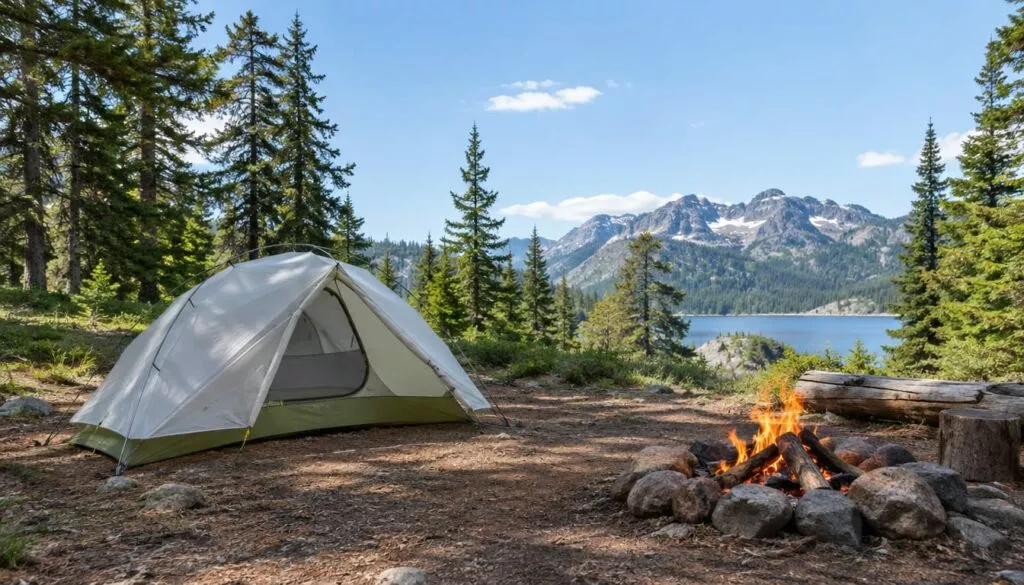
Most tent flame retardants guard against a mistake you shouldn't be making in the first place. Buy a flame-retardant-free tent for ordinary backpacking and car camping. Many backpacking tents and plenty of budget car-camping tents now ship untreated. You skip a chemical you handle every time you pitch, and you give up nothing that keeps rain out. Flame retardant free tents ask one thing in return: keep stoves, campfires, lanterns, and sparks well away from the walls. A treated tent was never a safe place for flame anyway.
Are Flame Retardant Free Tents Worth It?
Yes, for most hikers and campers. A tent's job is to shed rain, block wind, keep bugs out, and pitch fast when you're tired. None of that depends on a flame-retardant treatment, and many backpacking brands have already dropped it.
The case for a treated tent is narrow. It covers organized settings with written rules, such as some group camps, events, and work sites. Everywhere else, the chemical rides in your pack for trail miles without earning its place.
There's one condition, and it isn't optional.
An untreated tent means stricter habits around flame. Cook outside it, pitch it upwind and well back from the fire ring, and never bring a candle, heater, or lit stove under the fly. Those are the same habits that keep you safe in a treated tent, so the change is smaller than it sounds.
What "Flame-Retardant-Free" Means on a Tent Label
The phrase sounds simple, but brands use it loosely. Some mean nothing was added anywhere. Others mean only the fly is clean, or they use soft green words that never mention fire chemistry.
| Label language | What it usually means | What to do |
|---|---|---|
| "No flame retardants" or "FR-free" | No added chemical treatment on the listed parts | Confirm it covers fly, body, and floor |
| "Inherently flame resistant" | The fiber resists burning without a topical treatment | Ask which fiber; rare on hiking tents |
| "FR-free fly" | A claim about one part only | Ask about the floor, body, and webbing |
| "Eco-friendly," "non-toxic," "PFAS-free" | Says nothing about flame retardants | Ignore it for this question |
| "Meets CPAI-84" | Passed a flammability test, often by using a treatment | Assume treated unless told otherwise |
The claim you want covers the whole tent: fly, inner body, floor, and any coated mesh or trim. Inherently flame-resistant fibers exist, but they're heavy and expensive. That's why they almost never show up on backpacking tents.
If a brand calls a thin nylon fly "inherently resistant," ask what fiber they mean. A vague answer tells you plenty.
Why Hikers Skip the Treatment
You touch your tent more than almost any other gear. You stuff it wet, pull stakes bare-handed, roll the fly against your chest, and sleep with your face near the walls. Topical flame retardants can rub off onto skin and settle into dust. That handling adds up over years of ownership.
Researchers have found flame retardants on campers' hands after they set up treated tents. That doesn't prove one trip causes harm. Still, it shows the chemical leaves the fabric and lands somewhere, and that somewhere is you, your kids, or your dog.
The smaller reasons stack up too:
- Smell. New treated tents often carry a chemical odor that takes several airings to fade.
- Kids. Small children crawl on tent floors and then put their hands in their mouths.
- Home storage. A treated tent in a closet or garage keeps shedding into household dust between trips.
None of these is dramatic on its own. Together, they make the treatment a small cost you pay on every real trip for protection you should rarely need.
The Real Tradeoff: Fabric Will Still Burn
Removing the treatment changes how fast a tent fails near flame. It doesn't change whether it fails. Nylon and polyester shrink away from heat and melt, and thin untreated fabric can burn quickly once lit.
Melted synthetic also drips and sticks to skin. That's the part that hurts people.
A treated tent burns more slowly and is more likely to go out once the flame source is gone. That buys seconds to get out, which matters. However, a treated fly still melts, holes, and smokes. It will still catch from a stove flare or a tipped lantern.
Treat the chemical as a thin margin for accidents and distance as the wide one. Cooking inside any tent also adds carbon monoxide risk, and no fabric treatment touches that. If you camp beside fires often, our guide to fireproof tents covers what fire-resistant fabrics can and can't do.
How to Camp Safely Without the Treatment
Most tent fires start with a choice. Someone cooks in the vestibule, runs a fuel heater, or pitches too close to the fire ring because the flat spot was there. Fix those choices and the missing treatment stops mattering.
- Pitch upwind of the fire and well back from it. Evening wind shifts, and sparks travel farther than you expect.
- Cook in the open, away from the tent. If it's raining, rig a separate tarp and cook under that.
- Keep fuel outside and capped. Refill stoves away from camp and let spilled fuel evaporate before you light anything.
- Leave candles, flame lanterns, and fuel heaters at home. A headlamp or battery lantern does the job.
- Put the fire out cold before bed. Drown it, stir it, and drown it again until it's cool to the touch.
- Keep a knife inside, within reach. It's your second door.
If the tent catches fire
Get out first. Don't try to slap out flames on a nylon wall, because melting fabric sticks to hands. If fire blocks the door, cut through the far wall and step out.
Once you're clear, check your clothes and stop, drop, and roll if anything is burning. Then stop the fire from spreading into dry grass or duff. Cool burns with clean water, and get help for anything beyond a small one.
Ember Resistance Is a Different Problem
Embers land, sit, and burn small holes. Whether they do depends mostly on fabric weight, weave, coating, and how far you pitched from the fire. A chemical treatment helps less than most people assume.
Here's how common tent fabrics handle stray sparks. Denier, a measure of fiber thickness, shows up on every spec sheet:
- Thin ripstop nylon or polyester (typical backpacking tents) melts a pinhole almost on contact.
- Heavier, higher-denier polyester (typical car camping tents) holds out a little longer but still melts.
- Cotton or poly-cotton canvas chars instead of melting, so a spark usually leaves a scorch mark you can live with.
- Silicone and polyurethane coatings don't stop embers. Both melt along with the fabric under them.
Ember resistance comes from distance and fabric weight, not chemistry. A treated thin fly still collects holes. If your trips revolve around campfires, canvas or a heavy fly is the better tool. Pitching downwind of the fire is the mistake to avoid.
Patch kits fix pinholes. Still, a dozen patches over the sleeping area eventually mean a fly that weeps in steady rain.
Waterproofing Never Depended on Flame Retardants
Rain protection comes from coatings, seams, and design. Polyurethane (PU) or silicone coatings make the fabric waterproof. Taped or sealed seams stop leaks at the stitching, and a fly that pitches tight sheds water instead of sagging onto the inner tent.
Ventilation decides how much condensation drips on you at 3 a.m. Flame retardant plays no part in any of it. Sometimes treated fabric gets pitched as part of a "weatherproof" package. Even then, the water performance comes from the same coatings untreated tents use.
The fire-retardant waterproof canopies that fill search results are mostly pop-up event shelters. Fire marshals at markets and festivals often require certified fabric, so those canopies are built to pass inspection. They're heavy, open-sided, and meant for a vendor booth with an inspector walking the rows.
The Health and Environmental Case Against Added Flame Retardants
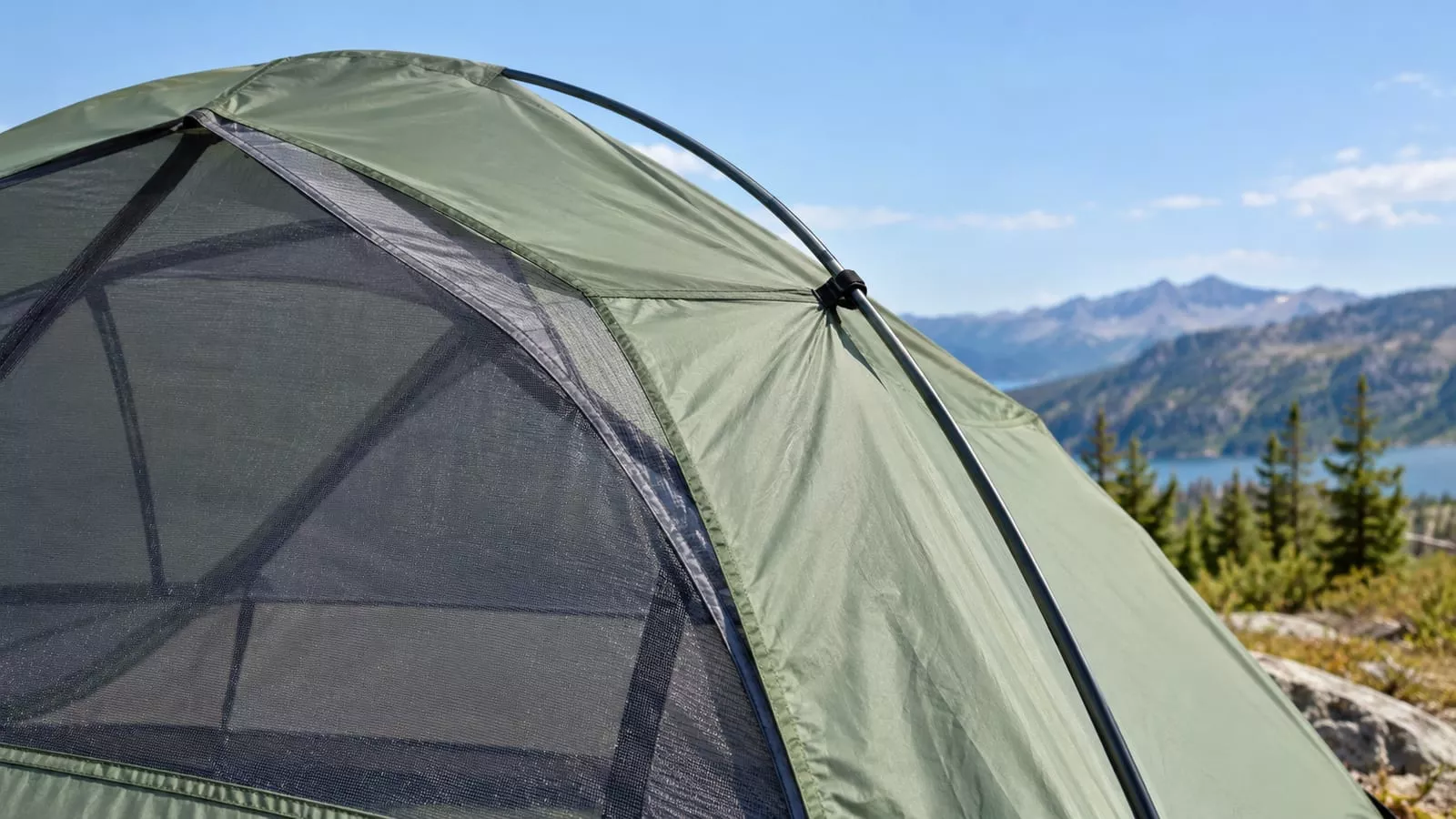
The National Institute of Environmental Health Sciences tracks research on flame retardants. Studies have linked some of them to hormone disruption, effects on child development, and cancer. The main exposure routes are skin contact, household dust, and hand-to-mouth habits. That's why handling matters more than you'd guess.
Keep the evidence in proportion. Tent-specific research is limited, and the risk from a few nights a year is unknown. Meanwhile, some older flame retardants were phased out after health and persistence concerns, and some of their replacements now face similar questions.
The environmental side reaches beyond your campsite. Many flame retardants break down slowly and build up in wildlife and sediment. Manufacturing releases them, and a worn-out tent carries its load to the landfill.
You don't need certainty to skip a chemical that adds nothing to your weather protection. Avoiding it costs you nothing on the trail.
Why Tent Fire Rules Became Common, and Why Labels Still Vary
Tent fire standards grew up when campers used open-flame lanterns and heaters inside shelters. The industry's answer was CPAI-84, a voluntary flammability standard for tents. Some states later wrote it into law. Brands didn't want separate inventories for each market, so many sold treated tents everywhere, including in states with no such rule.
The federal picture is easy to misread. The Consumer Product Safety Commission (CPSC) says importers and manufacturers of products likely to be used near flame, such as outdoor tents, should make sure those products aren't highly flammable. The federal flammable solids testing method, listed as 16 CFR Part 1500.44, is one testing protocol used for outdoor tents. It isn't a tent-specific federal flammability requirement, and CPAI-84 itself remains voluntary.
That patchwork explains the mixed labels. Rules have shifted over time, and more brands now sell untreated tents. Other countries, event organizers, and group camps set their own requirements, so the same model can carry different tags in different markets.
Legal compliance answers a seller's question: can this tent be sold or used here? Your question is different. You're deciding what you want to handle, sleep against, and store at home for years.
How Do You Verify a Brand's Chemical Disclosure?
Check in this order, and stop when you get a clear, specific answer:
- Product page and spec sheet. Search for "flame retardant," "FR," and "CPAI-84." A good claim names the parts it covers.
- Sewn-in labels. A CPAI-84 or flammability compliance tag often signals treatment. A generic "keep flames away" warning appears on untreated tents too, so it tells you nothing about chemistry.
- Brand chemical policy. Some brands publish restricted-substance lists or statements about flame retardants across their whole line.
- Material details. Fabric, coating, and floor specs sometimes reveal a treated component the headline claim skipped.
- Written confirmation. Email customer service and keep the reply.
A short message gets a clearer answer than a vague one:
Is any flame-retardant chemical applied to the fly, inner body, floor, mesh, webbing, or any other part of this tent model? If yes, which parts?
If the answer dodges the question, assume the tent is treated. The same goes for used and older tents. Unless the model is documented as untreated, a secondhand tent from years back most likely came with the treatment.
How to Choose One That Works After Mile 10

Chemical-free status is a filter, not the whole decision. Once a tent passes it, judge it like any other shelter:
- Fit: enough length that your bag doesn't press the footbox walls, and enough headroom to sit up.
- Weather: a fly that reaches low, solid guyout points, and a storm pitch that holds when wind gets rude.
- Space: vestibule space for boots and a pack, so wet gear stays off your sleeping bag.
- Weight: worth the weight for how far you carry it. Car campers can ignore ounces; long-distance hikers can't.
- Setup: a pitch you can manage in the dark, in wind, with cold hands.
- Durability: a floor that survives rocky sites, or room in the budget for a footprint.
- Ventilation: high vents and two doors cut condensation on humid nights.
- Price: good enough beats fancy. Plenty of budget hiking tents now ship untreated.
For car camping with kids, the same checklist applies to family tents. Put extra weight on floor space and a door you can use without stepping on someone.
When Is a Flame-Retardant-Free Tent the Wrong Tool?
Some settings require certified fire-resistant shelters, and your preferences don't override the rules. Common examples include organized youth camps, festivals, fairs, vendor events, workplaces, and some group campgrounds. In those places, buy, rent, or borrow a compliant tent.
Skip the spray-on fix. Home-applied flame retardant goes on unevenly and may damage coatings. It adds the very exposure you were avoiding, and it won't earn the certification an inspector wants to see.
Winter hot tents are a separate category. These shelters are built around a wood stove with a stove jack and heat-tolerant fabric. An ordinary backpacking tent, treated or not, is the wrong shelter for that job.
FAQ
Do flame-retardant-free tents cost more?
Usually not. Dropping the treatment removes a manufacturing step, and untreated models now show up at every price level. When one tent costs more than another, look at fabric, poles, and design first.
Can you wash flame retardant out of a tent you already own?
Not reliably. Scrubbing and detergent can strip waterproof coatings faster than they remove the treatment. A better plan is to keep using the old tent, air it out, wash your hands after packing it, and choose an untreated model when it's due for replacement.
Are canvas tents usually untreated?
Not always. Canvas tents sold for outfitters, events, and group use often carry a treatment to meet inspection rules. Ask the same component-by-component question you'd ask about a nylon tent.
Does a footprint or tarp need to be untreated too?
Check it if skin contact matters to you. Footprints and tarps get handled at every pitch, and some are treated even when the matching tent isn't. Ask the brand which parts the claim covers.
