
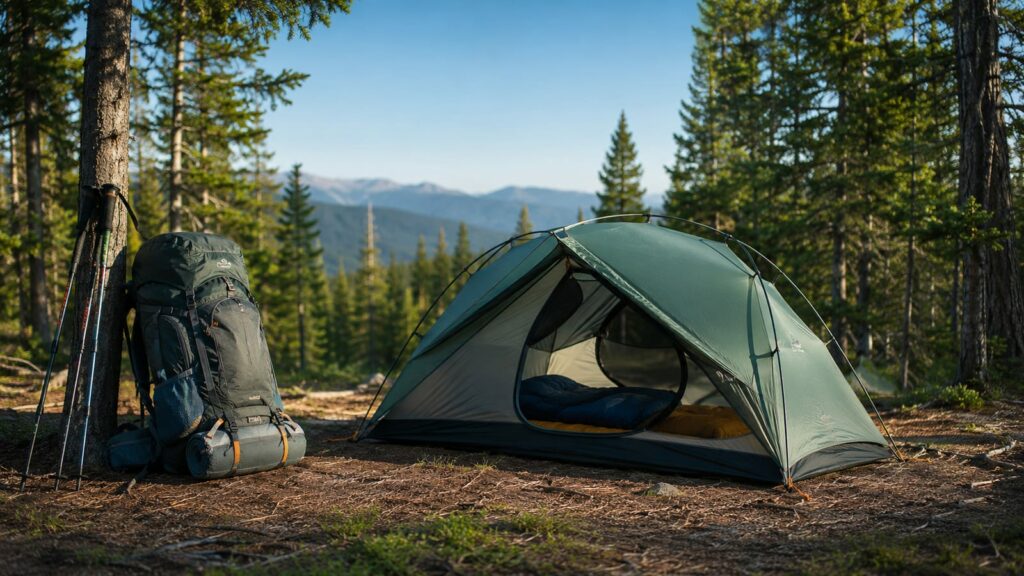
Compact tents come in three shapes worth buying: a freestanding double-wall two-person tent, a semi-freestanding version that trims a pole section, or a trekking-pole shelter that packs smallest because the poles are already in your hands. For most hikers, the two-person double-wall wins. Buy it for the space it saves inside your pack, not the number on the hang tag. Packed size matters. Still, a tent that pitches slowly, wets through at the seams, or presses damp fabric on your shoulder all night costs more than the space it saved.
What "compact tent" actually means in your pack
Compact is four things: packed length, packed girth, weight, and how much of the inside you can use. Marketing usually talks about one and stays quiet about the rest.
Packed length decides whether the tent rides inside your pack or gets strapped outside, where it collects rain and branches. Girth decides what else fits around it. A stuffed, shapeless tent often beats a tidy cylinder, because you can push it into gaps.
Usable interior is the part people forget. A tent with steep walls and a real vestibule feels twice the size of one with the same floor plan and sloped mesh that touches your face.
How small should a tent pack before comfort becomes the cost?
Small enough to disappear inside your pack, and no smaller. Once the tent stops dictating your pack size, further shrinking buys almost nothing on the trail.
After that point, the savings come out of your night. Shorter poles mean lower peak height. Thinner floors mean you carry a groundsheet anyway, which cancels part of the gain. Trimmed floor space means your bag touches the wall, and wall contact means a damp footbox by morning.
Here's the test that matters. Pack the tent, then pack everything else. If your food bag and layers still fit without a fight, the packed size is already small enough for the trips you actually do.
Why two-person is the right size for most solo hikers
A two-person backpacking tent is the sane default even if you always hike alone. The weight difference over a one-person model is usually small. The difference in livability is not.
Solo tents ask you to sleep in the exact posture the designer imagined. Sit up to cook, and your head is in the mesh. Bring a wet jacket, and it sleeps with you. Meanwhile a two-person floor gives you room for your pack, your boots, and a bad mood.
Rated sizes shake out roughly like this, and the third column is the one to read first.
| Rated size | What it comfortably sleeps | Where it earns its keep |
|---|---|---|
| 1-person | One hiker, gear in the vestibule | Fast, dry trips where every ounce is counted |
| 2-person | One hiker plus gear, or two friendly ones | Most backpacking, most of the time |
| 3-person | Two adults with room, or two plus a dog or kid | Long storms, shoulder-season trips, parents |
Rated capacity describes floor width and nothing else. Two-person means two people who like each other.
Tent designs that pack small without a miserable pitch
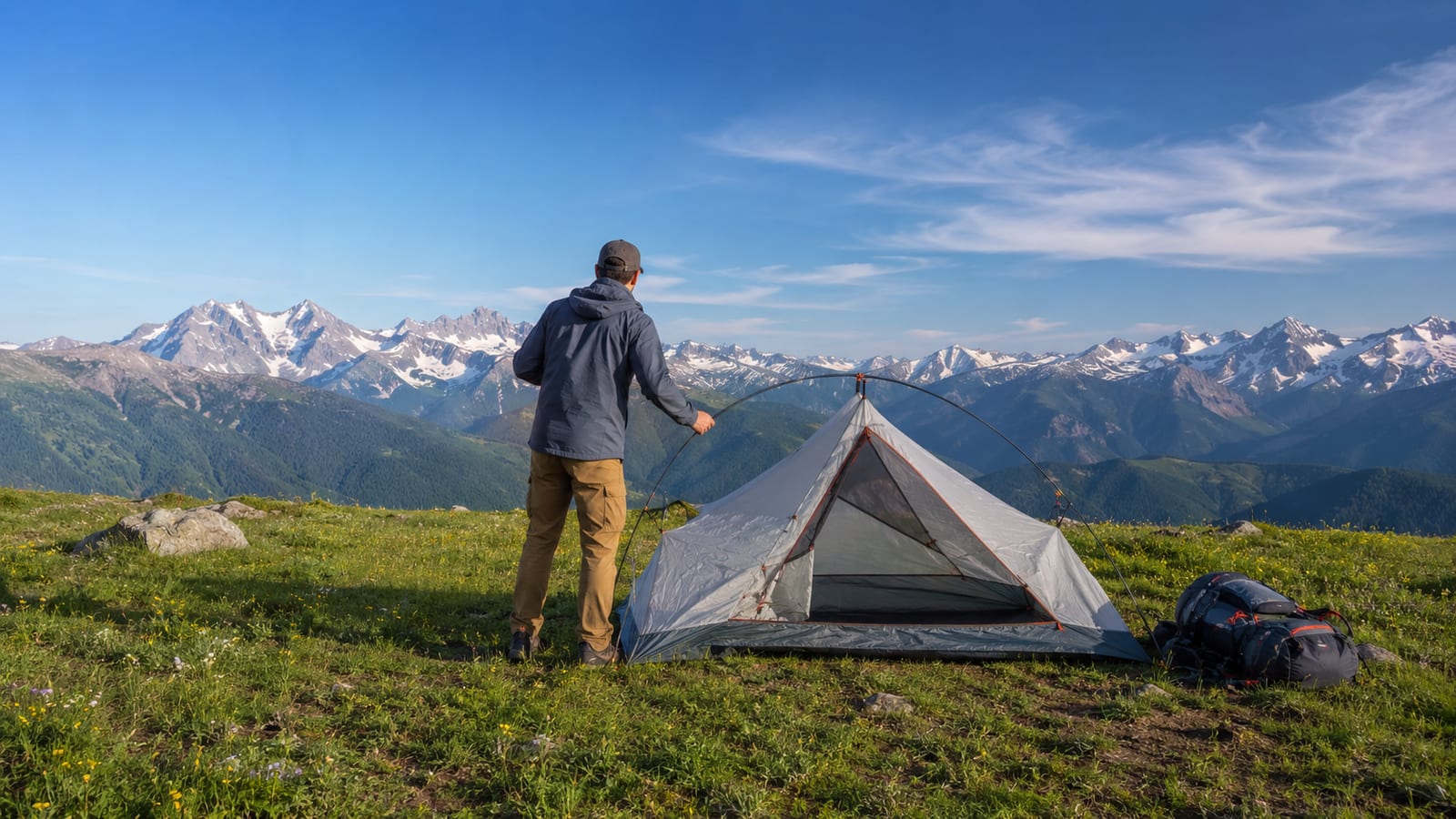
Freestanding tents pack largest because of the poles, and they're the easiest to pitch when you're tired. You can lift one and shake the dirt out. On rock, sand, or wooden platforms, that beats saving ounces.
Semi-freestanding designs cut a pole section and lose a bit of foot room. They still need stakes at the ends, so bring stakes that hold.
Trekking-pole shelters pack smallest, since the poles are already in your hands. However, they demand a decent pitch to work. Pitch one loose and it flaps, sags, and rains condensation on you at 3 a.m.
Single-wall shelters save weight and space, then hand you the condensation problem full-time. Choose one only if you'll manage venting every night.
Weight cuts that are fine, and cuts that bite
Some weight savings cost nothing. Fine cuts: fewer stuff sacks, lighter stakes for soft ground, no included footprint, a shorter pole set on a semi-freestanding design.
Cuts that bite: a floor thin enough to pinhole on granite, guy-out points sewn without reinforcement, zippers that snag on the first grit, and a fly that stops short of the ground. Light gear can be strong. Fragile gear fails politely at home and rudely in the field.
For reference on what a modern light two-person tent weighs, the NEMO Hornet OSMO 2P packs at 2 lb 8 oz (1.14 kg). That's a reasonable target for a shelter you'll trust in real weather.
If you want the sub-category in detail, our roundup of ultralight shelters for solo backpackers goes deeper on where the line sits.
The waterproofing details that matter more than the headline rating
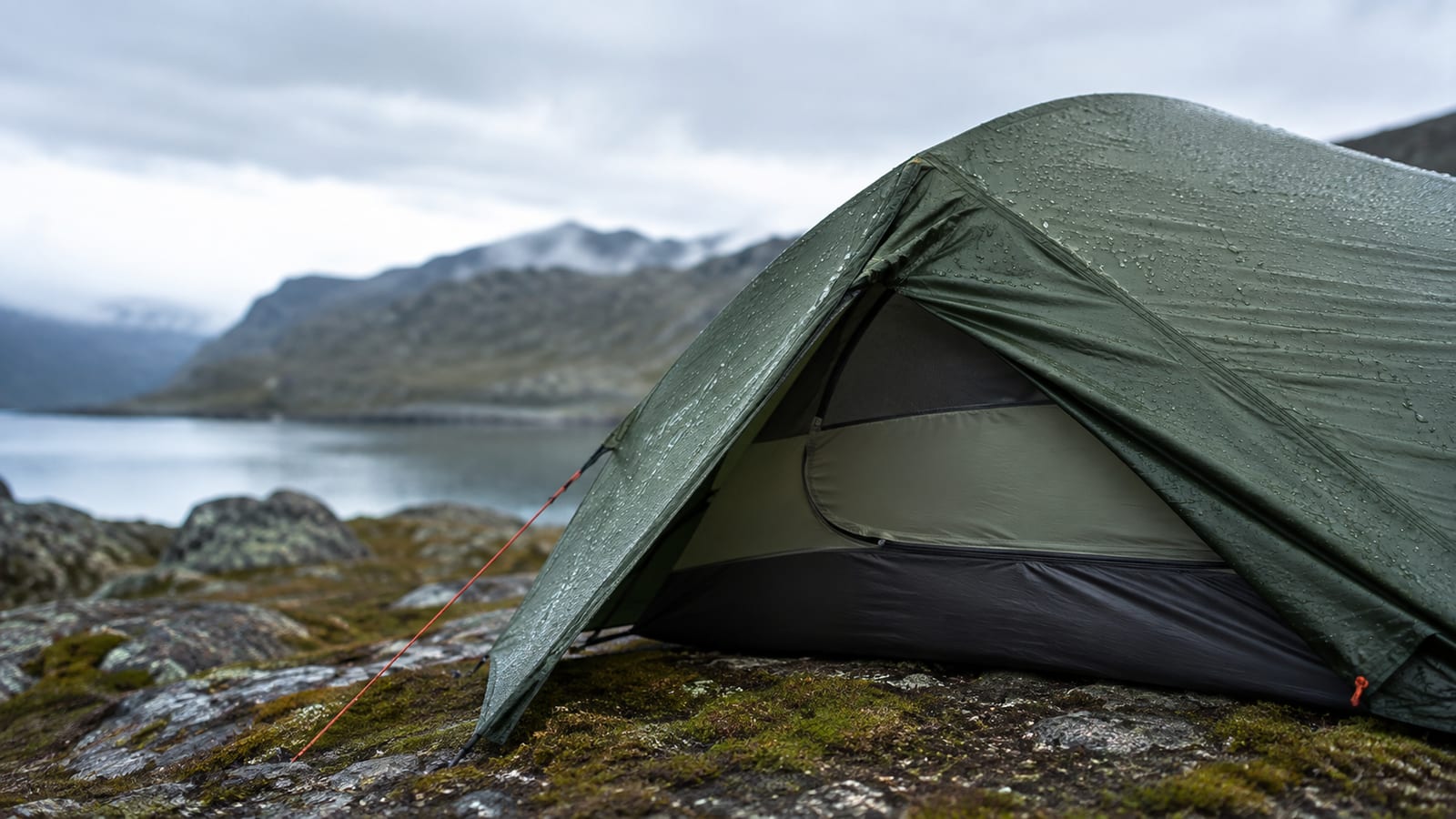
Fly coverage beats fabric ratings. A fly that reaches near the ground keeps splash off your mesh. A stubby one lets wind drive rain sideways into the tub.
Then look at the floor. A bathtub floor with walls that rise a few inches keeps you dry when water sheets under the tent. Flat floors with a seam at ground level leak eventually, whatever the numbers say.
Check whether the seams are taped or sealed from the factory. Many silnylon shelters ship unsealed and expect you to do it yourself. That's fine if you learn it before your first wet trip.
Ventilation is waterproofing too. Most "leaks" people report are condensation dripping off cold fabric. As a result, vents, a cracked vestibule, and a site with a little air movement do more for a dry morning than an expensive fly.
Can a compact tent handle wind, cold, and mountain nights?
A standard compact backpacking tent handles most three-season weather, including steady rain and gusty nights below treeline. It stops being enough when wind arrives with nothing to break it.
Signs you need more: exposed ridges, alpine passes, sustained shoulder-season storms, or snow load. For those, look for a fly with several guy points, poles that cross to brace the roof, and a low, wind-shedding shape.
Site choice does more than gear here. Pitch behind a rise, well clear of a shallow bowl that collects cold air and water. Stake the guy lines before you crawl in, because nobody re-stakes a tent in the dark by choice.
For dispersed sites and camping rules on public land, the USDA Forest Service is the place to check before you drive out.
Backpacking versus car camping: pick the tent for the trip
Backpacking and car camping want opposite things, so one tent for both usually gives you a bad version of each.
For miles under a pack, prioritize in this order:
- Carried weight, counting stakes, poles, and the footprint you'll actually bring
- Packed shape that fits inside the bag instead of swinging off the outside
- A small footprint, so tight, rocky, and root-bound sites still work
- Headroom to sit up and cook under the vestibule with the door shut
- Repairability: standard pole sections, patchable fabric, replaceable guy line
For trips that end at a car, packed bulk barely registers. Standing room, thicker floors, real doors, and easy setup win instead. Families in particular should stop optimizing for grams and read our comparison of two-person and four-person layouts before buying.
Overlanding shelters follow the same logic. Weight is the vehicle's problem, so buy for durability and living space.
Splitting a tent between two hikers
Split by volume, not by fairness theater. One person takes the tent body and stakes. The other takes the fly and the poles. That divides both the weight and the awkward shapes.
The person carrying the fly should carry the wet fabric on day two, since it rides outside a pack anyway. Meanwhile, whoever carries the poles owes the other some food weight, because poles are dense and unhelpful in a pack.
Agree on the split at the trailhead. Sorting it out in a parking lot beats sorting it out at mile eight.
What to test before you trust it overnight
Pitch the tent in your yard first, then take it down and do it again. Two pitches teach you more than reading the instructions three times.
Run through this before a trip that matters:
- Pitch it once after dark, with no manual and no help
- Hose the fly and floor, then check the seams and corners from inside
- Sit up in it, then lie down and see whether the wall touches your bag
- Stake every guy point and pull tight to find the ones that pucker the fly
- Load the vestibule with the pack and boots you'll actually bring
- Stuff it back in the bag and time it
Also check how it dries. Storing a shelter damp does more damage than one bad storm, which is why proper folding and storage is worth the ten minutes.
Shortcuts that waste money
Undersized vestibules are the most common false economy. You save a bit of coverage, then keep your wet pack inside with you and wonder why everything is damp.
Proprietary parts are the second. A tent with a custom pole hub or a one-off connector is one broken piece away from useless in the backcountry. Standard pole sections and a splint sleeve fix themselves.
Capacity claims are the third. A three-person shelter that sleeps three has no room for gear, and three-person weight punishes you all day for a night nobody enjoys.
Cheap stakes deserve a mention too. Manufacturers save money there first, and thin stakes bend in rock and pull straight out of sand. Replace them and keep the tent.
If you camp in genuinely wet country, spending on coverage and floor quality pays back faster than spending on grams, as our guide to tents built for heavy rain lays out.
FAQ
Do I need a footprint, or is that an upsell?
Bring one on abrasive ground: granite slabs, desert grit, packed gravel, anything with sharp edges. Skip it on duff, grass, and sand, where the floor isn't fighting anything. A cut piece of polycryo window film does the same job for less money and packs flatter than the branded sheet.
How long will a light shelter last?
Longer than most people expect, as long as you keep it out of the sun. Ultraviolet light kills thin fabric faster than rain or wind. So pitch under trees when you can, and break camp before the afternoon bakes the fly. A tent left standing all week at base camp ages more than one used hard for a season.
Can I use a compact tent in winter?
Only with reservations. Three-season shelters carry a lot of mesh, which is exactly wrong when spindrift blows sideways. They also lack the pole strength for snow sitting on the roof. Cold, dry nights below treeline are fine. Real winter wants a four-season shelter, or a shovel and a plan.
Is a tarp lighter and simpler than a small tent?
Lighter, yes. Simpler, no. A tarp asks you to read the site, the wind, and the bug season correctly every night. That's a real skill, and it's satisfying once you have it. Until then, a door you can zip buys better sleep.
Where am I allowed to pitch outside a campground?
Rules vary by land manager, so check before you leave home rather than at dusk. Camp on durable ground and well back from water, following the Leave No Trace principles. Wet meadows recover slowly, and they hand you a cold, condensation-heavy night on top of it.
