
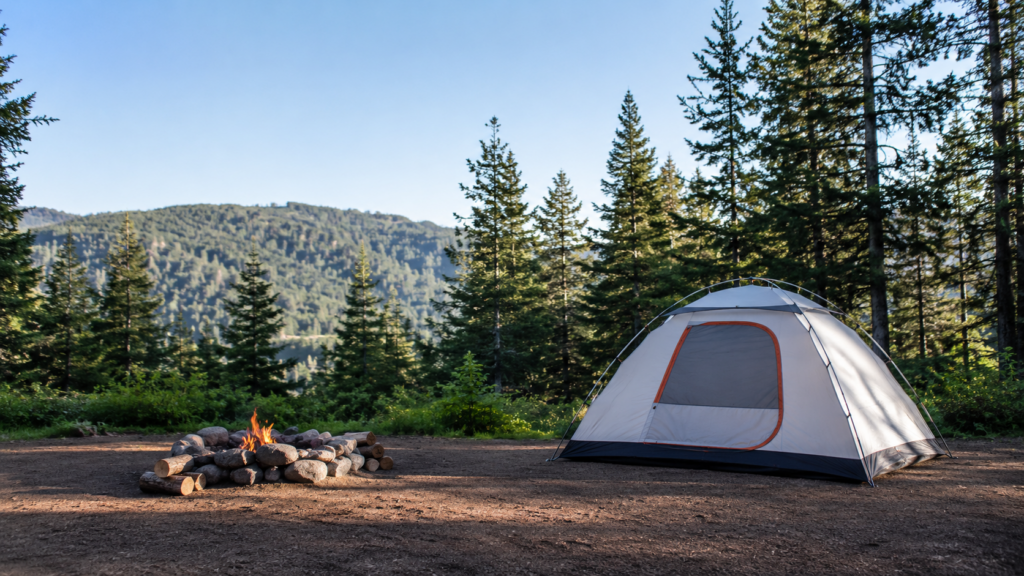
A true fire proof tent is not what most campers can buy, and pretending otherwise is how gear marketing gets people too close to flame. Camping tents are usually fire-resistant, fire-retardant, flame-resistant, or tested to a flammability standard. That means the fabric may resist ignition or slow flame spread. It does not mean you can pitch beside a campfire, cook inside a nylon shelter, or trust a spark to politely give up.
Last updated: 2026-07-01
If you want the safest answer, buy a tent with a clear flammability label, keep fire outside, use a real stove-compatible shelter only if you need one, and keep any campfire at least 15 feet from your tent or shelter.
Can a tent really be fireproof?
No camping tent is truly fireproof in the way most people mean it. A fireproof tent would shrug off flame, sparks, radiant heat, and hot stove parts. Most camping tents will not do that. Some melt. Some char. Some burn slower. Some treated fabrics self-extinguish in a lab test, which is useful, but not magic.
Call it what it is: a fire resistant tent is a risk-reduction tool, not permission to camp badly.
This matters because people search for fireproof tents, fire tents, fire rated tent options, and even “fire resestance tent” when they usually want one of three things:
- A tent safer near a campfire
- A hot tent with a stove jack
- A tent without flame-retardant chemicals
Those are different problems. Buying the wrong one can waste money or create a false sense of safety, which is worse than a normal tent and better habits.
What does CPAI-84 actually tell you?
CPAI-84 is a flammability standard used for camping tents. If a tent label says it meets CPAI-84, the fabric has been tested for how it behaves around flame. That is worth checking. It tells you more than a product page calling something “campfire safe.”
It does not mean the tent is safe against open flame.
A fire retardant tent may use a chemical treatment. A flame retardant tent usually means the same thing in casual product copy. A flame resistant tent may use fabric that resists ignition without the same type of coating. A fire rated tent should name the rating or test. If it does not, treat the phrase like a sticker on a cooler.
The label matters more than the headline. If a brand leads with “best,” “largest,” or an award badge but hides the fabric test, skip the applause and read the sewn-in tag.
The options worth considering
The clear pick is the RBM Outdoors Cuboid 2.20 if you actually need a stove-ready cold-camp shelter. The best budget move is not a fancy “fireproof” tent. It is a basic CPAI-84-labeled car-camping tent kept well away from flame.
| Option | What it really is | Fire-safety detail that matters | Verdict |
|---|---|---|---|
| RBM Outdoors Cuboid 2.20 | A cold-camp shelter for people who want stove compatibility | Has a stove jack | Best overall if you need a hot-tent setup. Worth the money for cold basecamp use, not for sitting closer to a campfire. |
| Basic CPAI-84-labeled car-camping tent | A normal synthetic family tent with a flammability label | The label gives you a real standard to check | Best budget. Good enough for weekend camping if you keep fire away and do not cook inside. |
| Boutique Camping fire retardant bell tent | A roomy cotton-style glamping tent | Advertised as fire retardant, with heavier fabric behavior than thin backpacking tents | Worth it for drive-in camps with space, shade, and dry storage. Skip it for backpacking or rushed wet pack-ups. |
| Campfire Canopy-style shelter | A social shelter marketed around fire use | Only useful if the fabric label and ventilation match the claim | Borrow or rent first. The idea sounds better on a hang tag than during smoky, windy setup. |
| Big Agnes, Kelty, or similar backpacking tents | Lightweight trail shelters | Often bought for pack weight, not fire safety | Buy them for trail miles, not as fireproof tents. Sparks and ultralight fabric are a poor friendship. |
| Firefighter-style fire shelter | Emergency fire protection gear, not camping shelter | Made for survival use, not sleeping comfort | Skip it for camping. “Fire tents” can mean the wrong category entirely. |
The Cuboid is the only option here I would call a real fire-focused camping shelter, and only because a stove jack changes the use case. A stove jack is not decoration. It means the shelter is built around a controlled stove pipe exit, which is a separate world from dragging a camp chair closer to a fire ring.
The basic CPAI-84-labeled tent wins on value because most campers do not need a hot tent. They need better site choice, less smoke, and a little discipline after dinner. If you are camping in mild weather, spend the saved money on a better sleep pad, a cleaner kitchen setup, or a tent shape that actually fits your group. If you are sorting that out, this guide to basic tent shapes is more useful than another fireproof claim.
Boutique-style fire retardant bell tents have a place. They are roomy, pleasant for standing and changing clothes, and better suited to drive-in camp than a thin backpacking shelter. The tradeoff is weight, drying time, and storage. Cotton-like shelters punish lazy drying. Put one away damp and the tent will remember.
Campfire canopy products deserve the most suspicion. An open shelter can manage smoke better than a closed tent, but wind shifts, sparks jump, and people move chairs where they should not. If the brand talks more about vibes than fabric labels and setup limits, keep your wallet closed.
Backpacking tents from Big Agnes, Kelty, Eureka, and similar brands can be excellent tents. That does not make them fireproof tents. Their job is pack weight, storm pitch, dry time, and livable space after mile 10. Asking a thin fly to deal with sparks is asking the wrong tool to take the blame.
Campfire distance beats fabric claims
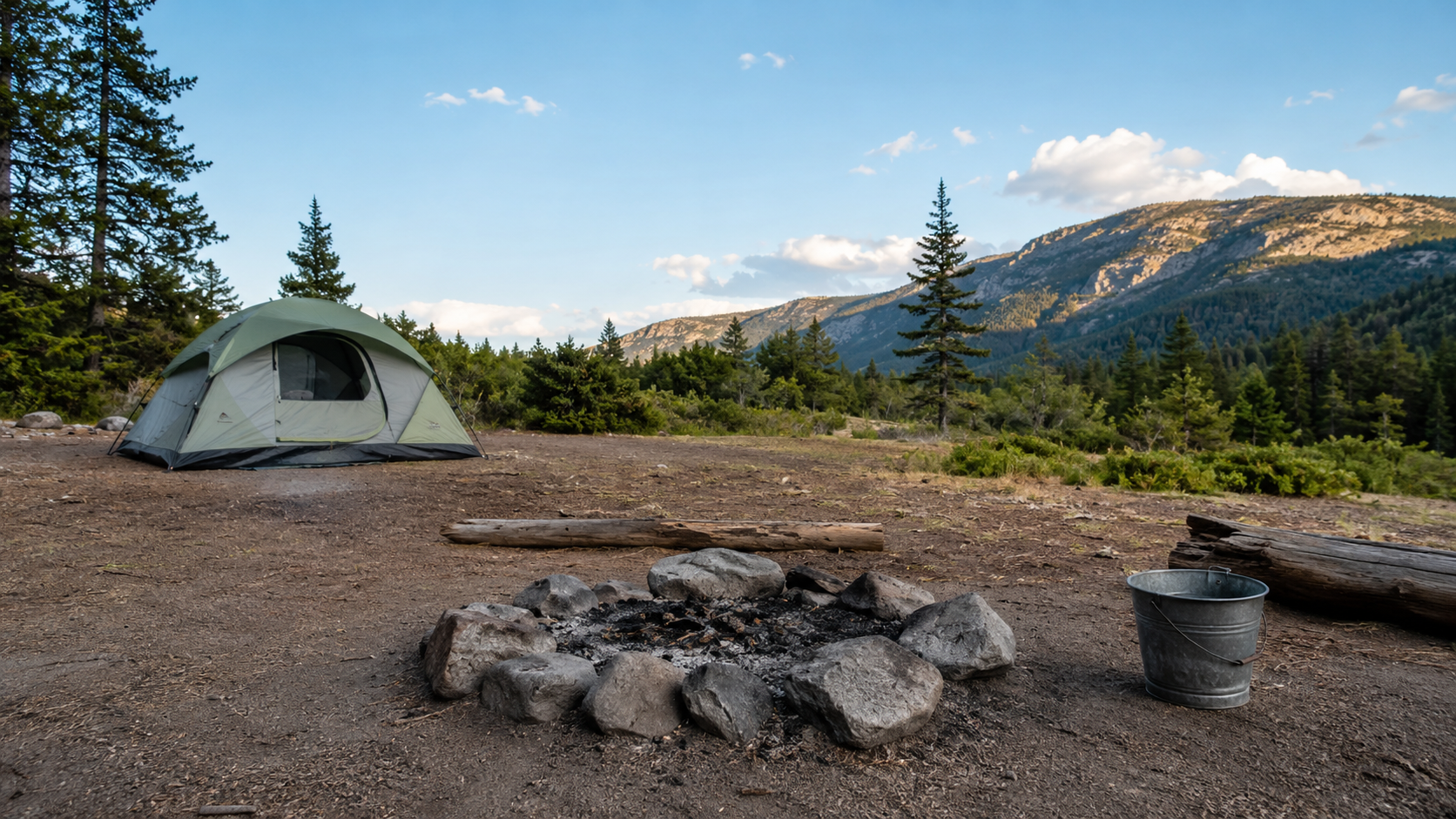
The safest fire resistant tent is still a tent pitched away from flame. Keep the campfire at least 15 feet from any tent or shelter, and give yourself more room if wind is throwing sparks. Dry grass, pine needles, loose nylon guylines, and tired campers are a bad little committee.
A fire retardant tent can still fail in boring ways:
- Sparks melt pinholes in synthetic fly fabric.
- Radiant heat warps coatings and plastic clips.
- Smoke loads the fabric with stink and residue.
- Wind shifts embers under vestibules.
- Kids, dogs, and camp chairs shrink the safe zone without asking.
Do not cook in a regular tent. Do not put a lantern flame under a fly. Do not use a vestibule as a tiny kitchen during bad weather unless you are willing to accept carbon monoxide risk, fabric damage, and a very dumb insurance conversation.
If comfort is the reason you want to crowd the fire, fix the camp setup instead. Better layers, a wind break, a warmer sleep system, and a cleaner kitchen area do more than a marketing claim. For normal weekend trips, a comfortable tent camping setup beats chasing a mythical fireproof shelter.
Stove jacks are for hot tents, not regular tents
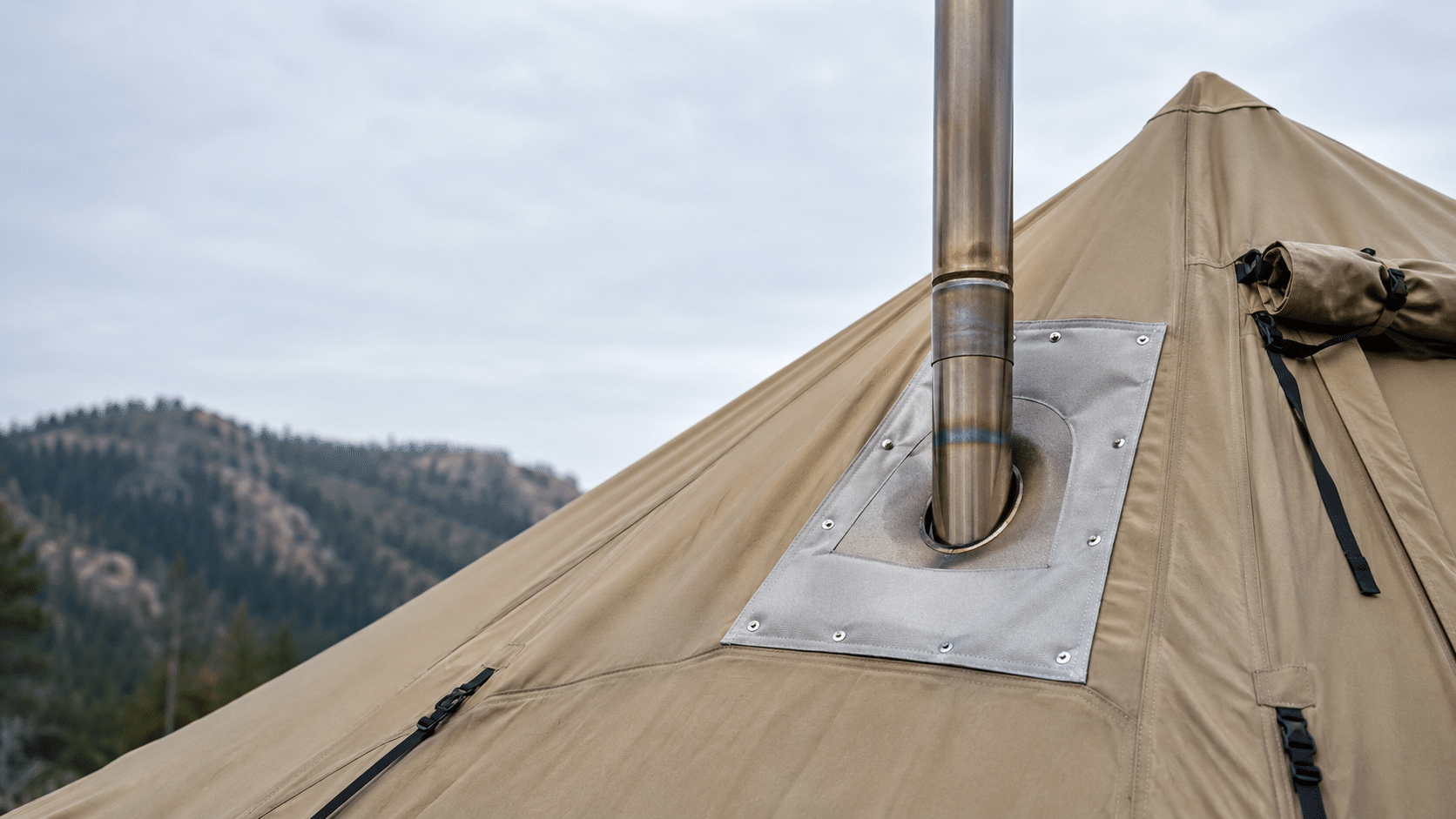
A stove jack makes sense only in a tent designed for stove use. That means the shelter, pipe exit, ventilation, floor setup, and stove placement all need to work together. Cutting a hole into a standard tent is not a clever budget hack. It is just making a flammable problem with scissors.
Use a hot tent if you camp in cold shoulder-season or winter conditions and know you will manage the stove like a tool, not a campfire toy. You need airflow, a stable stove base, careful pipe routing, and a habit of checking the setup before sleep. Wet gloves and tired hands are when mistakes happen.
Skip a stove-jack tent if your trips are mostly summer car camping. It adds cost, bulk, and setup fuss you do not need. A normal tent, warmer bag, better pad, and smart site choice will be simpler. If winter warmth is the real issue, start with winter tent insulation before buying a shelter built around a stove.
Flame-retardant-free tents need stricter habits
Flame retardant free tents are a valid choice if you want to avoid added treatments. Some campers care about chemical exposure, skin contact, indoor air, or how coatings age. Fair enough. I would not dismiss that.
But a flame-retardant-free tent is not a fire safety upgrade.
If you choose untreated fabric, your safety margin comes from camp discipline: more distance from fire, no flame in the shelter, careful kitchen placement, and fast repairs when sparks damage fabric. You are trading a treatment for better habits. That can be a good trade, but only if you actually keep the habits.
This is where the search terms get messy. A flame retardant tent and a flame-retardant-free tent point in opposite directions. One asks for treated fire behavior. The other asks to avoid the treatment. Decide which problem you are solving before comparing models.
How should you choose a fire-resistant tent?
Start with your real trip, not the strongest product claim. A wet forest weekend, a desert car camp, a cold hunting basecamp, and a summer festival do not need the same shelter.
Use this buying filter:
- For normal car camping: Choose a CPAI-84-labeled tent and keep fire well away. This is the best budget answer.
- For cold camps with a stove: Choose a purpose-built hot tent with a proper stove jack. The Cuboid is the strongest fit here.
- For glamping or long drive-in stays: Consider a fire retardant bell tent if you can dry and store it properly.
- For backpacking: Prioritize weight, storm pitch, ventilation, and repairability. Do not buy an ultralight tent for campfire resistance.
- For chemical avoidance: Look for flame-retardant-free tents, then tighten your fire habits.
- For windy camps: Treat all fire claims as weaker. Sparks travel, guylines trip people, and loose fabric moves toward heat.
The cheapest mistake is believing the word “fireproof.” The better move is to buy a shelter that matches your camp style, then set up like someone who has seen nylon melt.
If you are mostly trying to save money on weekend camping, compare normal shelters first. A good budget tent kept away from flame is safer than an expensive fire retardant tent used badly. This guide to weekend budget tents is the better place to start if fire is not part of your cooking or heating plan.
Who should skip this category?
Skip fireproof tent shopping if you only want to camp near a standard fire ring on mild weekends. You do not need a special tent. You need distance, wind awareness, and a kitchen area that does not drift under the fly.
Skip hot tents if you do not want stove chores. A stove inside a shelter adds warmth, but it also adds setup time, ash, pipe management, ventilation checks, and burn risk. Cozy has paperwork.
Skip fire retardant bell tents if you cannot dry bulky fabric after rain. Wet storage ruins good gear quietly. It does not need drama.
Skip any tent that uses “fire rated” without naming the actual standard. That phrase is useful only when it points to something you can read on the label.
FAQ
Can I seam-seal a fire-retardant tent?
Usually, yes, but use the sealant type recommended for that fabric and coating. Random sealers can peel, stay tacky, or interfere with treated fabric. Test a small hidden area first and let it cure fully before packing the tent.
Do fire-resistant tents need special storage?
Yes. Store them clean, fully dry, and loose enough that coatings are not crushed for months. Heat, damp fabric, and trapped dirt shorten the life of coatings and treatments. A dry storage bin beats a damp stuff sack in the garage.
Are fire-retardant tents warmer than regular tents?
Not automatically. Warmth comes from fabric weight, tent shape, airflow, ground insulation, and your sleep system. A fire retardant coating does not turn a thin tent into a winter shelter.
How do I reduce condensation in a hot tent?
Vent low and high, avoid drying soaked gear right over your sleep area, and do not seal the shelter tight just because it feels cold. Warm air holds moisture, then dumps it on fabric when temperatures drop. A little airflow saves you from a wet morning.
Should I size up for a fire-resistant camping tent?
Size up if you are car camping with bulky pads, kids, dogs, or stove-safe gear that needs clear space. Do not size up for backpacking unless you are willing to carry the extra pack weight. More room is nice at camp, but your shoulders get a vote.
