
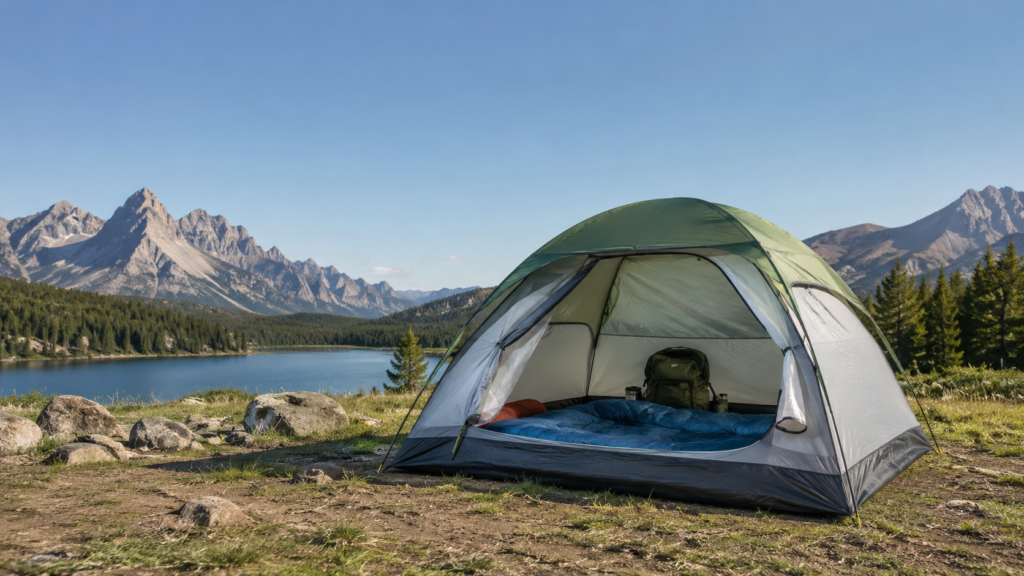
The best budget tent for most campers is the Coleman Sundome, which runs about $120 and handles fair-weather car camping without drama. If you want a step up in build quality, the ALPS Mountaineering Lynx 2 sits near $190 and holds up better in wind and rain. For a true bargain, the Wenzel Lone Elk once sold for $20 to $25 and proves you can shelter under a few pounds of nylon without paying for a logo. None of these will follow you up a serious backpacking route, but for weekends near the car they are enough.
Last updated: 2026-07-01
A note on the word "budget." A lot of roundups quietly slip $300 and $500 tents into a cheap-tent list, then call the whole thing affordable. That's a spec sheet trick, not honest advice. For this article, budget means under $300, and the real sweet spot sits well below that. Once you're past that ceiling, you're shopping for something else.
What counts as a budget tent
Under $300, and ideally under $200. That's the line. Above it, you're paying for lighter fabric, better poles, and refinements that matter for miles of backpacking but do almost nothing for a weekend 40 feet from your trunk.
Here's how the honest budget options compare:
| Tent | Price | Weight | Best for |
|---|---|---|---|
| Coleman Sundome | around $120 | varies by size | Easy car camping, first-timers |
| ALPS Mountaineering Lynx 2 | around $190 | moderate | Two people who want a real rainfly |
| Wenzel Lone Elk | $20 to $25 (older stock) | 3 lb 4 oz | Dirt-cheap solo or minimalist trips |
For reference, the NEMO Aurora 2 runs $299.95 and weighs 5 lb 7 oz with an 88-inch interior. It's a good tent. It's also sitting right at the ceiling, so treat it as the point where "budget" stops, not a value pick.
The Coleman Sundome is the easy default
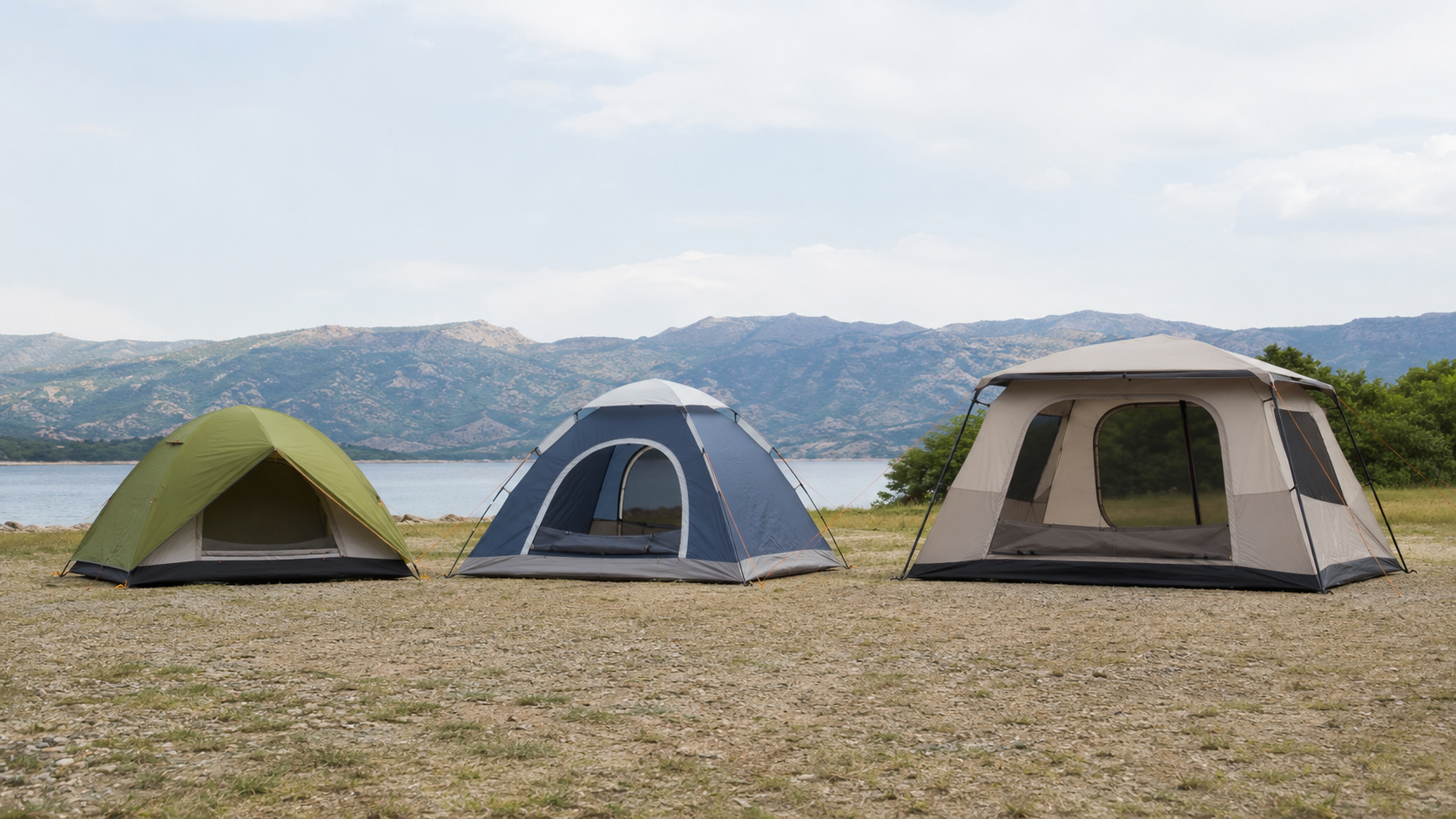
The Coleman Sundome earns the top spot for one plain reason: it does the job most weekend campers actually ask of a tent, and it costs around $120. Setup is quick, the dome shape sheds wind better than the cheapest cabin tents, and it comes in sizes from two up to six people. You get interior pockets and a small port for running a cord.
What it isn't: waterproof in a real storm without help. The floor and rainfly handle light rain fine, but in steady weather you'll want to seam-seal and maybe add a groundsheet. The rainfly is partial, not full-coverage, so wind-driven rain can find the mesh. Marketing leans hard on "thousands of five-star reviews," which tells you it sells well, not that it survives a bad night on an exposed site.
Buy it if you camp in fair weather, park close, and want something a tired person can pitch in the dark.
The ALPS Lynx 2 is worth the step up
Spend around $190 and the ALPS Mountaineering Lynx 2 gives you a better tent than the price suggests. It's a real two-person, two-door design with a full-coverage rainfly, which is the single feature that separates a tent that stays dry from one that leaks at the seams. Aluminum poles instead of fiberglass mean it flexes in wind rather than snapping.
The tradeoff is space. Two adults and gear is tight, so treat it as a genuine two-person tent, not a roomy one. If you want to sit up and read, or you camp with a dog, size up.
This is the pick for people who camp in wetter country or want something that lasts more than a couple of seasons. It costs more than the Sundome and returns that money in the rainfly and poles.
The Wenzel Lone Elk is the cheap-and-cheerful option
At its old $20 to $25 price and a packed weight of 3 lb 4 oz, the Wenzel Lone Elk is the closest thing here to a throwaway tent that isn't actually throwaway. Fiberglass poles, simple pitch, light enough to carry a short way from the car. For a solo camper or a kid's first tent, it's plenty.
Be honest about the limits. Fiberglass poles are the weak point on any cheap tent; they crack in cold and hard wind, and stakes bend. If you find one at that price, grab it, but don't expect a full rainfly or much room. This is a "good enough for calm weekends" shelter, not a storm tent.
Where cheap tents fall short
Budget tents cut costs in predictable places, and knowing where helps you decide what you can live with:
- Poles. Fiberglass is cheaper and heavier than aluminum, and it fails suddenly instead of bending. If a tent brags about "durable poles" on the hang tag but uses fiberglass, that sounds better than it holds up.
- Rainfly coverage. Partial flies save fabric and cost. They also let wind-driven rain reach the mesh. A full-coverage fly is the upgrade that matters most.
- Seams. Factory taping on cheap tents is thin. Plan to seam-seal before your first wet trip, not after.
- Zippers. The first thing to snag and clog on a budget tent. Keep them clean and don't force them.
None of these are dealbreakers for weekend car camping. They become dealbreakers the moment you take a $120 tent somewhere it wasn't built to go. If you're heading into the backcountry, read up on how to pick a tent for backpacking before you trust a car-camping shelter with your night.
Who should skip a budget tent
Skip the cheap options if you backpack real miles, camp in shoulder-season cold, or head somewhere the wind gets rude. Weight and packed size start to matter after mile 10, and fiberglass poles are a bad bet in a mountain storm. If that's you, the money is better spent on a lighter, tougher shelter. Our guide to lightweight tents for the backcountry is a better starting point than any $120 dome.
Also skip if you camp with a big family and need standing room. Budget two- and four-person tents are honest about capacity only if you read them as one person smaller than the label. For larger groups, look at roomier options built for families instead of stretching a small tent past its comfort.
For weekend camping specifically
If your camping is mostly weekends near the car, the math is simple: buy the Sundome, spend the saved money on a good sleeping pad, and don't overthink it. The Lynx 2 makes sense if rain is common where you camp. Everything above $200 is a want, not a need, for two nights in a state park.
The one place not to cut corners is the ground. A cheap tent on a comfortable pad beats an expensive tent on cold dirt every time.
FAQ
How do I keep a budget tent from leaking?
Seam-seal it before your first wet trip and add a groundsheet or footprint cut slightly smaller than the floor. Most leaks on cheap tents come from untaped seams and water pooling under the floor, not the fabric itself. A can of seam sealer costs a few dollars and fixes the most common failure.
What size should I actually buy?
Buy one person larger than the label if you want room for gear or a wide sleeping pad. A "two-person" budget tent fits two people shoulder to shoulder with nowhere for packs. If comfort matters more than a tight fit, size up.
How do I deal with condensation in a cheap tent?
Ventilate. Crack the rainfly vents, don't seal yourself in tight, and pitch away from low, damp ground near water. Single-wall and partial-fly tents trap breath and sweat overnight, and the "leak" you find in the morning is often just condensation. Wipe it down and let the tent dry before packing.
How should I store a budget tent between trips?
Dry, loose, and out of the sun. Never pack a tent away damp; mildew ruins the coating and the smell never fully leaves. Stuff it loosely in a pillowcase or bin rather than cramming it in the original tiny sack, which stresses the same fabric creases every time.
Are budget tents okay for cold-weather camping?
For mild shoulder-season nights, a decent budget tent with a full rainfly is fine if you bring the right sleeping bag and pad. For real cold or snow, no. The thin poles and light fabric aren't built for it, and that's where paying more actually buys safety instead of just comfort.
