
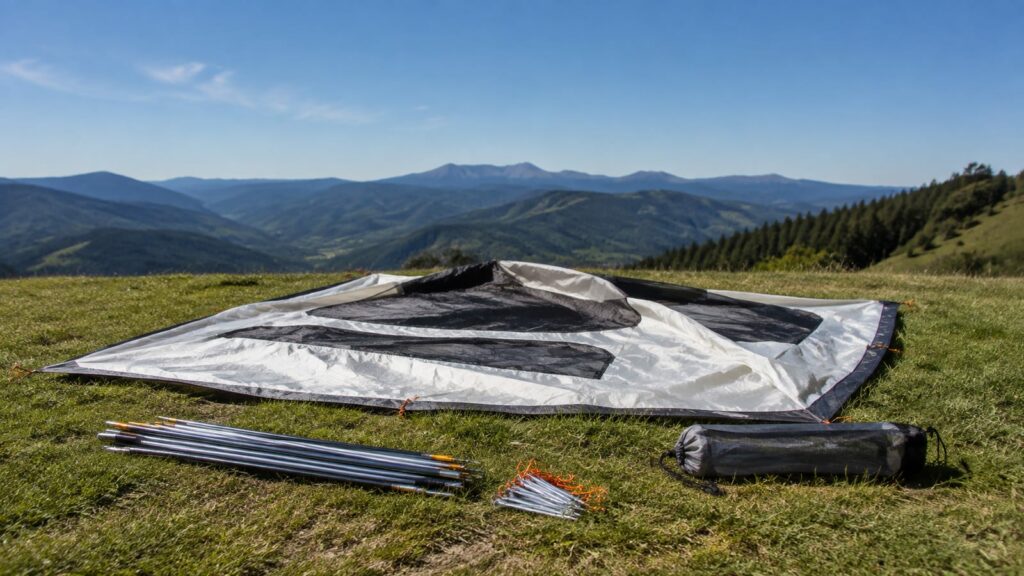
Clean the tent when it needs cleaning, dry every part completely, then fold or roll it loosely and store it indoors in a cool, dark, dry place. That is how to fold and store a tent for longevity and durability. A damp closet, hot garage, or tightly compressed stuff sack can damage waterproof coatings more deeply than an ordinary muddy campsite. The tent may look fine until the fabric turns sticky, flakes, or leaks.
Last updated: 2026-08-12
Why does proper storage matter more than most field damage?
Normal field use leaves dirt, scuffs, and small patches of wear. Those problems are usually visible and repairable. Long-term storage damage is quieter. Moisture sits inside seams, heat speeds up coating failure, and compression keeps the same crease stressed for months.
A tent stored dirty can also hold grit against the fabric. Sand works into coatings and zippers. Mud can keep moisture against the floor. Tree sap and food residue attract insects, while mildew can spread before you notice the smell.
Storage is where a small packing mistake becomes a material problem. A storm pitch may leave a few wet spots. A wet tent sealed in a bag can stay damp long enough to break down the waterproof layer.
You don’t need to baby a tent at every trailhead. You do need to stop treating the stuff sack as a long-term closet.
How should you clean a tent before storing it?
Cleaning is not necessary unless the tent has an offensive odor or becomes heavily soiled. If the shelter is only dusty, shake it out and remove loose debris with a soft brush.
For a heavily soiled tent, use this process:
- Set up the tent or spread each part over a clean surface.
- Remove loose dirt, sand, leaves, and grit.
- Rinse the fabric gently with clean water.
- Wash by hand with a mild soap only if the fabric still needs cleaning.
- Rinse until no soap remains.
- Let every part dry fully before folding.
MSR recommends hand-washing the MSR Access 3, a three-person four-season ski touring tent, rather than machine-washing it. For that tent, MSR also says not to use dishwashing liquid, detergent, bleach, pre-soaking solutions, or spot removers.
Those products can strip or weaken the waterproof coating. Abrasive scrubbing can do the same thing in a less obvious way. If dirt needs more force than gentle hand cleaning, you may be trying to rescue a stain that isn’t worth damaging the fabric for.
For mildew, use a separate cleaning plan rather than burying the problem in storage. This guide to cleaning a moldy tent covers the messier cases.
How can you dry a tent completely before packing it away?
Dry the fly, inner tent, groundsheet, pockets, seams, and stuff sack separately. A tent can feel dry on the outside while moisture remains in the floor folds, seam tape, corner pockets, or the sleeve where the poles sit.
Use this drying routine:
- Shake out water and debris before leaving the trailhead.
- Hang or spread the fly in shade with air moving around it.
- Turn the inner tent inside out if its floor or pockets are damp.
- Open doors and vents so trapped moisture can escape.
- Wipe puddles from the groundsheet, then hang it separately.
- Check seams, corners, pockets, and webbing by touch.
- Dry the stuff sack before putting it away.
- Pack only after the fabric feels dry in every fold.
Shade is the safer choice for routine drying. Direct sun dries fabric quickly, but ultraviolet light also weakens tent materials over time. A breezy porch, shaded clothesline, or indoor drying rack works better than spreading the tent on a hot driveway.
Bad weather changes the timing, not the rule. If rain prevents full drying outdoors, unpack the tent as soon as you get home and spread the pieces indoors. Keep them away from heaters, and give the floor and fly enough room for air to reach both sides.
Do not trust a quick wipe followed by a sealed bag. That is how a clean-looking tent develops mildew in the folds.
How should you fold or roll the tent to protect its fabric and coating?
Fold the tent loosely, change the fold lines when you can, and never force a bulky shelter into a small bag. Permanent sharp creases can stress fabric and waterproof coatings, especially when the same crease sits under pressure for a long time.
There is no prize for producing a perfect rectangle. A loose roll is often easier on the fabric than repeated hard folding. If you fold, alternate the lines so one seam, corner, or coating strip does not carry the same bend every time.
Use this order:
- Remove poles, stakes, and guylines from the fabric.
- Shake out grit before placing the tent on a clean surface.
- Lay the inner tent and fly flat without dragging them over rough ground.
- Fold large panels loosely, keeping sharp hardware away from the fabric.
- Alternate the fold direction on later storage cycles.
- Roll the tent without crushing it if the fabric is slippery or bulky.
- Place it in a breathable storage sack with room to expand.
Stuffing is fine for short-term transport if it keeps the tent from rubbing against stakes or dirty gear. Long-term storage is different. Tight compression creates hard folds, stresses coatings, and leaves the fabric with nowhere to relax.
If the tent fights the bag, stop forcing it. Remove the poles and stakes, loosen the roll, and use a larger breathable sack. A few extra inches of storage space cost less than a replacement shelter.
Folding, rolling, and stuffing compared
| Method | Good use | Main problem | Verdict |
|---|---|---|---|
| Loose folding | Shelf storage and organized packing | Repeated fold lines | Keep, but change the lines |
| Loose rolling | Slippery fabrics and bulky shelters | Can take more shelf space | Best general storage choice |
| Tight stuffing | Short trips and fast breakdowns | Hard compression and creasing | Skip for long-term storage |
Where is the safest place to store a tent indoors?
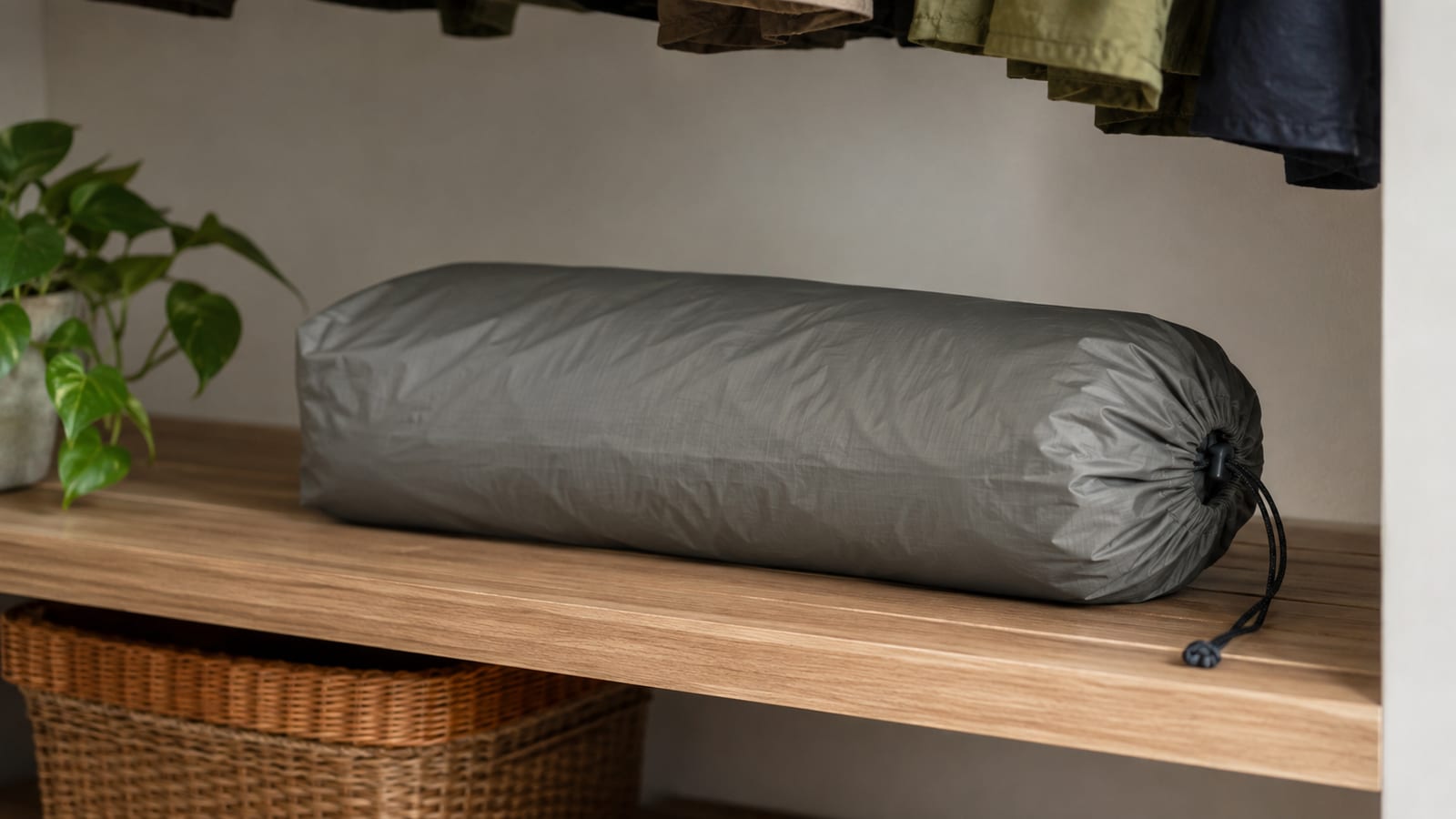
Store the tent on a shelf or in a cupboard inside your home. Choose a place that stays cool, dry, dark, and fairly stable in temperature.
Good storage locations include:
- A bedroom or hallway cupboard
- A dry gear closet
- A shelf away from windows
- A ventilated indoor storage bin
- A dry room with no plumbing leaks
Skip these locations:
- Damp basements
- Hot attics
- Garages with temperature swings
- Cars
- Sheds
- Radiators and furnace rooms
- Windowsills
- Floors where water can collect
A garage may seem convenient, but heat and damp air are a poor mix for coated fabric. Cars are worse because they can become hot enough to speed up coating breakdown. The gear closet wins because it is boring and predictable. Tents like boring.
Keep the fabric away from sharp tools, fuel, oils, and loose metal hardware. Store poles and stakes beside the tent, not inside it, unless the manufacturer gives a different storage plan.
Why do moisture, heat, and light damage stored tents?
Moisture can promote mildew and hydrolysis. Hydrolysis is a chemical breakdown of some waterproof coatings. The process can continue inside folded fabric, even when there is no visible mold.
Heat speeds up material breakdown. It also makes some coatings soften and stick to nearby fabric. A hot attic or car can create the conditions that turn a usable tent into a gummy problem.
Ultraviolet light damages fabric fibers and coatings through repeated exposure. The ultraviolet radiation that fades outdoor fabric can also weaken it. A tent stored beside a bright window may age faster than one kept in a dark cupboard.
These threats work together. Damp fabric in a warm, bright place has a worse chance than clean fabric stored dry and dark. Keep the storage conditions stable, and you remove the problems that are hardest to reverse.
How can you recognize hydrolysis before waterproofing fails?
Hydrolysis often announces itself through a coating that no longer feels normal. Run clean fingers over a hidden section of the fly or floor and look for changes.
Warning signs include:
- A sticky or tacky surface
- A gummy feel
- Peeling or flaking coating
- A foul chemical smell
- Small areas that cling together
- Waterproofing that fails despite clean, intact fabric
Do not scrape aggressively at the coating. That can turn a spreading problem into a larger bare patch. Instead, inspect nearby seams, corners, and areas that stayed folded.
Repair can make sense when the damage is small and limited to a seam or isolated patch. A broad, sticky coating across the fly or floor usually means the shelter has reached replacement territory. Fresh sealant cannot restore fabric that is breaking down across its working surface.
If a pole has failed at the same time, use this guide to repair a tent pole. Don’t spend more repairing small parts than the shelter is worth after the coating has started to fail.
How should you store poles, stakes, and the stuff sack?
Store poles clean and dry, with the sections relaxed rather than under unnecessary tension. Keep them beside the fabric so the poles don’t press into folded panels or rub against the floor.
Wipe stakes before storage. Dirt and moisture on steel or aluminum hardware can spread into the storage area. Keep stakes in their own pouch or container, not loose inside the tent.
The stuff sack should be dry and ventilated. Use it to protect the shelter from dust, but don’t use it to keep the tent tightly compressed for months. A larger breathable sack gives the fabric room to settle.
Keep guylines untangled and dry. If they’re packed wet or knotted under tension, they can become a small problem waiting inside an otherwise sound tent.
How often should you inspect a stored tent?
Inspect the tent before each shoulder-season trip and after any long period of storage. You’re looking for dampness, pests, mildew, coating changes, damaged seams, and stretched or failed elastic.
Lay out the fabric and check:
- The floor for pinholes, cracks, and worn corners
- The fly for sticky, flaky, or peeling coating
- Seam tape for lifting edges
- Zippers for grit and damaged teeth
- Mesh for tears
- Pockets for trapped dirt or moisture
- Pole sleeves for abrasion
- Elastic cords for slack or breaks
- Stakes for rust, bends, or sharp burrs
Open the tent fully instead of inspecting only the outside of the stuff sack. Stored gear can hide a problem in a corner that never gets air. Finding it before the trailhead gives you time to patch, replace, borrow, or skip the trip.
For broader upkeep, this guide to maintaining hiking gear covers the same dry, inspect, and repair habits across your kit.
What should you do if the tent must be stored wet temporarily?
Treat wet storage as an emergency, not a storage method. Unpack the tent as soon as you can, separate every component, and dry the fabric completely before putting it away.
If you’re still traveling, keep the wet fly and inner tent in separate waterproof bags when possible. That limits the spread of moisture to poles, stakes, clothing, and other gear. At the next dry stop, air everything out.
Once home, follow these steps:
- Remove the tent from its bag immediately.
- Separate the fly, inner tent, groundsheet, poles, stakes, and sack.
- Rinse off dirt before it dries into the fabric.
- Hang or spread each fabric component until fully dry.
- Dry seams, pockets, corners, and folds by hand.
- Check for mildew smell or coating changes.
- Fold loosely or roll it for indoor storage.
Don’t hide a wet tent in a basement because you plan to deal with it later. That plan usually becomes a sticky coating and a bad smell.
FAQ
Can I leave my tent in its original stuff sack between trips?
You can use the original sack for short-term transport, but long-term storage is safer in a larger breathable bag. The original sack often compresses the fabric more than needed.
Should I store the tent with the zippers open?
Leave doors and vents open while drying. For storage, partly open zippers reduce strain and make the shelter easier to inspect later, but don’t force them if the fabric is folded nearby.
Can I store a tent in a plastic tote?
A plastic tote can protect dry gear from dust, but it should not seal in moisture. Put only fully dry components inside, and avoid tight packing that crushes the fabric.
Should I apply waterproofing before storing the tent?
Only re-treat waterproofing when the shelter needs it and the product matches the fabric. A fresh coating cannot fix hydrolysis, rotten seam tape, or fabric weakened by ultraviolet exposure.
Is hanging a tent better than folding it?
Hanging can reduce long, sharp fold lines if the fabric hangs loosely and stays supported. However, a cool, dark shelf works just as well when the tent is dry, uncompressed, and protected from pests and heat.
