
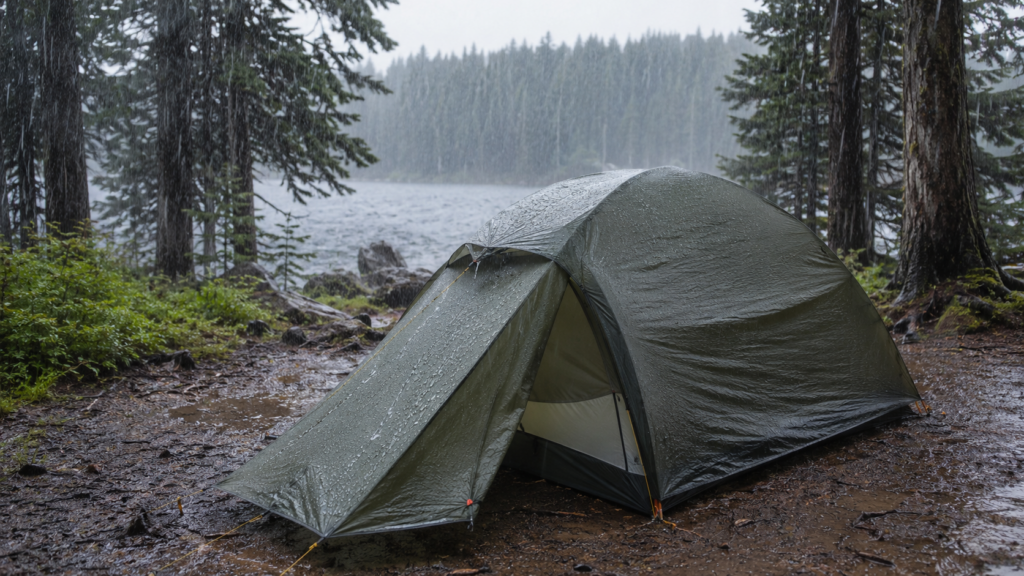
Heavy rain exposes lazy tent design fast. The best tent for heavy rain here is the REI Co-op Base Camp 6 because its lower, storm-focused shape and full-coverage setup make more sense in wind-driven rain than tall cabin-style shelters. The North Face Wawona 6 is better for wet car-camping comfort, while the Quechua 2 Seconds Fresh & Black is the budget pick if you camp in protected sites and keep expectations sane.
Last updated: 2026-07-01
Which tent is best for heavy rain?
Pick the Base Camp if rain protection matters more than standing-room bragging rights. It is the most sensible all-around answer for a waterproof camping tent in bad weather because the design favors coverage, structure, and runoff over showroom height.
Here is the short version:
| Rank | Tent | Best use | Rain verdict | Price noted |
|---|---|---|---|---|
| 1 | REI Co-op Base Camp 6 | Best overall for heavy rain | Worth the money for car campers who expect hard rain, gusts, and a muddy campsite | $450 |
| 2 | Teton Sports Mountain Ultra 2 | Best small-tent storm shape | Worth considering if you want a lower-profile shelter instead of a tall family tent | Not listed here |
| 3 | The North Face Wawona 6 | Best wet-weather comfort shelter | Worth it for vestibule space, but not my first pick for exposed storm camps | $585 |
| 4 | Quechua 2 Seconds Fresh & Black camping tent | Best budget pick | Good enough for protected campground rain, not a heavy-duty storm shelter | three-person variant is $110 on sale and $179 regular |
| 5 | REI Co-op Wonderland 6 | Best fair-weather livability | Skip it for prolonged downpours if rain protection is the main reason you are buying | Not listed here |
A heavy duty waterproof tent is not just a tent with a bold waterproof claim on the hang tag. It needs a fly that sheds water cleanly, sealed seams, a floor that keeps splashback out, and enough structure that the fabric does not flap itself into a wet bedsheet.
The ranked picks for wet camping
REI Co-op Base Camp 6 – best overall
Buy the Base Camp if you want the best tent for rain among these options and you are camping from a car. It is the least silly choice for a rough forecast because it does not chase tall cabin comfort at the cost of storm shape.
The value is straightforward: it costs less than the Wawona and makes fewer compromises for heavy rain. A tent with a lower profile, firm pole structure, and real fly coverage will usually behave better when wind pushes rain sideways. That matters more than an airy sales photo.
Skip it if you want a lounge-sized shelter for sunny weekends. That is not the job here. This is the tent I would put first for a wet family trip where dry sleeping bags matter more than standing around admiring the ceiling.
Teton Sports Mountain Ultra 2 – best small-tent storm shape
The Mountain Ultra makes sense because smaller tents often handle bad rain better than tall camping shelters. Less wall area catches wind, the fly is easier to tension, and runoff has fewer places to stall.
This is the better call for one or two campers who do not need a big vestibule or family-style interior. It is not the comfort pick. You trade space for a simpler storm pitch, and in steady rain that trade is often worth it.
Skip it for group car camping, dogs, cots, or anyone who wants to stand up while changing clothes. Small tents keep the weather problem smaller, but they also make every wet jacket and muddy shoe feel personal.
The North Face Wawona 6 – best wet-weather comfort
The Wawona is the comfort pick, not the pure storm pick. It has a 75.7 square foot floor, a 44.7 square foot vestibule, a 76 inch peak height, and a 19 pound 6.4 ounce packed weight. That big vestibule is the reason it belongs on this list.
Covered entry space matters in rain. You can stash wet shoes, keep packs out of the sleeping area, and cook only if conditions and campsite rules make that safe. The dry porch idea is not marketing fluff here. It solves the real campground problem of mud, rain jackets, and kids stepping on sleeping pads.
Still, call it what it is: a large car-camping tent with a big profile. Tall shelters need careful staking and guying before the storm, not after the first gust reminds you. If your trip is on an exposed coast, open desert, or high ridge, I would rather have the Base Camp or a smaller storm-shaped shelter.
If you are mainly comparing roomy shelters, our guide to family camping tents gives the space-first side of the argument.
Quechua 2 Seconds Fresh & Black – best budget pick
The Fresh & Black is the budget answer, and that is not an insult. If you need a cheap waterproof tent for camping in a managed campground, it can be good enough.
The quick-pitch design is useful when rain is already falling and patience is gone. The problem is the same one most fast-pitch tents have: convenience is not the same as storm strength. Bulky packed shape, exposed setup choices, and limited adjustment can matter when the weather turns rude.
Buy it for short trips, protected sites, and low-risk weekends near a bailout point. Skip it if the forecast says hard rain with wind, or if you are camping far from the car. Saving money is fine. Turning a wet night into a gear failure drill is false economy.
For cheaper fair-weather options, compare it with budget weekend tents before pretending every low-cost shelter is ready for ugly weather.
REI Co-op Wonderland 6 – roomy, but not a heavy-rain first choice
The Wonderland is the one I would be careful about calling one of the best waterproof tents. It may be comfortable, tall, and pleasant in camp, but those are not the same as rain performance.
Cabin-style tents tend to have more vertical wall, more fabric to push around, and more places where wind-driven rain can find a weak point. That does not make them useless. It means they belong in fair-weather family camping first, rainy campground use second, and prolonged downpour duty last.
Buy it if livability is your main need and you can choose sheltered campsites. Skip it if you came here searching for the best tent for heavy rain. A roomy tent that leaks at the wrong seam is just a furnished puddle.
Rain proof means design, not just coated fabric
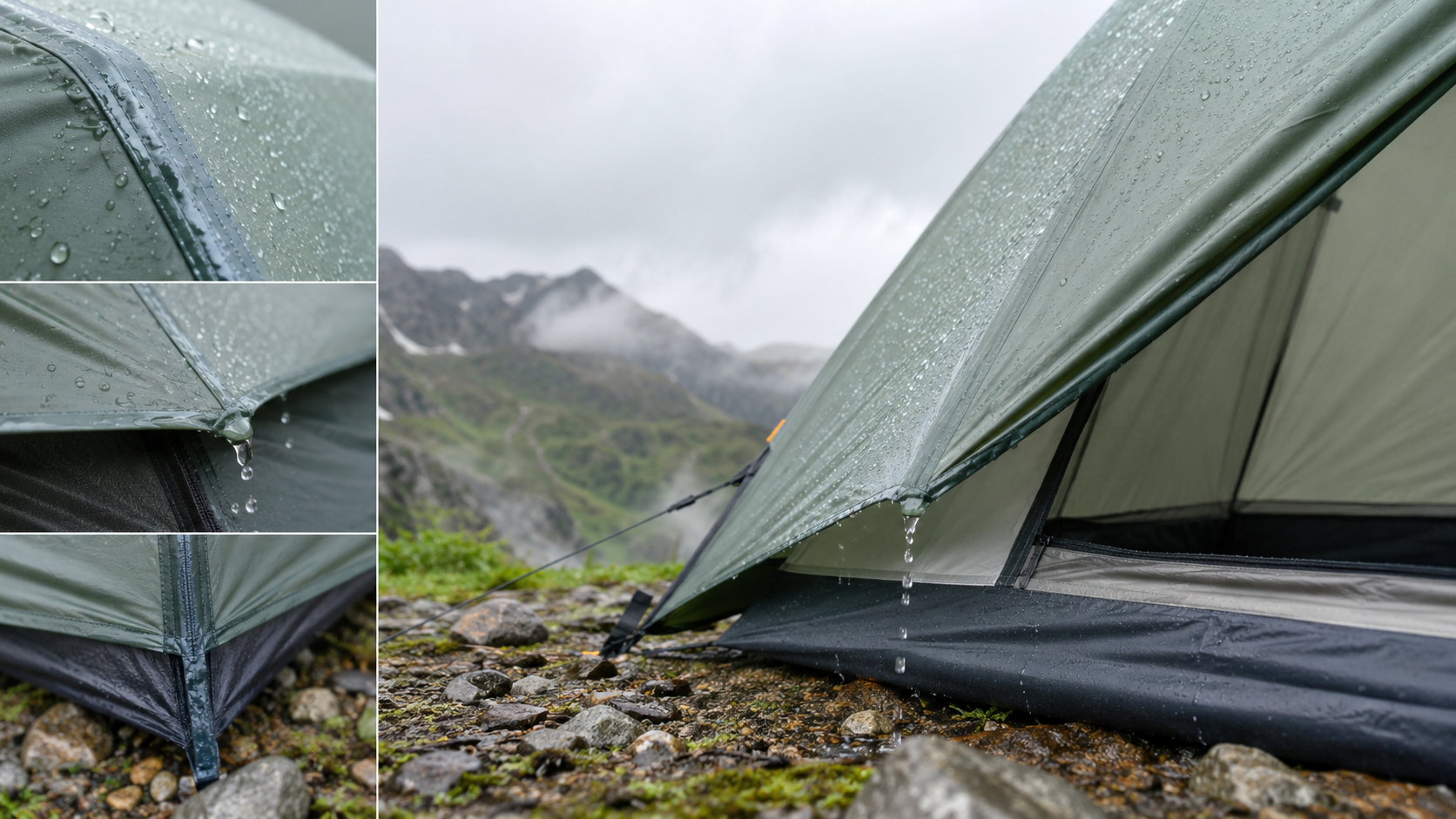
No tent is truly rain proof if you pitch it badly, let the fly sag, or camp in a drainage path. The better phrase is waterproof enough for the trip, and that depends on the whole shelter.
Look for these details before trusting any waterproof tent for camping:
- Full rainfly coverage: The fly should protect doors, roof seams, and mesh panels. Partial coverage is fine for mild rain, not for wind-driven rain.
- Taped or sealed seams: Stitch holes leak first. Seam tape or sealant blocks the obvious failure points.
- Bathtub floor: The floor should rise up the sides so splashback and shallow pooling do not roll straight into your sleeping area.
- Usable vestibule space: A vestibule keeps wet packs, boots, and rain shells out of the sleeping area. Tiny vestibules look tidy on a spec sheet and annoy you in real rain.
- Good fly tension: A loose fly sags, touches the inner tent, and invites wet-out. Guy lines are not decoration.
- Protected zippers: Door zippers need flaps or smart placement. A zipper facing wind and rain is a leak waiting for better timing.
- Ventilation: A sealed-up tent can feel dry from the outside and still soak you from condensation inside.
Hydrostatic head ratings measure how much water pressure a fabric can resist in a lab. Higher can be better, but the number does not save a bad design. A strong rating on the floor does not help if the door leaks, the fly is too short, or the seams are ignored.
Spec sheets are useful. They are not a storm pitch.
The storm details that matter more than award claims
Award labels and “best waterproof tent” claims are cheap until rain hits the sidewall. For heavy rain, I care about the parts that fail quietly: seams, door shape, fly tension, floor edges, and stake points.
Wind-driven rain is the real test. Straight-down rain is easy. Sideways rain finds vents, zippers, loose fly edges, and the gap under a shallow vestibule. This is why the Base Camp ranks above taller livability tents.
A big vestibule is only useful if it drains well. The Wawona has a real advantage for wet gear storage, but a big front area also needs a clean pitch. If the vestibule fabric is loose or the ground slopes toward the door, you have built a nice little gutter.
Cabin height cuts both ways. Standing room feels great in dry camp. In weather, height gives wind more fabric to grab. That is why I would not put the Wonderland first for heavy rain, even if it looks more comfortable on a sunny product page.
Fast setup is helpful, not magic. The Fresh & Black gets points for speed. But in heavy rain, the boring work still matters: stake it properly, tension the fly, avoid low ground, and keep gear away from tent walls.
If your current shelter mostly needs maintenance, do not replace it yet. Start with these tent waterproofing steps and see whether the coating, seams, or setup are the actual problem.
Where these tents fall short in real rain
Every tent on this list has a compromise. Ignoring that is how people end up defending a wet floor because the box looked convincing.
- Base Camp: Best overall here, but still a car-camping shelter. It is not the answer for snow loading, alpine exposure, or trips where pack weight matters.
- Mountain Ultra: Better storm shape, less living space. Wet gear management gets tight fast.
- Wawona: Great vestibule, big footprint, heavy packed weight. Worth the weight for campground comfort, not for rough exposed sites.
- Fresh & Black: Cheap and fast, but not the tent I would trust for a long, windy, rain-heavy trip far from the car.
- Wonderland: Comfortable, but the shape works against it in serious weather. Good camp living does not equal good storm behavior.
The dry advice is simple: if the forecast is ugly, pick the tent that makes the fewest promises.
Setup choices that decide whether the floor stays dry
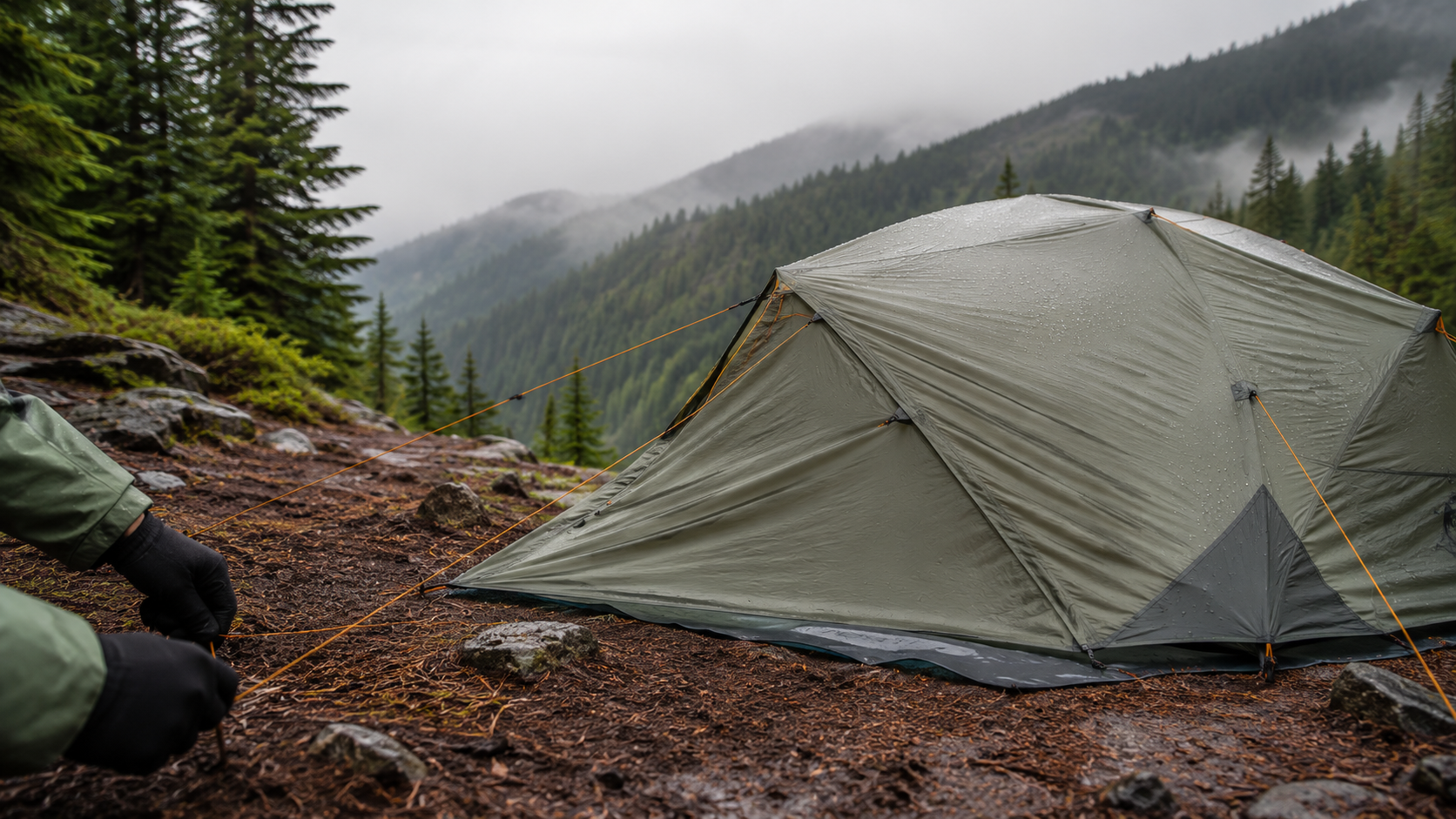
A good waterproof camping tent can still leak if you set it up like the rain will be polite. Heavy rain is not polite.
Do this before the storm:
- Pick higher ground. Avoid dips, worn tent pads with puddle marks, and the soft dirt below a slope.
- Face the strongest door away from the wind. Door design matters less if you aim it into sideways rain.
- Stake every point the tent gives you. If the fly is loose, it will sag.
- Use guy lines early. Add them before dark, before rain, and before you are tired enough to call “probably fine” a plan.
- Keep gear off the walls. Sleeping bags and jackets can wick moisture from damp fabric.
- Tuck the footprint under the floor edge. If it sticks out, it can catch rain and feed water under the tent.
- Vent when you can. Closing every vent may feel safer, but trapped breath and wet clothing can make the inside damp anyway.
A storm pitch is not complicated. It is just less forgiving.
Who should skip these shelters?
Skip this whole list if you are planning true winter camping, exposed alpine travel, or shoulder-season storms where snow and hard wind are likely. That is a different category of shelter, and pretending a roomy campground tent can do it all is how poles get bent and trips get short.
Look at cold-weather tent options if you need stronger structure, snow handling, and a shelter built for harsher conditions.
Also skip buying new if your current tent only leaks at old seams or a tired floor coating. Repair first, then replace. New gear is fun; dry gear is the point.
FAQ
Should I size up for rainy camping?
Yes, usually. Rain makes every tent feel smaller because wet jackets, muddy shoes, and damp packs need space. If you are car camping, sizing up gives you room to keep sleeping bags away from wet walls and store gear without turning the floor into a laundry pile.
Do new tents need seam sealer before the first trip?
Some do, some do not. Check the seams before you trust the tent in bad weather. If the seams are not taped or the instructions recommend sealing, do it at home and let it cure fully before the trip.
Why is the inside wet if the rainfly did not leak?
That is often condensation, not a leak. Warm breath, wet clothing, and poor airflow can coat the inside of the fly or walls. Open vents when weather allows, keep wet gear out of the sleeping area, and avoid pressing sleeping bags against fabric.
How should I store a waterproof tent after a wet weekend?
Dry it fully before long storage. A damp tent packed in a bag can grow mildew, weaken coatings, and smell like a forgotten gym sock with poles. Set it up at home or hang it loosely until every panel and seam is dry.
Are three-season tents enough for shoulder-season rain?
Often, yes, if the forecast is rain rather than snow and you can choose a protected campsite. For cold storms, exposed wind, or mixed snow and rain, move to a stronger shelter instead of asking a campground tent to do winter work.
