
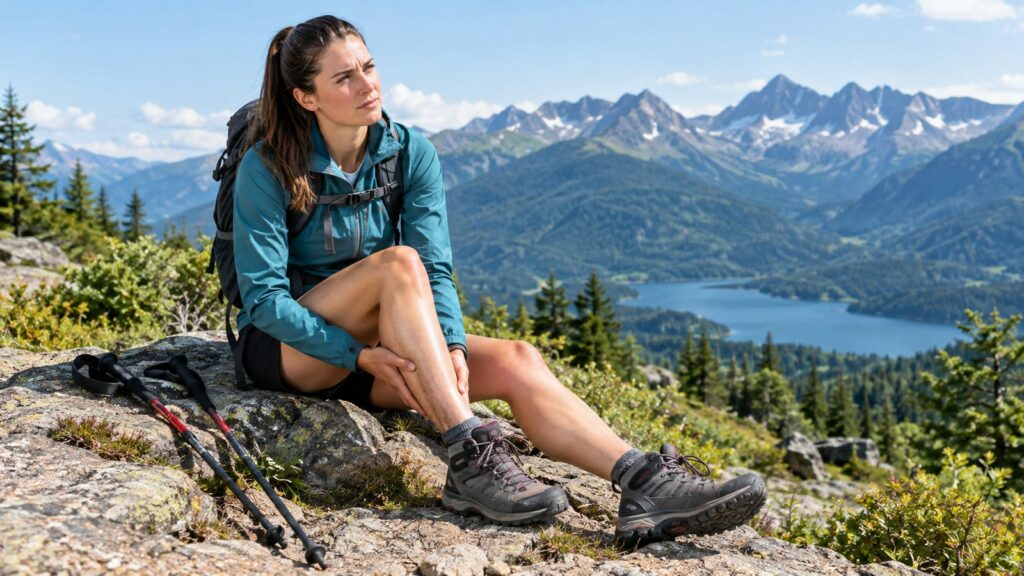
Most hiking cramps are a fatigue, pacing, hydration, or footwear-fit problem. If you need to know how to deal with muscle cramps on a hike, stop somewhere stable, unload your pack, and gently lengthen the tight muscle. Then eat or drink if you’ve fallen behind. Prevent the next cramp with a realistic pace, regular fuel and fluids, stronger legs, and shoes that don’t squeeze your feet after they swell.
Last updated: 2026-10-07
Why hiking cramps happen
A cramp is a sudden, painful muscle contraction. Calves, feet, hamstrings, and quadriceps take most of the complaints because they handle climbs, descents, loose rock, and pack weight.
Exercise-associated muscle cramps were traditionally blamed on dehydration and electrolyte loss in hot, humid conditions. However, evidence now points toward a neuromuscular cause. In plain terms, a tired muscle can receive confused signals from the nerves controlling contraction and relaxation.
That explains why cramps often show up after a hard climb or late in the day. Heat, missed food, inadequate fluids, uneven ground, and a heavy pack can push tired muscles closer to their limit.
Electrolytes still matter, but the story isn’t tidy. Studies measuring serum electrolytes found no clear association between blood electrolyte changes and cramps. Local concentrations around muscle and nerve cells may matter, while blood measurements may fail to show those changes.
One small study of cramp-prone football players included 5 athletes and found greater sweat sodium losses than in players without a cramp history. That’s useful context, but it doesn’t prove every tight calf needs an expensive drink mix.
Footwear adds another route to trouble. A narrow toe box, overtight laces, poor arch support, or toes gripping inside loose boots can fatigue the small foot muscles surprisingly fast.
Prevent cramps before the trailhead
Start with a route your legs can handle. A steep trail with rough footing asks more from your calves and thighs than the same distance on smooth ground.
Check the weather and trail conditions before leaving. Heat, mud, snow, and long water carries can turn a reasonable plan into a slow grind. Also, know your bailout point and share your route with someone who isn’t coming.
Build hiking strength gradually. Calf raises, step-ups, controlled step-downs, squats, and basic core work prepare you for climbing and braking on descents. Training on hills helps because flat gym work won’t teach your ankles what loose rock feels like.
The American College of Sports Medicine recommends warming up for 5 to 10 minutes before aerobic activity. For hiking, start with easy walking and a few controlled ankle and knee movements. Aggressive stretching beside a cold car is mostly ceremony.
Keep pack weight sensible. Extra gear sounds harmless in the kitchen, then spends every switchback leaning on your calves. Carry what the route and weather require, but leave the anxious duplicates at home.
Finally, break in your footwear before a long trip. Wear it on shorter walks with the socks you plan to use. A boot that pinches in the neighborhood won’t become kinder after mile 10.
Pace, fuel, and fluids on the trail
Use a pace that lets you speak in short sentences without gasping. On steep climbs, shorten your stride instead of charging uphill until your calves start twitching.
Take brief rests before your form falls apart. If you’re stumbling, leaning heavily on trekking poles, or dragging your toes, fatigue already has the wheel. Our guide to recognizing trail fatigue covers the early signs that hikers tend to ignore.
Eat carbohydrate-rich food regularly during longer hikes. Crackers, dried fruit, sandwiches, bars, and other familiar trail foods are fine. The useful snack is the one you’ll eat before you feel empty.
Drink according to thirst, heat, effort, and the next water source. Hot climbs and exposed routes demand more attention than cool forest walks. For longer routes, plan your water carry using the actual trail and weather, then follow these long-hike hydration practices.
Electrolytes are a tool, not a permission slip to hike too hard. They may help during long, sweaty efforts, especially if you lose a lot of salt. They won’t fix poor pacing, weak calves, or a boot crushing your forefoot.
Wear boots and socks that leave room
Foot cramps often start with pressure or instability inside the shoe. Your heel should stay controlled, your toes should move, and the forefoot shouldn’t feel clamped once your feet warm up.
Check these areas before committing to trail miles:
- Heel: It should stay seated without requiring painfully tight laces.
- Midfoot: The shoe should feel secure without pressing hard across the top.
- Toe box: Your toes need space to spread and avoid hitting the front downhill.
- Arch: Support should feel steady. A high or rigid insole can press into the foot and cause its own trouble.
- Socks: Avoid folds, seams, and loose fabric under the toes or ball of the foot.
If your heel slips, use a runner’s loop at the top eyelets. However, keep the lower laces comfortable. Cranking every lace tight can solve heel movement while creating numb toes and foot cramps.
A “half cramp” in hiking boots isn’t a medical term. Hikers usually mean a foot or heel muscle that tightens, threatens to cramp, then eases when they change position. Stop and adjust the boot before it becomes a full contraction.
Loosen the forefoot lacing, smooth the sock, and check for grit or a folded insole. If the same spot tightens on every hike, the boot shape or arch support is wrong for your foot.
How to deal with muscle cramps when one hits?
Knowing how to deal with muscle cramps matters most when you’re standing on loose ground with a loaded pack. Don’t try to walk through a hard contraction. A cramped calf on a rocky descent can turn a minor problem into a fall.
- Move to stable ground. Step away from exposed edges, crossings, and rolling rock if you can do so safely.
- Take off your pack. Removing the load lets the cramped muscle relax and gives you better balance.
- Gently lengthen the muscle. Move slowly into a mild stretch. Stop if the pain becomes sharp.
- Massage the tight area. Use steady pressure rather than digging hard into the muscle.
- Check food and fluids. Sip water and eat something if you’ve fallen behind. Avoid chugging a large amount at once.
- Wait for normal movement. Walk a few careful steps on safe ground before putting your pack back on.
- Resume at an easier pace. Shorten your stride and reduce effort. If the cramp returns, reassess the hike.
The cramp should release enough for you to walk normally before you continue. Lingering tightness is a warning to slow down, especially if the route ahead is steep or exposed.
Calf, foot, and thigh relief
Stretch on stable ground and use a tree, rock, or hiking partner for support. Don’t bounce or force a joint into position. Trails offer enough ways to lose your footing without adding one-legged stretching.
| Cramped area | Gentle relief position | Common mistake |
|---|---|---|
| Calf | Place the affected foot behind you, keep the heel down, and bend the front knee slightly | Lifting the back heel or forcing the ankle |
| Foot or arch | Sit down, remove the pack, and gently pull the toes upward with your hand | Standing on the cramped foot and curling the toes harder |
| Hamstring | Sit or stand with support, extend the affected leg, and hinge forward slightly | Rounding hard and yanking toward the foot |
| Quadriceps | Hold stable support, bend the knee, and guide the heel toward the seat | Pulling the knee far behind the body |
| Inner thigh | Take a supported wide stance and slowly shift weight away from the tight side | Dropping quickly into a deep side lunge |
After the muscle releases, move the joint through an easy range. Then walk without the pack before deciding whether your leg is trustworthy.
Turn around when the leg can’t do its job
A cramp that releases and stays quiet may only require a slower day. Repeated cramps change the decision because the muscle is telling you it can’t handle the current load.
Turn around or use your bailout point if:
- The cramp returns when you resume walking.
- You can’t place the foot normally.
- Pain becomes sharp, local, or worse with each step.
- Weakness makes climbing or descending unsafe.
- Heat symptoms are developing.
- Daylight, weather, or water supplies leave no room for a slow exit.
- The route ahead includes exposure, crossings, scrambling, or loose descents.
Downhill travel deserves extra caution. A compromised quadriceps or calf may feel manageable on level ground, then buckle while braking your body weight.
If heat is part of the problem, stop in shade and cool down. Review the signs of heat illness on the trail before summer hikes, because confusion and worsening weakness aren’t ordinary fatigue.
Leg cramps after hiking
Leg cramps after hiking usually call for gentle movement, normal food, fluids, and rest. Walk around for a bit rather than dropping straight into a chair with your knees bent.
Eat a normal meal with carbohydrates, protein, and some salt. Drink according to thirst and replace what you reasonably lost, but don’t turn recovery into a gallon-drinking contest.
Light calf, hamstring, and quadriceps stretches may ease tightness. Keep the pressure mild. A sore, tired muscle doesn’t need punishment disguised as mobility work.
Knowing how to deal with muscle soreness also means leaving it alone long enough to recover. Skip hard training if your gait remains altered. For broader planning, use this post-hike recovery guide.
Cramps that keep returning after ordinary hikes deserve medical advice. The same applies if they happen without exercise, wake you often, or come with medication changes or other symptoms.
Red flags beyond an ordinary cramp
A normal exercise cramp is painful but usually improves as the muscle relaxes. Swelling, loss of strength, dark urine, or symptoms affecting the whole body need a different response.
| Symptom | Why it matters | What to do |
|---|---|---|
| Severe pain that doesn’t ease | May be an injury or another medical problem | Stop hiking and seek medical evaluation |
| One-sided swelling, warmth, or redness | Can point to a circulation problem | Get prompt medical care |
| Numbness or clear muscle weakness | Suggests nerve or circulation trouble | Don’t continue into difficult terrain |
| Dark brown or tea-colored urine | Can occur with serious muscle breakdown | Seek urgent medical care |
| Confusion, fainting, vomiting, or worsening heat symptoms | May indicate serious heat illness | Cool the person and get emergency help |
| Chest pain or trouble breathing | This isn’t a trail cramp problem | Contact emergency services |
The MedlinePlus overview of muscle cramps explains when recurring or severe cramps need medical attention. For heat-related symptoms, follow OSHA heat illness first-aid guidance.
If you’re unsure whether the person can walk out safely, treat that uncertainty as part of the risk. A long exit, fading light, and a leg that keeps failing are a poor combination.
A repeatable cramp-prevention checklist
The useful answer to how to deal with muscle cramps starts before you leave home. Run this list for long days, hot routes, and hikes with hard climbs or awkward footing.
Before leaving
- Choose a route that matches your current fitness.
- Check heat, storms, mud, snow, and water availability.
- Identify bailout points and tell someone your plan.
- Wear broken-in footwear with enough toe room.
- Pack familiar food and enough water for the route.
- Keep pack weight appropriate for the trip.
- Warm up with easy walking and controlled joint movement.
While hiking
- Hold a conversational pace.
- Shorten your stride on climbs.
- Eat before your energy drops.
- Drink with attention to thirst, heat, and effort.
- Rest before your footing gets sloppy.
- Loosen laces if your toes become cramped or numb.
- Turn around if a cramp keeps returning or changes your gait.
This won’t prevent every cramp. However, it removes the common causes that hikers can control without filling the pack with powders and promises.
FAQ
Can pickle juice stop a hiking cramp?
Pickle juice may seem to help some people, possibly because its strong taste triggers a nerve response. It doesn’t replace water, food, sensible pacing, or rest. Carry it only if you already know it agrees with your stomach.
Should I take magnesium before hiking?
Don’t take magnesium blindly because your calf cramped once. A supplement won’t correct poor conditioning, tight boots, or an ambitious pace, and unnecessary doses can upset your stomach. Ask a clinician if cramps are frequent or you suspect a deficiency.
Why do leg cramps happen at night after a hike?
Tired muscles can remain irritable after the hike ends. Cooling down, resting in one position, and pointing the toes under bedding may trigger a calf contraction. Gentle movement and a comfortable sleep position often help, but repeated nighttime cramps deserve medical advice.
Can trekking poles prevent cramps?
Poles can reduce some leg strain on steep climbs and descents, especially with a loaded pack. They also improve balance when fatigue starts making your steps careless. However, they can’t rescue a pace your legs weren’t trained to hold.
Can I hike the next day after a cramp?
You can hike if the muscle feels normal, your gait is even, and there’s no swelling, weakness, or sharp pain. Choose an easier route and keep a quick exit available. If the leg still feels unreliable, rest it instead of conducting a field experiment several miles from the trailhead.
