
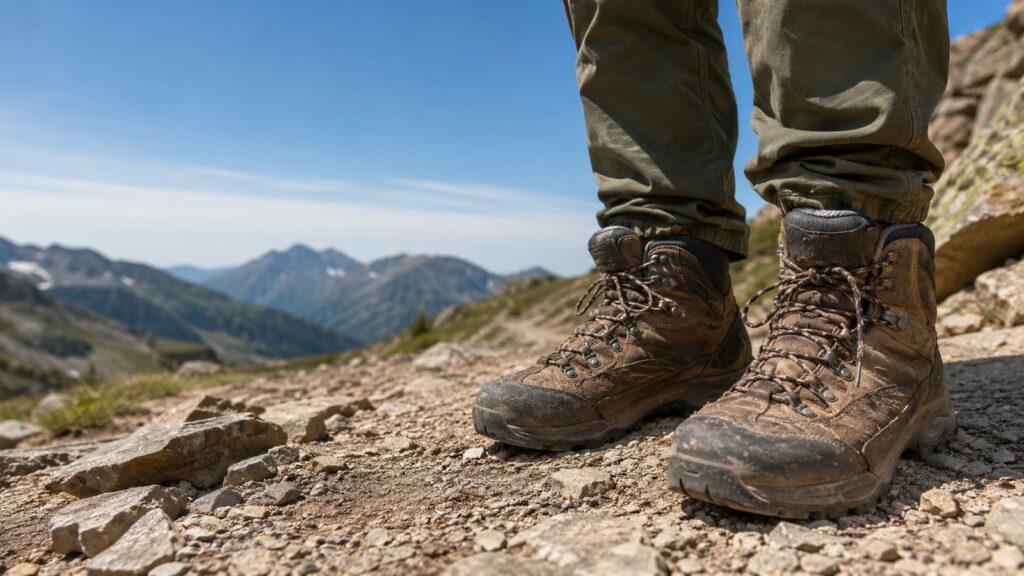
Feet hurt after hiking for one of four fixable reasons: the wrong footwear, more miles than your feet are trained for, poor fit, or warning signs you walked through instead of stopping for. When you catch yourself asking why do my feet hurt after every trip, start there before you blame the trail. Each of those causes is preventable once you understand what is happening inside your boot. Sore is normal. Sharp, hot, or one-sided pain is a message.
Normal soreness versus actual pain
Tired feet and injured feet are not the same thing, and confusing them is how a small problem becomes six weeks off the trail. General fatigue is dull, spread across both feet, and gone after a night's sleep. That is your soft tissue acclimating to a long day of load and impact, which is exactly what it is supposed to do.
Real pain behaves differently. It shows up in one spot, stays sharp, gets worse as you walk, or lingers days later. A burning line under your arch, a stabbing heel on the first morning step, or numb toes are not "toughen up" problems.
Here is the simple test. If the ache fades as you warm up and disappears by morning, keep hiking and keep training. If it sharpens with each mile or wakes you up at night, treat it as an injury until proven otherwise.
Why do my feet hurt in different spots?
The location of the pain usually tells you the cause. Feet complain in three main places, and each one points at a different fix.
Burning under the ball of the foot
The balls of your feet burn because the long bones behind your toes, the metatarsals, are taking pressure they cannot spread out. Hard-packed trail and rock give no cushion, so every step loads the forefoot like a hammer on a nail. Add a stiff, thin sole and you get that hot, bruised feeling by the afternoon.
Relief comes from cushion and spread, not toughness. A shoe with more forefoot padding helps, and so does a metatarsal pad that lifts the load off the sore spot. Loosen a laced-too-tight forefoot, because crushing the bones together makes it worse. If the burn turns into a shooting pain between two toes, that is nerve territory, not just fatigue.
Heel pain after long descents
Heels hurt after downhill hiking because descending pounds the heel and stretches the plantar fascia, the thick band along the bottom of your foot. Going down is not the easy part. Your muscles work by lengthening under load, called eccentric contraction, and that beats up the heel and arch more than any climb.
That first-step-in-the-morning stab is the classic plantar fascia strain. Shorten your stride on descents, use trekking poles to bleed off impact, and do not lock your knees. A supportive heel counter and a shoe that actually fits your heel matter more here than any gimmick.
Arch ache miles into the trail
Arches ache when they collapse and fatigue over distance, especially if your feet roll inward, which is called pronation. A soft, worn-out midsole lets the arch flatten step after step until the muscles that hold it quit. A too-stiff midsole can cramp a high arch just as badly.
Match the support to your foot, not to the marketing. Flat feet want structure. High, rigid arches want a little give and good cushioning.
Is your boot the real problem?
Most "trail was too hard" foot pain is really a fit problem in disguise. Difficulty makes it show up faster, but the boot manufactures the pain. Three fit mistakes cause most of it.
- Heel slippage. If your heel lifts, friction builds and you get blisters plus a foot working overtime to stay planted. Lock the heel with a runner's loop lacing.
- Toe box crush. Toes jammed forward on descents bruise nails and load the forefoot. Size up and leave a thumb's width in front.
- Wrong last shape. The "last" is the foot-shaped mold a shoe is built on. A narrow last on a wide foot pinches no matter how you lace it.
Weight matters too, and not gently. Roughly speaking, a pound on your feet costs you like five pounds on your back over a day of walking. So heavy boots you do not need are a false economy for your feet. Buy the boot that fits your foot shape, then worry about the feature list. A stiff mountaineering boot on a smooth five-mile path is the fastest way to end a hike limping.
How socks quietly make or break your feet
Socks are the cheapest fix for foot pain and the most ignored. Cotton holds sweat, softens skin, and turns hotspots into blisters by mile 10. Wet-out skin tears easily, so moisture management is half the battle.
Wear merino or synthetic, size them to your foot, and make sure the seams do not sit across your toes. A bunched sock under the forefoot is a blister factory. Too much cushion crammed into a snug shoe crushes the fit and jams your toes forward.
If blisters are your recurring problem more than joint soreness, work through our tips to prevent blisters on long hikes before you buy anything new. Sock liners help some feet and annoy others. Test them on a short walk, not on day one of a big trip.
Trail surface changes how your feet load
The ground under you decides where the pain lands. Pavement and hard-packed dirt give zero shock absorption, so they hammer the forefoot and heel. Gravel and roots force constant tiny adjustments that fatigue the small muscles in your feet and ankles.
Soft dirt and duff are kinder underfoot but make your stabilizers work harder to stay balanced. That is not a bad thing. Varying terrain actually builds stronger feet than a single flat surface ever will.
Steep grade stacks the deck against you. When a trail climbs more than 1,000 feet per mile, both the pounding on the way up and the impact on the way down spike your foot pain risk. Plan those days shorter until your feet are ready for them.
Building feet that survive the miles
Strong feet handle load that weak feet cannot, and you build them before the trip, not during the damage. Feet are full of small muscles that respond to training like any others. Skip the conditioning and every hike becomes the training, which is how you get hurt.
Work these in over a few weeks:
- Walk more, on real ground. Build weekly mileage slowly. Sudden jumps are what break feet.
- Calf raises. Do them off a step for range. Strong calves protect the plantar fascia and Achilles.
- Toe and arch work. Towel scrunches and short-foot holds wake up the muscles that support the arch.
- Loaded practice. Do a few training walks with your actual pack, not an empty daypack.
Progress your distance and your pack weight, not both at once. If a specific joint keeps flaring, our guide to preventing common injuries on long hikes covers how to load without overloading.
What to do the moment you get off the trail
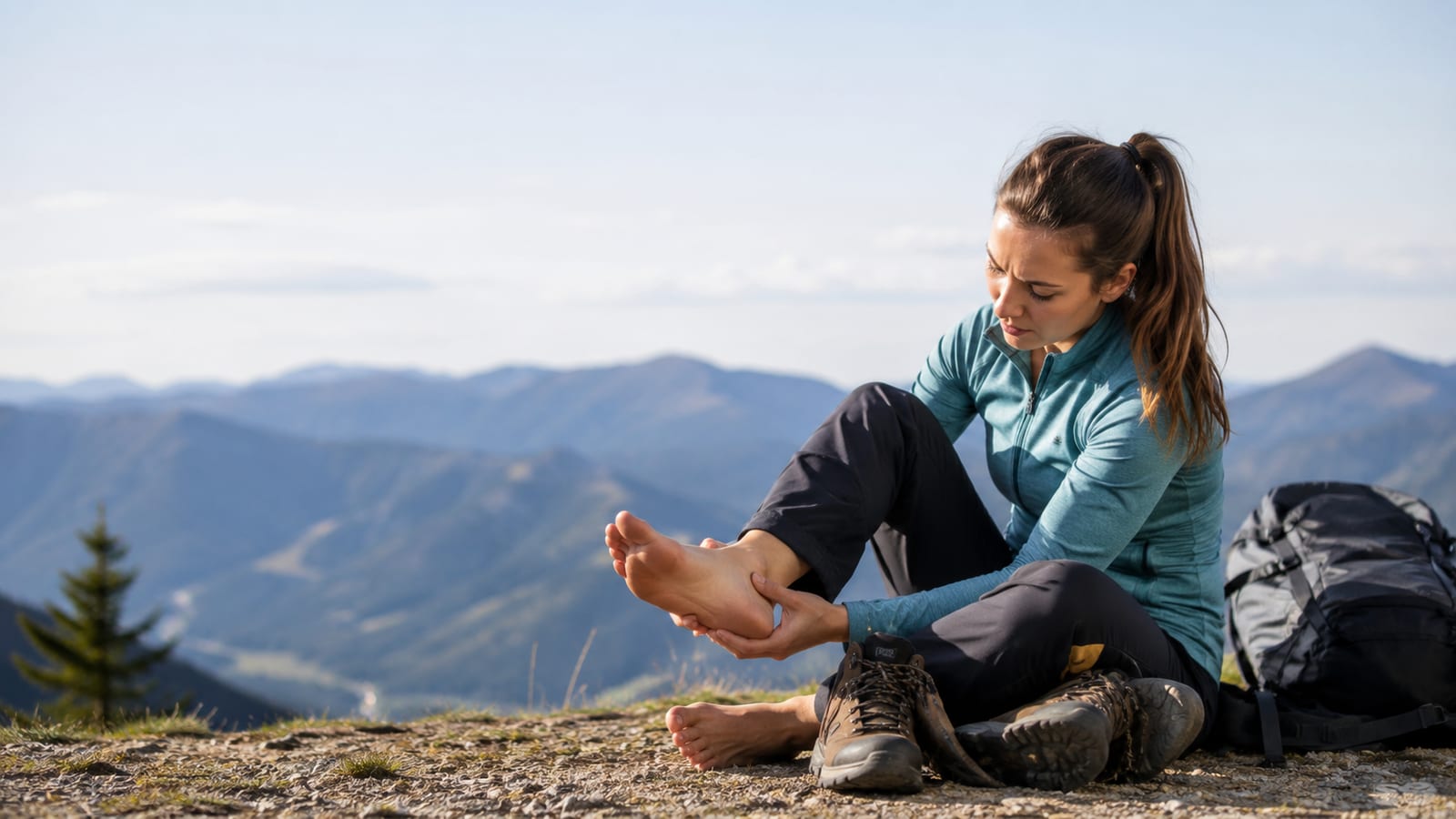
Get the swelling down first, then decide about heat later. The ranked order matters more than any single trick.
- Elevate. Feet above heart level for 15 to 20 minutes drains the swelling that builds over a long day.
- Cool it, day one. For a fresh, angry, or swollen foot, cold beats heat. Ice or cold water calms inflammation.
- Heat, later. Once the swelling is down, a warm soak and a foot rub boost circulation and loosen tight tissue. Skip the hot soak on a swollen foot the first night.
- Stretch gently. Calves and the bottom of the foot, slow and easy. No forcing.
- Rest, when it earns it. Sharp or one-sided pain means a rest day is not optional.
For a fuller reset after a hard trip, our post-hike recovery routine walks through sleep, food, and legs, not just feet.
When foot pain after hiking is a red flag
Stop hiking and see a professional when pain is sharp, one-sided, or getting worse instead of better. Some problems do not walk off, and pushing through turns a week into a season.
Watch for these:
- Stress fracture. A pinpoint pain on a bone, usually the forefoot, that worsens with each step and hurts at rest. This needs imaging, not ibuprofen.
- Nerve compression. Numbness, tingling, or a burning zap between the toes. Often a pinched nerve, sometimes made worse by tight lacing.
- Tendinopathy. Ache and swelling along a tendon that does not settle. Posterior tibial tendonitis, on the inner ankle and arch, can take up to six weeks to recover once it flares, so catching it early is the whole game. You can read how doctors describe posterior tibial tendon dysfunction if you want the clinical picture.
The threshold is simple. Soreness that fades is training. Pain that sharpens, localizes, or lingers is an injury, and injuries get diagnosed, not ignored.
FAQ
How long should foot soreness last after a hike?
Ordinary post-hike soreness should ease within a day and be gone in two. If it is still there on day three, or worse than when you stopped, treat it as more than fatigue and back off the next hike.
Do insoles actually help foot pain from hiking?
For many hikers, yes, especially if the stock footbed is thin and flat. A supportive aftermarket insole can steady a collapsing arch or add cushion under a hammered forefoot. It will not fix a boot that is the wrong size, though, so sort the fit first.
Should I hike again if my feet still hurt from the last trip?
Only if the pain is dull, even across both feet, and fading. Go easy and short. If it is sharp, in one spot, or you are still limping, take the rest day. Stacking miles on an injured foot is how people lose a whole month.
Why do my feet hurt more going downhill than uphill?
Descending loads your feet with braking impact and eccentric muscle work, which pounds the heel and stretches the plantar fascia far harder than a climb does. Shorter strides, softer knees, and trekking poles take the edge off.
Can tying my boots differently reduce foot pain?
Often, more than people expect. A runner's loop locks a slipping heel, and easing the forefoot laces relieves burning across the ball of the foot. Lacing is free and instant, so it is the first thing to try before spending money.
