
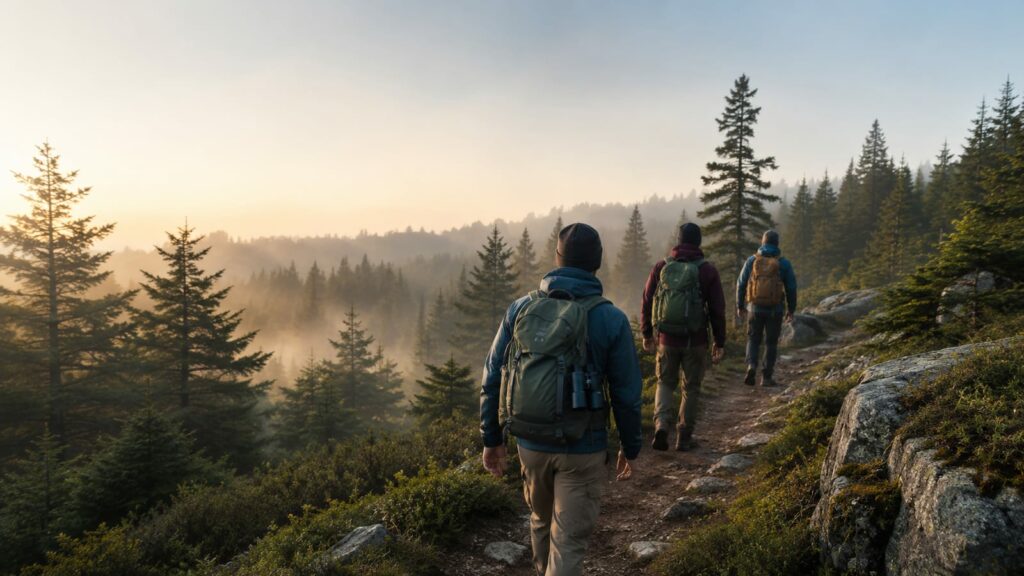
Wildlife doesn’t care which logo is printed on your booking email. Small groups and dawn hikes usually put you closer to the right habitat at the right hour, with less noise, less waiting, and more time to stop when something moves. A self-led walk is often cheaper. A genuinely local guide can be better still, but only when that guide adds field knowledge instead of bus-tour theater.
Last updated: 2026-08-10
Why do small groups and dawn hikes beat tour brands for wildlife?
First light lines up with how many animals use the day. They feed, travel, and cross open ground before heat, traffic, and people push them into cover. Yellowstone National Park identifies dawn and dusk as the best times for wolves, and that advice applies well beyond Yellowstone.
A branded tour may advertise wildlife hikes, but its schedule often starts after breakfast. Then come hotel transfers, parking delays, group checks, and a fixed return time. You reach the trail after the useful part of the morning has already passed.
Quiet feet matter too. Gravel carries conversation. Bright clothing, slammed car doors, and a dozen people stopping at different times can clear a meadow before you reach it. A smaller group can spread out, lower its voices, and wait without turning every pause into a committee meeting.
A good dawn walk gives you three advantages:
- Animals are more active.
- Cooler air makes a longer walk easier.
- You can stay at a productive spot instead of leaving because a schedule says so.
That last part is the quiet advantage. Wildlife watching rewards patience, and fixed tour timetables are not patient.
What does a big tour brand really cost?
The booking fee is only the first cost. You also spend time on transfers, early pickups, group delays, crowded viewpoints, and short viewing windows. The package may include meals, permits, equipment, or lodging, but those extras don’t make an animal appear.
| Choice | What you gain | What usually gets in the way |
|---|---|---|
| Big branded tour | Logistics, transport, a set itinerary | Waiting, noise, higher cost, less control |
| Small local group | Local knowledge and a quieter pace | Quality depends on the guide |
| Self-guided walk | Low cost and full control | You handle navigation, safety, and timing |
| Private guide | Focused attention and flexible stops | The fee can be hard to justify for an easy trail |
Wildland Trekking’s Yellowstone wildlife hiking tour allows up to 15 guests. That may be manageable for a full-day hiking operation, but I wouldn’t call it small for close wildlife observation. Fifteen sets of boots make more noise than four. They also create more spacing problems, more questions, and more people trying to photograph the same animal.
The same issue shows up with large “eco” tours. The label sounds responsible, but a crowded viewing stop still crowds wildlife. Ask how many people are on your actual walk, how long you can stop, and who decides when to move.
A famous brand can handle logistics well. That doesn’t mean it has the best trail timing or the quietest group. Animals judge the footsteps, not the marketing department.
When is a small group actually small enough for wildlife?
A small group is one that can move quietly and stop without blocking the trail. That matters more than a badge, an award, or the word intimate in a brochure.
I’d look for these signs:
- The guide can hear every person without raising their voice.
- People can spread out with space between them.
- The group stops together instead of forming a noisy knot.
- The guide sets a clear viewing time and leaves before animals feel pressured.
- Nobody is allowed to chase an animal for a better photograph.
Single-digit groups are easier to manage, but the headcount isn’t the whole story. Six loud people can ruin a sighting faster than ten quiet walkers. Conversation volume, loose gear, dogs, and stop discipline matter just as much.
Ask the operator direct questions before booking:
- How many guests are on this departure?
- Is the group split between guides?
- How much time do we spend walking versus riding?
- Can the itinerary change if animals are active?
- Does the guide carry binoculars and identify tracks or calls?
- What happens if weather closes the planned route?
If the answers stay vague, the tour probably sells scenery and convenience. That can still be useful. It just isn’t the same as a wildlife-focused walk.
Can a self-guided nature walk be safer than a tour?
Yes, if you treat the walk as a small trip instead of a casual stroll. You need a route that fits your daylight, weather, fitness, and bailout options. A tour removes some planning. It doesn’t remove risk from steep ground, heat, storms, mud, or wildlife.
Before leaving, check:
- Trailhead access and parking restrictions.
- The weather, including wind and storm timing.
- Trail closures and seasonal wildlife rules.
- Offline maps and phone battery.
- Water, layers, and a headlamp.
- A turnaround time that leaves daylight for the walk out.
- A person who knows your route and finish plan.
Choose a trail with reliable navigation and a clear return route. Don’t pick an obscure path at dawn just to avoid people. Getting lost in the dark is a poor trade for a small chance at a fox.
Keep the first walk easy enough that you can stop and look around. A difficult route turns wildlife spotting into a race with your own lungs. For a starting point, use these beginner hiking trails and choose one with known access and a simple bailout point.
A guide may still be safer in bear country, on a route with poor navigation, or where access rules are confusing. Self-guided does not mean careless. It means you own the decisions.
Which trails make wildlife spotting realistic rather than lucky?
Choose habitat, not a famous trail name. Animals often use the edges between places because those edges offer food, cover, and a way to escape.
Good places to study include:
- Meadow and forest edges.
- Water corridors and wetland margins.
- Brush beside open ground.
- Ridges where birds ride rising air.
- Seasonal food sources such as fruiting shrubs or fresh grass.
- Low-traffic paths away from busy overlooks.
- Routes with enough daylight left for a calm return.
Water corridors can be productive, but they’re not guaranteed animal highways. Heat, drought, recent rain, hunting pressure, and human traffic can change how animals move. Check recent conditions if the land manager provides them.
A short loop can beat a long route. You may see more by revisiting one meadow slowly than by covering miles of forest while staring at your boots. Longer trail opportunities sound attractive, but extra distance only helps if the habitat improves.
Look for trail maps, ranger updates, local conservation groups, and recent closure notices. Don’t trust a map pin that says wildlife viewing without showing why the habitat works. A lookout with a famous name may hold more tripods than animals.
How should hikers behave when they encounter wildlife?
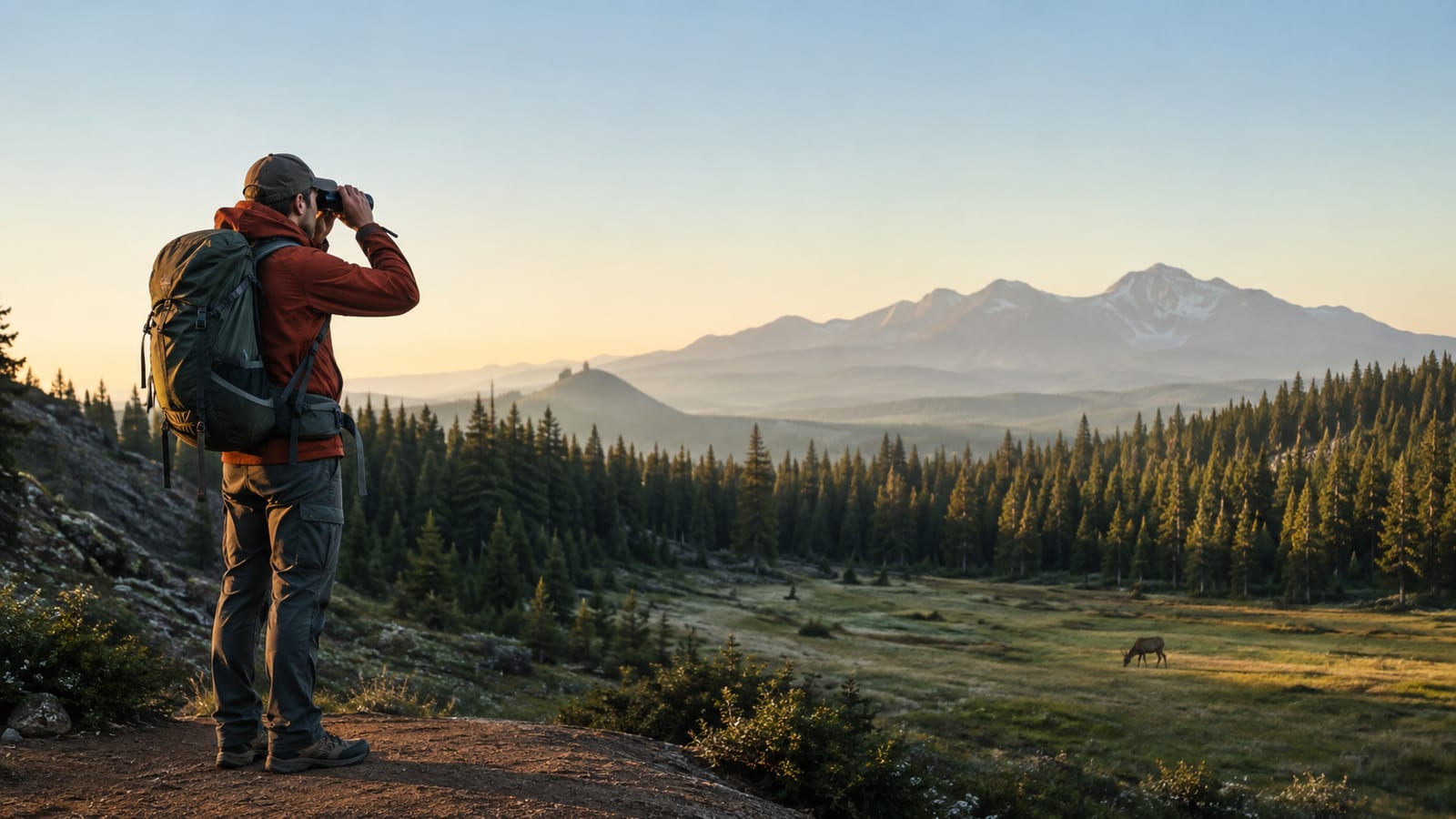
Stop before you get close. Watch the animal’s behavior, then back away if it changes direction, stiffens, watches you, or leaves its food or young.
Yellowstone National Park requires visitors to stay at least 100 yards from bears and wolves. Yellowstone also requires at least 25 yards from all other wildlife, including bison, elk, and deer. Those are park rules, not suggestions for getting one more photograph.
Use these habits:
- Keep the wind in mind so your scent doesn’t carry straight toward the animal.
- Speak softly, or stop talking.
- Never approach, surround, feed, call to, or pursue wildlife.
- Keep dogs leashed where allowed, and skip the trail if your dog can’t stay calm.
- Store food and scented items securely.
- Turn off flash photography.
- Leave the trail edge clear for other hikers and for the animal.
- Retreat along your route if the animal blocks the way.
A telephoto lens earns its weight faster than a reckless approach. Read more about protecting wildlife while hiking before you go.
The rule against pursuit is absolute. If the animal moves away, your viewing time is over.
Are eco-experiences better when they’re built around a walk?
An eco-experience earns the name through conduct, local benefit, and habitat respect. A green logo on a booking page proves nothing by itself.
Look for an experience that:
- Uses a small group with clear limits.
- Employs local guides who know the area.
- Keeps vehicles and stops to a minimum.
- Respects closures and seasonal access.
- Doesn’t bait animals or promise close encounters.
- Pays local staff fairly.
- Teaches guests how to reduce disturbance.
- Leaves food, waste, and damaged vegetation out of the experience.
A walking-based trip can reduce transfers and keep attention on the place. However, a walk can still be careless if the group crowds nests, tramples plants, or follows an animal off-trail.
You can also plan a lower-impact self-guided outing with this eco-friendly hiking guide. Keep it practical. Pack out waste, stay on durable ground, and don’t turn a quiet habitat into a photo set.
When is a guided wildlife walk worth paying for?
Pay for a guide when the guide solves a problem you can’t solve alone. That usually means unfamiliar hazards, restricted access, difficult navigation, or species-sensitive rules.
A good local guide earns the fee by:
- Reading tracks, scat, calls, and feeding sign.
- Knowing which habitat is productive that morning.
- Adjusting the route for weather and animal movement.
- Explaining safe distances without bargaining.
- Recognizing when the group should retreat.
- Handling permits or access rules.
- Finding wildlife without dragging guests off-trail.
A guide is also useful when you’re visiting a large park for the first time. You may spend all morning on a pretty but empty route. Local knowledge can save the day, especially when parking, road closures, or water levels change the plan.
Skip the guide if the route is easy, well mapped, open to the public, and you’re comfortable starting before sunrise. You don’t need to pay someone to walk beside you on a clear nature loop and point at squirrels.
A guide who only leads from one marked stop to another is providing transport with boots. That can be convenient. It isn’t naturalist skill.
How do you plan a dawn hike without wasting the morning?
Do the planning the night before. Dawn is a bad time to discover that the gate is closed, your phone has no map, or your only warm layer is still damp.
Use this checklist:
- Confirm trailhead access and parking.
- Download the route for offline use.
- Check weather, wind, rain, and trail conditions.
- Lay out quiet layers that won’t rustle.
- Charge your phone and headlamp.
- Pack water, food, rain protection, and first aid.
- Tell someone your route and expected finish.
- Set a turnaround time before you leave.
- Arrive with enough time to park and settle before first light.
- Plan where you’ll warm up after the walk.
Wear layers you can adjust without digging through your pack. A cold start can become a sweaty climb quickly, and wet clothing stays unpleasant after the sun comes up.
Use the headlamp on the way in, but keep the beam pointed at the trail. Avoid sweeping it across meadows or into trees. Once there’s enough light, pack it away so you can scan without a bright spot ruining your view.
Don’t schedule a hard finish. Leave time for a slow return, a wrong turn, a weather change, or one last stop near the trailhead.
What should you bring for a wildlife-focused nature walk?
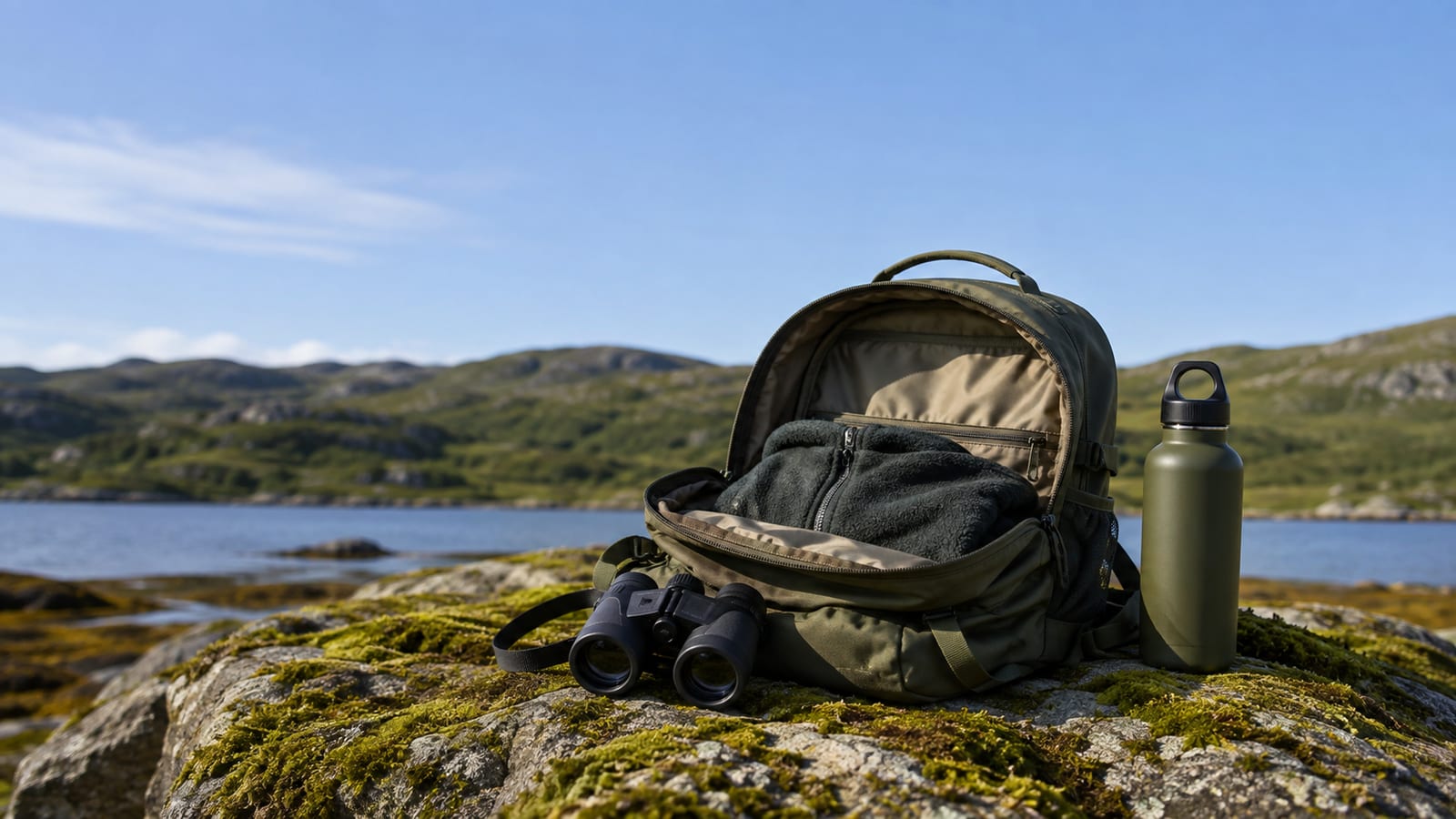
Carry the items that help you stay quiet, warm, oriented, and patient. Tour-style packing lists often include too much gear and not enough attention to fit.
Pack:
- Quiet layers for changing temperatures.
- Grippy footwear suited to mud, rock, or wet roots.
- Binoculars with a strap you can control.
- A rain shell and pack cover.
- Offline navigation and a charged phone.
- Water and simple snacks.
- Small first-aid supplies.
- A headlamp.
- Waste bags and secure food storage.
- A notebook if you want to record tracks, calls, or locations.
Binoculars are more useful than a phone zoom. They let you watch without closing the distance, and they weigh less than a camera setup that spends the morning in your pack.
Muted clothing can help, but don’t buy a special camouflage outfit. Quiet movement matters more than matching the bushes. A loud shell, jangling bottle, or squeaky shoulder strap will do more harm than a bright hat.
Check your shoulder straps and pockets before leaving. Pack rub and loose gear become distracting after mile 10, even if the trail only has a few miles left.
How can you spot more wildlife without covering more miles?
Slow down before you start adding distance. Most hikers miss animals because they scan too quickly and walk past the useful places.
Try this method:
- Pause at habitat transitions.
- Listen before you look.
- Scan from near ground to treeline.
- Check branches, shadows, and open gaps.
- Look for tracks, scat, feathers, chewed plants, and broken stems.
- Wait quietly before moving on.
- Revisit productive sections on the return.
Listening first helps you notice rustling, alarm calls, wingbeats, and movement behind cover. Then scan in a steady pattern instead of swinging your eyes everywhere. Wildlife spotting is less like searching a shelf and more like giving your eyes time to catch up.
Stop at bends, water crossings, meadow edges, and places where the trail enters cover. Animals often appear for a few seconds and disappear again. If you keep walking, you’ll miss the whole exchange.
Small groups and dawn hikes work because they give you room for this slow method. You don’t need to cover more trail. You need to spend more time noticing the trail you already chose.
What is the best alternative to a tour brand for a first wildlife hike?
Start with an easy, well-mapped local trail or conservation-area walk at dawn. Pick a route with reliable parking, clear access rules, nearby bailout points, and habitat edges. That setup gives you useful practice without adding remote-route problems.
Choose a small independent operator if:
- You don’t know the area.
- Wildlife rules are complicated.
- The trail has real navigation hazards.
- The guide can identify tracks and calls.
- The guide has authority to change the route.
- The group stays quiet and genuinely small.
Choose a self-guided walk if:
- You can read an offline map.
- The weather is stable.
- The route has a safe return plan.
- You’re comfortable carrying your own water and layers.
- You can keep wildlife distance without a guide reminding you.
Choose a branded tour if logistics matter more than control. It may suit families, visitors without a car, or hikers who need gear and meals handled. Just pay for the service you need. Don’t pay extra for a wildlife guarantee nobody can make.
For a larger trip, compare routes and access before comparing brands. Our guide to wilderness areas for hiking and paddling can help you think through remoteness, water, and transport before you book.
The best first wildlife outing is usually simple: a familiar trail, an early start, a quiet pace, and enough time to turn around safely. Add a local naturalist when their knowledge changes the plan. Otherwise, keep the money for another trail day.
FAQ
Do wildlife tours include enough time for photography?
Some do, but ask how long each stop lasts and whether the guide can wait for changing light. A schedule built around transfers and fixed viewpoints leaves little room for careful framing. A local guide with a flexible route usually gives you more useful time than a large coach-based trip.
Should you choose a loop or an out-and-back trail?
A loop gives you different habitat and viewpoints, but an out-and-back route makes navigation and retreat simpler. For a first dawn walk, choose the route with the safer return rather than the more impressive map shape. You can learn the area before adding complexity.
Is wildlife easier to spot in silence?
Silence helps, but total silence isn’t required. Keep voices low, control loose gear, and stop talking near likely habitat. The bigger problem is sudden noise and constant movement, not a quiet sentence between two people.
What should you do if another hiker approaches an animal?
Tell the person calmly that the animal needs space, then move away yourself. Don’t form a crowd or argue beside the wildlife. If the animal has limited escape routes, give it the clear path and leave the area.
Can you take children on a dawn wildlife walk?
Yes, if the route is short enough for them to stay warm, quiet, and interested. Give each child a simple job, such as listening for birds or checking one side of the trail. If the group can’t manage the pace or distance rules, choose a developed nature walk instead.
