
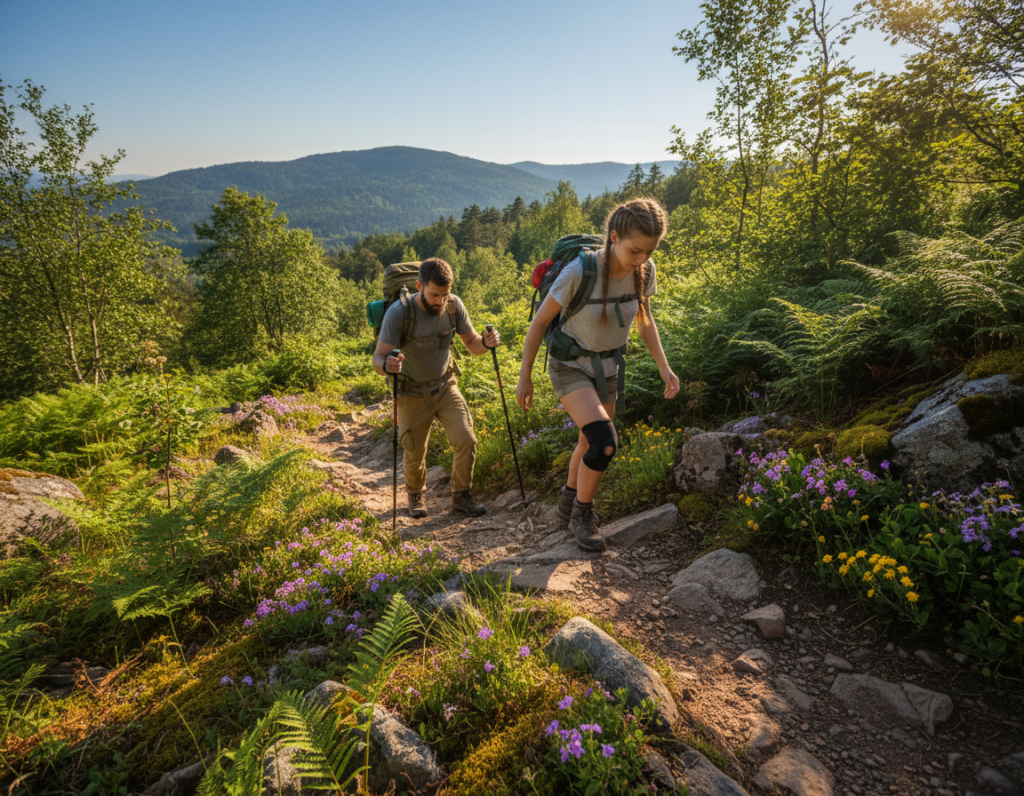
That triumphant feeling on a summit is incredible, but the journey back down is where many adventures turn painful. Gravity shifts from a helpful push to a relentless force on your joints with every step. I’ve learned this through hard experience on everything from local trails to Everest—the descent is often the real challenge.
Studies show a staggering 80% of hiking accidents occur during the descent. A single day’s downhill hiking can involve a vertical drop equal to a skyscraper, placing immense stress on your body. I’ve watched strong hikers conquer steep ascents only to struggle on the way down, their knees swollen and aching.
This guide shares the practical strategies I’ve gathered from thousands of miles on steep trails. You’ll learn how to make downhill sections manageable and even enjoyable. We’ll cover techniques, gear, and training that actually work so you finish your hike strong.
Key Takeaways
- Downhill sections put significantly more stress on your knee joints than uphill climbing.
- Most hiking accidents happen during the descent phase of a trek.
- Proper technique is crucial for absorbing impact and controlling your momentum.
- The right gear choices can dramatically reduce strain on your joints.
- Specific strength training prepares your body for the demands of steep descents.
- These methods are field-tested by experienced guides and mountaineers.
- Implementing these strategies helps you finish hikes strong instead of limping.
Understanding Knee Stress on Downhill Hikes
Gravity becomes your greatest opponent on the way down, placing immense demands on your knees. It’s a force you can’t fight, only manage. Understanding how it works is the first step to protecting yourself.
Impact of Gravity on Your Joints
Each step down is a controlled fall. Your legs act as brakes, slowing your descent. This creates a significant impact with every footfall.
Your muscles, especially the quadriceps, work hard in a lengthening motion. This is called eccentric loading. It causes more muscle soreness than climbing up. Your knee joints bear the brunt of this force.
Identifying Common Knee Strains
The repetitive stress of a long descent can lead to specific problems. It’s helpful to know what you might feel. Common issues include pain around the kneecap and sharp pain on the outer side of the knee.
Swelling and a feeling of instability are also red flags. This is why learning how to prevent knee pain on steep is so valuable. Your body sends clear signals when it’s overwhelmed.
| Activity | Estimated Force on Knees | Primary Type of Stress |
|---|---|---|
| Walking on Flat Ground | 1-2 times body weight | Compression |
| Climbing Uphill | 2-3 times body weight | Compression & Muscle Power |
| Steep Downhill Descent | 3-4 times body weight | Impact & Eccentric Loading |
Downhill Hiking Tips for Knee Protection
The secret to a pain-free descent lies in two simple but powerful adjustments to your movement. These methods work together to manage forces and keep you steady.
I’ve watched expert guides use these techniques for years. They finish long days on the trail strong.
Use Trekking Poles for Stability
Think of your trekking poles as extra legs. They create a four-point contact system with the ground. This dramatically improves your balance.
When you use trekking poles correctly, you transfer impact to your upper body. Your knees absorb significantly less stress with every step. It’s a game-changer for long descents.
Maintain a Low Center of Gravity
Your body position is everything. Avoid locking your knees straight. Instead, keep them softly bent throughout your descent.
This lowers your center gravity. It lets your strong thigh muscles act as shock absorbers. Your weight stays centered over your legs for better control.
Yes, your thighs will feel the burn. But muscle fatigue is far better than joint pain. This technique is a cornerstone of safe movement on steep terrain.
| Technique | Primary Benefit | Key Action |
|---|---|---|
| Using Trekking Poles | Redistributes impact force away from knees | Plant poles slightly ahead with each step |
| Low Center of Gravity | Uses muscles as shock absorbers | Keep knees flexed, avoid locking joints |
Preparing Your Body with Strength Training
Building a strong foundation through targeted training transforms how your body handles steep terrain. General fitness alone won’t protect your joints during challenging descents. You need specific exercises that build the exact strength your legs demand.
Start your preparation 3-9 months before your adventure. This gives your muscles time to adapt gradually. Consistent training builds protective strength that prevents joint stress.
Targeted Leg Workouts
Your legs require exercises that mimic trail movements. Step-downs are particularly effective for building quadriceps strength. Stand on a platform and slowly lower your heel over 3-4 seconds.
Squats and lunges develop coordinated muscle systems. Focus on slow, controlled movements during the descent phase. This builds time-under-tension strength that prevents muscle fatigue.
Core and Balance Exercises
A strong core stabilizes your entire body during movement. It maintains proper posture and prevents compensatory motions that stress knees. Include planks and rotational exercises in your routine.
Balance training prepares your body for uneven terrain. Single-leg stands strengthen stabilizer muscles around ankles and hips. This coordination minimizes stumbling risks.
| Exercise Type | Primary Benefits | Recommended Frequency |
|---|---|---|
| Step-downs & Lunges | Builds eccentric quadriceps strength | 2-3 times weekly |
| Squat Variations | Develops coordinated leg muscle systems | 2 times weekly |
| Core Stability Work | Improves posture and body control | 3-4 times weekly |
| Balance Training | Enhances joint stability and coordination | Daily practice |
The muscle fatigue you feel during training builds protective capacity. This preparation pays dividends when you’re navigating difficult trail sections with confidence.
Optimizing Footwear and Gear
I’ve learned through experience that proper gear adjustment is just as important as technique itself. Your equipment creates the foundation for every step you take on challenging terrain.
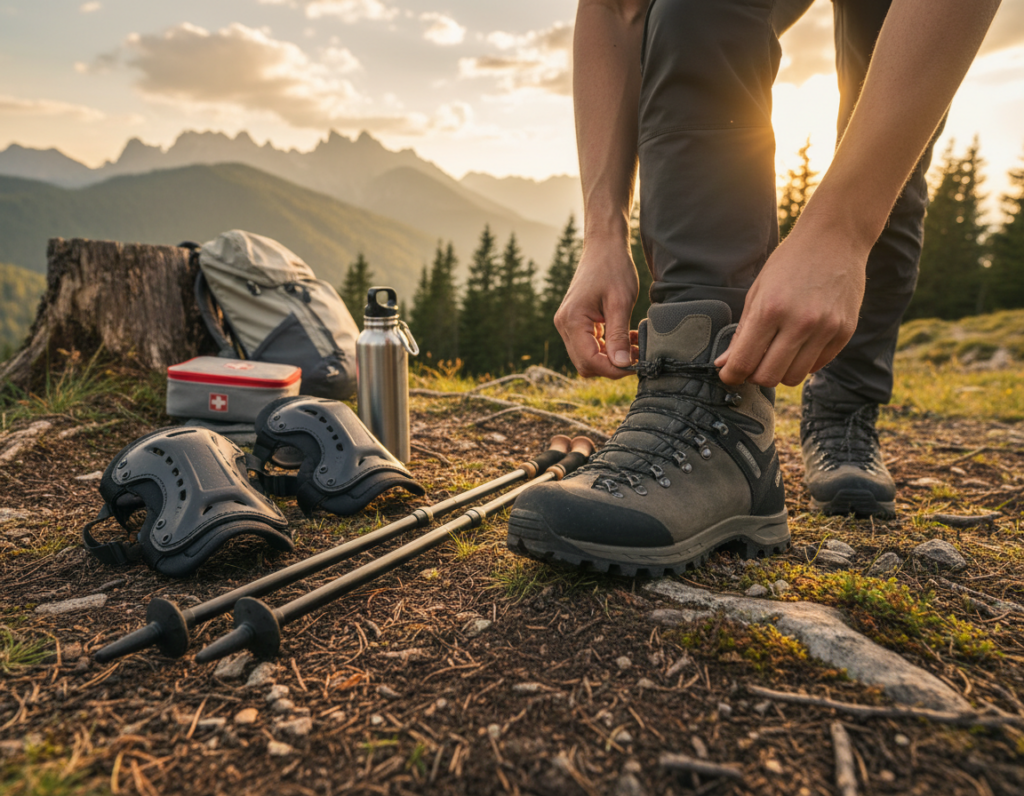
The right setup transforms how your body handles steep trails. It reduces strain and improves stability throughout your adventure.
Selecting Supportive Hiking Boots
Your feet absorb significant impact during descents. Supportive boots with proper fit protect your knees from excessive stress.
Choose footwear with adequate toe box room. Your feet slide forward during steep sections, and cramped toes lead to painful problems.
Keep boots comfortably loose during climbs. Snug them up before descending to prevent foot sliding inside the boot.
Adjusting Trekking Poles and Pack Fit
Lengthen your poles for descents so elbows form a 90-degree angle. Short poles force you to reach forward, disrupting your balance.
Tighten your hip belt and shoulder straps before steep sections. This minimizes pack movement that can throw off your stability.
Start with lighter pack weight during training. Gradually increase load as your strength improves over time.
| Scenario | Boot Adjustment | Pole Adjustment | Pack Adjustment |
|---|---|---|---|
| Steep Descent | Snug lacing for foot stability | Lengthened for better reach | Tightened straps for minimal movement |
| Gradual Trail | Comfortable fit for endurance | Standard hiking length | Balanced weight distribution |
| Technical Terrain | Secure but flexible | Adjusted for precision placement | Compacted load for agility |
Adapting Techniques for Varied Terrain
What works on a smooth dirt path can be dangerous on loose rock or snow. The ground beneath your feet dictates your entire strategy for a safe descent. I’ve learned this through trial and error on mountains worldwide.
Your approach must shift with each new surface you encounter. Reading the trail ahead becomes your most important skill. This awareness prevents injuries and makes challenging terrain manageable.
Strategies for Rocky, Loose, and Snowy Trails
On steep rocky trails, move diagonally instead of heading straight down. This zigzag pattern reduces the effective grade dramatically. You’ll find more stable footing options this way.
Scan ahead for loose rocks that could roll under your weight. Give people below you plenty of space in case you slip. Short, controlled steps maintain balance on unstable surfaces.
Snow conditions change everything about your descent. Hard-packed snow allows a “plunge step” technique—drive your heel down firmly. Soft snow requires different balance as you sink with each step.
Steep snow slopes often demand switchbacks to reduce the angle. This makes your descent longer but much safer. Always adapt your technique as trail conditions shift throughout the day.
Using Proper Form and Controlled Steps
I first learned about proper descent form from a Sherpa guide decades ago, and his wisdom still holds true today. He pointed out that many people take long, jarring strides that send shockwaves straight to their joints. The right technique transforms this impact into manageable muscle work.
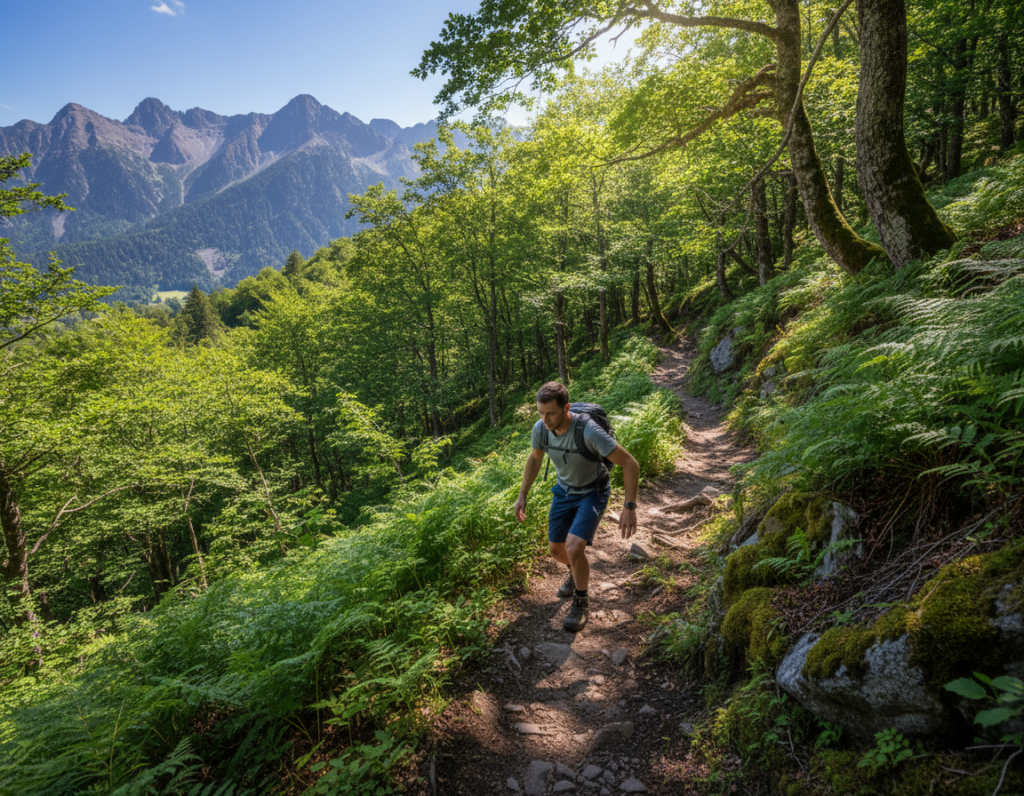
Your entire approach should focus on two simple but powerful adjustments. These methods protect your joints and improve your stability on any trail.
Shorter, Quicker Steps
Reduce your stride length significantly. Your front foot should land closer to your body, not stretched far ahead. This simple change keeps your center of gravity over your feet.
Increase your pace to maintain speed. A faster turnover of smaller steps feels smoother. Your legs act like efficient shock absorbers instead of rigid poles.
Think of it as a controlled shuffle. This technique uses momentum to your advantage. It’s far gentler than stomping down with heavy heel strikes.
Avoiding Knee Lock-Out
Never let your knees snap straight when your foot lands. Keep them softly bent throughout the entire step. This forces your strong thigh muscles to absorb the force.
Lean forward slightly from your ankles, not your waist. This posture helps maintain a flexed knee position. Leaning back encourages locking, which is damaging.
Use your arms for balance and rhythm. You can also use trekking poles to enhance stability. They provide extra points of contact with the ground.
| Element of Form | Proper Technique | Common Mistake | Resulting Impact |
|---|---|---|---|
| Step Length | Shorter, quicker steps | Long, reaching strides | Reduces joint stress |
| Knee Position | Always slightly bent | Locked straight on impact | Muscles absorb force |
| Body Lean | Forward from ankles | Leaning back at waist | Improves balance and control |
| Arm Usage | Out for balance or using poles | Tight at sides | Enhances stability |
Practice this form on small slopes near home. Make it automatic before you tackle a big mountain. Your knees will thank you after a long day on the trail.
Monitoring Your Progress and Preventing Injury
The most important part of your adventure often begins when you turn around to head home. Listening to your body during this phase is your best defense against a minor issue becoming a major setback. I learned this the hard way on a multi-day trek where knee pain started on day one.
Sharp pain in a joint is a red flag, while sore muscles are a normal sign of hard work. If you feel joint discomfort, slow your pace and shorten your steps immediately. This quick adjustment can make the difference between finishing strong and being sidelined.
Incorporate Rest and Recovery Days
Your muscles need time to repair after a significant elevation loss. A recovery day doesn’t mean doing nothing. Light walking or stretching maintains your fitness level while aiding repair.
Plan your training and trips with this balance in mind. Gradually increase the difficulty of your descents over time. Research the elevation drop and terrain type of your target trails beforehand. Proper preparation is the ultimate key to enjoying your time on the mountain without injury.
Conclusion
Mastering the art of descending means you’ll finish every adventure strong rather than limping to the trailhead. Protecting your joints comes down to combining smart preparation with mindful technique on the trail.
Your foundation includes strength training for your legs, proper gear adjustments, and adapting your approach to different terrain. Using trekking poles correctly and maintaining control through shorter steps makes a dramatic difference.
Remember that reaching your goal is only half the journey. The real success comes from returning safely with healthy knees ready for your next exploration. Start practicing these methods on local trails today.
