
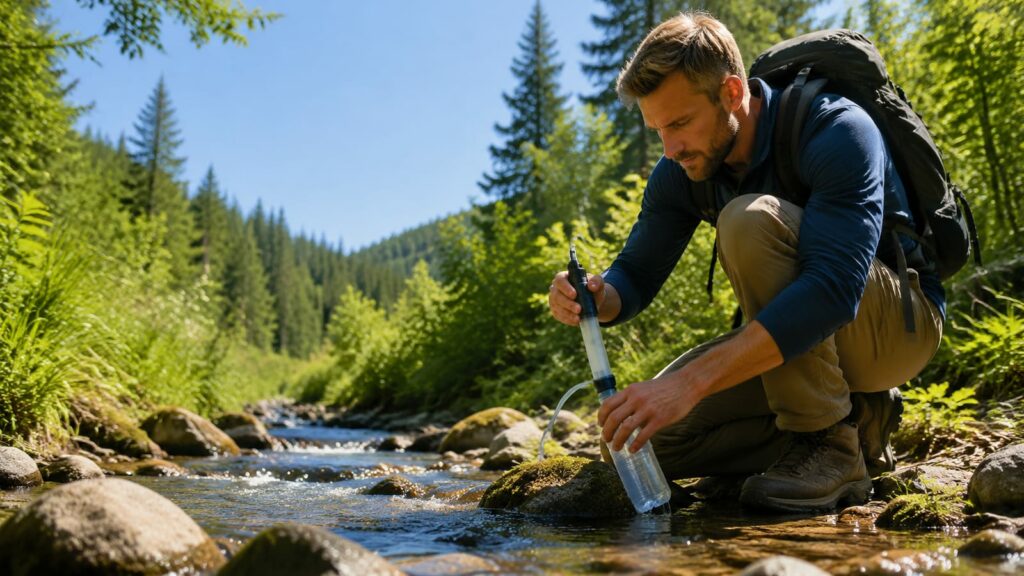
Clear water is not safe water, and a fast creek is not a free pass. Use a maintained hollow-fiber filter for most trail water, carry chemical tablets as backup, and treat every drop used for drinking or cooking. Choose the cleanest reachable source and keep untreated water off the clean side.
Last updated: 2026-08-13
Updated 2026-08-13
The safe trail-water process
The basic process is simple. Most trouble comes from dirty hands, mixed-up bottle caps, or a filter that was clogged, frozen, or left in a gear bin since last season.
- Check upstream before collecting. Look for camps, livestock, dead animals, mines, farms, roads, and heavy human use.
- Choose the cleanest reachable water. Favor clear moving water over stagnant pools, but don’t risk a fall for a prettier collection point.
- Let cloudy water settle. Then strain it through clean cloth before it reaches your filter.
- Fill the dirty container carefully. Keep the filter outlet, clean bottle, and clean cap away from untreated water.
- Filter into a clean container. Avoid touching the outlet to wet bottle threads or dirty hands.
- Add a second treatment when needed. Use tablets or an ultraviolet purifier if viruses may be a concern.
- Protect the system after use. Backflush when flow slows, inspect seals, and keep hollow fibers from freezing.
- Keep backup treatment accessible. Tablets buried under your sleeping bag aren’t much help during a rushed water stop.
This is how to filter water on a real trip: reduce the mess first, treat it, and keep the clean side clean. A good filter cannot fix sloppy bottle handling.
Safer water-source selection
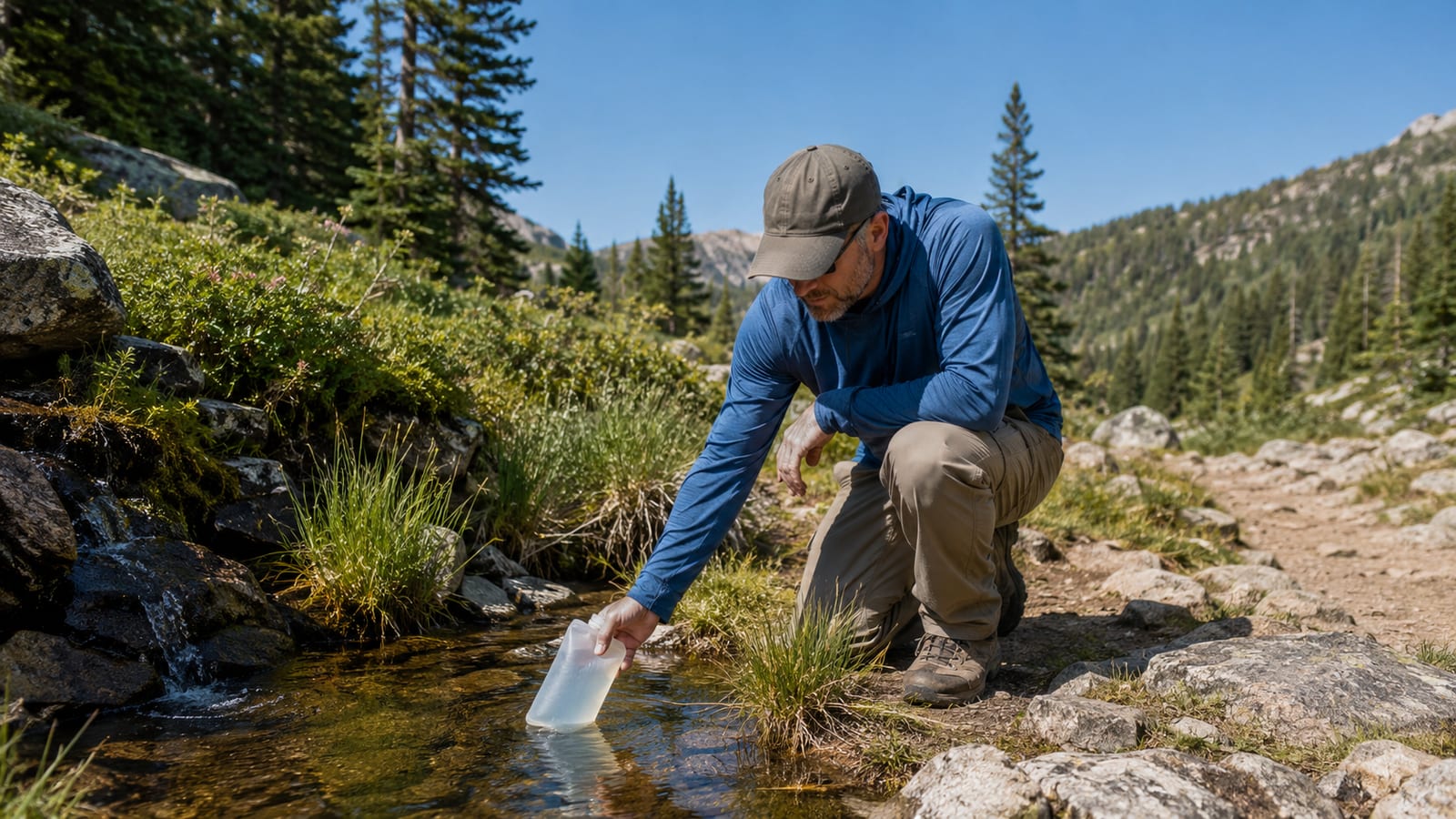
No wild water source is guaranteed safe. However, some sources give your treatment system a cleaner starting point.
Look upstream before you unpack the filter. Avoid water below grazing animals, busy camps, pit toilets, trail crossings, roads, mining areas, farms, or obvious wastewater discharge. Also skip pools with dead animals, oily films, strange colors, chemical smells, or heavy algae.
Choose the clearest accessible flow. Collect upstream from where people and animals enter the water. If you have to step onto loose rock or lean over a steep bank, find another spot. A wet boot is annoying. A fall into fast current is a different problem.
Springs can look inviting, but the exposed outlet may still be contaminated by animals or surface runoff. Meanwhile, stagnant ponds collect more sediment and organic debris. You can treat pond water, but expect worse taste, faster clogging, and more work.
Clear water is easier to treat. It isn’t proof that the water is safe.
Hidden risks in clear backcountry water
Waterborne threats include protozoa, bacteria, and viruses. Giardia and Cryptosporidium are protozoa. They can survive in water that looks cold, clear, and ready for a bottle photo.
Most hiking filters use hollow fibers to block protozoa and bacteria. However, standard trail filters generally don’t provide reliable virus protection. Viruses matter more where human waste may enter the water, including crowded camps, flood-affected areas, and places with poor sanitation.
Appearance tells you almost nothing about microscopic contamination. An animal can foul a source upstream without leaving hair, tracks, or a polite warning sign.
Chemical and agricultural pollution is a separate problem. Standard filters, tablets, ultraviolet light, and boiling don’t reliably make fuel, pesticides, mine runoff, or harmful industrial waste safe. If the source smells chemical, has an odd sheen, or sits below known contamination, avoid it rather than building a treatment experiment beside the trail.
Does fast-flowing water still need treatment?
Yes. Current, waterfalls, snowmelt, and cold temperatures do not make untreated water safe.
Moving water may contain less stagnant debris than a muddy pool. Still, it can carry waste from wildlife, livestock, camps, roads, or people farther upstream. A bright mountain creek has better marketing than a cattle pond, but pathogens don’t care about the scenery.
Treat every source unless a local authority has specifically confirmed that it is potable. Even then, check whether storms, flooding, or seasonal use have changed conditions.
The same rule applies to water used for brushing teeth, cold soak meals, drink mixes, and rinsing food. If it’s going into your mouth, treat it.
Choosing a treatment method
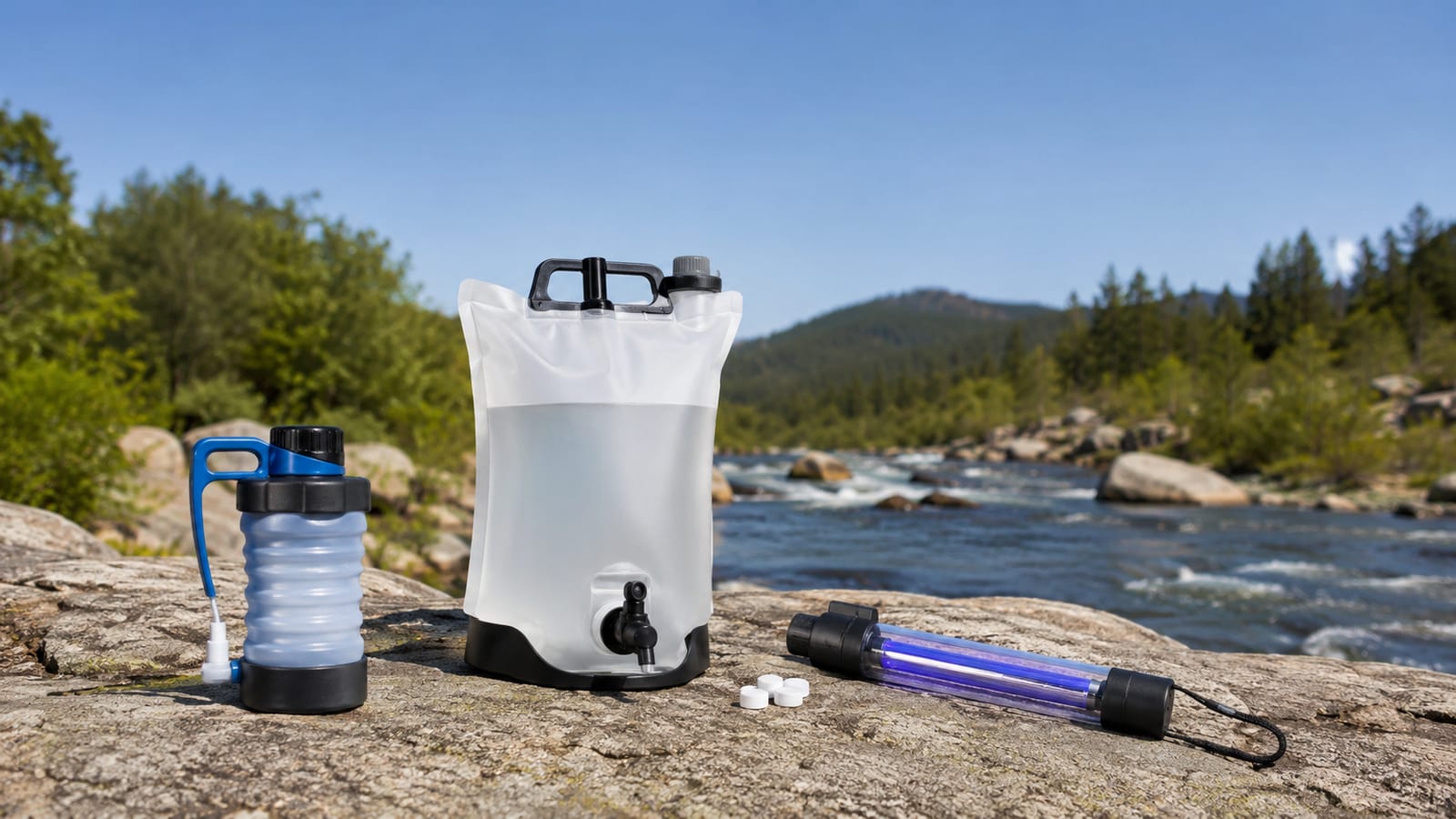
For most hiking in the United States, use a hollow-fiber filter and carry tablets as backup. Add virus treatment when the route, local guidance, or human contamination risk calls for it.
| Method | Keep it for | Where it falls short |
|---|---|---|
| Hollow-fiber filter | Routine trail water with protozoa and bacteria concerns | Usually doesn’t handle viruses; can clog or freeze |
| Chemical treatment | Backup use and virus coverage | Needs label wait time; taste can be poor; some organisms are harder to treat |
| Ultraviolet purifier | Clear water where broad microbe treatment matters | Needs batteries, clear water, and intact electronics |
| Boiling | Camp treatment and gear failure | Uses fuel, takes time, and leaves hot water to cool |
| Gravity filter | Groups and larger camp water needs | Needs a place to hang, more setup, and careful hose storage |
The table gives you the short version, but the weak points decide what stays in your pack. A filter that works beautifully at a clear creek can become dead weight beside a silty pond or after a freeze.
Hollow-fiber filters
A hollow-fiber filter is the right default for most day hikes and backpacking trips. It filters water as you drink, squeeze, or let gravity pull water through.
However, don’t confuse filtration with full purification. If viruses are a credible concern, pair the filter with a suitable chemical treatment or use a purifier designed for broader coverage.
Chemical treatment
Tablets are light, compact, and hard to justify leaving at home. They’re slower than filtering and may leave a taste. Also, effectiveness depends on the chemical, water temperature, clarity, and label wait time.
Follow the product instructions exactly. Guessing at wait time because you’re thirsty turns treatment into wishful thinking.
Ultraviolet purification
Ultraviolet light can treat viruses, bacteria, and protozoa in clear water. It doesn’t remove grit, dead organisms, or bad taste.
As a result, cloudy water should settle and be strained first. A dead battery or damaged lamp also ends the plan quickly, so carry another treatment method.
Boiling
Boiling works against biological pathogens and makes sense in camp or after gear failure. Bring water to a rolling boil, then let it cool in a covered clean container.
However, boiling uses fuel and doesn’t remove chemical pollution. Check the Environmental Protection Agency’s emergency water guidance for official treatment principles, especially during local advisories.
Clean-side handling for squeeze filters
A squeeze filter has a dirty side and a clean side. Treat that divide like it matters, because it does.
- Mark the dirty bag. Don’t later use it as a clean bottle because it happens to fit.
- Collect without dunking the clean parts. Keep the outlet cap and drinking spout away from the source.
- Attach the filter with clean hands. At minimum, avoid handling animal waste, mud, or wet shoreline debris first.
- Hold the outlet over the clean bottle. Don’t push it inside or let it touch untreated bottle threads.
- Roll or squeeze the dirty bag steadily. Hard twisting can split seams or damage the connection.
- Cap the clean bottle immediately. Keep its cap in a pocket or clean hand, not on the riverbank.
- Store dirty and clean parts separately. A small bag for the clean outlet prevents pack rub and contamination.
If untreated water runs down the outside of the clean bottle, wipe and disinfect the threads before drinking. Don’t take a careful clean-water system and finish it with a dirty cap.
For more gear options, see this guide to portable hiking water filters.
Squeeze-filter tradeoffs
Squeeze filters suit solo hikers and small groups because they’re light, quick to deploy, and simple to inspect. You can filter directly into a bottle without hanging hoses across camp.
They also have predictable weak points. Silty water clogs the fibers. Soft bags can split at seams, and repeated squeezing gets old when several people need water. Meanwhile, trapped water can freeze inside the fibers and cause damage you can’t see.
Flow decline usually means the filter needs cleaning. Backflush or clean it according to the maker’s instructions, using treated water. Forcing harder on a clogged filter may burst the bag without improving much else.
A squeeze filter earns its place because it’s good enough for most trail miles. Still, carry tablets. Hollow fibers and optimism both have limits.
Which trail filters are worth carrying?
The right pick depends on your trip pattern, not an award badge or a tidy product photo. Pick for water sources, group size, and the kind of abuse your filter will see after mile 10.
- Sawyer Squeeze – best all-around choice: Keep it for regular backpacking, longer trail miles, and routes where field durability matters. It has a useful balance of flow, pack weight, cost, and replaceable small parts. However, the included soft bags demand sensible handling.
- Platypus QuickDraw – best for fast flow and easy cleaning: Choose it if slow filter flow makes you delay drinking. Maintenance is straightforward, but the soft reservoir can be damaged by sharp gear or rough squeezing.
- Katadyn BeFree – best for frequent short trips: Its soft flask makes quick dips and drink stops convenient. Still, the flask and membrane need more careful storage than hikers sometimes give them.
- Aquatabs – best emergency backup: These tablets pack small and work against many bacteria and viruses. They take time and don’t improve the taste, which is still better than having no backup.
- SteriPEN Ultra – best clear-water ultraviolet option: Carry it when viruses are a concern and your sources are likely to be clear. Skip it as your only method if you expect silty water, battery trouble, or cold conditions that make electronics less dependable.
Test every system at home with the exact bottles and bags you’ll carry. Discovering that the threads don’t match at a dry trailhead is poor trip planning with excellent comic timing.
Gravity filters for groups
Use a gravity filter for groups, base camps, family trips, and routes where you’ll treat a lot of water at once. You fill the dirty reservoir, hang it above the clean side, and let gravity handle the repeated work.
That saves hands and patience while you cook, pitch shelters, or check tired feet. It also reduces the urge to squeeze too hard through a slowing filter.
However, gravity systems take more pack space and need a suitable hanging point. Low brush, open desert, or a cramped campsite can make the setup awkward. Leaking hoses and mixed-up clean connections also create contamination risk.
Keep the dirty reservoir, hose, and clean outlet clearly separated. Before a multi-day route, add filter care and backup treatment to your multi-day hiking checklist.
Chemical tablets as backup
Carry tablets whenever your main treatment system can clog, freeze, crack, leak, or lose power. That covers nearly every system.
Tablets are useful because they take little room and have no moving parts. However, they aren’t instant. Read the label before the trip, because treatment time changes with the product and conditions.
Cloudy water can shield organisms from chemical treatment. Cold water may also slow the process. Therefore, settle and strain dirty water first, then follow the full label wait time.
Some treatments work poorly against certain protozoa. Check the stated organism coverage rather than trusting broad “purifies water” wording. That sounds better on a hang tag than it does during a forced bailout.
Ultraviolet purifiers
An ultraviolet purifier makes sense when virus treatment matters and your route offers mostly clear water. It can also suit hikers who dislike chemical taste and don’t want to wait for tablets.
Still, ultraviolet light needs direct exposure throughout the water. Mud, silt, and floating debris can block that exposure. Strain cloudy water first, and don’t assume a quick flash through brown water did the job.
Battery level matters too. Keep the charging port dry, protect the lamp from knocks, and follow the unit’s treatment cycle exactly. Electronics don’t get partial credit because the campsite was dark and inconvenient.
For remote trips, pair ultraviolet treatment with tablets or a basic filter. Redundancy is worth the weight when your only water source is a questionable pool.
Cloudy, silty, or cold water
Cloudy water needs patience before pressure. Sending mud straight into a hollow-fiber filter is an efficient way to turn good filter flow into a dribble.
- Collect the water in a dirty container.
- Let heavy sediment settle.
- Pour the clearer upper water through clean cloth.
- Filter it through your normal system.
- Add chemical or ultraviolet treatment if virus protection is needed.
- Allow the full treatment cycle or label wait time.
A bandana or cloth removes grit, not pathogens. It protects the filter and improves later treatment, but the water still needs proper filtration or purification.
Cold water can slow chemical action. Meanwhile, cloudy water can reduce both chemical and ultraviolet performance. Don’t shorten the process because dinner is late.
If a source stays heavily discolored or smells wrong after settling, move on when you safely can. Treatment methods have limits, and chemical contamination isn’t fixed by stacking more trail gear onto the problem.
Filter maintenance and storage
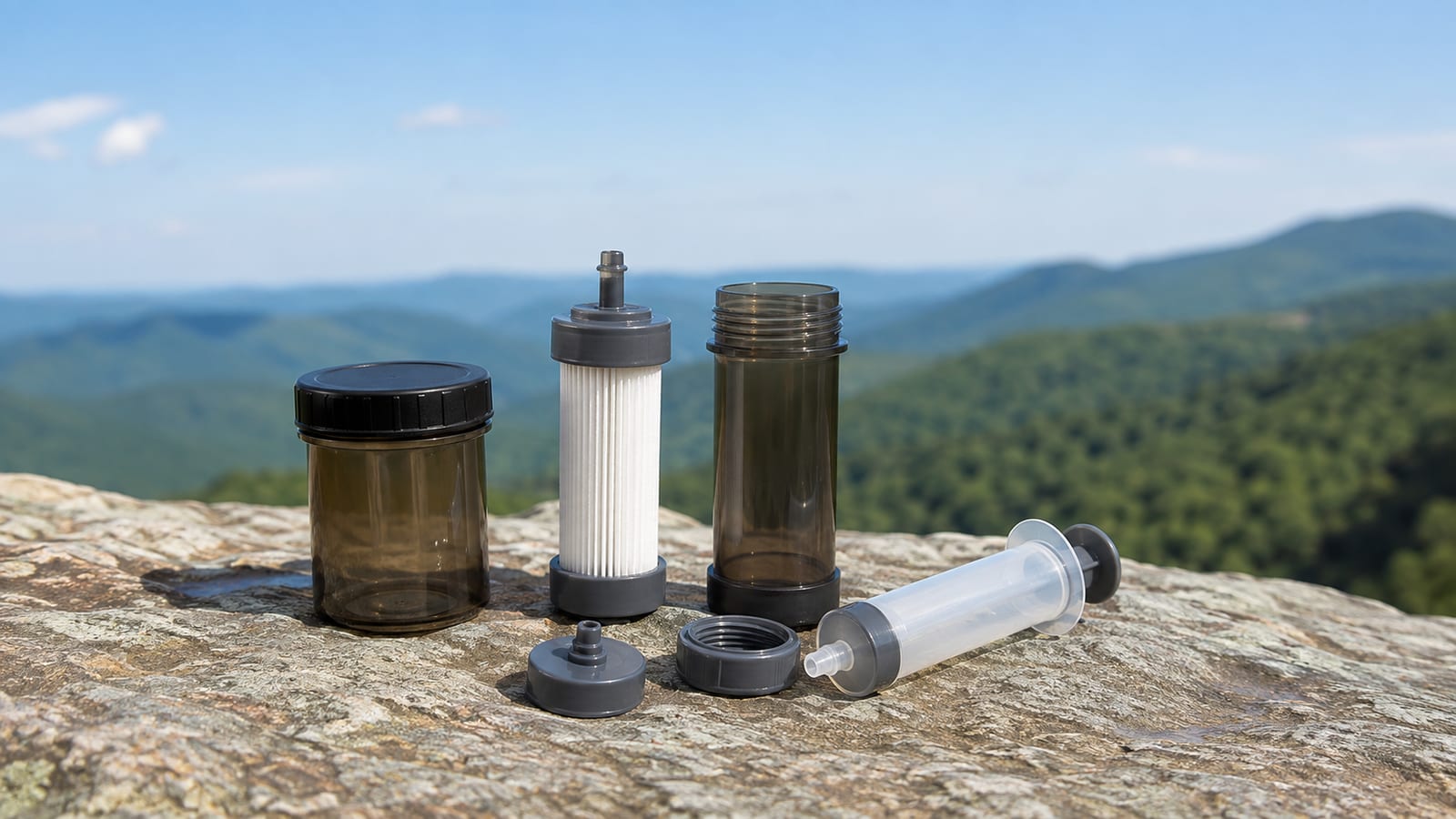
Clean the filter when flow drops, not after you’ve spent half a trip wrestling with it. Use the maker’s approved backflushing or cleaning method and treated water.
At home, sanitize the filter as directed. Then dry and store its bags, hoses, caps, and seals where mildew and rodents can’t reach them. Inspect gaskets, threads, soft reservoirs, and hose connections before the next trip.
Hollow-fiber filters need strict freeze protection once they’ve been used. Water trapped inside can freeze, expand, and damage the fibers without leaving a visible crack. Keep the filter close to your body during freezing weather and inside your sleep system overnight.
If you think a wet filter froze, replace it or stop trusting it as your only treatment. “Probably fine” is not a useful test for invisible membrane damage.
For broader planning around water, weather, and route problems, review these common trail hazards.
If your filter fails
Stay calm and switch methods. A clogged filter is a gear problem, not a reason to gamble on untreated water.
- Use chemical tablets and follow the full label directions.
- Boil water if you have enough fuel and a safe stove setup.
- Use ultraviolet treatment if the water is clear and the unit works.
- Settle and strain silty water before applying the backup method.
- Protect clean containers from the failed filter’s dirty parts.
- Move toward a safer source or bailout point if treatment is uncertain.
Don’t rinse a clean bottle with untreated water. Also, don’t pour treated water into a dirty container unless you’ve disinfected the container and its cap.
Avoid aggressive water rationing that leaves you weak, confused, or overheated. Instead, reduce exertion, seek shade, reassess the route, and head toward reliable water or help. Your itinerary is allowed to lose an argument.
FAQ
Can you drink rainwater collected from a tent fly?
Treat it first. A tent fly can collect bird droppings, dust, insect residue, sunscreen, soap, and campsite grime before the water reaches your bottle. Also, don’t collect runoff from fabric treated with chemicals unless the maker says that use is safe.
Can you share one filter with several hikers?
Yes, but treat the outlet as a clean part, not a shared drinking straw. Filter into separate clean bottles instead of passing the outlet from mouth to mouth. Carry enough backup treatment for everyone if the shared filter fails.
Should you filter water used for washing dishes?
Treat water that touches food, cups, utensils, or cooking surfaces when practical. However, wash well away from the source and let items dry fully. That reduces contamination without sending soap into the stream.
Can a carbon filter make polluted water safe?
Activated carbon can improve taste and reduce some chemicals, but it won’t rescue every polluted source. Carbon capacity is limited, and trail units aren’t a reliable answer to fuel, mine runoff, pesticides, or industrial waste. Avoid the source.
What should you do after accidentally drinking untreated water?
Don’t panic or take random medication. Record where the water came from and watch for digestive symptoms, fever, weakness, or dehydration over the following days. Contact a medical professional if symptoms appear or worsen, and mention the untreated water exposure.
