
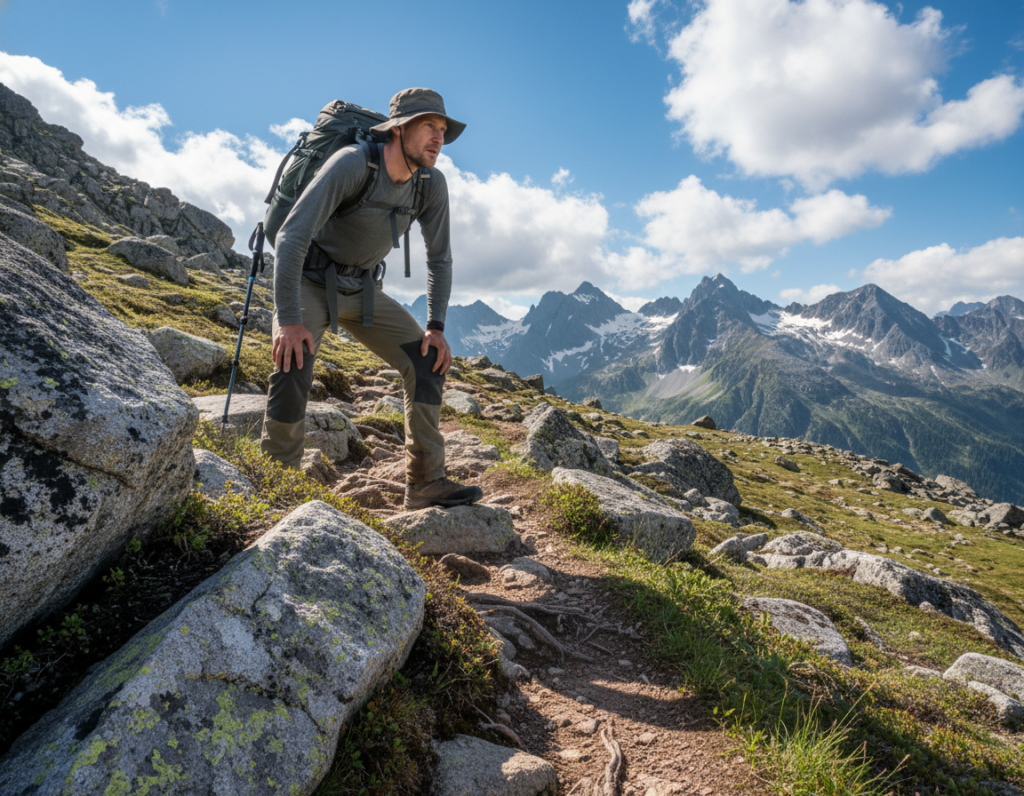
That moment you step from a smooth, flat path onto a steep, rocky incline is where terrain transition hiking truly begins. Your body instantly feels the difference, and your confidence can waver if you’re not prepared. Every new surface, from loose gravel to slick mud, demands a slight shift in your movement.
This isn’t about brute force; it’s about smart adaptation. The way you position your feet, distribute your weight, and even where you look can turn a struggle into a fluid, enjoyable experience. We’ve gathered practical tips from countless miles on diverse paths to help you move with confidence.
You’ll learn how to prepare your body and gear, master uphill and downhill movement, and navigate tricky sections safely. These techniques transform uncertainty into capability, letting you focus on the stunning views instead of your next step.
Key Takeaways
- Adapting your movement is essential for safety and enjoyment on varied paths.
- Small adjustments in footing and balance make a huge difference.
- Proper preparation for your body and equipment is non-negotiable.
- Mastering uphill and downhill techniques conserves energy.
- Navigating technical sections requires a calm, focused approach.
- Real-world experience forms the basis of all reliable advice.
Understanding Terrain Transition Hiking
The true test of any outdoor enthusiast comes when the path beneath you transforms unexpectedly. One moment you’re on firm, packed earth. The next, you face loose stones or slippery surfaces. This constant change defines the experience.
Recognizing Varied Trail Conditions
Different surfaces demand different approaches. Packed dirt allows confident strides. Loose gravel requires careful footing. Exposed roots and slick rocks test your awareness constantly.
Your body works much harder on uneven ground. Research shows you burn 28% more energy on irregular surfaces. Your muscles constantly adjust to maintain stability.
Impact on Balance and Footwork
Unstable footing directly affects your balance. Rocks shift under weight. Mud pulls at boots. Roots can catch unprepared feet.
Your footwork must adapt continuously. You cannot use the same stride on boulder fields as on smooth paths. Proper weight distribution prevents slips and falls.
Recognizing conditions ahead helps you adjust proactively. This prevents reactive scrambling to stay upright. It makes your journey safer and more enjoyable.
Preparing Your Gear and Packing Strategy
Smart gear preparation is your first line of defense against unpredictable trail conditions. The right setup keeps you stable and comfortable when the path gets challenging.
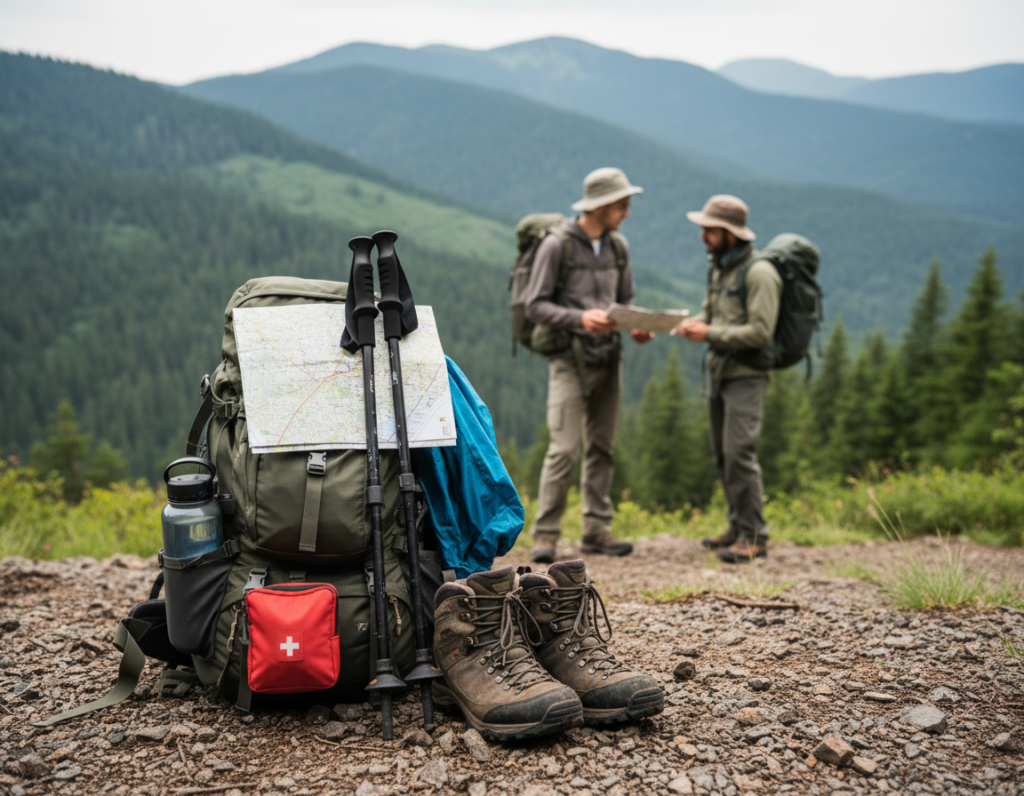
Your equipment choices matter more than you might think. A well-organized load moves with you instead of working against you.
Proper Load Distribution for Stability
Pack your heaviest items like water bottles close to your back. Position them at waist level or slightly above for optimal balance.
This placement keeps your center of gravity stable. It prevents the weight from pulling you backward on inclines.
Balance your backpack by matching weights in side pockets. A full water bottle on one side needs equal weight on the other.
Adjust your hip belt and shoulder straps before starting. The hip belt should carry most of the load, not your shoulders.
Selecting Supportive Footwear and Accessories
Your feet deserve the best protection you can give them. Lightweight boots with durable soles provide essential ankle support.
For detailed guidance on selecting the right footwear, consider your specific needs. Quality Merino wool socks prevent blisters and manage moisture effectively.
Don’t forget camp shoes for rest periods. Giving your feet a break helps prevent hotspots during multi-day adventures.
Techniques for Uphill and Downhill Movement
How you handle ascents and descents can make or break your outdoor experience. These elevation changes demand specific approaches that conserve energy and keep you safe.
Managing Uphill Steps with Controlled Pacing
Climbing efficiently starts with your foot placement. On moderate slopes, let your heel strike first, then roll through your sole to your toes.
This creates natural forward momentum. Take smaller steps rather than big lunging strides.
You’ll take more steps total but use far less energy. Alternate which leg leads to distribute effort evenly.
Securing Your Balance on Downhill Descents
Downhill sections test your balance as gravity pulls you forward. Keep your core tight and center of gravity over your legs.
Think “nose over toes” to avoid leaning too far. Bend your knees slightly to absorb the impact of each step.
On extremely steep drop-offs, turn your body sideways to the slope. Step down carefully, then rotate and repeat with your other foot.
Effective Use of Trekking Poles
Trekking poles transform your stability on any slope. They provide extra points of contact and take weight off your knees.
Adjust pole length so your elbows bend at 90 degrees. Shorten them for uphill climbs, lengthen for downhill descents.
Move each pole opposite your stepping leg for natural rhythm. On very steep sections, plant both poles before taking two steps.
Navigating Uneven and Technical Trail Sections
When the path dissolves into a field of boulders or a steep scramble, your mental focus becomes as important as your physical strength. These sections test your ability to read the landscape and choose a safe route forward.
Moving through this type of ground requires deliberate, thoughtful steps. It’s a lot different from walking on a smooth path.
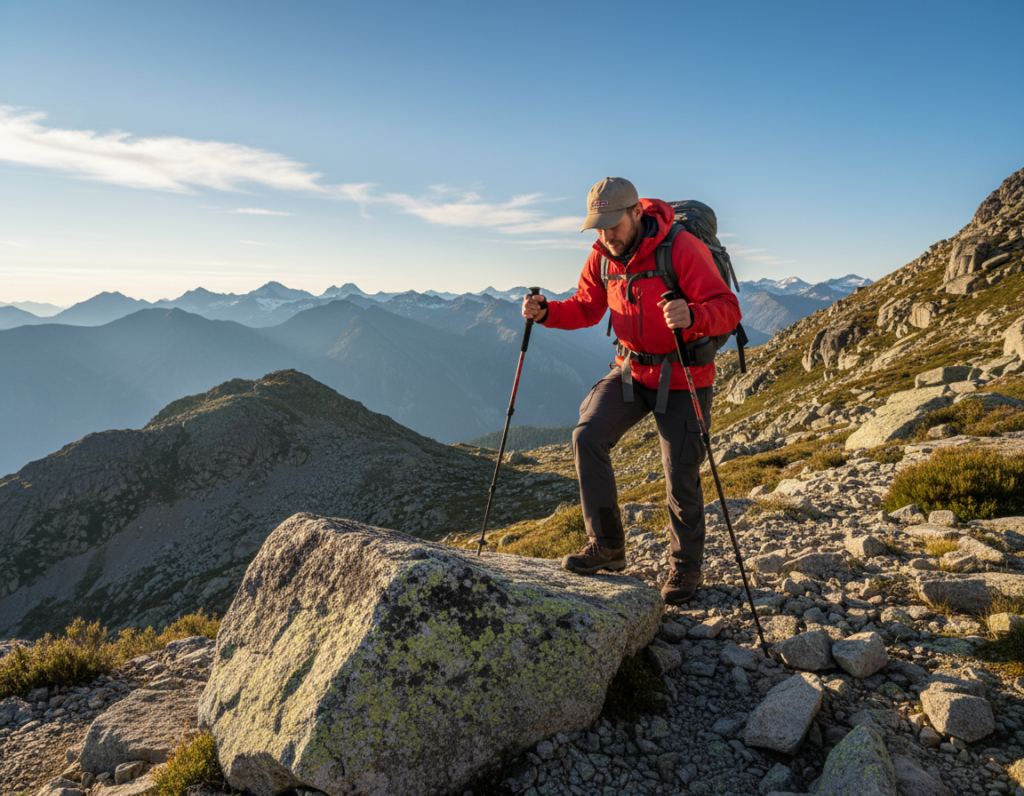
Strategies for Rock Scrambling and Boulder Fields
Boulder fields are unpredictable. Loose rocks can shift under your weight. Always check your footing before committing your full weight to a step.
Take small, controlled steps with your core engaged. This lets you react quickly if a stone moves. Avoid jumping between rocks, as a fall here is a real risk.
For scrambling, maintain three points of contact with the ground. Test every handhold and foothold before trusting it. Never use vegetation like roots for support—they can pull free without warning.
- Scrambles are graded from Class 2 (easier) to Class 4 (expert-only). Start with Class 2 to build confidence.
- Class 3 involves more difficult movement on steep rock. Class 4 has significant exposure and should only be attempted by experienced hikers.
Safe River Crossings and Loose Scree Areas
Crossing a river demands careful planning. Look for designated spots like shallow sections or stable rocks. Keep your boots on to protect your feet.
Rocks in rivers are often slippery. Test each step carefully. Angle your body upstream and unbuckle your backpack straps in case you fall.
On loose scree and talus slopes, move deliberately. Look a few steps ahead to find stable boulders, often marked by lichen or moss. Stay light on your feet to adjust quickly if a rock proves unstable.
Adapting to Changing Weather and Terrain Conditions
The backcountry is a master of surprise, often shifting from sunshine to storm in the time it takes to finish a snack. Your plan for the day must be flexible. Smart preparation is your best tool for handling these sudden changes safely and comfortably.
Monitoring Weather and Adjusting Your Pace
Always check the forecast right before you head out. This simple step helps you pack the right gear. A reliable layering system is crucial because trails often pass through microclimates.
You might sweat on a sunny ridge and then shiver in a shaded valley just minutes later. Your speed will naturally vary. Most people cover one to two miles per hour, depending on fitness and trail difficulty.
Starting at a moderate, steady pace saves energy for later challenges. It gives your body time to adapt. Pushing too hard early on can leave you exhausted when you need strength the most.
Keep a close eye on the remaining daylight. Ask yourself what type of path you’ll be on as the sun sets. Navigating tricky sections in the dark significantly increases risk.
- Check forecasts at home and again at the trailhead if possible.
- Dress in layers you can easily add or remove throughout the day.
- If conditions worsen or darkness falls, turning back or making camp is the smart choice.
- Adjusting your plans isn’t a failure—it’s intelligent trail management that ensures a safe return.
Enhancing Your Footing with Strength and Training
Your physical preparation is the bedrock of confident movement on any path. A smart training plan builds the specific strength your body needs for long days outdoors. It turns potential struggles into manageable challenges.
Think about the movements you use on a trail. You need power for climbs and stability for uneven ground. A good routine mixes different types of exercise.
Incorporating Cross-Training Exercises
Cross-training prepares your entire body for the demands of the trail. Focus on exercises that mimic real trail movements. This builds functional strength.
Weighted step-ups and lunges train your legs for steep slopes. Wear your loaded backpack during these exercises. It simulates the exact load you will carry.
Balance work is also crucial. Practice single-leg stands to strengthen your ankles and knees. This helps you stay upright on unstable surfaces.
Don’t forget your grip. Hand strengtheners build forearm endurance. This supports long hours using trekking poles effectively.
Building Endurance for Extended Hikes
Endurance lets you enjoy the journey without running out of energy. Building it takes consistent time and effort. Start your program weeks before a big trip.
Cardio exercises like stair climbing build essential stamina. They train your heart and lungs for sustained effort. Hill repeats in your neighborhood are perfect practice.
The best training is practice on actual trails. Start with easier, accessible paths. Gradually increase distance and difficulty. This builds hiking-specific muscles in your legs and core.
You will feel more capable with every training session. Your body adapts to the demands. You gain the confidence to tackle more technical adventures.
Practical Tips for Trail Safety and Balance
Smart trail safety practices can transform a potentially dangerous situation into a manageable challenge. Your ability to stay upright and move confidently depends on simple techniques that become second nature with practice.
Maintaining Stability on Loose Ground
Loose surfaces like gravel or scree test your footing constantly. Keep your weight centered over your feet with each deliberate step. This prevents slips and maintains control.
Trekking poles provide extra stability points on unstable ground. They help distribute your weight and reduce strain on your knees during descents.
| Trail Condition | Foot Placement | Body Position | Recommended Gear |
|---|---|---|---|
| Loose Gravel | Heel-first steps | Weight centered | Trekking poles |
| Muddy Paths | Flat-footed | Slight forward lean | Waterproof boots |
| Rocky Sections | Test each step | Low center of gravity | Ankle-support boots |
| Steep Descents | Sideways steps | Bent knees | Knee braces if needed |
Preventing Injuries During Rapid Terrain Changes
When the path changes suddenly, slow your pace immediately. Rushing increases fall risk on unfamiliar surfaces. Proper footwear makes a significant difference in injury prevention.
Quality boots with good ankle support protect against twists. Merino wool socks reduce blister formation during long days on the trails. Always carry a basic first aid kit for minor issues.
Stay hydrated and take regular breaks. Dehydration affects balance and decision-making. These simple precautions keep you safe when conditions shift unexpectedly.
Conclusion
With these foundational skills, you’re ready to meet the path’s challenges with newfound confidence. You now possess practical techniques for adjusting your approach across every type of ground you’ll encounter.
The essential tips covered—from smart gear choices and weight distribution to mastering ascents and safety practices—create a solid base for any adventure. Remember, adapting isn’t about perfect execution. It’s about reading the conditions and making smart adjustments.
Start applying these methods on your next outing. Begin on a familiar trail to practice before progressing to more technical routes. Every hiker develops a personal style, but these core principles ensure you stay stable and efficient.
The more you practice, the more intuitive your movements become. Get out there, trust your preparation, and discover how capable you feel when the journey gets tough. That’s when exploration becomes truly rewarding.
