
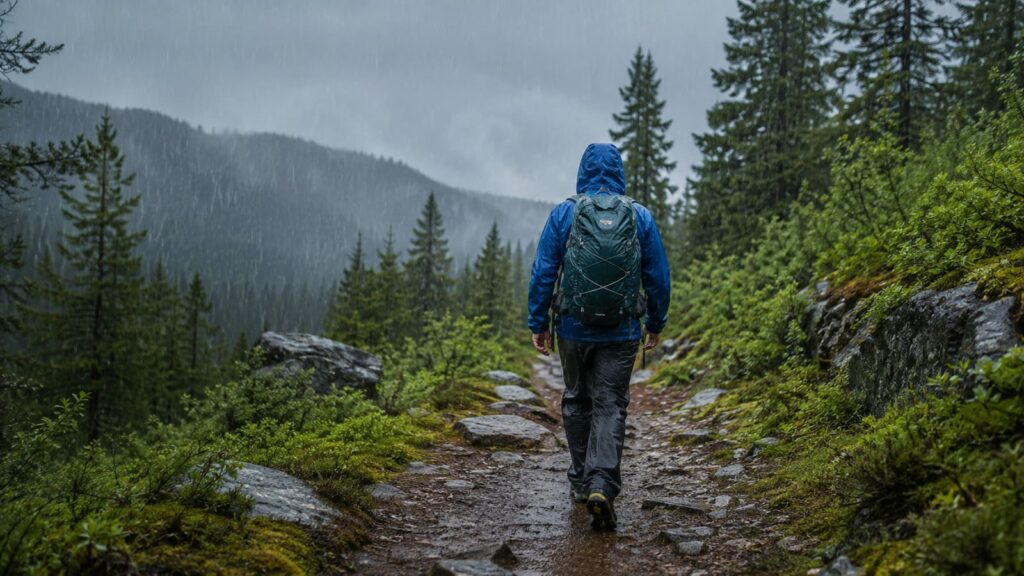
A genuinely waterproof shell, a dry insulation reserve, and a plan for wet feet are the core of good hiking-in-the-rain gear. Add rain pants when wind, brush, or long exposure justify them. Vent before you feel clammy, slow down on slick rock, and keep your sleeping insulation dry. No jacket keeps you dry inside while you climb hard through humid rain. That claim sounds better on a hang tag than on a switchback.
What hiking-in-the-rain gear do you actually need?
Start with a hooded rain shell that blocks steady rain and fits over your base layer. It should have a secure hood, adjustable cuffs, a hem you can tighten, and enough room for one useful insulating layer. A shell that fits only over a T-shirt leaves you cold when the temperature drops.
Your core kit should include:
- A waterproof rain shell with a real hood
- Pack protection, such as a liner or waterproof bags
- A dry insulating layer kept inside the pack
- Footwear suited to mud, rock, and water crossings
- A spare pair of socks in a sealed bag
- A small repair kit for torn fabric or failed hardware
Rain pants earn their weight in cold rain, wet brush, strong wind, and long stretches above treeline. They also help at camp when your hiking pants have soaked through. Put them on before your legs are drenched. Waiting until then turns a useful layer into a damp wrestling match.
Gaiters help when mud, wet grass, snow, and loose debris keep entering your shoes. They don't replace rain pants, and they won't save low shoes from a deep stream crossing. See how gaiters compare with hiking pants before buying both and carrying extra fabric for no clear reason.
Gloves matter when cold rain combines with wind. Thin liner gloves work for mild weather, while a waterproof shell glove makes more sense on exposed routes. An umbrella can work on easy trails with light packs, but it becomes awkward in brush, high wind, and scrambling terrain.
Your footwear strategy depends on the trail. Waterproof shoes help in cold, shallow wet conditions. Breathable trail shoes drain and dry faster in warm rain and repeated crossings. Neither choice keeps feet dry forever. Pick the option that leaves your feet functional after the water gets in.
Why do hikers get wet inside a rain jacket?
Rain gets inside through three main routes: leakage, sweat, and condensation. Treating all three as a jacket failure leads to bad buying decisions.
Leakage comes from damaged fabric, open cuffs, loose hems, failed seams, or a hood that lets water run down your neck. It also happens when a pack strap forces water through a weak spot. Check those areas before blaming the waterproof membrane.
Sweat comes from your own effort. A steep climb produces more moisture than any jacket can move, especially in warm, humid rain. Waterproof-breathable fabric can slow the buildup, but it can't cancel the laws of sweaty uphill walking.
Condensation is different. Warm, damp air from your body meets the cooler inside of the shell and forms moisture. This often shows up on the hood, shoulders, and back. Open the vents early, loosen the hem, and remove a layer before you start sweating hard.
A rain shell keeps outside water out. It does not make your torso dry and cool during a hard climb. For more detail on how shells differ from softer jackets, read our guide to softshell and hardshell jackets.
How should you balance waterproofing, breathability, weight, and price?
Choose the least expensive shell that can handle your actual weather, mileage, pack weight, and trail abrasion. That usually means avoiding both extremes: the bargain jacket that wets through and the delicate shell bought for a trip it won't survive.
Use this field-first test:
- Short fair-weather hikes: A light emergency shell may be good enough.
- Regular wet-season day hikes: Choose a durable shell with useful vents and a hood that stays put.
- Backpacking with a loaded pack: Favor stronger fabric, better seam work, and space for insulation.
- Cold shoulder-season trips: Choose room for layers, sealed cuffs, and dependable wind protection.
- Brushy or rocky routes: Skip fragile fabric that snags on every branch.
Weight matters when you carry the shell all day. However, a small weight saving means little if the jacket tears beside the trail or wets through during a storm pitch. The Patagonia Torrentshell 3L Rain Jacket has a listed weight of 400 g (14.1 oz), which puts it in the substantial everyday-shell category rather than the barely-there emergency layer category. Its weight only makes sense if you use the added protection.
Price also needs a field test. A cheaper jacket is fine for occasional park walks and short fair-weather trips. It becomes a false economy when you hike in wet conditions often, carry a pack, or depend on it far from the trailhead.
If you want a product-to-product starting point, use our guide to waterproof jackets for hikers. This article is about choosing and using one after the product page stops being helpful.
Which ventilation features matter most in real rain?
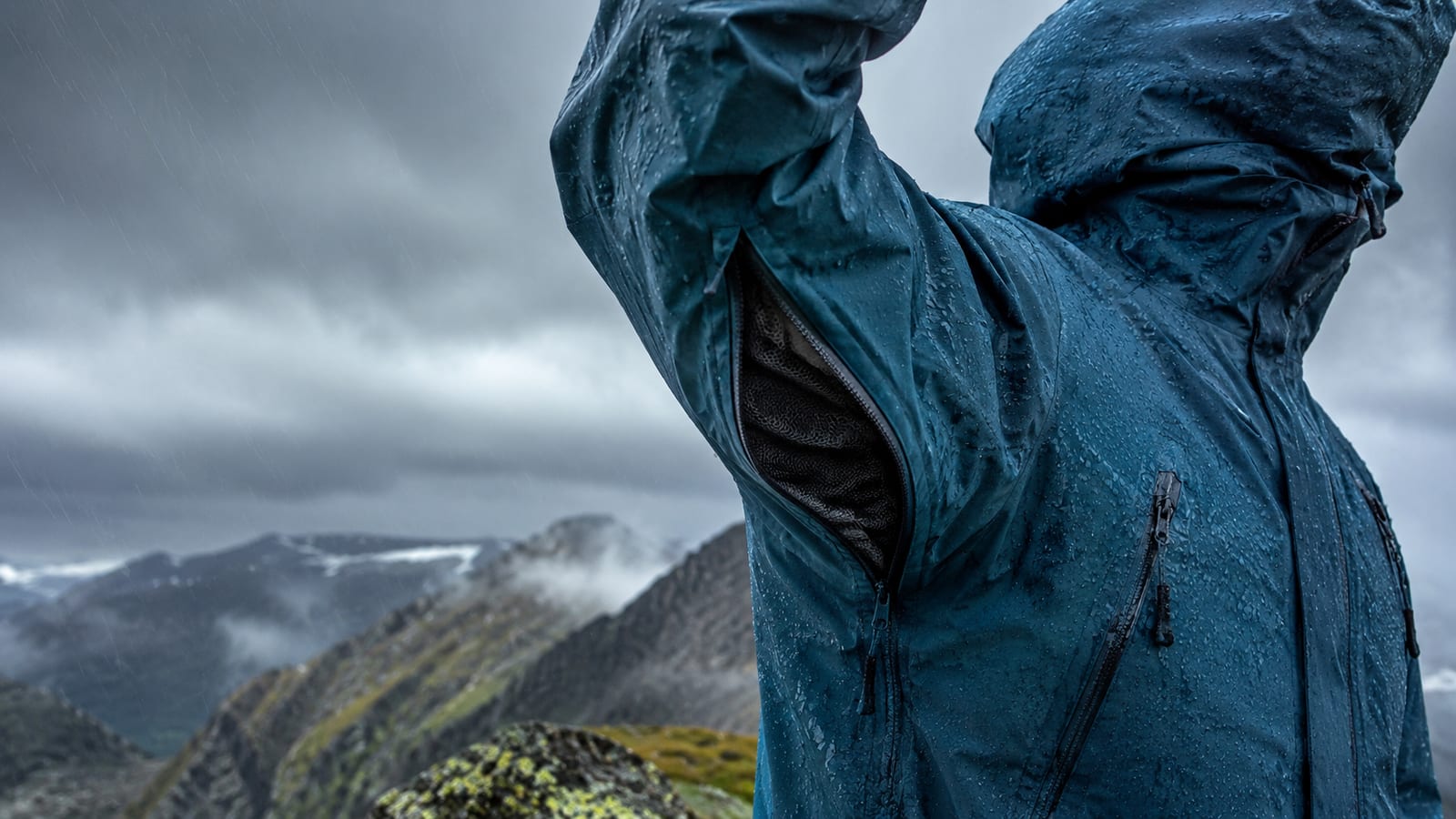
Pit zips matter more than vague breathability claims. Open them before your base layer turns wet, not after the inside of your jacket feels like a greenhouse.
A two-way front zip helps when you need airflow around your torso or room over a hip belt. It also lets you reach a pocket without opening the entire front. A good zipper still needs a storm flap or a water-resistant design that doesn't leave a cold leak across your chest.
Look for these features:
- Pit zips that open smoothly with a pack on
- Adjustable cuffs that seal over or under gloves
- A hem drawcord that keeps runoff away from your waist
- Pockets placed above the hip belt
- Pocket vents that release heat without exposing your base layer
- A hood that turns with your head
- A front zip you can operate with cold fingers
Hood movement is easy to ignore in a shop. On a windy ridge, a hood that moves with your head lets you see the trail without turning your whole body. That matters near drop-offs, slick roots, and crossings.
You should also adjust the jacket as the trail changes. Open vents on climbs, close them on exposed ridges, and loosen the front zip before you overheat. Breathability is partly a fabric feature and partly a timing problem.
When is an ultralight rain shell the wrong choice?
An ultralight shell makes sense as an emergency layer on a short hike with a light pack and a good bailout point. It can also work for warm-weather trips where you expect brief showers and little brush.
Skip it for repeated wet trips, rough vegetation, strong wind, or a heavy pack. Thin fabric can tear under shoulder straps, catch on branches, and wear through at the spots you need most. Once a shell develops a hole, the weather doesn't care how little it weighed in the store.
A minimalist shell also gives you less room for insulation. That becomes a problem when the temperature drops and your thin jacket fits only over a shirt. You don't need a huge cut, but you do need enough space to move your arms and add a warm layer.
The right question is not, "What's the lightest rain jacket?" Ask what can survive the trip without making you carry a second jacket as insurance. Sometimes the answer is a light shell. Sometimes that light shell belongs in the drawer.
How do you choose a rain jacket for wind and all-season hiking?
For wind and shoulder-season hiking, choose a shell that seals the openings and holds its shape under a pack. Waterproof fabric helps, but exposed trails punish weak hoods, loose cuffs, and floppy hems first.
Check the hood while wearing a hat. It should cover your head without blocking your view. It should also stay in place when you turn toward the wind. A hood that slides backward sends rain down your collar, where it will find your base layer quickly.
The front zip needs to block wind through its full length. A storm flap can help, but a well-designed water-resistant zip can work without extra fabric. Run the zipper with gloves before you buy. If it snags in a warm shop, it won't improve during a cold storm.
A good all-season shell should also have:
- Cuffs that close around your wrists
- A hem that stays below your pack belt
- Fabric that resists pack rub
- Enough room for cold-weather layers
- A hood adjustment you can reach without removing the pack
- Seams that show no lifting, peeling, or gaps
A jacket can be waterproof and still fail as a wind layer if air pours through the cuffs. You don't need a winter expedition shell for every day hike. You do need a shell that matches your exposed terrain and the time you may spend waiting for help.
How should you layer under rain gear in cold weather?
Wear a wicking base layer, add adjustable active insulation, and keep a dry backup layer sealed in your pack. The system should let you remove warmth before sweat soaks the clothing you need at the next stop.
A synthetic or wool base layer moves moisture away from the skin better than cotton. Cotton holds water and stays cold against your body. That is a poor trade on a wet trail, even if the shirt felt comfortable at the parking area.
Active insulation means a layer you can regulate while moving. A light fleece or breathable insulated layer often works better than one bulky jacket trapped under a tight shell. If the shell is too small, the whole system loses airflow and arm movement.
Keep a dry warm layer separate from your walking layers. Store it in a waterproof bag and use it at breaks, lunch, or camp. Don't wear it into the rain just because you packed it. Once that layer gets wet, your backup plan has become another wet layer.
For a fuller system, use our guide to layering for hiking comfort. The same system works in rain, but you need stricter control over sweat and spare warmth.
Do you need rain pants, and when should you put them on?
You need rain pants when cold rain, wind, wet brush, or long exposure will soak your legs faster than they can dry. They also make sense when you have to stop in bad weather or spend the night with no dry indoor place to recover.
Put them on when the rain becomes steady, before your hiking pants absorb water. The pants won't make your legs magically warm, but they slow heat loss and keep wet vegetation from rubbing water into every seam.
Rain pants should fit over your hiking clothes without restricting your stride. Check the ankles against your shoes and gaiters. A narrow opening can be difficult to pull over footwear on the trail, especially with cold hands.
They become less useful in warm, short showers on a smooth trail. You may sweat more inside them than the rain would put through your hiking pants. In that case, keep them accessible and decide based on wind, temperature, and exposure.
How do you keep your feet dry and safe while hiking in rain?
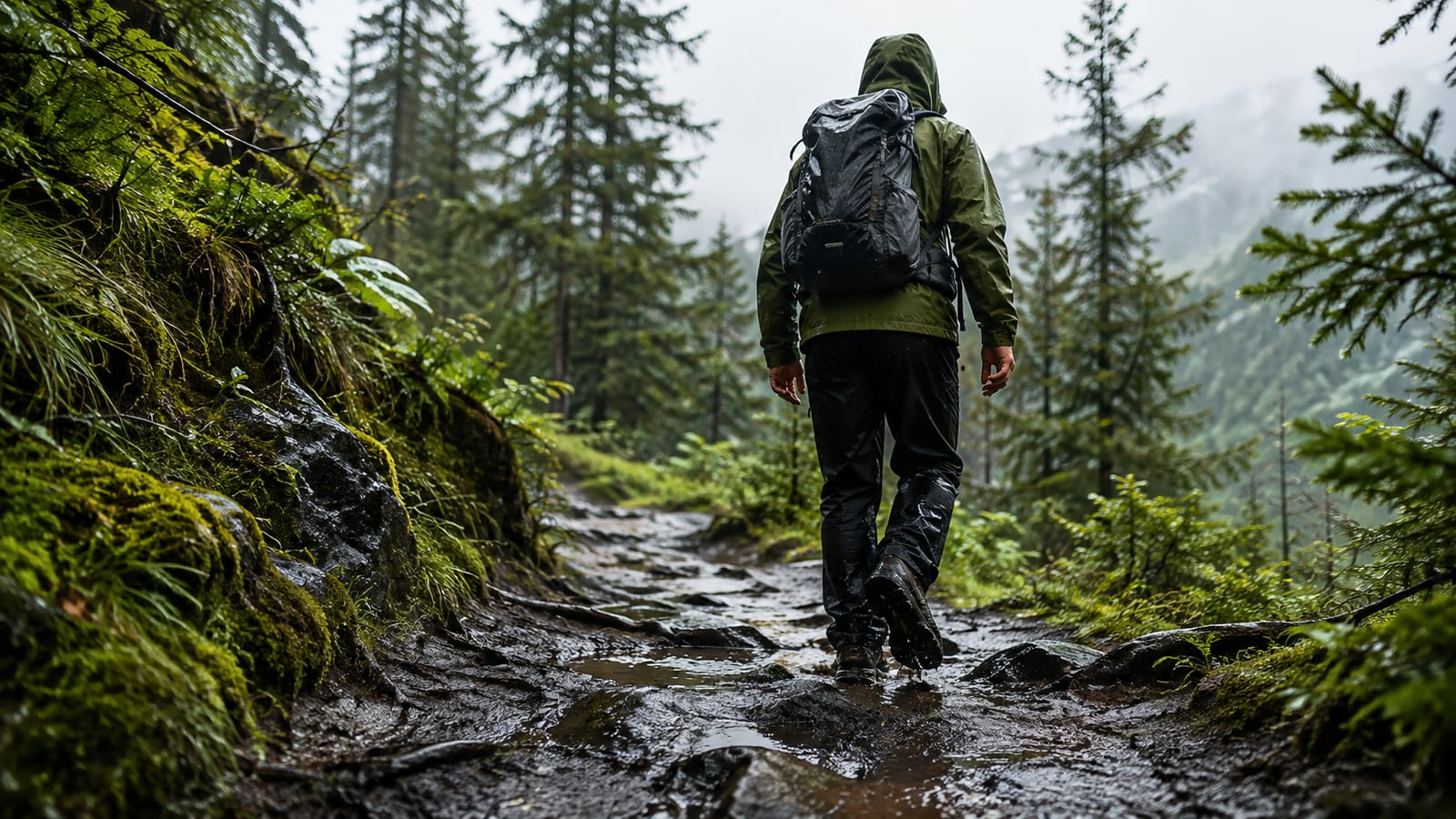
Choose waterproof footwear for cold, shallow wet conditions, or choose draining footwear for warm rain and repeated water crossings. Neither option wins every trail. Dry feet are helpful, but stable feet and intact skin matter more after several hours.
Waterproof shoes can keep puddles and mud out until water runs over the collar. They also dry slowly once water gets inside. Draining trail shoes let water escape quickly, but they leave your socks exposed to mud, grit, and cold wind.
Carry spare socks in a sealed bag. Change them before your skin turns soft and wrinkled, then dry the damp pair against your pack or under a sheltered layer. Don't put wet socks into the same bag as the dry pair and call the job done.
Rain also changes traction. Slow down on wet roots, smooth rock, clay, and wooden bridges. Shorter steps help you keep your feet under you, while trekking poles give you two more points of contact on slick ground.
For streams, check the crossing before stepping in. Rising water, cloudy depth, and strong current are reasons to turn around or find a safer route. A waterproof shoe is not a substitute for judgment.
Blister prevention starts before the hot spot appears. Trim rough nails, keep socks smooth, and tape known trouble spots before the descent. Grit inside wet shoes will work like sandpaper until you deal with it.
How do you pack rain gear so it works when weather turns?
Store the rain shell where you can reach it without unpacking the whole bag. The top pocket, side pocket, or outer stretch pocket works better than the bottom of your pack. A jacket packed for perfect weather is not much help when the first shower hits on a switchback.
Use a pack liner or separate waterproof bags for anything that must stay dry. Your sleeping bag, spare insulation, electronics, medication, and dry camp clothes deserve their own protection. A pack cover helps with surface rain, but water can still enter around the back panel and shoulder straps.
Keep these items easy to reach:
- Rain shell
- Rain pants
- Pack liner or dry bags
- Spare socks
- Warm backup layer
- Headlamp
- Map or protected navigation device
The backup insulation should stay sealed until you need it. Don't open the bag at every break to show yourself that it is still dry. Rain gear works best when it stays boring and available.
Pack covers also have limits. Wind can lift them, brush can snag them, and water can run down the back of the pack. The cover protects the bag. The liner protects your gear.
How should rain change your route, pace, and turnaround decision?
Rain should make you slower, more conservative, and less attached to the original route. Slick rock, rising water, poor visibility, and wet hands can turn an ordinary trail into a different problem.
Reduce pace before the dangerous section, not after the first slip. Keep more space between hikers on steep ground, and avoid stepping on wet logs when a safer line exists. If a route depends on dry rock or a simple stream crossing, rain may have changed the route's difficulty.
Turn back when:
- Water is rising or moving faster than expected
- Lightning reaches exposed terrain
- You lose the route in poor visibility
- Your layers are wet and you can't warm up
- A fall could leave you injured far from help
- Daylight is shrinking faster than your route plan allows
- The trail has become too slick for safe footing
Lightning deserves a firm response. Leave ridges, summits, open rock, and isolated trees when storms move in. Check National Weather Service lightning safety guidance before trips that may put you above treeline.
Rain also creates navigation errors. Familiar trails look different under runoff, fog, and low light. Mark your route, check your position before junctions, and keep a bailout point in mind. Pride is a poor shelter.
How do you care for rain gear so it stays waterproof?
Clean rain gear according to the manufacturer's instructions, dry it fully, and inspect it after wet trips. Dirt, body oil, and pack grime can reduce water beading and make a shell feel less breathable.
The outer fabric's durable water repellent finish, often called DWR, makes rain bead and roll away. It doesn't provide the jacket's main waterproof barrier. When the finish wears down, the fabric can wet out and feel cold or clammy even if the inner barrier still blocks rain.
Wash the shell when dirt builds up or water stops beading across large areas. Avoid regular household detergent unless the care label allows it. Residue can harm the finish and leave the fabric less willing to shed water.
After washing, follow the care label for restoring the water-repellent finish. Some treatments go in the wash, while others spray onto clean fabric. Apply them evenly, especially across the shoulders, hood, and upper back where pack rub does the most damage.
Dry the jacket before storing it. Then check:
- Hood seams and brim
- Shoulder areas under the pack straps
- Cuffs and hem
- Front zipper
- Seam tape
- Patches and repair points
- Any peeling or bubbling inside the fabric
Small tears can often be patched when the surrounding fabric is sound. Delamination, where layers separate or bubble, is a larger problem. If the waterproof barrier keeps failing after cleaning and proper treatment, replace the shell instead of trusting it on a remote trip.
What should you avoid wearing under a rain shell?
Avoid cotton, bulky insulation, and too many tight layers. Cotton stays wet, while excess bulk blocks airflow and restricts your arms under the shell.
A shell should fit over your base layer and active insulation without pulling across the shoulders. If the fabric stretches tight when you reach for a trekking pole, the jacket is too small for real use.
Don't wear a heavy warm layer just because the trailhead feels cold. Start with less, vent early, and add insulation when your effort drops or the weather turns worse. This keeps sweat from soaking the layer you need later.
Is waterproof footwear better than trail shoes in rain?
Waterproof footwear is better for cold puddles, wet grass, and steady rain when you can avoid deep crossings. Trail shoes are better when warm conditions and repeated crossings make drainage and dry time more useful.
The trail decides. A waterproof membrane has no answer for water pouring over the shoe collar. A draining shoe has no answer for cold wind blowing through wet socks. Match the footwear to the temperature, crossing depth, mud, and time you can spend with wet feet.
Can a rain jacket replace a windbreaker?
A rain shell can replace a windbreaker in wet, exposed conditions, but it may feel clammy during dry, hard climbs. A windbreaker is lighter and often more comfortable when rain is unlikely.
For one jacket on a mixed-weather trip, choose the rain shell. For dry shoulder-season hikes where sweat management matters more than rain protection, carrying both may make sense if the extra weight earns its place.
FAQ
What color rain gear is safest for hiking?
Choose a color you can see in low light, fog, and heavy rain. Bright fabric can help other hikers notice you, but it doesn't replace a headlamp, reflective details, or a clear route plan.
Should you wear a rain jacket while hiking uphill?
Wear it when rain or wind threatens your base layers, but open the vents before you overheat. On a warm climb, an unzipped shell with the hood down may work better than sealing yourself inside it.
How do you dry rain gear during a hike?
Shake off excess water, wipe mud from the zipper and cuffs, and hang the shell under shelter when you stop. Keep wet clothing away from sleeping insulation and avoid placing a shell directly against high heat.
Are ponchos good for hiking in rain?
Ponchos work well on open, low-traffic trails with light packs and warm weather. They become awkward in wind, brush, and scrambling terrain, and they leave your arms and lower legs less protected.
How often should you replace a rain jacket?
Replace it when repairs no longer stop leaks, the waterproof barrier peels, or the fabric fails around the shoulders and seams. A jacket that still beads water but has a sound barrier may only need cleaning and renewed water repellency.
