
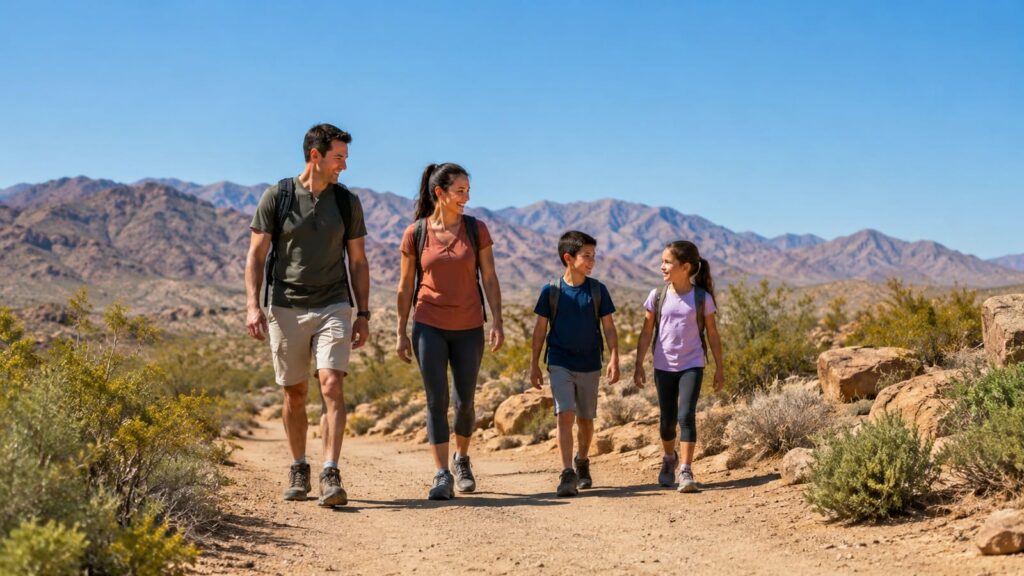
Kids don't hike for mileage. They hike toward something they can see, and that's the whole logic behind these 7 California trails with kid-friendly landmarks: a real cave, a couple of waterfalls, the ruins of a burned-down estate, ocean bluffs, and a redwood boardwalk a stroller can roll. My picks are Bronson Canyon Cave and the lower path at Runyon Canyon in Los Angeles, Eaton Canyon Falls near Pasadena, Escondido Falls and Solstice Canyon in Malibu, the Guy Fleming Trail at Torrey Pines, and the Main Trail boardwalk at Muir Woods. Each pairs a short, small-legs walk with a payoff a kid remembers longer than the car ride.
Last updated: 2026-07-25
Which 7 California trails with kid-friendly landmarks earn the drive?
Here's the ranked shortlist, with the landmark that does the heavy lifting on each one. I've put the cave first because it delivers the most wonder for the least effort.
| Trail | Where | Distance | The landmark | Best for |
|---|---|---|---|---|
| Bronson Canyon Cave | Griffith Park, LA | Under a mile | A cave kids walk right into | Highest payoff, least effort |
| Runyon Canyon (lower path) | Los Angeles | Short paved lower loop | Skyline and Hollywood Sign | Skipping the summit climb |
| Guy Fleming Trail | Torrey Pines, San Diego | Under a mile loop | Ocean bluff views | Kids who tire fast |
| Solstice Canyon | Malibu | Flat, a few miles round trip | Ruins of a burned estate | A history lesson disguised as a walk |
| Escondido Falls (lower) | Malibu | Easy graded, moderate | A tall waterfall | Waterfall goal without the scramble |
| Eaton Canyon Falls | Pasadena | A few miles round trip | A creek-fed waterfall | School-age legs and water play |
| Muir Woods boardwalk | Marin County | Flat short loop | Old-growth redwoods | Wagons, strollers, grandparents |
Bronson Canyon is the safest bet for a first "real" hike. The trail is short, the grade is gentle, and the cave is a genuine destination, not a scenic overlook of a parking lot. Everything below is either near Los Angeles or worth a longer drive for the scenery.
What actually makes a hike kid-friendly, not just short
Distance matters less than the ratio of payoff to effort. A flat mile toward a waterfall beats a scenic three miles toward a viewpoint a kid can't name. Shade, water crossings, big rocks, and anything they're allowed to climb all count as features, not hazards.
Bailout points matter just as much. Loops and out-and-backs under a couple of miles let you turn around at the first meltdown without a mile of guilt on the walk out. Bathroom access near the trailhead saves the day more often than any view.
So when you're vetting a trail that isn't on this list, ask four things: is there shade, is the footing forgiving, is there a real bathroom, and can you quit early? If the answer is yes four times, take the kids. For the longer version of this checklist, see our guide on choosing family-friendly trails for all ages.
Trails toddlers and very young kids can actually finish
Three picks stay under a mile and handle wheels or a carrier: Bronson Canyon Cave, the Guy Fleming Trail at Torrey Pines, and the Muir Woods boardwalk. These are the ones I'd trust with a two-year-old and a nap schedule.
The Guy Fleming loop is the sleeper. It's short, the signage is clear, and the ocean bluff scenery arrives fast, so a kid gets the reward before the legs give out. You can read more about the reserve on the official Torrey Pines State Natural Reserve page before you go.
Muir Woods is the stroller-and-wagon champion because the Main Trail runs on a flat boardwalk under the redwoods. The catch is parking: you need a reservation, and spots go early, so book ahead and arrive before the tour buses. Bring a carrier as backup in case you want to leave the boardwalk.
Where kids can see caves and ruins instead of a plain overlook
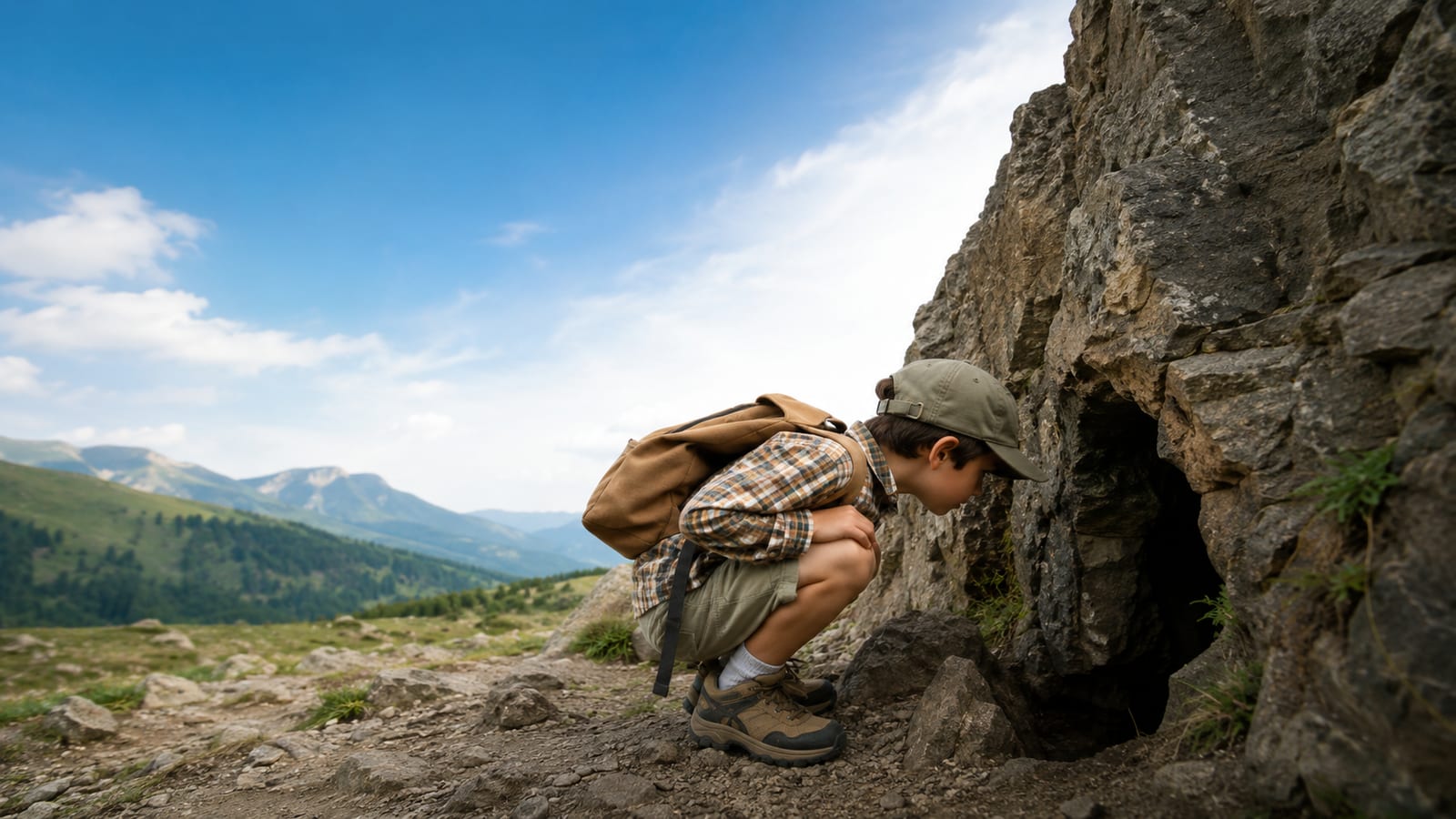
Two picks trade the standard viewpoint for something with a story. Bronson Canyon Cave is a short walk to a tunnel blasted out of an old quarry, and it has stood in for countless film and TV backdrops. Kids don't care about the movie trivia. They care that they can walk into it.
Solstice Canyon is the better history lesson. The flat, shaded trail follows a creek to Tropical Terrace, the stone ruins of a house that burned decades ago. Chimneys, foundations, and old steps still stand, and a small cascade runs behind them in wet months.
Griffith Park bills itself as one of the largest urban parks in the nation, and that's true. Size isn't the reason to bring a kid, though. The cave is.
Waterfalls that pull tired legs forward
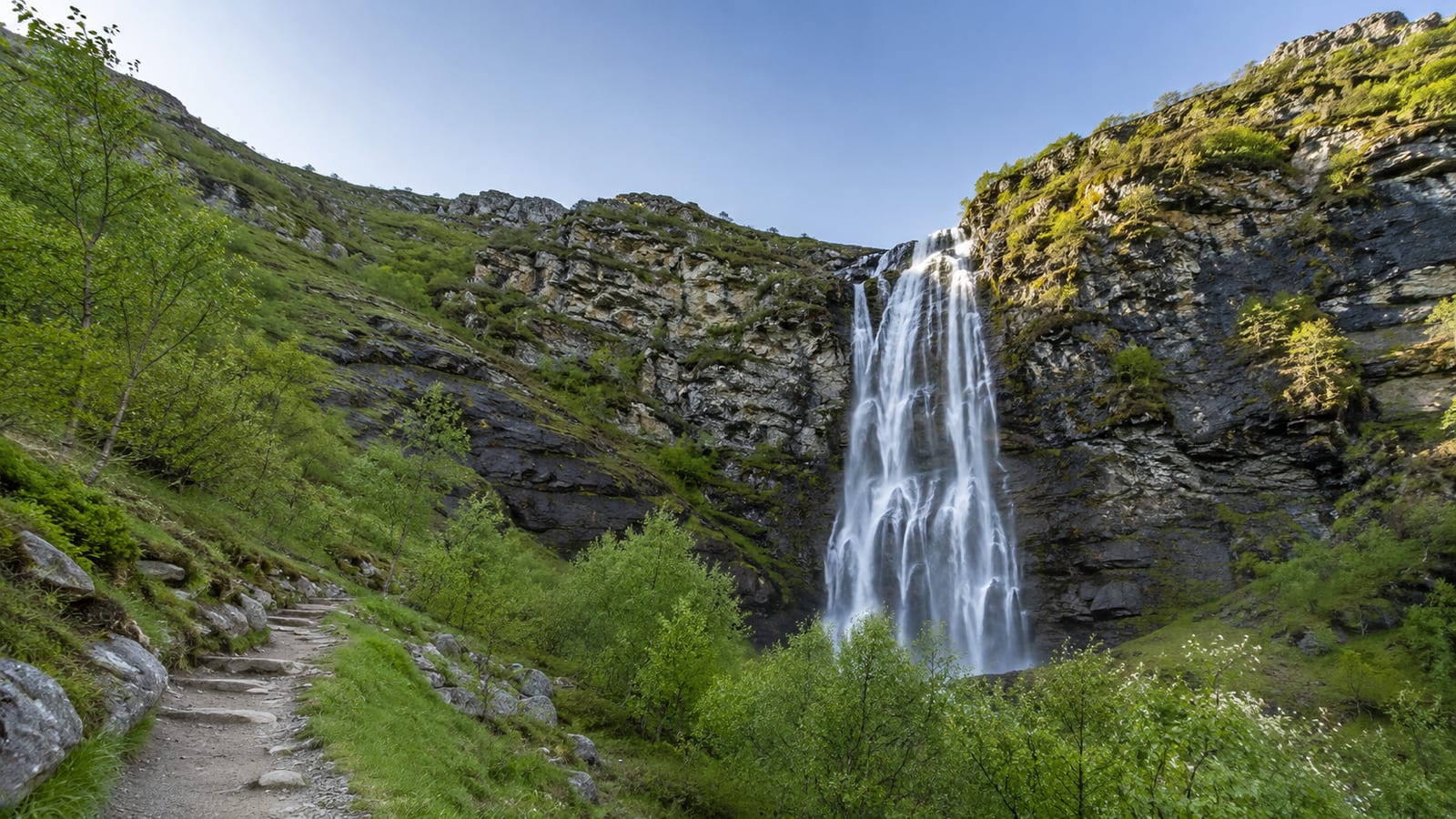
For a reward-driven hike, Escondido Falls and Eaton Canyon Falls both end at moving water, which motivates a dragging five-year-old like nothing else. Just be clear about where you're stopping.
At Escondido Falls in Malibu, the graded path to the lower falls is the whole trip with young kids. There's a scramble up to the upper falls above it, and it isn't worth the fall risk with little ones. Turn around at the lower cascade and call it a win.
Eaton Canyon Falls near Pasadena is a few miles round trip and worth it, but the last creek crossing gets slick. Bring water shoes, expect wet socks, and hold small hands over the rocks. The pool at the base is the point of the hike, so plan time to splash, not just to look.
The best kid-friendly hikes near Los Angeles
Four of these picks sit within an easy drive of Los Angeles: Bronson Canyon and Runyon Canyon in the city, Eaton Canyon near Pasadena, and Solstice Canyon out in Malibu. That's a cave, a skyline view, a waterfall, and a set of ruins without leaving the metro area.
If I had one free Saturday, I'd do Bronson Canyon in the morning for the cave and shade, then save Solstice Canyon for a cooler day when the creek is running. Eaton Canyon is the go-to when kids want to get wet. Runyon is the pick when you want a view and a short walk close to home.
These are city trails, so none of them are quiet. Go early or go on a weekday if crowds fray your kids' patience. For packing and timing without the fear-mongering, our post on kid-friendly hiking with the family covers the basics.
Which hike gets the best Hollywood Sign view with kids?
Runyon Canyon's lower paved path is the easiest Hollywood Sign view for young kids, no summit required. You get the sign and the skyline from the flatter section, so you can skip the exposed loop that turns into a sweaty haul on a warm afternoon.
Bronson Canyon is the other option, and it sits closer to the sign than Runyon does. There's a longer route from the cave area toward a classic sign vantage, but that's a real hike with elevation, not a toddler stroll. With little legs, take the short view and save the climb for older kids.
Either way, bring hats and water. Both trails run exposed once you leave the shade, and a sun-baked kid stops caring about the sign fast.
Which picks have picnic spots and bathrooms nearby
Plan the outing, not just the hike, because a picnic and a working restroom decide whether the day ends well. Here's the quick rundown:
- Bronson Canyon / Griffith Park: picnic areas and restrooms scattered across the park, though not right at the cave.
- Solstice Canyon: a shaded trailhead area with restrooms and room to eat before or after the walk.
- Muir Woods: restrooms and a cafe near the entrance, plus benches along the boardwalk.
- Torrey Pines: restrooms and ocean-view spots to eat, with more facilities down near the beach lot.
- Eaton Canyon: a nature center with restrooms at the trailhead, but pack your food, since the falls area is bare rock and water.
- Runyon Canyon: limited facilities, so hit a bathroom before you park.
For a full outing, eat before the hike with young kids. A snack midway is a bribe, not lunch.
Is Southern California hikeable with kids year-round?
Yes, but the good window shifts by trail and season. The coastal picks, Torrey Pines and the Malibu canyons, are pleasant most of the year, with cool, sometimes foggy mornings that keep kids comfortable. Inland spots like Eaton Canyon bake by late morning from spring through fall.
Winter and shoulder-season are the honest sweet spot for the waterfalls, because that's when Escondido and Eaton actually run instead of trickling. A dry August waterfall is a broken promise to a kid. Check flow before you drive.
Muir Woods up north stays cool and damp under the redwoods most days, so bring a layer even in summer. As a rule, aim for early starts, chase shade inland, and treat the coast as your hot-day backup.
How to find a trail map with landmarks marked for kids
There's no special California trail map with landmarks for kids that you should pay for. Any site selling one is repackaging free park maps. Start with the agency that maintains the trail: California State Parks and the National Park Service both publish free, current maps that mark restrooms, parking, and features.
Print the map before you leave, because canyon and coastal cell service is a rumor. Snap a photo of the trailhead sign too, so you have the route and the rules even at eight percent battery. Crowd-sourced apps are a fine backup, not a plan, since some show "trails" that are drainage ditches with ambition.
One small trick: give each kid their own copy and one landmark to hunt for. A kid tracking a cave or a waterfall on a map hikes farther and whines less. If you want more short, forgiving routes to practice on, browse our roundup of easy and scenic short hikes.
FAQ
What age can kids start on trails like these?
Most kids can walk a short, flat trail around age three with frequent stops. Below that, a carrier beats a stroller on anything unpaved. Let the slowest hiker set the pace and count snack breaks as part of the plan, not a failure.
Stroller or carrier for the youngest kids?
A stroller works on the Muir Woods boardwalk, the paved lower Runyon path, and parts of Torrey Pines, and nowhere else on this list. For the cave, the creek crossings at Eaton, and the ruins walk at Solstice, use a carrier. Bring the carrier as backup even on paved trails, in case you leave the smooth section.
Are dogs allowed on these trails?
It varies, and the parks are stricter than the city trails. Muir Woods and Torrey Pines keep dogs off the trails, while Runyon Canyon is famously dog-friendly. Check the specific park's rules before you load the dog, not at the trailhead.
How much water should we carry for the Malibu and Pasadena hikes?
More than the mileage suggests, especially inland at Eaton Canyon where the trail runs exposed. A simple rule is to turn back when half your water is gone. Kids drink more per pound than adults and mention it late, not early.
