
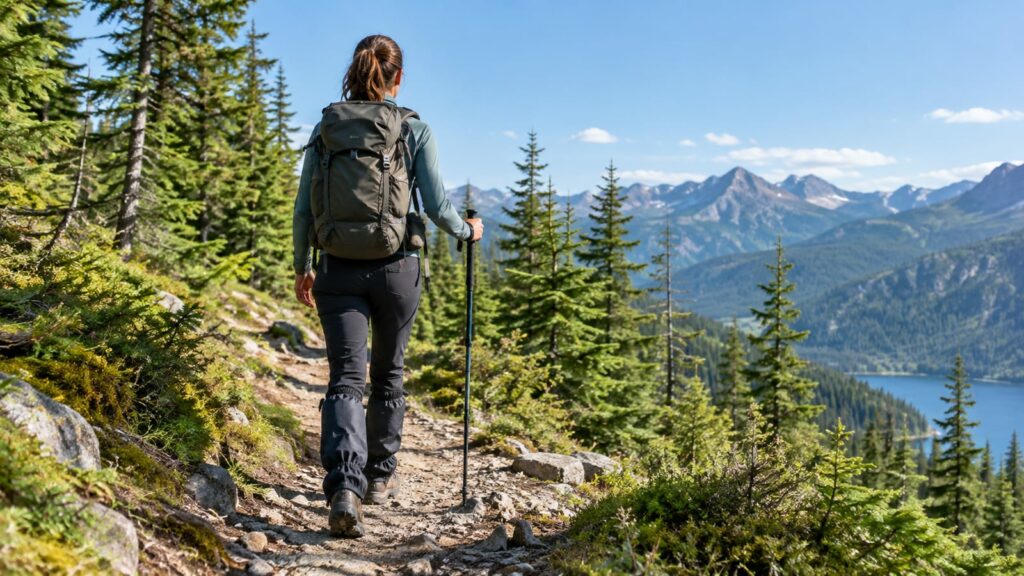
Outdoor Research Crocodile Gaiters are the best hiking gaiters to keep mud and debris out of your boots. Their full-height coverage, waterproof, breathable GORE-TEX, and abrasion-resistant Cordura lower panels handle wet grass, thick mud, brush, shallow snow, and repeated off-trail use. They run warmer and cost more than low gaiters, but they prevent the most annoying failures on wet hikes: mud around the ankle, grit under the tongue, and soaked socks after one careless step.
Last updated: 2026-10-19
Lightweight gaiters still make sense on dry trails. They block gravel and seed heads without turning your lower legs into a small sauna. The right choice depends on trail conditions, boot height, and how much weather you expect.
What are the best hiking gaiters to keep mud and debris out?
For most hikers, choose the Outdoor Research Crocodile Gaiters. They offer the strongest mix of coverage, waterproofing, durability, and boot protection in this group.
The best hiking boots for long-distance treks still do most of the work. Gaiters close the gap around the ankle and boot collar. That gap is where mud, pebbles, wet grass, and bugs get in.
| Gaiter | Best use | Protection | Main drawback | Verdict |
|---|---|---|---|---|
| Outdoor Research Crocodile | Wet, muddy trails and rough off-trail travel | Full-height waterproof coverage with strong abrasion resistance | Warm and heavier than low gaiters | Best overall |
| Hillsound Armadillo LT | Rainy hikes and flexible mud protection | Waterproof, contour-fitting coverage with a lower cuff built for scrapes and scuffs | Warmer than a low debris gaiter | Best waterproof hiking gaiter for lighter trips |
| Kahtoola INSTAgaiter Mid | Dry trails and light moisture | 19 cm high, water-repellent fabric against debris, quick on and off | Water-repellent, not waterproof | Quick-fitting debris gaiter |
| Outdoor Research Rocky Mountain Low | Dry trails, gravel, and shallow mud | Low-profile debris and splash protection | Limited lower-leg and weather coverage | Best lightweight mud gaiter |
| Dirty Girl Gaiters | Trail runners and dry fast hikes | Good debris protection at low weight | Not waterproof protection | Best ultralight debris gaiter |
| Outdoor Research Helium | Lightweight wet-weather hiking | Waterproof, breathable, lightweight design | Thin materials need more care | Good light rain option |
The table shows the real split. Full-height gaiters protect against weather and brush. Low gaiters save weight and stop trail grit. Neither style does the other job well.
Outdoor Research Crocodile Gaiters are the best overall
The Crocodile earns the top spot because it protects the parts that usually fail first. At $99.00, it pairs waterproof, breathable GORE-TEX with 1000D Cordura lower panels that resist rocks, crampons, and rough terrain. The tall upper section keeps wet vegetation and loose debris away from your socks and boot collar.
The instep strap matters on any gaiter. A loose strap lets the gaiter ride up, exposing the ankle. Then one muddy step fills the gap you were trying to seal. That sounds like a small problem until you spend the rest of the hike carrying a boot full of grit.
The Crocodile makes the most sense for:
- Wet forests with long stretches of saturated grass
- Muddy shoulder-season trails
- Rocky routes where gaiters rub against stone
- Off-trail travel through brush
- Shallow snow and cold, wet conditions
- Hikes where replacing wet socks is not an option
The tradeoff is clear. Full-height gaiters add heat, weight, and drying time. They can also feel excessive on a dry park trail. Still, repeated use in bad weather makes the cost easier to justify. Cheap gaiters that split at the zipper or lose their strap become false economy quickly.
The best waterproof gaiters for hiking
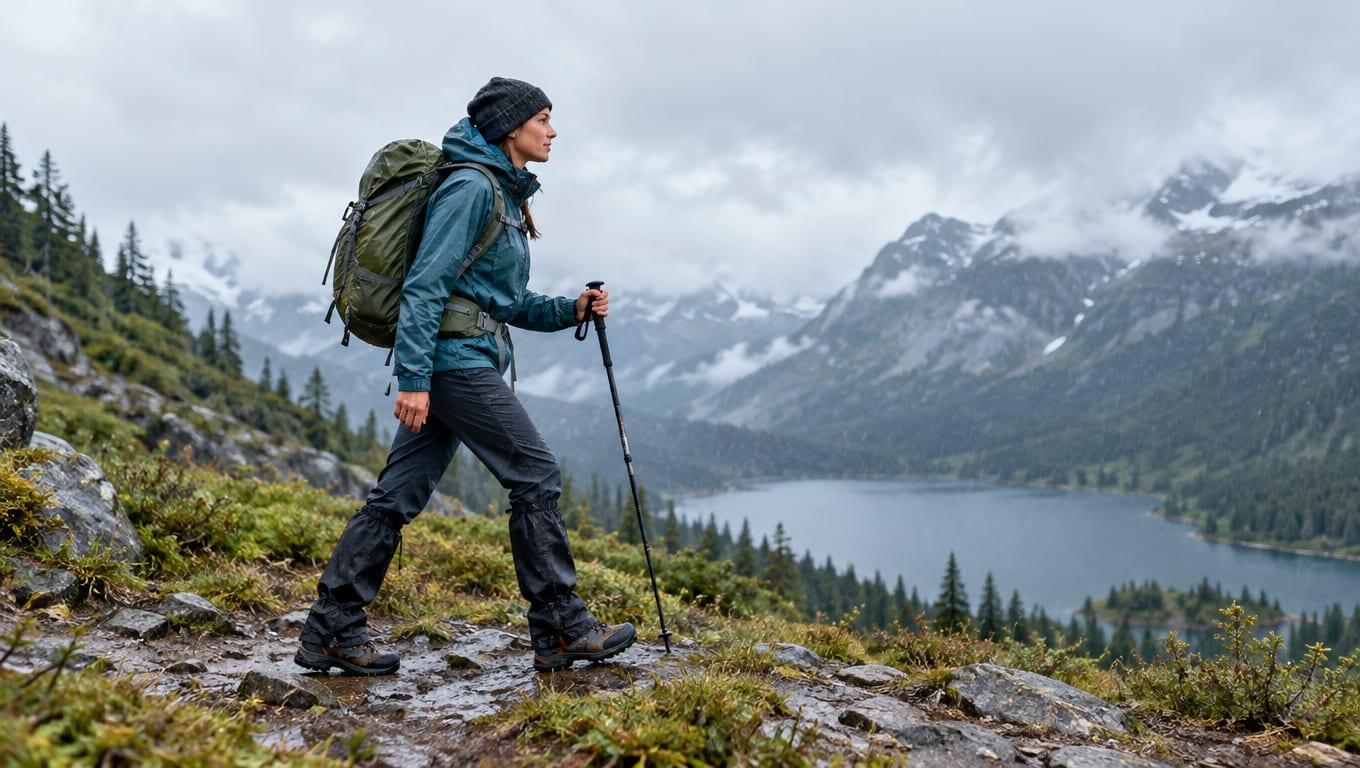
Waterproof gaiters need more than waterproof fabric. The closure, seams, boot fit, and instep strap decide whether water stays out after several miles.
The Hillsound Armadillo LT Gaiters are the better choice if you want dependable rain and mud protection without the stiff feel of traditional expedition gaiters. Their flexible design follows the boot more closely, which helps on steep switchbacks and uneven ground.
They suit wet day hikes, muddy trails, and hikers who dislike bulky gear. Hillsound builds the lower cuff to withstand scrapes and scuffs, designs the gaiter to save your lower legs in brushy conditions, and covers it with a limited lifetime warranty. The regular price is $79.95. At the time of writing, every size is sold out at Hillsound, which says the gaiter is coming back soon with material upgrades, so check stock and the updated details before you plan around it.
The Outdoor Research Helium is aimed at hikers who want waterproof coverage without much bulk. Its listed weight is 6.07 ounces, or 172 grams, and its stated fabric performance is waterproof, breathable, lightweight, and durable. That combination makes sense for wet day hikes and lightweight backpacking.
The Helium gaiters are made in Cambodia. Their lighter construction deserves more care around sharp rock, thorn, and aggressive brush. They are useful when pack weight matters, but the Crocodile remains the safer buy for repeated rough use.
The Rab Muztag GTX is another waterproof option. Its listed MSRP is $85.00, which puts it in the serious gear category without making it a clear winner. Choose it if you already like its fit and need a waterproof gaiter for snow or wet mountain travel. Otherwise, the Crocodile has the stronger case for general hiking because it handles mud, brush, and boot protection so well.
The best boot gaiters for muddy trails
Boot gaiters need to seal around the boot, stay put while you walk, and survive contact with mud and rock. A tall fabric tube alone does not do that.
The Crocodile is the strongest choice for deep mud and rough trail conditions. Its 1000D Cordura lower panels protect the boot and ankle. On any gaiter, a snug instep strap keeps the bottom edge anchored, which matters when mud tries to pull the gaiter downward with every step.
For boot compatibility, check three points before buying:
- The gaiter must wrap the boot without crushing the zipper or closure.
- The strap must sit under the instep without sliding toward the heel.
- The top opening must close around your leg without cutting into your calf.
A gaiter that fits the leg but not the boot will still leak debris. Your boot shape matters more than the product photo.
Lightweight gaiters for dry trails and fast hikes
Low gaiters are worth carrying when gravel, sand, and dry debris are the main problem. They keep small stones out of trail runners and reduce the need to stop and empty your shoes.
The Outdoor Research Rocky Mountain Low Gaiters are the better pick for hikers who want more protection than a thin debris gaiter. They suit gravel paths, dry desert routes, and trails with shallow mud or splash. Their low profile also keeps heat and bulk down.
They are not a substitute for full-height waterproof gaiters. Wet grass can soak the lower leg above the gaiter, and deeper mud can climb over the opening. Use them where the trail conditions match their coverage.
The Kahtoola INSTAgaiter Mid is another debris gaiter for dry trails. It stands 19 cm high and uses a durable, water-repellent fabric, so it handles debris and light moisture but is not waterproof. A quick-release system makes it easy to slip on and off. Skip it for sustained rain, deep mud, or wet brush.
Dirty Girl Gaiters are the light, simple choice for dry trails and trail runners. They block grit, seeds, and loose debris without adding much fuss. That is enough for many fast day hikes.
They are not a waterproof choice for sustained rain, deep mud, or wet vegetation. The fabric can stop trail debris while still letting water pass through. That distinction matters after the first wet mile.
The gaiters versus hiking pants comparison can help if you are deciding between lower-leg coverage and a clothing layer. Gaiters solve the boot-collar problem. Hiking pants protect more of your legs but may not seal around the footwear.
Mud gaiters and rain gaiters need different priorities
Mud creates suction and weight. Rain attacks seams, closures, and exposed fabric. Wet grass quietly wets everything that touches it. These conditions overlap, but they do not stress gaiters in the same way.
For thick mud, prioritize:
- A tough lower section
- A secure instep strap
- A closure that does not snag or open
- Enough height to keep mud below the boot collar
- Fabric that cleans without holding a heavy layer of grit
For sustained rain, prioritize:
- Waterproof fabric
- Protected seams
- A closure that covers the front of the leg
- A snug seal around the calf
- Enough breathability for uphill work
For wet grass, height matters more than most shoppers expect. Short gaiters may protect the boot from splashes but leave your socks exposed above the ankle. If the trail is narrow and overgrown, full-height coverage earns its place.
For running water, gaiters have limits. They can stop water from entering over the boot collar, but they cannot make a submerged boot dry. Step carefully, and treat gaiters as a barrier against splash and flow across the ankle.
The waterproof hiking jacket guide covers the same problem higher up your body. Waterproof gear still traps heat when you climb hard. A gaiter can keep rain out and still leave you sweaty inside.
How to choose hiking gaiters
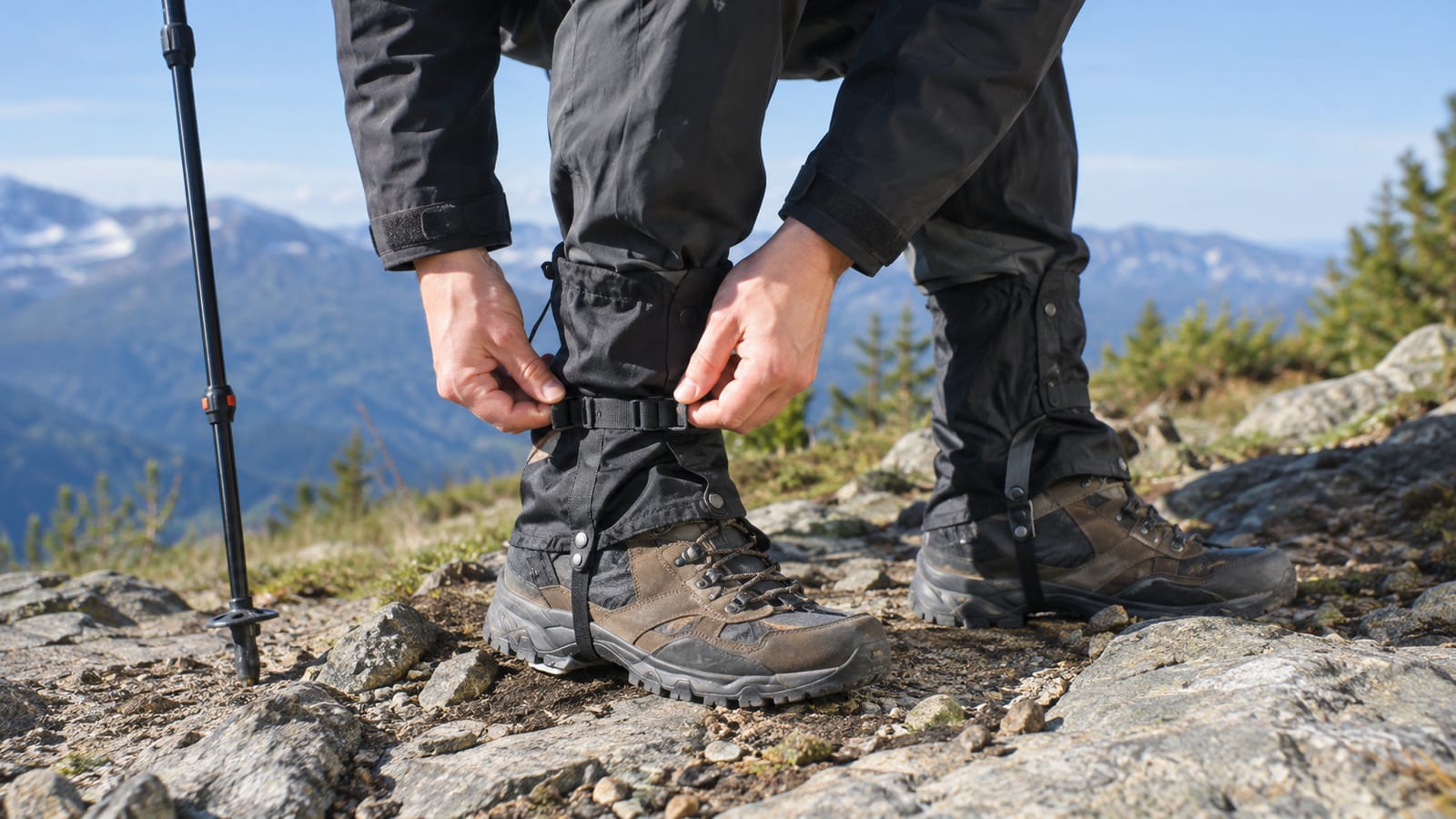
Start with trail conditions, then choose height and fabric. Buying the lightest pair first usually works only if your trails are dry.
Height
Low gaiters cover the shoe opening and lower ankle. They work for gravel, dust, and dry debris.
Mid-height gaiters cover more of the boot and handle wet trails better. They suit day hikers who see mixed conditions but do not need full brush protection.
Full-height gaiters protect the boot, ankle, and lower leg. They make sense for mud, wet grass, snow, thorny brush, and off-trail travel.
Fabric
Thin synthetic fabric keeps weight and heat down. It also needs more care around rock and thorn.
Heavier fabric resists abrasion and cleans up better after a muddy hike. The tradeoff is more bulk in your pack and slower drying.
Waterproof breathable fabric helps in rain, but no membrane removes all sweat. After mile 10, a hard climb can make any sealed layer feel warm.
Closures
Front closures should stay covered and easy to operate with cold fingers. A zipper that catches on the fabric becomes a trailhead problem before it becomes a weather problem.
Hook-and-loop closures are simple and easy to repair. They can collect mud and lose grip when dirty.
Snaps and buckles add security but may take longer to adjust. Choose the system you can operate without removing your gloves or dropping parts into the leaves.
Instep straps
The strap should sit under the boot and stay centered. If it slides toward the heel, the gaiter can pull loose during steep descents.
A replaceable strap is useful for long-term value. The strap sees constant contact with mud, rock, and boot edges. It often fails before the main fabric does.
Breathability
Breathability matters most on hot climbs and long approaches. It matters less during a cold storm pitch or a short walk through wet grass.
Do not buy a waterproof gaiter for dry summer trails unless you have a clear reason. You will carry extra heat for protection you may never use.
Fit and setup determine whether gaiters keep debris out
Put gaiters on before the hike, with the boots and socks you plan to wear. A fit that works over thin socks may feel tight over thicker layers.
Set the front closure straight over the shin. The bottom should sit close to the boot without folding under the sole. Route the instep strap under the boot and check that it stays centered while you walk.
Then test the setup:
- Walk uphill and downhill.
- Bend your ankle forward.
- Step over a log or rock.
- Check for gaps around the boot collar.
- Tighten the top without cutting off circulation.
- Recheck the strap after several minutes.
Do not wait for the first muddy trail to find a fit problem. A loose strap is easier to fix in your hallway than on a wet switchback.
Sizing also varies by boot shape. Wide boots may need more room around the lower gaiter. Narrow trail runners can allow excess fabric to fold and catch debris. If the gaiter twists during a short test walk, size changes may not solve the problem. A different model may fit better.
When gaiters are not worth carrying
Skip gaiters on dry, smooth trails if your boots fit well and loose debris is rare. They add heat, weight, cost, and another item to clean.
You also do not need full-height gaiters for every rainy forecast. A short walk on a maintained path may only require waterproof boots and sensible pants.
Gaiters earn their place when the trail has:
- Mud that reaches the boot collar
- Wet grass brushing both legs
- Loose gravel that enters your footwear
- Brush that scratches or catches fabric
- Shallow snow
- Repeated creek splash
- Trail conditions that change through the day
The best hiking gaiters to keep mud and debris out are the ones that match the mess you expect. Full-height protection on a dry sidewalk is just extra laundry.
Care, durability, and value after several miles
Rinse mud from gaiters before it dries into the fabric and closures. Fine grit can work into zippers, hook-and-loop panels, and strap hardware.
Let them dry fully before storage. Do not pack wet gaiters in the bottom of your gear bin for weeks. Damp storage creates odor and can shorten the life of coatings and elastic parts.
Check these areas after each rough trip:
- Front zipper or closure
- Instep strap
- Strap attachment points
- Lower fabric near the boot
- Top elastic or drawcord
- Seams around the boot opening
Waterproof gaiters may need care to keep their outer fabric working well. Follow the product instructions and avoid harsh cleaners that can damage coatings.
The Crocodile costs more than simple debris gaiters, but its stronger build makes sense if you hike in mud and brush often. The Armadillo LT gives you a lighter waterproof feel. The Rocky Mountain Low and Dirty Girl models save weight when conditions are dry.
A cheap gaiter is good value if it fits your trails and lasts. It is a false economy if the strap slips, the closure clogs, or the fabric tears before the season is over.
Final picks
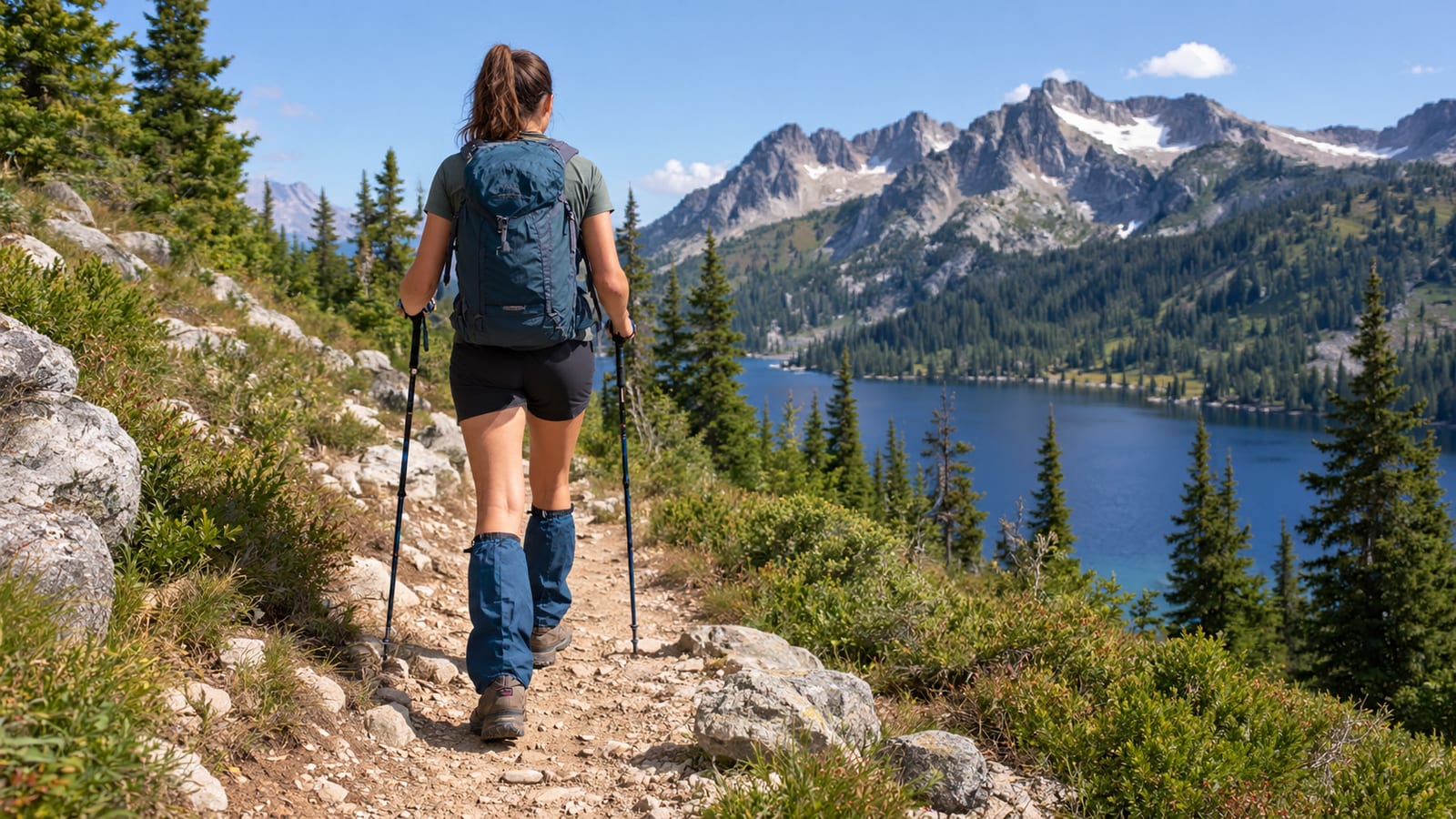
- Best overall: Outdoor Research Crocodile Gaiters. Choose them for mud, rain, snow, brush, and repeated off-trail use.
- Best waterproof hiking gaiter: Hillsound Armadillo LT. Choose it for flexible wet-weather protection with less bulk, once it is back in stock: every size is sold out at Hillsound at the time of writing, and it is due back with updated materials.
- Best quick-fitting debris gaiter: Kahtoola INSTAgaiter Mid. Choose it for dry trails, light moisture, and quick setup, not for sustained rain.
- Best lightweight mud gaiter: Outdoor Research Rocky Mountain Low Gaiters. Choose them for gravel, splashes, and shallow mud.
- Best ultralight debris gaiter: Dirty Girl Gaiters. Choose them for dry trails and trail runners.
- Best lightweight wet-weather alternative: Outdoor Research Helium Gaiters. Choose them when low weight matters more than rough-brush durability.
FAQ
Do hiking gaiters stop water from entering a boot?
They stop water from entering over the boot collar, but they cannot keep a submerged boot dry. For rain, wet grass, and splashing, a well-fitted gaiter helps a lot. For stream crossings, foot placement still matters more than the gaiter.
Can you wear gaiters with trail-running shoes?
Yes, if the gaiter is made for trail shoes and has a secure attachment point. Low debris gaiters work best because they follow the shoe closely. Full-height boot gaiters may feel loose or awkward on flexible trail runners.
Are waterproof gaiters too hot for summer hiking?
Often, yes. Waterproof gaiters make more sense in rain, wet grass, mud, and cool shoulder-season conditions. On a hot, dry trail, low debris gaiters or no gaiters at all will usually feel better.
Do gaiters protect against snakes?
Some gaiters add a layer against brush and minor contact, but ordinary hiking gaiters should not be treated as snake-proof protection. If snake protection is your main concern, choose equipment specifically rated for that purpose and match it to the trail.
Should gaiters go over or under rain pants?
That depends on the pants design and the weather. Wearing rain pants over gaiters can shed water more cleanly, while placing gaiters over the pants can seal the boot opening better. Test both setups before a long wet hike.
