
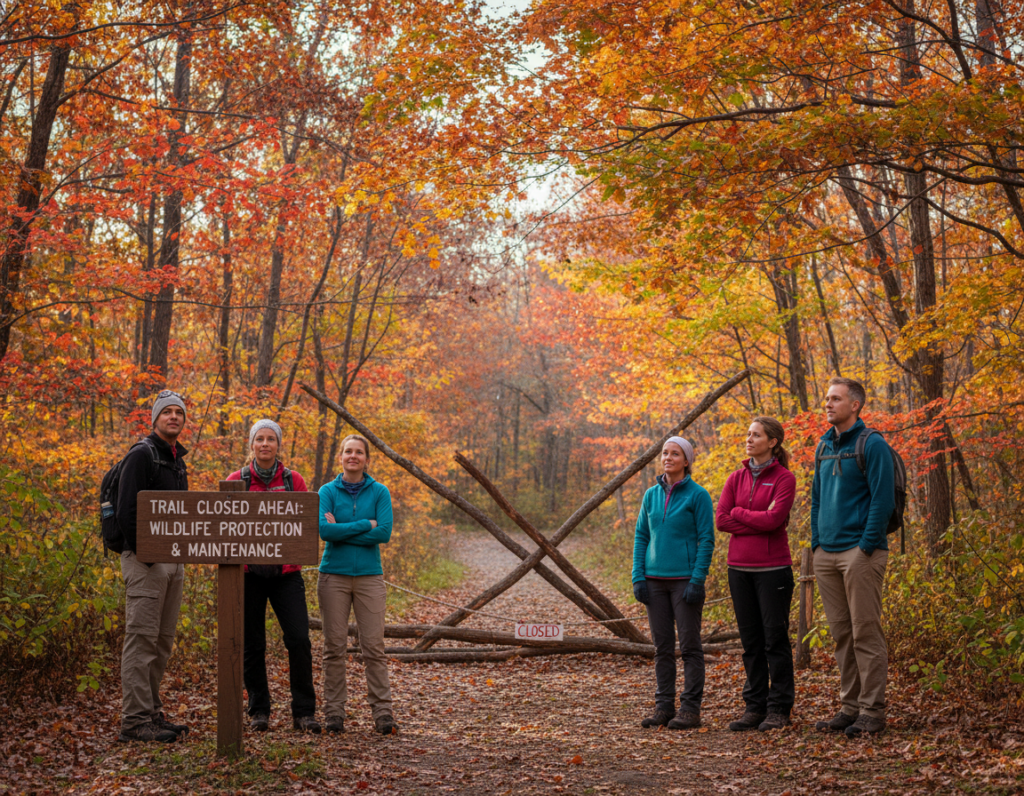
Have you ever wondered why a simple sign can block the path you planned for the day?
I’ll name the most common trail closure reasons you see across the United States: wet ground, recent fires, flood damage, and maintenance work. These situations aren’t arbitrary—land managers use closures to stop erosion and cut long-term repair time.
When a route is marked closed, I ask you to stay off the surface. Even one set of footprints or tire marks can widen a rut and start a longer erosion process that hurts plants, wildlife, and the whole area.
As a hiker, your choices matter. Respecting signs helps crews keep more routes open during the season and protects the places we all love to explore. For tips on minimizing impact and protecting wildlife while you hike, see this guide on respecting nature on the trail: how to protect wildlife while hiking.
Key Takeaways
- Closures prevent short-term use from causing long-term damage.
- Stay off marked surfaces—even if they look passable.
- Your footprints can trigger a damaging erosion process.
- Respecting signs saves crews time and keeps more routes open.
- Learn simple checks later in the article to judge conditions safely.
Wet weather closures: how soil, water, and traffic damage trails
One rainy day is all it takes for soft soils to fail under repeated use. I’ll show how clay, standing water, and regular use turn a good route into a damaged one fast.
Clay-based soils break down fast when wet
Clay holds water and loses strength when soaked. Under pressure the surface deforms instead of springing back.
That means ruts form in minutes when people walk or ride over it.
Ruts and compaction trap water and slow drying time
Pressure squeezes air from soils and seals the top layer. Water then sits longer and the surface takes more time to dry.
How mud and berms turn a trail into a water channel
Repeated traffic builds low berms at the edges. Those berms trap water on the tread and force flow downhill.
When water follows the path, the route becomes the easiest channel and cuts deeper with each storm.
Erosion basics and sustainable design
Erosion comes from wind, water, gravity, and repeated foot or tire impact. Good design moves water across and off the tread.
Management teams often close trails early to prevent damage; stopping use is faster and cheaper than rebuilding after erosion starts.
Trail closure reasons after wildfire and flooding in the United States
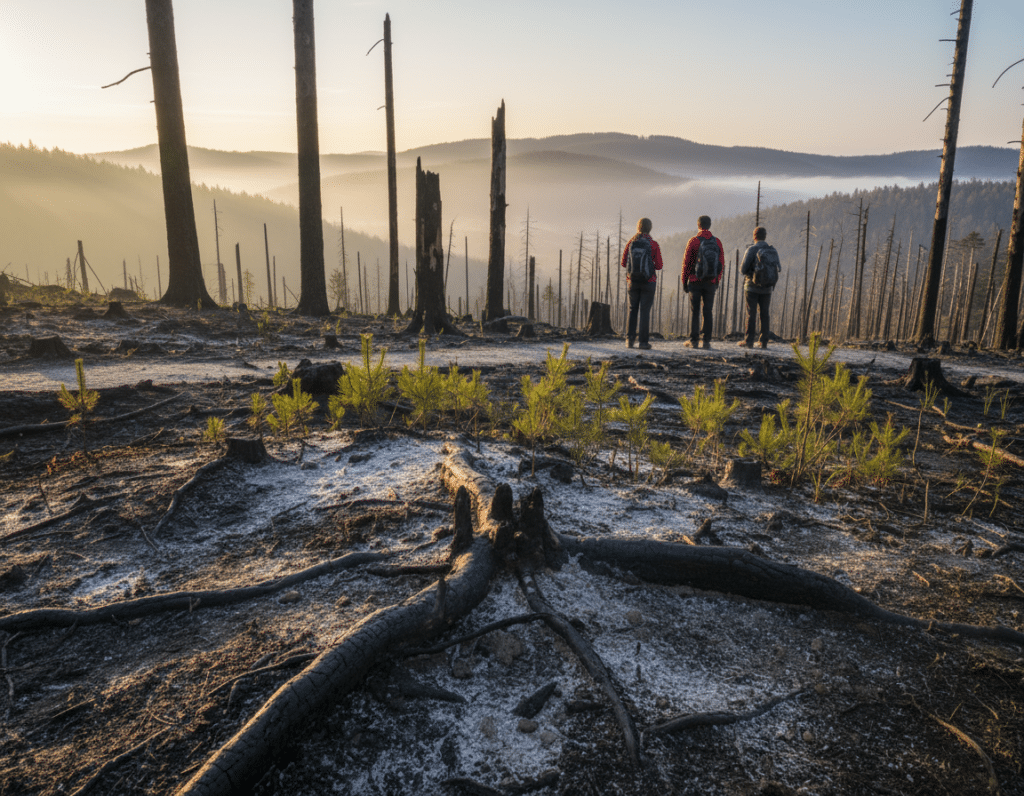
After a wildfire or major flood, I watch how the land changes before I plan a route. Burned ground can form a water-repellent layer that sends rain across the surface instead of into the soil. That overland flow can move sediment fast and start gullies uphill.
Hydrophobic soils increase runoff and move sediment downhill
Soils may repel water after heat exposure. Rain then becomes runoff that detaches small particles first. Those particles travel downhill and can fill channels downstream.
Loss of plants raises flood and erosion risk
Without vegetation, raindrops hit bare ground and displace soil. Post-fire flooding can be 10–100x worse than in undisturbed areas, so flows that look small can cause big damage.
Early recovery areas are fragile
New seedlings and crusted surfaces help stabilize slopes. A few footprints can crush sprouts, break soil crusts, and restart erosion. That is why closed areas protect recovery.
- Closures also limit spread of non-native seeds on shoes, pets, and vehicles.
- Respecting closed sections helps habitats heal and reduces long-term repair work.
| Condition | Effect | What to do |
|---|---|---|
| Hydrophobic soils | Increased runoff; sediment transport | Avoid walking on slopes; stay off affected trails |
| Loss of vegetation | Higher erosion and flood peaks | Follow posted limits; use alternate routes |
| Early recovery seedlings | Easy re-disturbance by foot traffic | Keep to closed areas; plan trips elsewhere |
If you want practical steps for low-impact hiking, check this leave-no-trace checklist. It helps you protect recovering landscapes while you explore.
Who closures apply to and how reopening decisions are made
Not every path opens at the same time—here’s how land crews decide when it’s safe again.
Closures apply to everyone who contacts the surface. A kid on a bike, a runner, a horse, or a hiker can all dig the tread when soil is soft. Damage comes from contact, not just weight.
What crews monitor before they reopen
Crews watch three main drivers: rainfall totals, how long the ground stays saturated, and freeze‑thaw activity. Frost heave in spring can lift and crack soil and extend recovery time.
Some crews use a rough guideline: about 24 hours closed per inch of rain. That helps plan time, but shade, soil type, and drainage change the outcome. Teams still check daily before they update status.
Quick field check you can use
If mud sticks to your boots, tires, or hooves, turn back. Sticking material means you are pulling soil from the surface and risking erosion and lasting damage.
- Ask: does mud cling on contact? If yes, choose another route.
- Plan alternatives: gravel paths, paved greenways, or well‑drained loops often stay open.
- Respect posted limits—one sunny day can hide a soft base that ruts after a few passes.
| What crews watch | Why it matters | What you can do |
|---|---|---|
| Rainfall totals | More water equals longer wet time and higher erosion risk | Delay trips; follow the 24‑hour per inch guideline as a rough rule |
| Freeze‑thaw cycles | Frost heave weakens and shifts soil in spring | Avoid early‑season uses; check park updates |
| Daily surface checks | One sunny day may not mean the base is firm | Use the mud‑stick test before you enter |
Conclusion
A short detour today can save a route for seasons to come. When you respect posted limits, you protect trails, preserve soil structure, and keep access open for others.
Wet use builds ruts and berms that trap water. Water then follows the path downhill and the tread becomes a channel. Erosion speeds up fast once that starts.
After fire or flood, burned slopes act differently and recovery is slow. Staying out lets plants and ground cover stabilize slopes and prevents long repairs.
Quick checklist: check status before you go, look for standing water, test for mud that sticks, and pick a different trail if any test fails.
You’re the hiker who turns back early so the trails stay smooth, draining well, and ready for the next clear day.
