
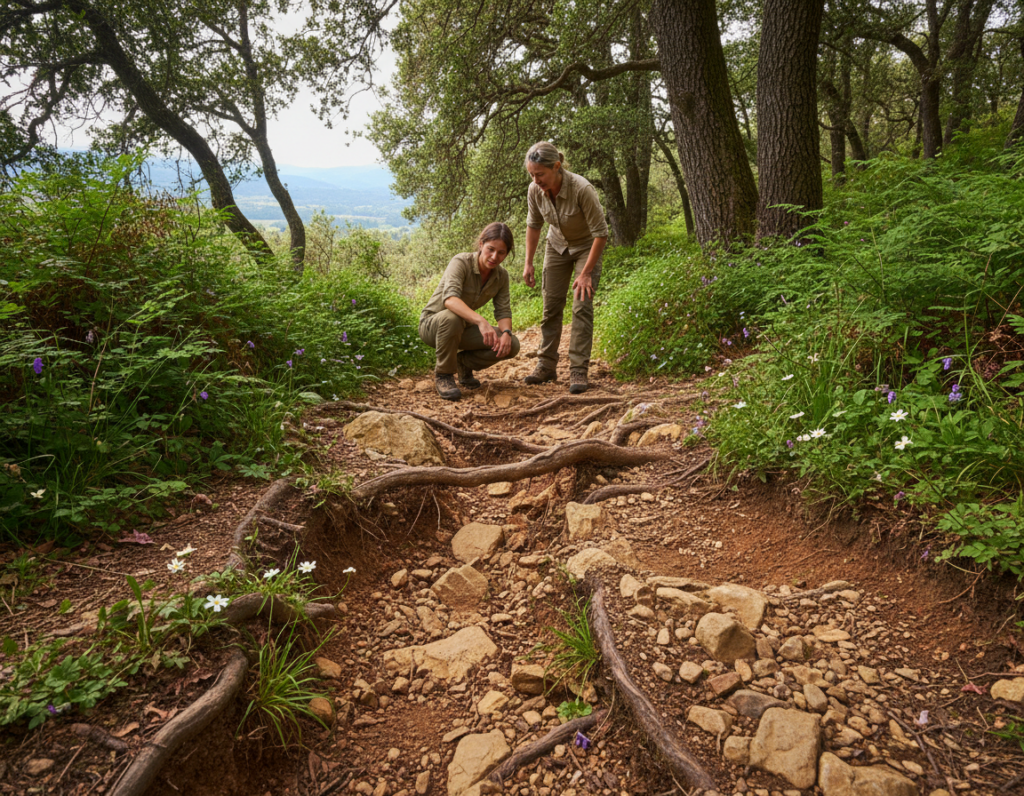
Have you ever stepped and felt the ground give under your boots—then wondered what is happening below your feet?
I set that scene because the shift underfoot links to how soil and rock move with water and weather. Big storms and flash floods speed this process, and heavier rain events today can push more runoff down paths in a short time.
I define “trail erosion causes” simply: it’s water, the make-up of the ground, and how people use the route—all working together. Kevin Hart of the Green Mountain Club says crews focus on stopping this movement because it eats away at routes fast.
In this piece I’ll show you how damage begins, what to watch for on the ground, and easy steps you can take as a hiker or volunteer. You don’t need special gear to help protect nature—just awareness and better choices by trail users.
Key Takeaways
- Water, soil, and use combine to move material downhill.
- Heavier storms today make damage happen faster.
- You can spot early signs on the ground and act quickly.
- Simple choices by trail users reduce harm.
- Field crews prioritize fixes that stop ongoing loss.
How trail erosion starts and why it turns into trail damage
Most ground wear is invisible day to day, until a heavy rain makes change obvious in an afternoon. I think of erosion as a slow downhill march of soil and rock, pushed by water and weather. Over months and years that march trims the surface and weakens the tread.
Storms speed that process. Intense rain raises runoff and concentrates flow into small channels. A single storm can carry fine soil away and deepen a groove where water runs.
What you’ll see on the path
Early signs are small: faint channels, loose sediment, and a cupped surface that holds water. Walk a little farther and you might spot ruts and shallow gullies down the center.
As water strips fine material, roots and rocks become exposed. Hikers and bikers then hit those hard points, which widens the route and makes runoff worse. Widening is not just messy—it increases problems by removing protective vegetation.
- Slow movement from weather and water, visible over time.
- Fast change during storms—runoff removes tread quickly.
- Common damage: ruts, gullies, exposed roots and rocks, and widened surface.
If you want to learn practical ways to reduce this, see a short guide on reducing wear and protecting paths: how to reduce erosion while hiking.
Trail erosion causes: water, trail design, soil, and traffic working together
Look closely and you’ll see how water, soil, and footsteps team up to reshape a path over time. First, repeated use compacts the surface. Then water follows that low-resistance line, and small flows concentrate into visible channels.
Water follows compacted lines
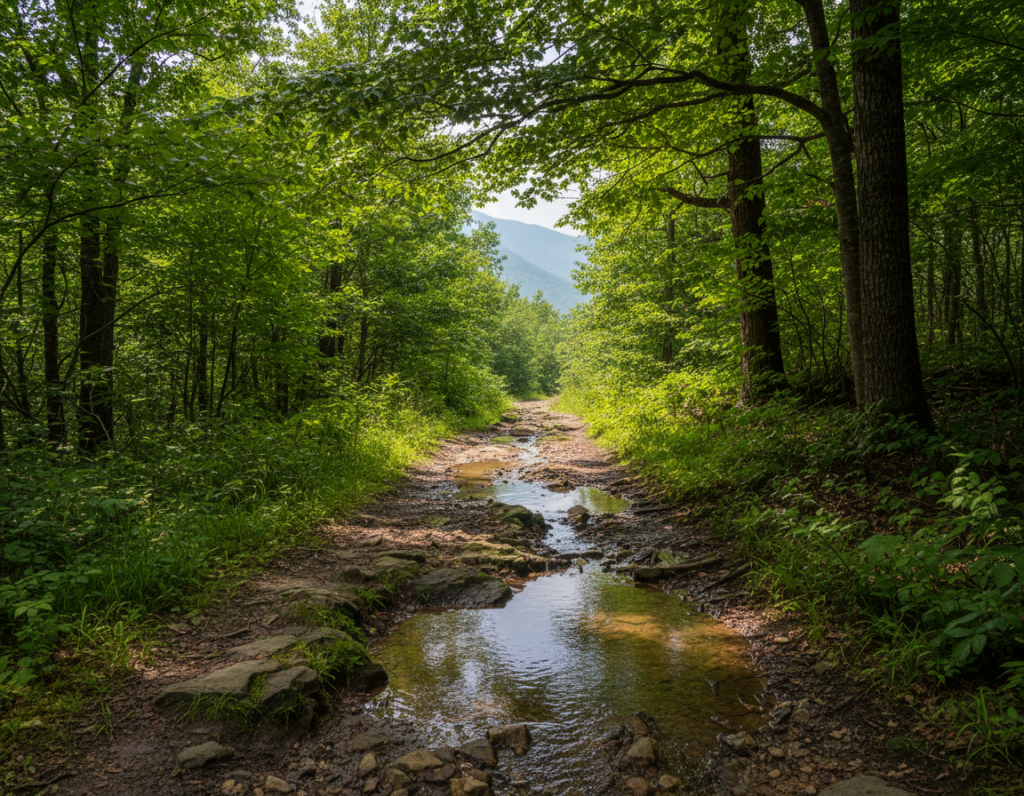
Compacted surface becomes a drainage channel. Runoff starts as sheet flow, then narrows into rills, and finally cuts gullies when flow concentrates and gains force.
Fall-line vs. switchbacks
Routes that run straight down a slope gather faster flow. Switchbacks slow and spread runoff, giving more time for absorption and reducing damage.
Grade, soil, and vegetation
Steeper grades speed water and increase its power to move soil. Sandy sections wash out quickly. Clay holds water and turns to mud. Loam usually dries and stays firmer.
User behavior and drainage failures
People step around puddles and widen the corridor. Missing cross-drains, clogged dips, or poor outslope trap water on the path and magnify wear.
| Feature | Signs | Impact |
|---|---|---|
| Sheet flow | Even wet surface, thin film of water | Surface soil loss, slick footing |
| Rills | Narrow channels, exposed roots | Concentrated sediment loss |
| Gullies | Deep cuts, unstable edges | Major repair needed, reroute likely |
| Soil types | Sandy / Clay / Loam | Washout / Mud / Best stability |
How to avoid trail erosion as a trail user and as a trail crew
A few smart moves by users and crews stop tiny damage from growing into big repairs. I’ll keep this short and practical so you can act on your next hike or volunteer day.
Stay on the tread
Stay centered on the path even if the edge looks easier. That protects vegetation that holds soil and soaks up water.
Walk through mud and puddles when safe
Step through soft spots instead of sidestepping around them. One pass through mud limits widening and keeps users on a single route.
Support drainage that works
Clear obvious leaf clogs from waterbars and drains when allowed. Small clearing keeps water moving off the tread and reduces maintenance later.
Use sustainable construction and hardening
Crews focus on outslope and grade reversals to shed water. Harden high-wear sections with stone stairs, check steps, or armored structures so the surface holds up under use.
Know when repairs aren’t enough
Escalate when gullies recur after storms, mud never dries, or the tread keeps widening. Reroutes or major drainage work may be needed, but crews face land and resource limits.
| Action | Quick effect | Who does the work | When to escalate |
|---|---|---|---|
| Stay on tread | Protects vegetation, limits widening | All users | Never; daily practice |
| Clear waterbars | Restores flow off the path | Volunteers / crews | After heavy leaf fall or storm |
| Install stone stairs | Durable surface, controls wear | Crew + skilled volunteers | Chronic mud or steep wear |
| Reroute | Removes recurring problem from use line | Professional planning and crews | Repeated gullies or failed fixes |
Conclusion
What you do on your next walk can stop small wear from becoming major damage. When water, grade, soil, and traffic line up the wrong way, damage is predictable—so act early.
Do this today: stay on the tread, step through mud when safe, and avoid widening the edge. These habits protect vegetation and keep the surface firm for everyone.
Watch for ruts, shallow gullies, widened corridor, and exposed roots. Spotting them early saves time and gear for crews.
Good drainage and thoughtful design work better than constant patching. Move water off the path and it stops repeating the same harm.
Small choices by many users add up: safer footing, better days outdoors, and less sediment heading into streams. Go enjoy the route—and leave it stronger for the next group.
