
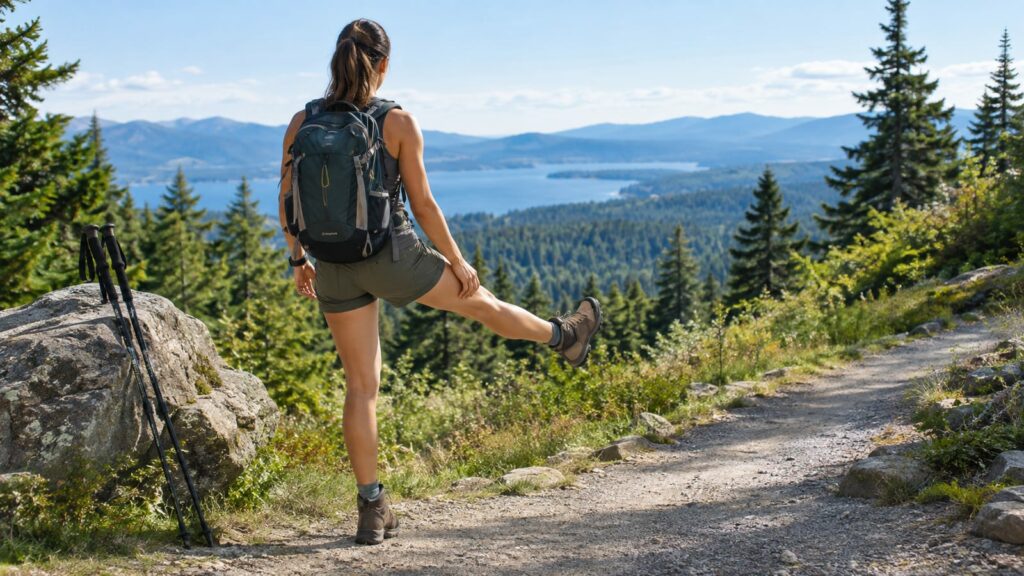
The right hiking stretches are simple: use moving stretches before you hike, then use slow, comfortable holds after you stop. Start with easy walking because cold muscles don’t need a surprise tug in the trailhead parking lot. This routine helps your ankles, hips, calves, and shoulders move under load, but it won’t fix poor footwear, weak legs, or a pack that weighs too much.
Last updated: 2026-09-17
Before a hike, keep your body moving through a comfortable range. Afterward, hold the positions that feel tight without bouncing or forcing them.
Which hiking stretches should you do?
Dynamic stretches use controlled movement. Leg swings, ankle rocks, and walking lunges belong here. Static stretches hold one position, such as a calf stretch against a tree.
Timing matters more than building a long routine. Move before the hike, hold stretches afterward, and skip anything that makes a joint feel less steady.
| Approach | When to use it | What it does | Call |
|---|---|---|---|
| Easy walking | Before other movement | Raises body temperature and loosens stiff joints | Keep it |
| Dynamic warm-up | Before hiking | Prepares ankles, hips, legs, and shoulders for trail movement | Best pre-hike choice |
| Long static holds | Before hiking | Can leave cold muscles feeling pulled rather than ready | Skip them at the trailhead |
| Short movement reset | During a break | Helps stiff ankles, hips, and shoulders start moving again | Useful on long or loaded trips |
| Static stretching | After hiking | Restores comfortable range and settles tight muscles | Keep it gentle |
| Foam rolling | Later in recovery | May ease the feeling of tight calves, thighs, and glutes | Optional |
Stretching supports a prepared body. It doesn’t guarantee protection from blisters, falls, tendon trouble, or sore knees.
Pre-hike movement that earns its place
Spend 5-10 minutes on a pre-hike dynamic warm-up. Easy walking can be part of it, especially after a long drive or on a cold morning. Avoid stretching a body that hasn’t warmed up, because pulling on cold muscles can cause injury.
You don’t need a mat. You need enough flat ground to move without backing into a bumper.
Ankle rocks
Stand with one foot forward and keep its heel down. Drive the knee gently toward the toes, then ease back. Repeat smoothly on both sides.
This prepares the ankle for steep climbs and rocky descents. If the heel lifts right away, shorten the movement rather than forcing it.
Calf raises
Rise onto the balls of your feet, pause, and lower with control. Hold the car if the parking area is loose or sloped.
Calf raises wake up the lower legs without yanking on the Achilles tendon. They’re especially useful before climbing with a water carry.
Leg swings
Hold a car door, trekking pole, or tree. Swing one leg forward and back with a relaxed knee, then move it side to side. Start small and let the range grow as the hip loosens.
Wild kicks add nothing. The job is to move the hip while your trunk stays quiet.
Walking lunges
Step forward and lower only as far as you can control. Keep your front knee tracking over the foot, then stand and move into the next step.
Lunges prepare the quads and glutes for climbing. However, anyone with irritated knees can use shallow reverse lunges or controlled partial squats instead.
Hip circles
Stand tall and circle one knee as if stepping over a low branch. Keep the movement slow enough that you don’t twist through the planted foot.
This works well after sitting in a car. Tight hips often announce themselves on the opening switchbacks, when doing anything about them is less convenient.
Pack-on shoulder rolls
Put your pack on and roll your shoulders forward and backward. Then reach each arm overhead without shrugging hard against the straps.
This exposes a bad strap setup before pack rub starts. If your shoulder straps pinch or your hip belt slides, adjust the pack rather than hoping your muscles will negotiate with it.
These hiking stretches cover the joints that do most of the work on a normal trail. For a longer sequence, use this stretching routine before and after a hike.
Static stretches belong after the hike
A post-exercise stretching routine can take about 5 minutes. Your muscles are already warm, so slow holds make more sense here than they did beside the cold car that morning.
In an easy routine for hikers, hold each stretch for at least 30 seconds. Use steady breathing and stop short of pain. Bouncing usually turns a useful stretch into a small argument with a tendon.
- Standing Quad Stretch: Hold support, bring your heel toward your backside, and keep both knees close together. This targets quads tired from downhill braking.
- Standing Hamstring Stretch: Place one heel on a low, stable surface. Hinge forward from the hips while keeping your back long.
- Standing Calf Stretch: Step one foot back, press the heel down, and keep the toes pointed ahead. Bend the back knee slightly if the lower calf feels tighter.
- Hip flexor stretch: Use a short split stance or a supported half-kneel. Tuck the pelvis gently instead of leaning forward through the lower back.
- Figure-four glute stretch: Sit or lie down, cross one ankle over the opposite thigh, and draw the legs closer only while the knee feels comfortable.
- Wide-legged Forward Fold: Stand with a broad, stable stance and hinge at the hips. Keep your hands on your thighs or a solid support if balance is shaky.
The Wide-legged Forward Fold isn’t a contest to reach the ground. A controlled hip hinge is enough. Wet grass and tired balance make grander plans a poor bargain.
Backpacking changes the sore spots
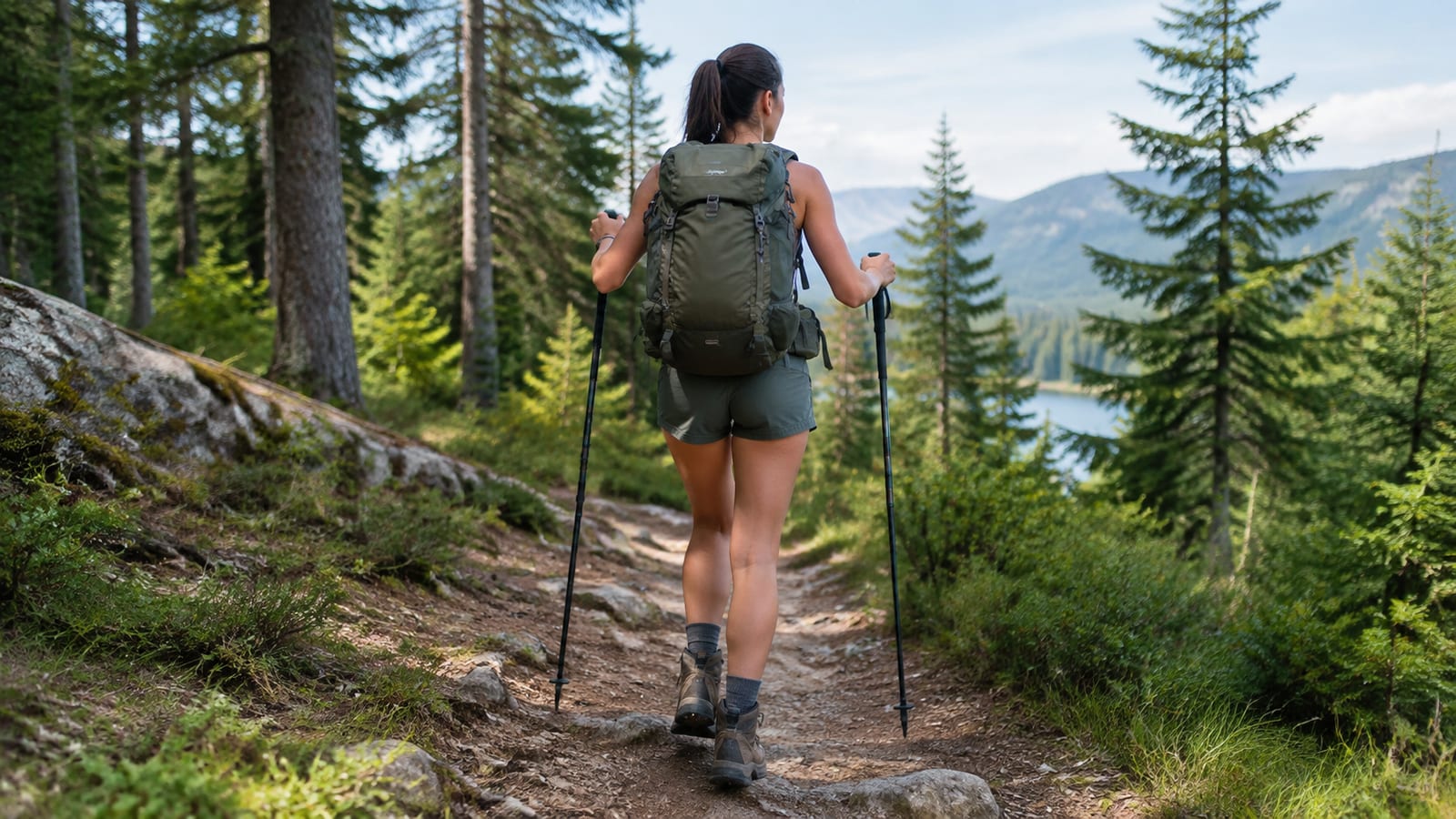
Backpacking stretches should account for pack weight, repeated trail days, and the way shoulder straps hold your upper body in one position. Your hips, chest, calves, and upper back usually need more attention than they do after a light day hike.
Before walking, use the same dynamic sequence with extra shoulder rolls and ankle work. Then put the pack on and take a short walk near the trailhead. A slipping hip belt or numb shoulder tells you more than another round of lunges.
At camp, focus on these areas:
- Calves and ankles after steep grades or uneven rock
- Quads after long descents
- Hip flexors and glutes after carrying a loaded pack
- Chest and shoulders after hours under shoulder straps
- Upper back after leaning into climbs
These areas tell the story of the trip. Tight calves usually follow steep grades, while a sore chest or upper back often points to pack fit and hours under the straps.
Keep the session short enough that you don’t cool down in wet clothes. On a cold shoulder-season evening, change layers first and stretch inside the tent or under shelter.
For a routine built around loaded trips, see these safer stretches for long hikes.
Mid-hike resets should stay brief
Long holds during a break can let warm muscles cool and stiffen. Instead, use controlled ankle circles, a few shallow lunges, shoulder rolls, or an easy hip movement before putting the pack back on.
This matters after a long lunch, a cold soak, or a windy rest stop. Stand carefully, test the sore area without the pack, and then reload.
If pain changes your stride, stop treating it as ordinary tightness. Check your shoes, socks, laces, pack load, and trail conditions. Stretching harder usually makes an irritated joint or tendon less cooperative.
Foam rolling can help, within limits
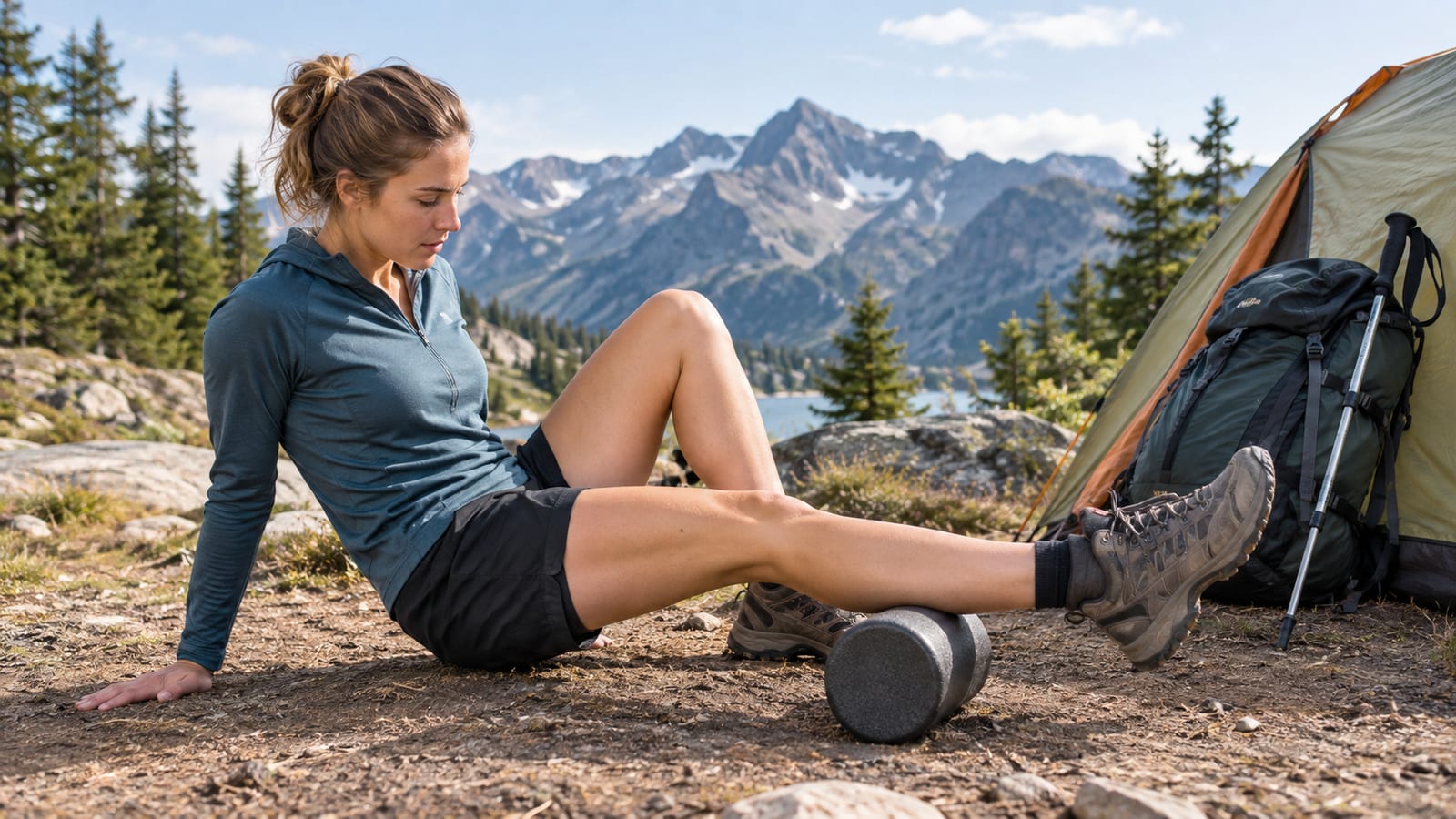
A foam roller can ease the feeling of tight calves, thighs, and glutes after a long walk. For a sore-muscle recovery session, spend around a minute per body part and move slowly over the muscle.
Don’t grind directly over a knee, ankle, hip bone, or swollen area. A hard water bottle can work on broad muscles in camp, although its small surface feels sharper than a proper roller.
Foam rolling offers temporary relief. It won’t repair an injury or make up for weak downhill control. If recovery is the larger problem, use a broader post-hike recovery plan.
Stretching has clear limits
Stretching may improve comfortable movement and help you feel less stiff. However, claims that one routine prevents every hiking injury sound better on a clinic handout than on loose rock.
Most trail trouble has several causes. Pack weight, sudden mileage increases, poor foot placement, heat, fatigue, and footwear all keep their vote. Meanwhile, strength matters because your quads and glutes control each descent instead of merely surviving it.
If knee pain appears mainly downhill, work on control, pack weight, and pole use. This guide to protecting your knees on steep hikes covers the parts stretching can’t handle.
Sharp pain, swelling, joint locking, buckling, numbness, or pain that worsens as you walk deserves more caution. Stop the stretch and shorten the trip if needed. Persistent symptoms belong with a qualified medical professional, especially after a fall or sudden twist.
Adjust for the trail and your body
Cold mornings need more walking and smaller movements at first. Standing still for long holds only cools you further, so keep your jacket on and build range gradually.
On hot hikes, don’t turn the warm-up into a workout. Save your water and effort for the climb. Shade, sweat management, and an easier opening pace matter more than an elaborate parking-lot routine.
Loose rock also changes the setup. Hold the car, a stable tree, or trekking poles instead of balancing on one tired leg. A stretch that ends in a parking-lot stumble has missed the assignment.
Finally, don’t force symmetry. One ankle or hip may move less because of an old injury, joint shape, or current irritation. Stay within a smooth range and get professional guidance if the restriction affects your stride.
FAQ
Can I do pre-hike stretches in hiking boots?
Yes, and that’s usually more useful than doing them barefoot at home. Boots change ankle movement and balance, so gentle ankle rocks, calf raises, and lunges show whether your setup works with trail footwear. Loosen the laces if the boot blocks movement or creates pressure across the top of your foot.
Should flexible hikers stretch less?
People with loose or hypermobile joints often need control and strength more than added range. Use small, steady movements and avoid hanging at the end of a joint’s motion. If a position feels unstable rather than tight, leave it out.
Can stretching make post-hike soreness worse?
Aggressive stretching can irritate muscles that are already sore from climbing or downhill braking. Keep the pressure mild and leave tender spots alone. Easy walking, food, fluids, dry clothes, and sleep often do more for recovery.
Do trekking poles change the stretching routine?
Poles add work for the hands, forearms, shoulders, and upper back. Open and close your hands during breaks, roll your shoulders, and stretch the chest after the hike. Also check your pole length, because constant shrugged shoulders can create tension that stretching won’t solve.
