
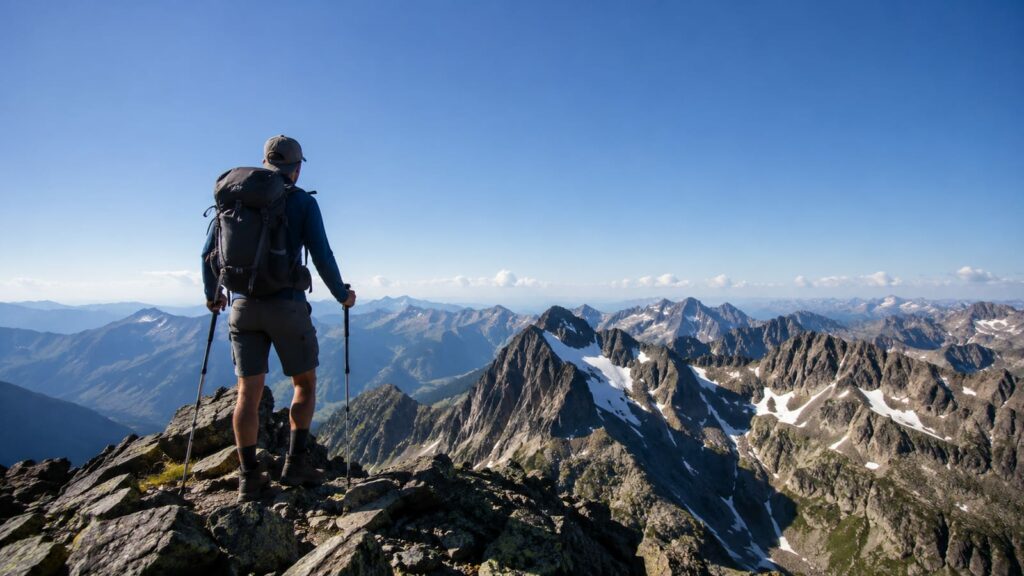
The mountains keep their own calendar, and your feet pay the fine if you ignore it. The best time for alpine hiking is high summer: July through the end of August in the Alps, when the snow has cleared off the passes, the huts are staffed, and the marked routes actually match the map. Early autumn runs a close second and usually beats summer on crowds and light. Everything outside that window asks more of your gear, your route-finding, and your nerve.
When is the best time for alpine hiking?
Go July through the end of August for most trails. That's peak alpine season across Switzerland, France, and Italy, and the reasons are boring and correct: melted snow, open huts, clear high passes, and long daylight.
Shoulder-season hiking isn't off-limits. It's a different game. Spring trails hide old snow and mud, and autumn brings short days and fast weather. You can hike both well, but you carry more judgment and usually another layer.
If you get one week a year and you want the trail to cooperate, book summer. Save the clever off-season trips for terrain you already know.
Why the Alps peak in July and August
Snow is the whole story. High passes hold snow well into June, and a heavy winter keeps them icy longer. By July most of it is gone, the huts are open, and the routes behave.
Heat is the tradeoff. Midsummer afternoons build thunderstorms fast, so you start early and try to be off exposed ridges by early afternoon. That's not fear. That's reading the sky and moving.
Crowds are the other cost. The famous loops fill in August, and huts book out months ahead. For quieter trails in good conditions, look at these underrated mountain trails across Europe instead of the headline routes.
Early autumn is the underrated window
September and early October often beat peak summer. The air is cooler for climbing, the light runs long and low, and the August crowds have gone home. Larches turn gold, and the whole thing photographs itself.
Daylight and weather are the catch. Days shorten quickly, huts start closing, and the first serious snow can arrive without much warning. Plan tighter turnaround times and pack a real warm layer, not a hopeful one.
Autumn is also when carelessness creeps in, because the trail looks calm. In the Austrian Alps, about 19.5% of alpine hiking accidents happen in autumn, a touch more than the 18.2% in spring. The mountains aren't more dangerous then. People just relax when they shouldn't.
North America keeps a different schedule
The Alps aren't the only clock. In North America, the alpine zone starts where the mean growing-season temperature falls to around 6.4°C, and that threshold sits at wildly different elevations depending on how far north you are. So "alpine" in Colorado and "alpine" in Alaska open on different dates.
Take North Cascades National Park in Washington. The practical hiking window runs roughly April through October before early snow shuts the high country down. Show up in June expecting dry passes and you'll wade through lingering snow instead.
For a gentler mountain shoulder season, the Canadian Rockies reward good timing. If that's your target, the Banff hiking trails guide lays out when the high trails clear.
Classic Alps routes and how long they take
Building a summer trip? Here are real multi-day Alps routes and their typical lengths. Best window for all of them is that July-to-August core, with early September as a strong option in a normal snow year.
| Route | Typical length |
|---|---|
| Tour du Mont Blanc | 11 days |
| Chamonix to Zermatt | 11 days |
| Dolomites Alta Via 1 | 10 days |
| Grand Tour des Combins | 7 days |
| Via Alpina: Bernese Oberland | 7 days |
| Arolla to Zermatt | 6 days |
| Tour des Glaciers de la Vanoise | 3 days |
Mont Blanc, the highest peak in the Alps and Western Europe, anchors several of these. That elevation is exactly why timing matters. The higher and more glaciated the route, the shorter and later its safe window.
Want a lower-commitment option? A middle-altitude itinerary like the Treasures of Mont Blanc trip stays hikeable deeper into the shoulder seasons than the high glacier crossings, because it skips the passes that hold snow.
What does off-season really cost you?
Access and margin, mostly. Spring and autumn each carry a real slice of the accident numbers, and winter, while quieter on the trails, still accounts for about 7.8% of alpine hiking accidents in the Austrian Alps. Fewer people go, so each trip carries more weight.
Winter valley weather hints at what waits up high. In January, Chamonix in France sits near a 41°F high and 32°F low with roughly 3.7 inches of precipitation. Cortina d'Ampezzo in Italy runs colder, close to 32°F and 18°F with about 3.4 inches. Radovljica in Slovenia lands around 35°F and 23°F but far drier, near an inch.
Those are town numbers. Add elevation and the mountains turn into a harsher place entirely. Winter alpine travel is real mountaineering, not hiking with extra socks. If that's the trip you want, start with proper winter hikes in the Alps and the skills they demand, not a summer route buried in snow.
How to pick your window
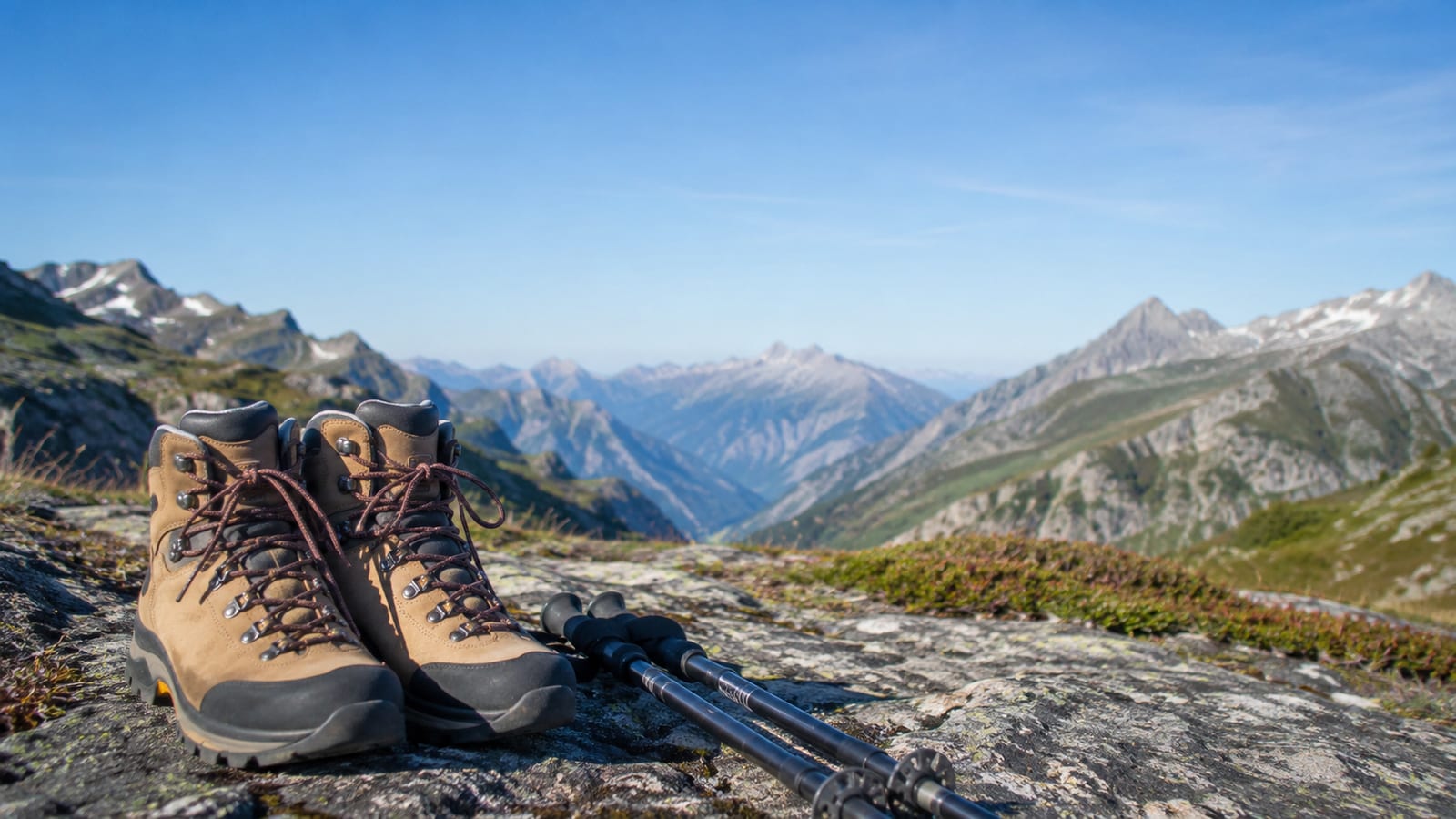
Match the season to the trail, not the trail to your vacation dates. A few honest calls:
- First alpine trip or a fixed one-week window: go in July or August, and let the conditions be the easy part.
- Fewer people and cooler climbs: early September, with tighter turnarounds and a warm layer packed.
- High glacier crossings or big passes: peak summer only. Late snow closes them without asking.
- Middle-altitude routes: these forgive a wider window, so they're your shoulder-season friends.
- Winter: treat it as mountaineering with the training and gear to match, or pick a lower objective.
Mountain forecasts age badly, so read the sky and build in bailout points. The best season won't rescue a bad plan, and a good plan survives an average one.
FAQ
How far ahead should I book huts for a summer alpine trip?
Months, not weeks, for popular routes. Alpine huts on the well-known loops fill by late winter for July and August dates. If your trip depends on specific huts on specific nights, reserve as soon as the season opens and keep a backup night in mind.
Is there still snow on alpine trails in early summer?
Often, yes. High passes can hold snow into June and sometimes July after a heavy winter, even when the valley is warm and green. Check recent trail reports instead of trusting the calendar, and carry traction and route-finding skills if you go early.
What's the difference between alpine hiking and mountaineering?
Hiking follows marked trails on foot, mostly in snow-free conditions. Mountaineering adds glacier travel, roped sections, ice, or technical climbing. The line blurs fast in winter and early spring, when a "trail" you'd stroll in August needs ropes, crampons, and a partner who knows how to use them.
Do afternoon thunderstorms really change my start time?
They should. Summer heat stacks storms over exposed alpine terrain by early afternoon, and ridgelines are the worst place to meet one. Start at first light, aim to be off the high open ground before the clouds build, and don't argue with a sky that's already darkening.
When are alpine trails least crowded without being dangerous?
Early September in the Alps is the honest answer. You get cooler air, golden light, and thinner crowds while conditions stay mostly summer-like. Just plan for shorter days and the chance of an early snowfall, and don't push a late-season high route on hope alone.
