
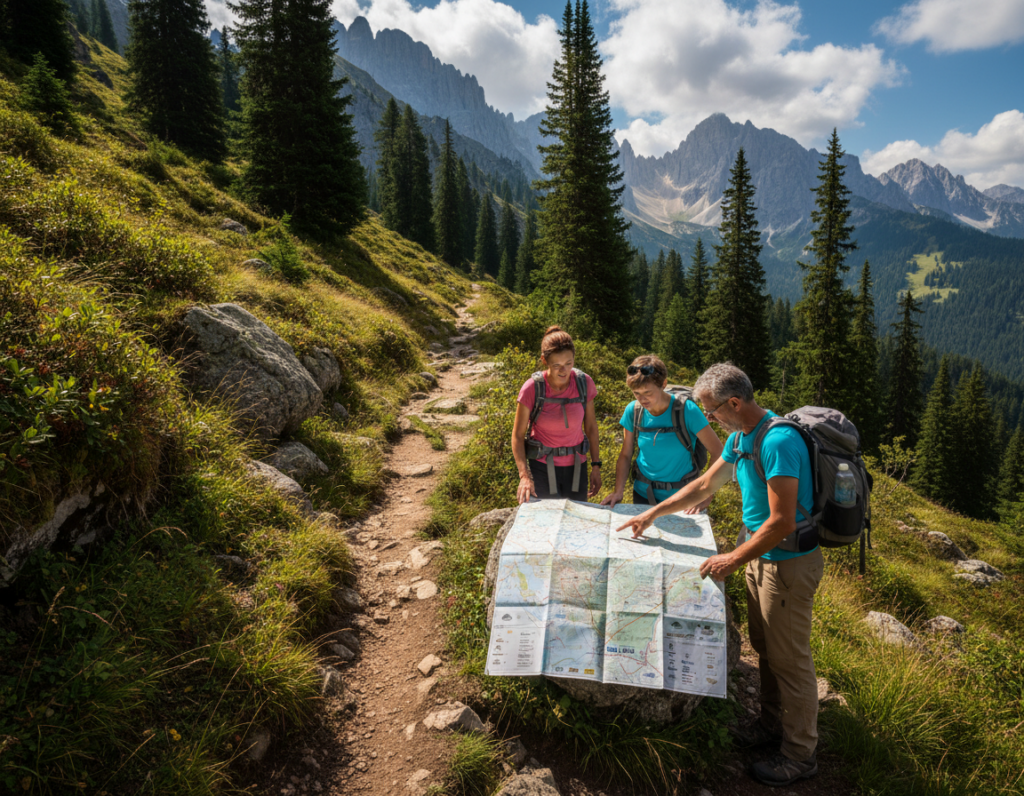
Over 80% of hikers don’t trust the posted signs at a trailhead. Those standard durations rarely match reality. Why does this matter so much? Knowing your true pace is a cornerstone of safety and enjoyment.
It ensures you reach your destination before dark. You’ll also conserve enough energy for the journey back.
Accurate predictions are the backbone of any good plan. They help you coordinate rides, secure campsites, and choose routes that fit your available daylight. You make informed decisions that match your fitness level.
Let’s be honest: a one-size-fits-all pace doesn’t exist. Your speed and the conditions you face are unique every single day. The steepness of the terrain, the weather, and even your pack weight change everything.
This guide will walk you through practical calculation methods. You’ll learn to adjust any formula for your personal rhythm. The goal is to build unshakable confidence for your next adventure.
While no formula guarantees perfection, mastering these techniques empowers you. You’ll make smarter choices on the trail. With practice, you’ll develop an intuitive sense that makes planning second nature.
Key Takeaways
- Knowing your true pace is crucial for safety and finishing before dark.
- Realistic time estimates are essential for planning transportation and accommodations.
- Standard posted times often feel inaccurate because every person’s speed is different.
- Your movement rate depends on fitness, terrain steepness, weather, and pack weight.
- Learning calculation methods helps you tailor plans to your personal rhythm.
- No prediction is perfect, but these skills lead to better on-trail decisions.
- With experience, you will develop a natural intuition for planning your adventures.
Understanding Key Factors in Hiking Time Calculation
Calculating your journey’s duration isn’t just about numbers. It’s a critical safety skill. Realistic predictions keep you off an exposed ridge after sunset. They also prevent you from pushing your body too hard.
Importance of Accurate Time Estimates for Safety
Running out of daylight is a common danger. So is exceeding your physical limits. Proper planning helps you avoid these situations. It ensures you have enough energy for the return trip.
Your personal fitness level is the foundation. Remember, your sea-level conditioning may not match mountain trails. Thin air and steep climbs demand more from your body.
Environmental and Personal Factors Affecting Pace
Terrain type dramatically changes your movement speed. A smooth path allows a steady pace. Rocky scrambles or root-covered slopes force a careful crawl.
Elevation gain affects every person differently. Some maintain speed on uphills. Others need frequent stops. Know your own response to climbing.
Trail conditions like mud, snow, or extreme heat add minutes. They can increase your total duration by 20-50%. Pack weight is another major factor. A heavy backpack with camping gear slows you down and increases fatigue.
| Factor | Impact on Pace | Consideration |
|---|---|---|
| Fitness Level | Sets baseline speed | High altitude reduces performance |
| Terrain Type | Can halve your speed | Rocks, roots, and sand are slow |
| Elevation Gain | Slows ascent rate | Add 1 minute per 10 feet of climb |
| Pack Weight | Reduces speed 5-15% | Every extra pound counts on long hikes |
| Weather Conditions | Adds significant time | Rain, heat, or snow require caution |
Mental factors matter too. Your motivation, familiarity with the route, and group size all influence the clock. A confident navigator moves faster than a hesitant one. Solo treks often have a different rhythm than group adventures.
Correction methods like Tranter’s or Langmuir’s exist for these variables. They adjust for fitness type and slope steepness. Your own experience will be the best guide.
Effective Techniques: how to estimate hiking time
Mastering a few reliable formulas can transform your trail planning from guesswork into a precise science.
Naismith’s Rule and Its Variations
The classic Naismith’s Rule is a great starting point. It allocates one hour for every three miles of distance. Add one more hour for every 2,000 feet you climb.
For a 6-mile trek with 2,000 feet of ascent, that’s 3 hours total. Several variations exist for different scenarios.
| Method | Formula | Best Use Case |
|---|---|---|
| Naismith’s Rule | 1 hr per 3 miles + 1 hr per 2000 ft ascent | General trail hiking |
| Field Version | (20 min × miles) + 15 min per 500 ft ascent | Quick mental math |
| Book Time | (30 min × miles) + 30 min per 1000 ft ascent | Mountainous terrain |
| Munter Method | (Distance km + (Ascent m/100)) / Rate | Off-trail or variable conditions |
The Munter Method uses rates like 4 for uphill hiking and 6 for downhill. This offers flexibility for your activity.
Corrections for Descent and Terrain Adjustments
Remember, descent isn’t free time. Steep downhills stress your knees and demand careful footing. Moderate descents may let you move faster.
These formulas provide a baseline. Your personal fitness and trail conditions require adjustments. Testing methods on familiar routes builds confidence.
Improving your cardio endurance directly influences your pace and these calculations.
Utilizing Tools and Calculators for Time Estimation
Modern hikers have powerful digital aids for journey planning. Online calculators apply proven formulas to your specific route. They deliver personalized predictions that boost your confidence.
Overview of Popular Hiking Time Calculators
Specialized tools like TrailsNH focus on regions like the White Mountains. You input your pack weight, terrain conditions, and personal pace. It then compares results from Naismith’s Rule and Book Time.
Caltopo offers robust route integration. You draw your path on a map. The tool automatically calculates duration using Munter Method principles.
These calculators often ask you to rate your speed. They compare you to other multi-day hikers. This creates a more accurate baseline for your forecast.
Integrating Personal Pace and Breaks in Calculations
Remember a critical detail. The output shows pure hiking hours only. You must add your own time for lunch, photos, and rest.
Your pack weight makes a significant difference. A heavy camping load can add over thirty minutes to a six-hour trek. Factor this into your final schedule.
Test these tools on trails you know well. You might finish consistently faster or slower than the prediction. This helps you calibrate future estimates.
Keep simple notes on your actual times and conditions. This builds a personal reference library. You will grow less dependent on calculators and more confident in your own judgment.
Planning Your Hike Considering Route and Conditions
Elevation gain is the primary clock-slowing factor you must account for. The National Park Service combines distance and vertical climb into a single difficulty score. This rating helps predict your pace.
Adjusting for Elevation Gain and Trail Features
One thousand feet of climbing typically adds thirty to sixty minutes. The NPS formula is Rating = √((Ascent feet × 2) × Distance miles). Use this table to gauge expected speed.
| Difficulty Rating | Distance Range | Pace (mph) |
|---|---|---|
| Easiest ( | 1.5 | |
| Moderate (50-100) | 3-5 miles | 1.4 |
| Moderately Strenuous (100-150) | 5-8 miles | 1.3 |
| Strenuous (150-200) | 7-10 miles | 1.2 |
| Very Strenuous (>200) | >10 miles | 1.2 |
A flat five-mile walk takes about one hour thirty-seven minutes. Add five hundred feet of ascent, and it becomes a two-hour trek. Trail features matter too.
Switchbacks aid efficiency, while rocky scrambles demand careful steps.
Factoring in Weather, Fitness, and Pack Weight
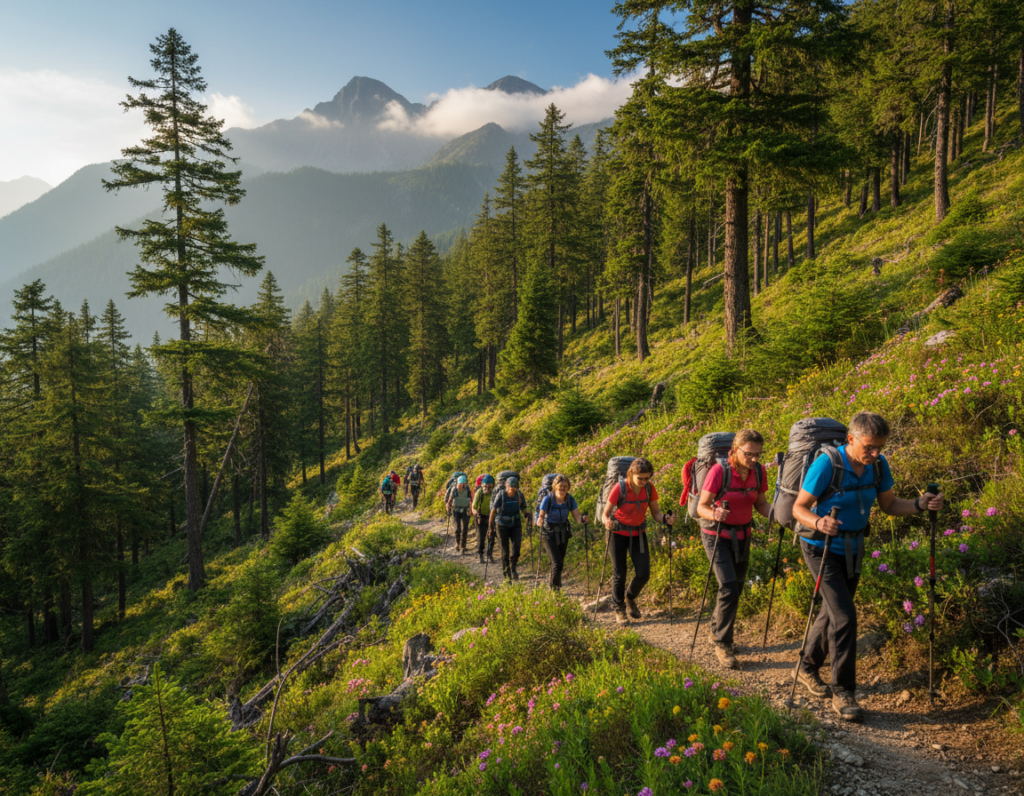
Rain or heat can slash your speed. Your fitness level changes during a multi-day trip. Fresh legs move faster than tired ones.
Pack weight feels heavier after hours on the trail. Account for short breaks—they add fifteen to twenty minutes per hour.
Always start with conservative estimates. Unfamiliar paths can take hours longer than expected.
Conclusion
Your most reliable guide for future journeys is the log of your past experiences.
Accurate planning blends proven formulas with personal adjustment. Your fitness level and trail conditions change every outing. No single method works perfectly for all hikers.
The goal is safe enjoyment, not clockwork precision. Always start with conservative time estimates. Include buffer hours for breaks and unexpected delays.
Digital tools and calculators provide a great starting point. For deeper navigation skills, consider using a hiking GPS effectively. Yet your own notes from the trail are the best teacher.
With each adventure, you develop a natural intuition for pace and distance. This confidence lets you focus on the views, not the watch. Plan wisely, hike safely, and return home eager for the next mile.
