
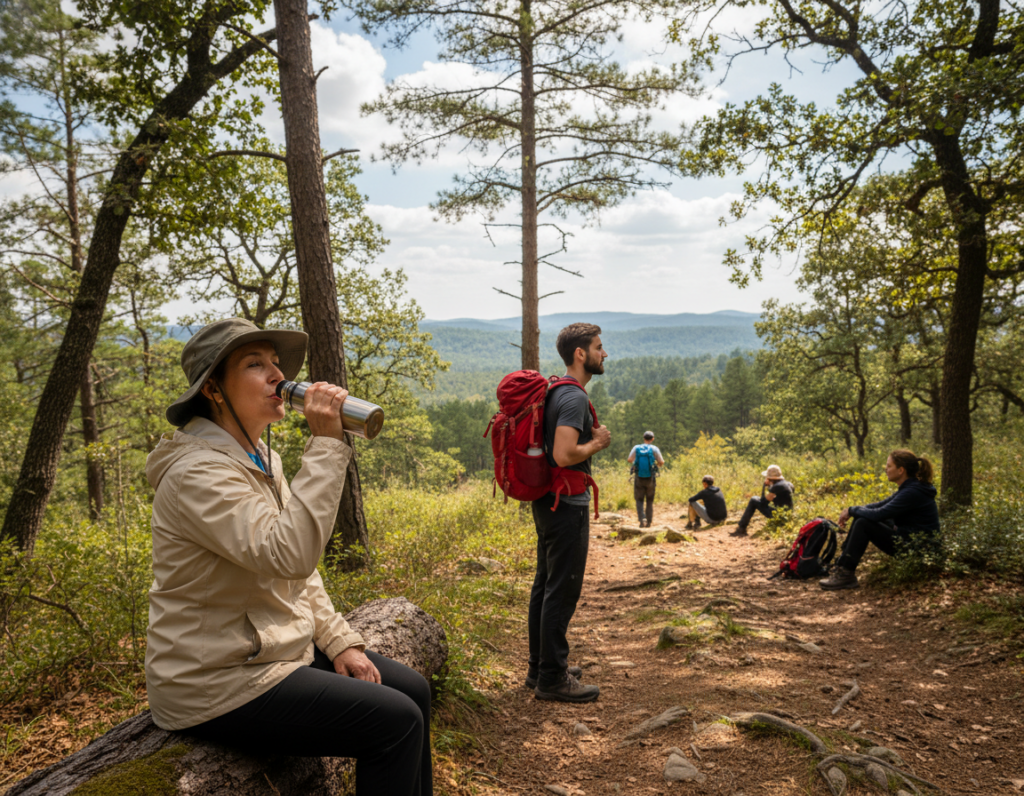
That feeling when your legs turn to lead halfway through a magnificent adventure—it’s a common struggle on long trail days. But what if you could finish as strong as you started? Smart energy management is the secret sauce that separates a grueling march from an enjoyable journey.
Conquering miles of rugged terrain demands more than just fitness; it requires a strategy. Many enthusiastic explorers push too hard early on, only to hit a wall later. This guide is packed with practical, real-world methods to help you maintain your stamina. You’ll learn how proper pacing, nutrition, and gear choices can dramatically reduce fatigue.
Our advice comes straight from the path, tested on countless excursions. These aren’t complex theories—they’re actionable steps for hikers of all levels. The goal isn’t to move slower, but to move smarter, ensuring you have the vitality to savor every moment in the wild. For a deeper dive into staying fresh, check out these 10 tips to avoid fatigue during long.
Key Takeaways
- Strategic planning is more important than pure physical strength for enduring long hikes.
- Proper pacing from the start prevents early burnout and exhaustion.
- Nutrition and hydration are critical for maintaining steady stamina levels.
- Smart gear choices can reduce physical strain and conserve your vitality.
- These techniques are practical and applicable for both new and experienced adventurers.
- The ultimate goal is to hike smarter, not just slower, to fully enjoy the journey.
Preparation and Planning for a Successful Trek
A great day on the path starts long before you take the first step. Smart preparation is your best tool for a smooth and enjoyable journey. A solid plan helps you avoid surprises that can drain your strength.
This initial phase is all about foresight. You make decisions now that pay off for miles to come. It turns a potential struggle into a confident adventure.
Study the Terrain and Weather
First, get to know your route. Look at a map to understand the trail’s layout. Identify any big climbs or long, flat sections.
This knowledge lets you pace yourself mentally and physically. You’ll know when to save your strength for a challenging mountain ascent. Checking the forecast is just as important.
Prepare for the conditions you’ll face. The right clothing and gear for sun, rain, or cold prevent you from fighting the elements. This saves a tremendous amount of vitality.
Pack Only Essential, Lightweight Gear
Every single ounce in your pack adds up. Be ruthless about what you truly need. Ask yourself if each item serves a critical purpose.
Choose gear that is light and has more than one use. A multi-tool is better than a separate knife, screwdriver, and can opener. A sleeping bag rated for the expected cold is smarter than a heavier, overly warm one.
Finally, your backpack itself is crucial. A well-fitted pack distributes weight evenly across your hips and shoulders. An uncomfortable bag causes strain and is a major cause of fatigue, so a proper fit is non-negotiable for long days. For more on this, see our guide on how to avoid fatigue.
This thoughtful planning phase sets the stage for your entire trek. It makes every step easier and conserves your power for the beautiful moments in nature.
Pacing and Rest Strategies Along the Trail
The secret to lasting through a full day outdoors lies in how you manage your movement and rest. Proper pacing prevents burnout before you reach your destination.
Many adventurers start too quickly when they feel fresh. This early enthusiasm often leads to exhaustion later. Smart rhythm management keeps you strong from start to finish.
Establish a Steady Pace
Find a comfortable speed you can maintain for hours. Use the “talk test” as your guide. You should be able to hold a conversation without gasping for breath.
Start slower than you think you need to, even when you feel energetic. Gradually warming up your muscles prevents early fatigue. This sets a sustainable rhythm for your entire journey.
| Pacing Approach | When to Use | Benefits | Potential Issues |
|---|---|---|---|
| Slow and Steady | Long distances, steep terrain | Conserves stamina, reduces injury risk | May feel too slow initially |
| Conversational Pace | Most trail conditions | Natural rhythm, easy to monitor | Requires self-awareness |
| Interval Method | Mixed terrain, training hikes | Builds endurance, variety | Harder to maintain consistently |
Schedule Regular Breaks for Recovery
Plan short pauses every 45-60 minutes. Use these moments to rest muscles and hydrate. Regular breaks maintain your energy levels throughout the long hike.
Listen to your body during each break. Check for any discomfort or early fatigue signs. Adjust your pace if you notice heavy legs or labored breathing.
Every step at a sustainable rhythm brings you closer to your goal. Pushing too hard early means struggling when the path gets challenging.
Mastering Energy Conservation Hiking Techniques
Transforming your trek from a grind to a glide starts with smart technique. The way you move your body directly impacts your stamina on the path.
Small, deliberate adjustments can preserve your strength for miles. This approach makes every step more efficient.
Shorten Your Stride on Challenging Climbs
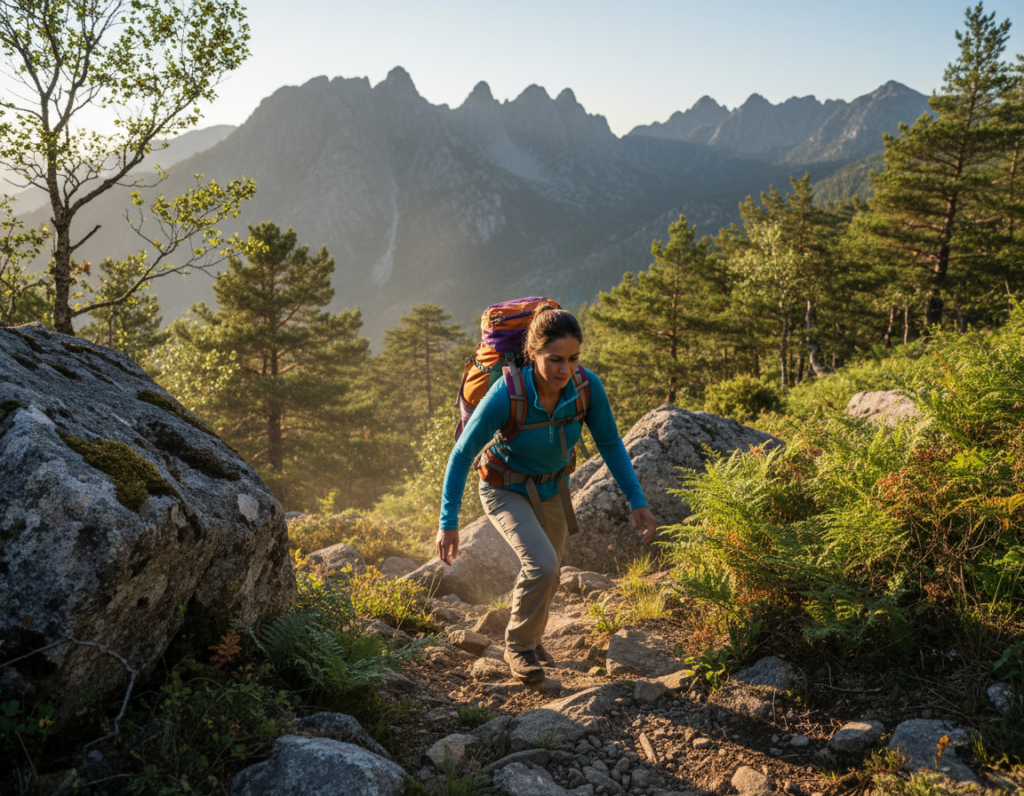
On uphill sections, avoid long, lunging steps. They quickly exhaust your leg muscles.
Instead, take shorter, more deliberate steps. This maintains momentum while reducing strain. It also helps keep your breathing steady.
Lean forward slightly from your ankles, not your waist. This keeps your center of gravity over your feet. It makes ascending more efficient without fighting gravity.
| Stride Technique | Best For | Impact on Body |
|---|---|---|
| Short, Quick Steps | Steep uphills | Reduces leg strain, conserves power |
| Long, Lunging Steps | Flat terrain (sparingly) | Quickly tires muscles, high impact |
| Heel-to-Toe Roll | Gentle downhills | Absorbs shock, protects joints |
Utilize Trekking Poles for Stability
Trekking poles engage your upper body to support your lower body effort. They distribute the workload across your entire frame.
Plant the poles with each step to create a four-point contact system. This provides excellent stability on uneven ground.
On descents, poles absorb impact that would otherwise pound your knees. This technique gives your leg muscles micro-breaks, saving vital strength.
Mastering these methods takes a little practice. Soon, they become second nature, letting you travel farther with less fatigue.
Managing Pack Weight and Streamlining Gear
The weight on your shoulders can be the difference between a triumphant finish and a grueling slog. Carrying a heavy pack quickly drains your stamina over thousands of steps. Smart management of your load is a non-negotiable skill for long days outdoors.
Your goal is to make every pound count. This involves both what you pack and how you carry it. Let’s break down how to organize and adjust your gear for maximum comfort and efficiency.
Organize and Distribute Weight Evenly
Packing your backpack correctly is crucial for balance. A simple rule: place the heaviest items close to your back and centered between your shoulder blades. This keeps your center of gravity stable.
Think about your food, water, and cooking kit. Positioning these mid-height prevents your pack from pulling you backward or forward. It makes carrying the load feel more natural.
Keep frequently used items like snacks and a map in external pockets. You won’t waste effort digging through your main compartment at every break. This simple organization saves vital strength on the path.
Adjust Straps and Use a Well-Fitted Backpack
A proper fit is everything. Your hip belt should carry about 80% of the pack’s weight. Tighten it snugly over your hip bones, not your waist.
Shoulder straps should be adjusted to be comfortable without gaps. Use the load lifter straps to pull the weight closer to your body. An ill-fitting backpack causes hot spots and muscle strain.
Before you even hit the trail, be ruthless. Ask if you truly need every item. Ditch the “just in case” gear. Opt for lightweight options like freeze-dried meals to significantly reduce your burden.
Staying Hydrated and Nourished on Long Trails
Think of your stamina on the trail as a campfire—it needs steady fuel to keep burning brightly all day. What you drink and eat forms the foundation of your performance. Without consistent intake, even the best pacing strategy will falter.
We’ve learned that proper planning for your body’s needs is just as critical as planning your route.
Sip Water Consistently Throughout the Hike
Don’t wait until you feel thirsty to drink. Thirst means you’re already dehydrated. Your performance drops before you even notice.
You should sip small amounts of water often. A hydration pack or an easy-access water bottle makes this simple. It lets you drink without stopping your forward momentum.
This habit helps you stay hydrated from start to finish. It prevents the fatigue that comes from fluid loss.
Include Energy-Dense Snacks Like Trail Mix and Energy Bars
Eating small snacks every hour keeps your blood sugar stable. It stops those big crashes in vitality. Go for lightweight, high-calorie food.
Trail mix is a classic for good reason. Nuts provide fats, dried fruit offers quick carbs. Energy bars are a convenient option for solid nutrition.
On strenuous outings, you also lose electrolytes through sweat. Replacing sodium and potassium is key. It helps prevent cramps and keeps you feeling strong.
Always plan your supply. Calculate your water needs based on heat and distance. Pack enough food for the entire trek, plus a little extra for safety.
Adapting to Varied Trail Conditions
No two miles on the trail are ever the same—each presents unique challenges that demand smart adjustments. The landscape constantly shifts from rocky ascents to muddy flats and everything in between. Your ability to read these changes and respond accordingly makes all the difference in your day.
Adjust Your Pace Based on Terrain Challenges
When you encounter steep sections or tricky footing, slow down deliberately. Rocky areas and stream crossings require careful steps. Rushing through difficult terrain drains your strength quickly.
Follow the natural contours of the land whenever possible. Animals create paths of least resistance that often make your hike easier. Taking established routes instead of bushwhacking saves tremendous effort.
Monitor Your Body for Signs of Fatigue
Pay attention to signals from your body throughout the journey. Heavy legs or labored breathing mean it’s time to ease up. Regular breaks help you assess how you’re feeling.
Stretch during pauses to prevent stiffness and improve circulation. Make sure you’re honest about your limits, especially in challenging conditions. Listening to your body ensures you’ll enjoy your next adventure in nature.
Incorporating Environmental Responsibility Along the Way
Caring for the wild spaces we explore is a fundamental part of being a responsible adventurer. Protecting nature ensures these beautiful trails remain vibrant for future explorers. This mindful approach requires little extra effort but makes a huge difference.
Making smart choices on the path benefits both the environment and your experience. Staying on designated routes prevents soil erosion and protects fragile plants. It also saves you the exhausting work of bushwhacking through untouched areas.
Follow Leave No Trace Principles
Stick to simple rules that keep mountains and forests safe. Always pack out every piece of trash you bring in. Leave rocks, plants, and other natural objects as you find them.
Camp on durable surfaces like established sites or rock. Use a camp stove instead of building a fire. This minimizes your impact on the local ecosystem.
Choose Eco-Friendly, Sustainable Gear
Your equipment choices can also reduce your footprint. Opt for durable items that last for many seasons. This creates less waste over time.
Lightweight gear often uses fewer resources to produce. Selecting products from companies committed to sustainable practices supports a healthier planet.
| Gear Choice | Environmental Benefit | Practical Advantage |
|---|---|---|
| Reusable Water Bottle with Filter | Eliminates disposable plastic waste | Access to safe drinking water anywhere |
| Biodegradable Soap | Protects water sources from pollution | Effective cleaning without harming nature |
| Solar Charger | Uses renewable power source | Keeps devices charged off-grid |
Respecting wildlife by observing from a distance keeps everyone safe. Proper food storage protects animals from becoming dependent on human sources. These practices help preserve the wild character of the trails we love.
Fueling Your Body with Nutritional Balance
Nutritional strategy is the invisible gear that powers every step of your journey. Getting the right mix of nutrients keeps your performance steady instead of spiking and crashing.
Understand the Role of Carbs, Fats, and Proteins
Carbohydrates are your primary fuel source. Complex carbs from whole grains like oats release power gradually throughout the day.
Fats serve as sustained energy reserves. Healthy fats from nuts and avocados provide long-lasting fuel when carb stores deplete.
Protein is crucial for muscle repair. It helps your muscles bounce back stronger after challenging trails. Your body needs amino acids to rebuild tissue overnight.
Plan Balanced Meals for Sustained Energy
Create meals that combine all three macronutrients. Breakfast could include oats with nuts. Lunch might feature quinoa salad with lean protein.
For complete proteins, combine rice and beans or peanut butter with whole grain bread. This ensures your system gets all essential amino acids.
Calculate your caloric needs based on distance. Aim for 50-60% carbs, 25-35% fats, and 15-20% protein. This balance maintains optimal energy levels during extended excursions.
Integrating Smart Hydration and Energy Supplies During Long Hikes
The right hydration system can transform your outdoor experience from a constant search for water to uninterrupted forward motion. Having the proper equipment means you can stay hydrated without breaking your rhythm.
Use Hydration Packs and Reliable Water Bottles
Hydration packs with drinking tubes let you sip hands-free while moving. You eliminate the need to stop, unpack, and repack your gear. This maintains your pace and keeps you properly hydrated.
Reliable water bottles offer different advantages. Wide-mouth designs are easy to fill from streams. They typically hold 1.5-2 liters to reduce refill stops.
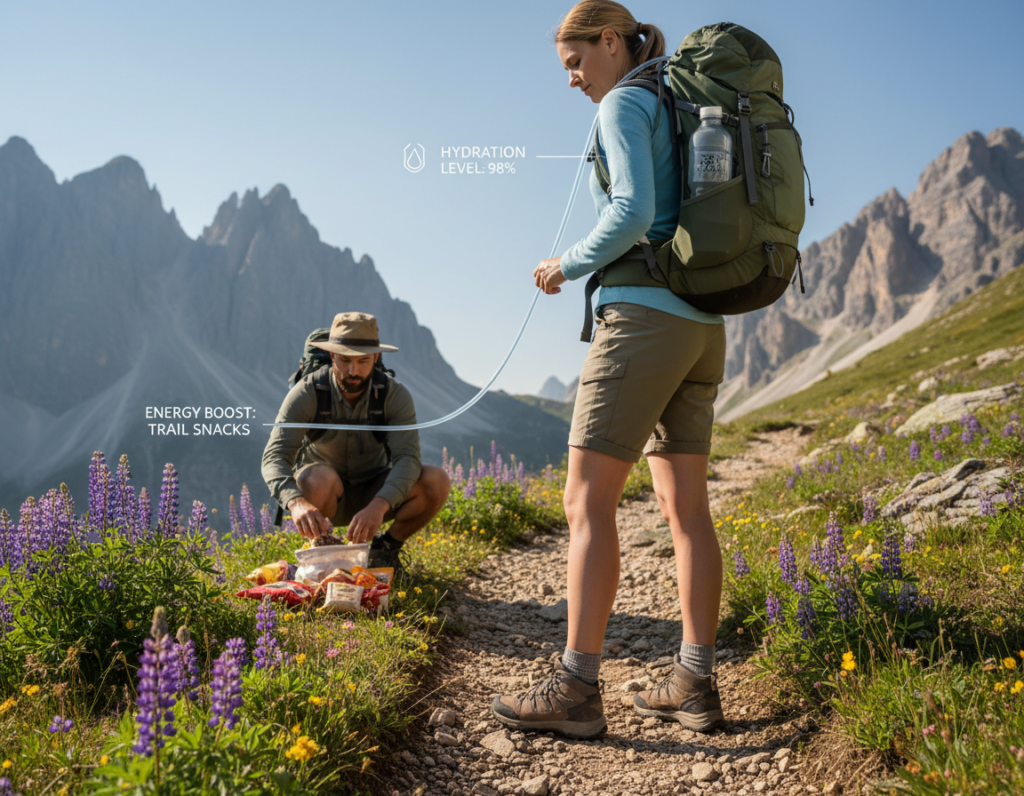
Calculate your water needs based on conditions. A general guideline is half a liter per hour of moderate activity. Increase this in heat or at high elevation.
Don’t forget about electrolytes. When you sweat heavily, you lose essential minerals. Consider tablets or powders to maintain your vitality.
Start your journey fully hydrated. Drink small amounts regularly rather than waiting for thirst. Combine water intake with salty snacks for optimal results.
Conclusion
Your next great trek begins with the knowledge you carry. This guide has shown that endurance on long trails is a game of smart strategy. It combines careful planning, efficient technique, and mindful fueling.
Remember, these elements work together. Good preparation sets your route. Smart pacing and gear management support your body. Proper nutrition and hydration maintain your power for the entire adventure.
Start by integrating one or two of these methods on your next outing. Listen to your body and adjust. Even with a solid plan, some days in the mountains are tougher. That’s part of the exploration.
You’ve got this. Use these strategies to explore more of nature with confidence. Make sure every step on the trail leads to a memorable adventure, not just a finish line.
