
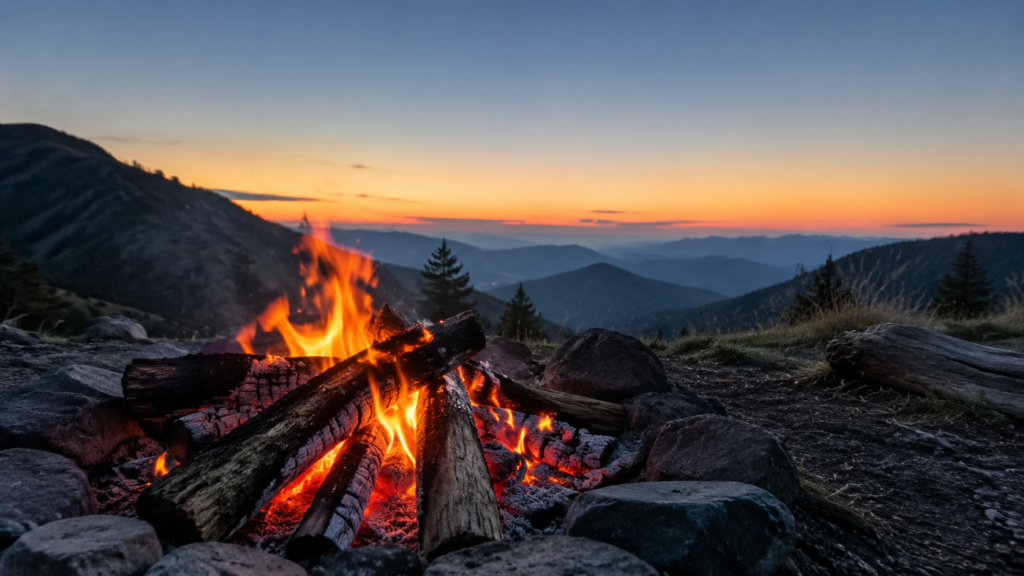
Banking a fire means burying a bed of hot coals under ash so it smolders slowly overnight instead of burning out. You rake your coals into a tight pile, cover them with a few inches of ash, and set your last logs against the edge. Done right, you wake up to warm embers that relight in minutes instead of starting cold. It saves fuel, saves time, and keeps a small controlled heat source alive while you sleep.
Last updated: 2026-07-10
What banking a fire actually means
To bank a fire is to slow it down on purpose. You stop feeding flames and start managing coals. The goal is a low, insulated smolder that survives the night on almost no oxygen.
Think of it as putting the fire in low gear, not turning it off. A banked fire is not a bonfire, and it is not out. It sits in between, holding heat under a blanket of ash. That blanket cuts airflow, so the coals burn slow instead of fast.
People have done this for centuries, long before matches were cheap. The reason it stuck around is simple. Relighting from live coals beats building a fire from scratch on a cold morning, every time.
Why bank a fire instead of letting it die?
Because a cold fire pit at dawn is a chore, and a banked one is a favor to your future self. You get three real payoffs: saved fuel, an easy morning restart, and a safer overnight setup.
Fuel first. A banked fire sips wood instead of eating it, so you carry or gather less. That matters more the farther you are from the car.
Safety is the quieter reason. Coals sealed under ash are far less likely to throw a spark than an open flame flickering in the wind. You are containing the fire, not just conserving it. Still, banked does not mean unattended in dry, windy country. If conditions are bad, put it dead out and skip the whole thing. Our guide on low-impact campfire habits covers when a fire is a bad idea at all.
The best wood for banking
Dense hardwoods like oak and hickory, and they need to be dry. Seasoned hardwood sitting around 15-20% moisture content is what you want. Wet wood hisses, steams, and quits on you by 2 a.m.
The picks sort out cleanly once you stop hoping softwood will do a hardwood's job:
| Wood type | How it banks | Verdict |
|---|---|---|
| Oak, hickory, other dense hardwoods | Slow, even, long-lasting coals | Keep it. This is the job. |
| Maple, ash, birch | Decent coals, burn a bit faster | Fine if that is what you have |
| Pine, fir, other softwoods | Fast flame, quick to ash, poor coal bed | Skip it for banking |
| Any damp or green wood | Steams, smokes, dies early | False economy every time |
Softwoods are not useless. They light fast and start your fire fine. They just burn out too quick to hold coals overnight, so use them to build, not to bank.
If your wood is questionable, split a piece and check the inside. Dry heartwood is lighter and cracks clean. Wood that feels heavy and smells green will disappoint you after mile 10 of a long day.
How do you bank a fire step by step?
Build a strong fire early, let it collapse into coals, then smother those coals with ash and edge-set your fuel. Here are the steps.
Set up the pit. Use an existing fire ring where you can. Clear leaves, twigs, and duff a few feet back. If the ground is damp, a base of dry mineral soil or flat stones keeps cold and wet from killing your coals.
Burn down to a real coal bed. Feed a good fire for an hour or two, then stop adding wood. Let the flames drop until you have a thick, glowing bed of embers. Thin coals will not last. You want depth here, not flame.
Rake the coals into a tight pile. Push them together in the center with a stick or small shovel. A compact pile holds heat far better than a spread-out one. Less surface means slower burn.
Cover with ash. Scoop several inches of ash over the coals until the glow is dulled but not smothered dead. This is the actual banking. The ash chokes airflow and traps heat, so the coals creep along instead of racing.
Set your last logs against the edge. Lay one or two dense logs at the border of the pile, not on top. They soak up heat and catch slowly, feeding the coals through the night without a full flame.
Shield it if weather is coming. Wind fans embers and scatters ash. Rain drowns them. A windbreak or good pit placement protects the setup. Do not fully seal the pit, though, or you cut the trickle of air the coals still need.
That is the whole method. Coal bed, tight pile, ash blanket, edge logs.
Where banking goes wrong
Most failed banks come down to a thin coal bed or wet wood, not technique. People cover flames instead of coals and wonder why it died. You bank embers, not fire. If you still see active flame, it is too early.
The second common miss is ash amount. Too little and the fire keeps breathing and burns out by midnight. Too much and you suffocate it. Aim for dulled coals you can still feel heat from, not a cold gray mound.
Wind is the sleeper problem. A breeze that seems gentle at bedtime can uncover your coals by 3 a.m. Check your pit's exposure before you commit. A poor spot is worth moving the fire for.
One more: do not confuse a banked fire with a safe-to-leave fire. Banking keeps it alive on purpose. If you are breaking camp or fire danger is high, drench it, stir it, and drench it again until it is cold to the touch. The Leave No Trace principles say the same thing about dead-out fires.
The tools that actually earn their place
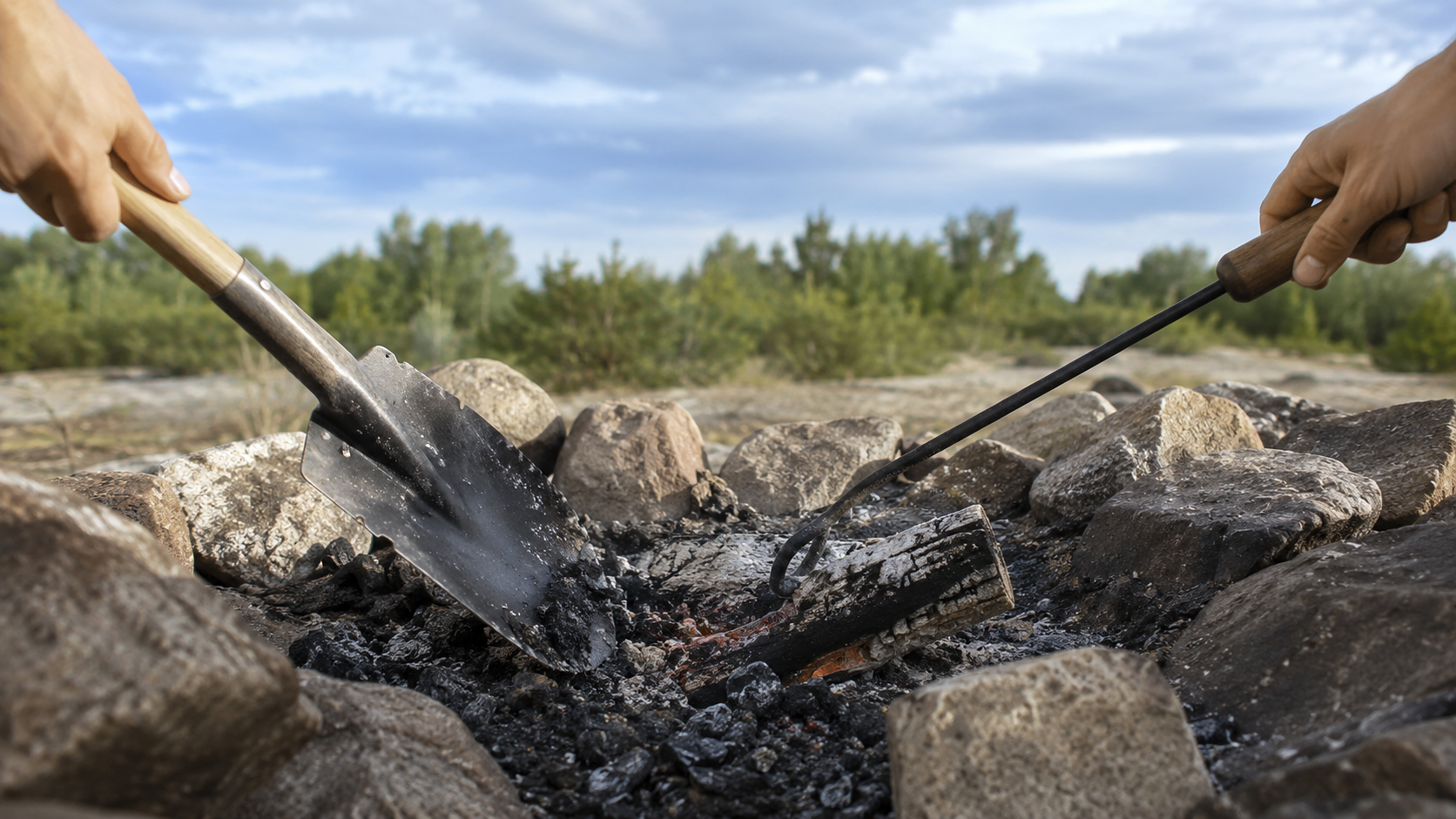
No special kit is required. A sturdy stick moves coals fine for most trips. That said, a few items make it cleaner and safer.
- Small shovel or trowel. It rakes coals and scoops ash better than a stick, and many campers already carry one for cat holes.
- Heat-resistant gloves. Reach near live coals bare-handed a few times and you will start packing a pair for good.
- A poker or long stick. Handy for nudging logs and checking the bed without putting your face over the heat.
You do not need a dedicated fire kit or anything sold as such. That is marketing solving a problem you do not have. The tools above earn their place. The rest is weight.
Who should skip banking a fire
Anyone in high fire-danger country, full stop. If burn bans are up or the ground is bone dry, a smoldering overnight fire is a risk not worth taking. Put it out.
Skip it too if you are only stopping briefly or heading out before dawn. There is no reward in nursing coals you will drown in a few hours anyway. And if your only wood is soft, wet, or green, do not fight it. Bank what deserves banking, or just enjoy the fire and let it die clean.
If you are new to all this, our beginner's camping walkthrough covers the basics before you start managing overnight coals.
FAQ
How long will a banked fire actually last?
A deep bed of dry hardwood under a solid ash cover will hold usable embers through a normal night. Thin coals, soft wood, or an exposed pit cut that down fast. What you built before covering matters more than anything you do after.
Do I need to check on it during the night?
A well-built bank does not need babysitting, so leave it be if you sleep through. If you happen to wake, glance over for shifting wind or coals working loose from the ash. Constant fiddling usually means the coal bed was too thin to begin with.
How do I relight it in the morning?
Rake the ash back to expose the coals and hunt for any glow. Set fine dry tinder and small twigs on the live spots, then blow low and steady until they take. Cold gray all the way down means the bank died in the night and you are building fresh.
Can I bank a fire in a backyard fire pit or fireplace?
Yes, the coal-and-ash method carries over to a masonry fireplace or metal pit, and the walls block wind for you. Keep the flue or vents cracked so a little air still reaches the coals. Same rule applies about drowning it fully before you walk away.
Is a banked fire safe to leave while I sleep?
Safer than an open flame, but not zero risk. Clear flammable material well back from the pit and shield it from wind. In dry or gusty conditions, do not lean on it at all. When you are unsure, out is the right call.
