
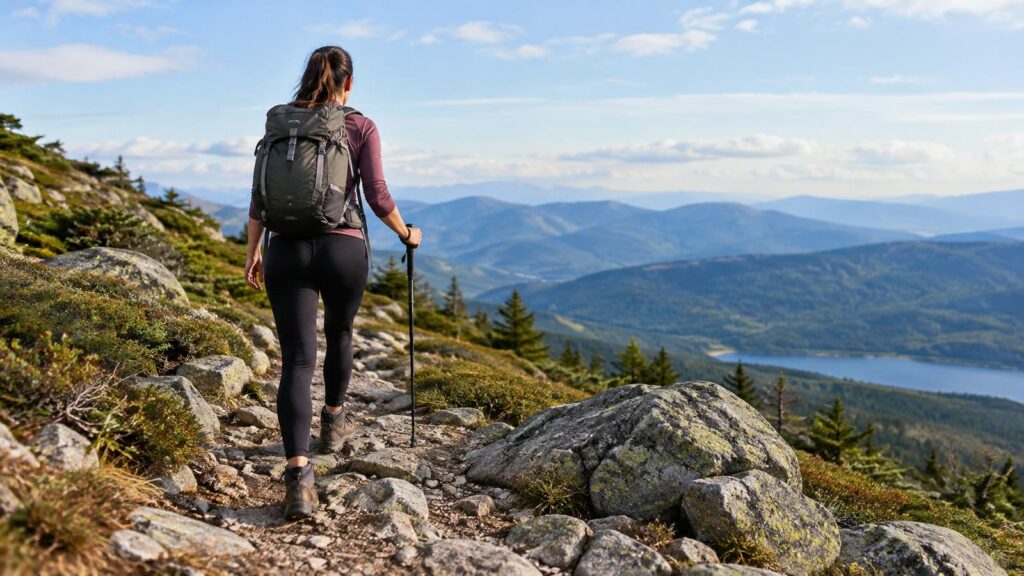
The La Sportiva Ultra Raptor 3 Mid GTX is the boot to buy for most rough day hikes. Rock rewards precise footing more than heavy armor, and this boot is the most precise in its class. Among the best hiking boots for rocky terrain conditions, it stands out for sticky rubber and a tough toe rand. Its fit also keeps your foot from sliding on slabs and scree. At a list price of $219, it's fair money for that grip. Buy the Salomon X Ultra 5 Mid GTX, around $190, if low weight matters more than maximum protection underfoot.
Heavy packs and ankles that roll easily need more boot than either. That pick is further down.
What Are the Best Hiking Boots for Rocky Terrain Conditions?
Six boots earn a spot. Which one you want depends on your pack weight, your foot width, and whether the rock under you holds still or slides. Prices below are list prices, and sales often knock them down, so check the going rate before you buy.
| Boot | List price | Best for | Where it falls short | Verdict |
|---|---|---|---|---|
| La Sportiva Ultra Raptor 3 Mid GTX | $219 | Technical day hikes, scrambly rock | Snug fit, so wide feet struggle | Keep it: best overall |
| Salomon X Ultra 5 Mid GTX | $190 | Fast, light hiking on mixed rock | Thinner platform on sharp talus | Worth it if speed matters most |
| Salomon Quest 5 GTX | $240 | Loaded overnights, weak ankles | Heavy and warm on hot days | Worth the weight with a big pack |
| Altra Olympus 6 Hike Mid GTX | $230 | Wide feet, long cushioned miles | Tall stack feels tippy on angled rock | Good pick for wide feet only |
| La Sportiva Aequilibrium Hike GTX | $279 | Loose rock, steep scree | Costs more than most hikers need | Worth the money for scree-heavy trips |
| KEEN Targhee IV Mid Waterproof | $180 | Moderate rocky trails on a budget | Soft and imprecise on technical ground | Good enough for easy rock |
The lighter, quicker picks
Ultra Raptor 3. This is a trail-runner-style boot with mountain-boot habits. It sits close to the ground and grips well on dry and damp rock. A rubber toe cap takes the kicks you'll deliver to boulders. The fit is narrow through the heel and midfoot. That's great for control and bad for wide feet.
X Ultra 5. Salomon's mid moves quickly and grips well on mixed trail. It suits day hikes where rock is part of the route but not the whole route. On long descents over sharp stones, though, you'll feel more of the trail through the sole than you would in the Raptor.
The support and room picks
Quest 5. This is a backpacking boot with a taller, stiffer build. It collects "best overall" awards that make it sound like the answer for everyone. It's really the answer for a heavy pack on broken ground. On a quick summit loop in July, it feels like overkill.
Olympus 6 Hike Mid. Altra builds on a wide, foot-shaped toe box and a zero-drop platform, meaning the heel sits no higher than the forefoot. The cushioning is generous. However, a thick, soft stack is less stable on slanted rock. Zero drop also takes your calves a while to get used to.
Aequilibrium Hike. This one is stiffer and more supportive than the Raptor, and it's built for the loose, steep stuff. If your trips are mostly scree fields, it earns its price. The Zamberlan Salathe Trek, at around $350, is the burlier step up. Skip it unless rough, rocky trekking is your regular weekend.
Targhee IV. It's comfortable from day one and roomy in the toes. It handles packed trails with some rock fine. On technical ground, the softer build twists more than you want.
Why the Ultra Raptor 3 Wins
Rock punishes two things: slipping and sloppy foot placement. The Raptor fights both. Its rubber sticks well, and the lugs are spaced so they don't pack with mud as fast as tighter patterns. Its snug fit means the boot goes where your foot goes, without a half-second delay.
Protection is the other half. The toe rand and rock guard wrap far enough around the front that stubbing a granite step costs you nothing but pride. Meanwhile, the midsole is firm enough that pointed rocks don't jab through on a long descent.
The catch is fit. If your foot is wide or high-volume, the Raptor's precision turns into pressure by mid-afternoon. In that case, the Olympus or Targhee will serve you better than forcing a narrow boot to work.
Rock-Trail Traction Is More Than Deep Lugs
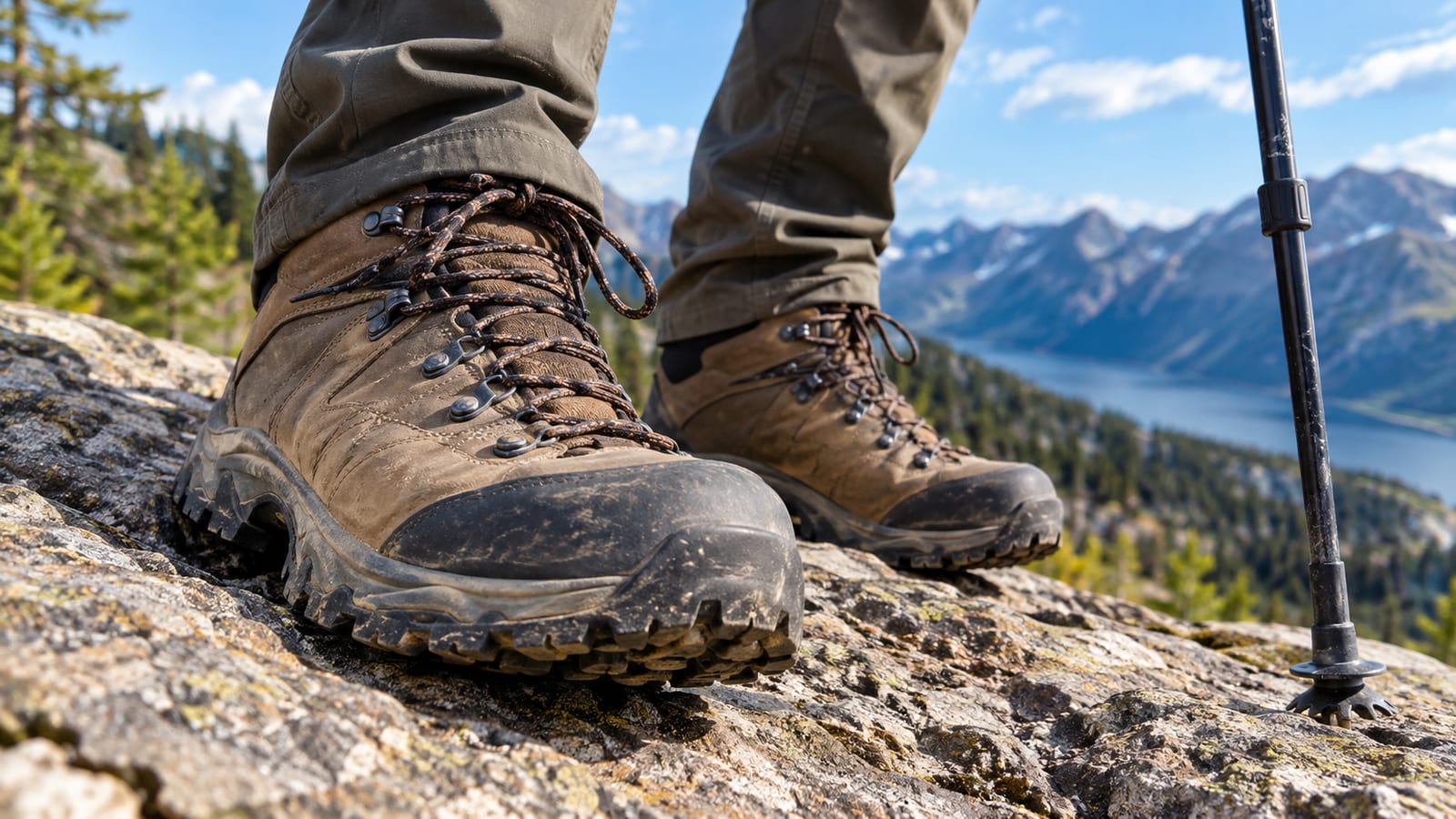
Deep lugs help in mud and loose dirt. On bare rock, they can hurt you, because less rubber touches the surface. What matters on slabs is soft, sticky rubber and a flat area of contact.
Different rock asks for different things:
- Dry slabs: Sticky rubber and a flatter contact area under the forefoot win. Lug depth barely matters.
- Loose scree: You want sharp braking edges at the heel and lugs that bite into gravel. Stiffness helps you kick steps.
- Wet rock: Softer rubber grips better, but nothing grips algae. Slow down, and place your feet flat.
- Mud between rocks: Wide lug spacing sheds mud. Tight patterns clog and turn into skates.
Vibram Megagrip shows up on many rock-friendly boots for a reason. The Hoka Kaha 3 GTX, for example, uses it and is especially good on rock. Still, rubber only works if your feet land well. Good rocky trail footwork beats any outsole claim on a hang tag.
Stability and Ankle Support Prevent Bad Foot Placements
A tall collar looks protective. On its own, it does little. Real stability comes from a firm heel counter (the stiff cup around your heel), a midsole that resists twisting, and laces that lock your midfoot in place. A tall, soft collar mostly gives you a sweaty ankle.
Height starts to matter with weight on your back. A loaded pack raises your center of gravity, so small missteps turn into big ones. That's where the Quest earns its weight and a low-slung boot starts to feel nervous.
If you've had an ankle sprain before, lean toward more structure. Then work on balance too, because a boot can only do part of the job. Our guide on preventing sprained ankles on rocky trails covers the rest.
Cushioning, Rock Protection, and Foot Fatigue
Soft cushioning feels great in the store. On rock, it has a downside. Thick, mushy foam lets your foot roll over sharp edges, and it can still let a pointed stone bruise your arch.
Firm midsoles and rock plates (thin, stiff layers under the foot) spread a pointy rock's force across your sole. As a result, your feet feel less beaten after mile 10 of talus. The tradeoff is a firmer ride on smooth trail.
Most people do best with a moderate setup: firm underfoot with some give. The Raptor and Aequilibrium sit on the firm side. The Olympus and Kaha lean cushy, which suits long, mixed days more than stepping from boulder to boulder.
Lightweight Boots Versus Protective Boots
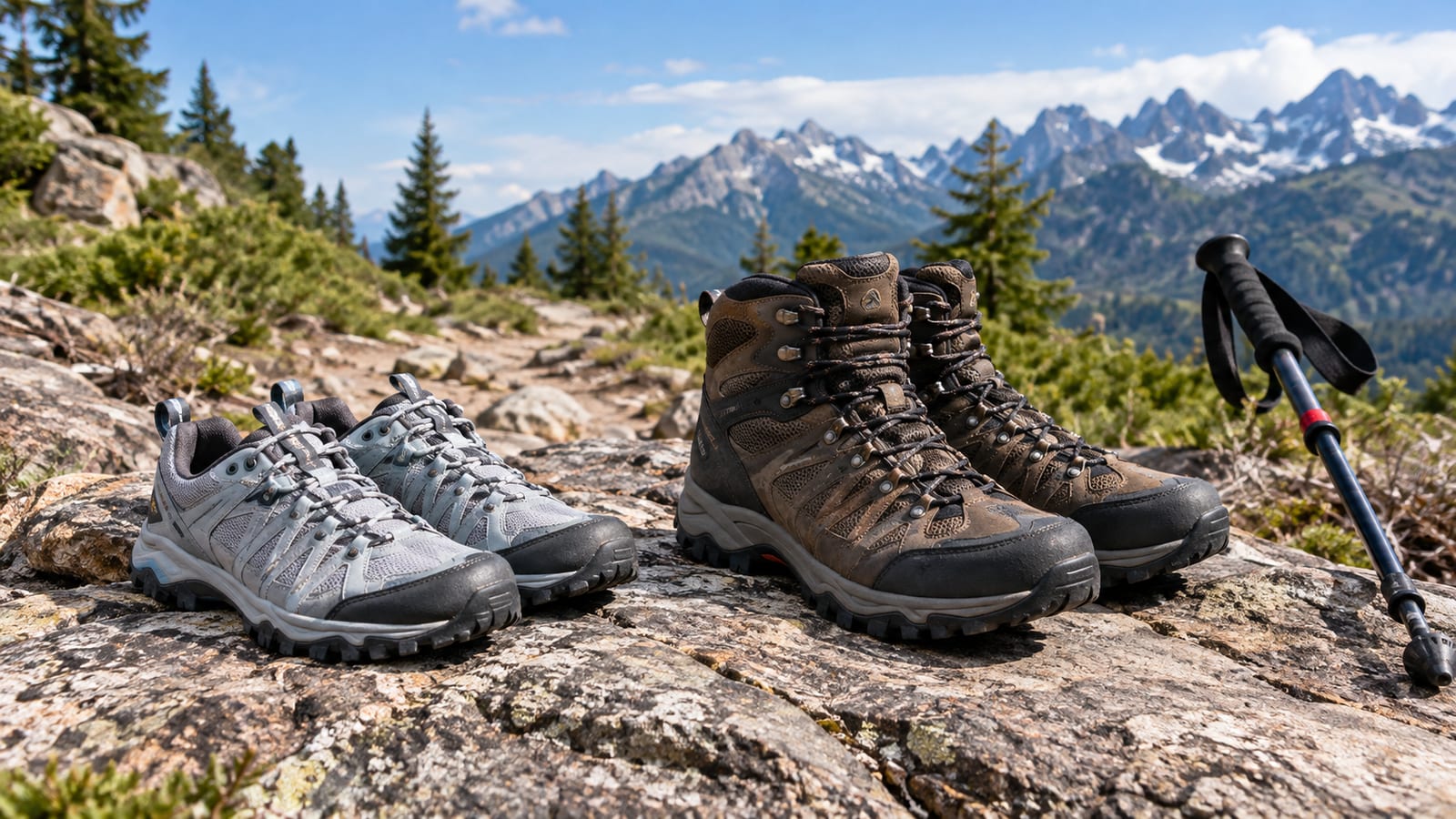
Weight on your feet costs more energy than weight in your pack. So a lighter boot makes a real difference on a long climb. For scale, Scarpa lists the Zodiac Plus GTX at 545 g (1 lb 3.2 oz) per half pair, size 42. Salomon's older Quest 4 GTX was listed at 2 lb 14 oz.
Lighter boots feel quick and nimble. Protective boots handle sharp terrain, heavy loads, and tired legs better. Neither wins every trip, so pick by the trip:
- Go light for day hikes, a light pack, and trails where rock alternates with dirt. The X Ultra 5 or the Merrell Moab Speed 2 Mid GTX, around $185, fit here.
- Go protective for overnights, off-trail routes, long talus fields, and ankles with a history.
A light boot on a heavy, rocky trip is a false economy. You save ounces and pay for it in sore arches.
Waterproofing and Breathability on Rocky Routes
Every boot in the table uses a waterproof membrane, most often Gore-Tex. That's worth it for shoulder-season hikes, snowmelt, cold puddles, and wet forests. Your feet stay dry from outside water as long as it doesn't come over the top.
The catch is heat and dry time. On a hot, dry desert route, a membrane traps sweat, and wet feet blister faster on rock. Worse, once water does get in, a waterproof boot takes ages to dry. A non-waterproof boot can drain and dry while you walk.
So pick waterproof for cold and wet trips. For hot ones, look for a non-waterproof version of the same model. If you mostly hike wet trails, our roundup of waterproof hiking boots for women goes deeper on membranes.
Durability Matters Where Rock Eats Footwear
Rock wears boots out faster than any other surface. Granite and lava chew through rubber, and sharp edges slice mesh. Check these four spots before you buy:
- Toe rand: A full rubber wrap at the front stops scuffs and stubbed toes from wrecking the upper.
- Upper material: Thick suede and leather resist abrasion better than open mesh. Mesh breathes better but tears sooner.
- Outsole rubber: Sticky rubber grips better and often wears faster. That's the price of traction.
- Stitching and glue lines: Check where the sole meets the upper. Peeling there is the early sign of a short life.
The Merrell Moab 3 Mid Waterproof is a solid all-rounder for most trails, but it isn't burly. It's good enough for gravel and roots. For real talus, skip it.
Comfort and Break-In Time
Modern synthetic boots should feel decent out of the box. The Targhee and Olympus feel comfortable almost immediately. Stiffer boots like the Quest and Aequilibrium take a few short hikes to soften at the flex points.
Some stiffness at first is normal. Pain is not. If a boot pinches, rubs your heel raw, or numbs your toes on the first walk, it's the wrong shape for your foot.
No boot should cost you blisters to become usable. Wear new boots around the house and on short local walks before a real trip. If something hurts after a few outings, return it.
The Best Rocky-Terrain Boots for Wide Feet
Wide feet have two good options here: the Altra Olympus 6 Hike Mid and the KEEN Targhee IV. Both give your toes room to spread, which matters on long descents when your feet swell. The Olympus suits long days and cushioning fans. The Targhee is the cheaper, simpler choice for moderate rock.
The mistake to avoid is sizing up in length to get width. That leaves your heel loose and lets your foot slide forward on every downhill. On rock, a sloppy fit means bad foot placements and black toenails.
Some models also come in wide versions, so check before you settle. Our list of hiking boots for wide feet covers more options and fit tips.
How a Rocky-Terrain Hiking Boot Should Fit
Try boots on late in the day, when your feet are at their largest. Wear the socks you actually hike in. Then run these checks:
- Heel hold: Walk up a ramp or stairs. Your heel should barely lift, because any slop there turns into a blister on a long climb.
- Toe room: Kick a wall or walk down a slope. If your toes tap the front in the store, they'll bruise on the first long descent.
- Midfoot lockdown: With the laces snug, your foot should not slide sideways when you stand on an angle.
- Width: You should feel no pressure on the sides of your little toe or the ball of your foot.
- Lacing: If your heel lifts, try a heel-lock lace, sometimes called a runner's loop.
A boot that fits well at the store can still pinch when your feet swell on a hot afternoon. Test on a real hill before your first big trip.
Choose the Right Boot for Your Trail and Pack
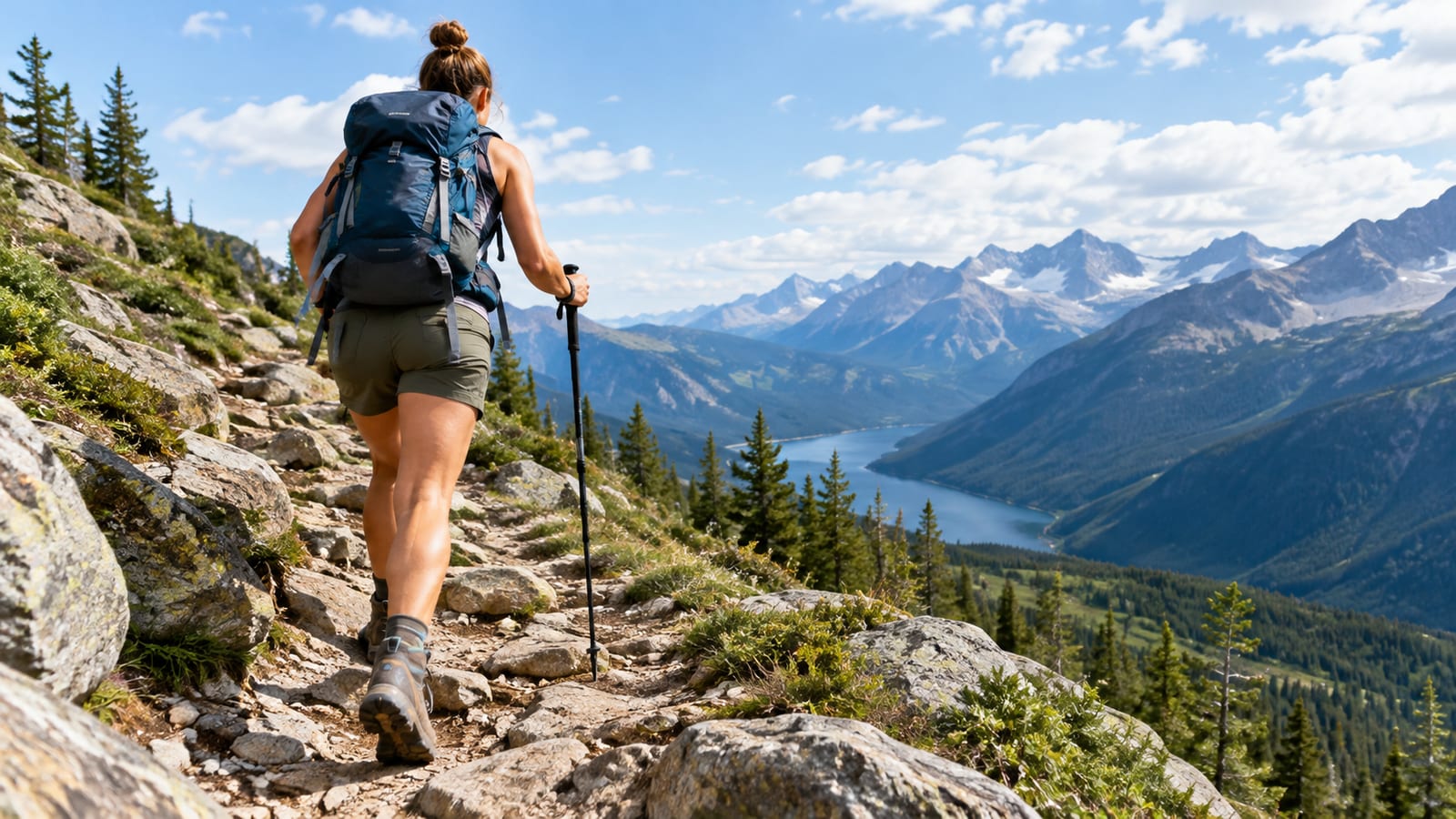
Match the boot to the trip you actually take, not the one in your daydreams. Overbuying costs weight and money. Underbuying costs comfort and, on bad rock, safety.
- Scrambly day hikes, light pack: Ultra Raptor 3.
- Fast hikes on mixed rock and dirt: X Ultra 5.
- Overnights with a heavy pack over talus: Quest 5.
- Wide feet and long mileage: Olympus 6 Hike Mid.
- Steep scree and loose rock, often: Aequilibrium Hike.
- Easy rocky trails on a budget: Targhee IV.
If you're doing multi-day routes with more than rock to think about, our guide to hiking boots for long-distance treks is a better starting point.
FAQ
Can I hike rocky trails in low-cut shoes?
Yes, if your pack is light and your ankles are strong. Plenty of experienced hikers cover rocky routes in trail runners or low hikers like the Oboz Katabatic LT Low, which lists around $145. You give up cover for your ankle bones, and loose rock has good aim. Start on easier rock and add talus once your ankles have proven themselves.
Are women's versions different, or just smaller?
Good women's versions use a different last, the foot-shaped form the boot is built on. That usually means a narrower heel and a different instep height. Try both, and trust heel hold over the label on the box. Some women fit a men's boot better, and some men with narrow heels fit the women's version.
When should I replace boots I use on rock?
Check the outsole first. Once the lugs under the ball of your foot wear smooth, grip on slabs drops fast, and that's your cue to retire them. A crushed midsole, a sole peeling away from the upper, or a torn toe rand also means it's time. Lightweight synthetic mids are usually built to be replaced rather than resoled, so budget for the next pair instead of a cobbler.
Do I need trekking poles if my boots are good?
Usually yes on steep, loose ground, because boots and poles do different jobs. Boots grip and protect. Poles add balance on loose descents and take strain off your knees under a heavy pack. On steep scree, a pair of poles helps more than any boot upgrade will.
