
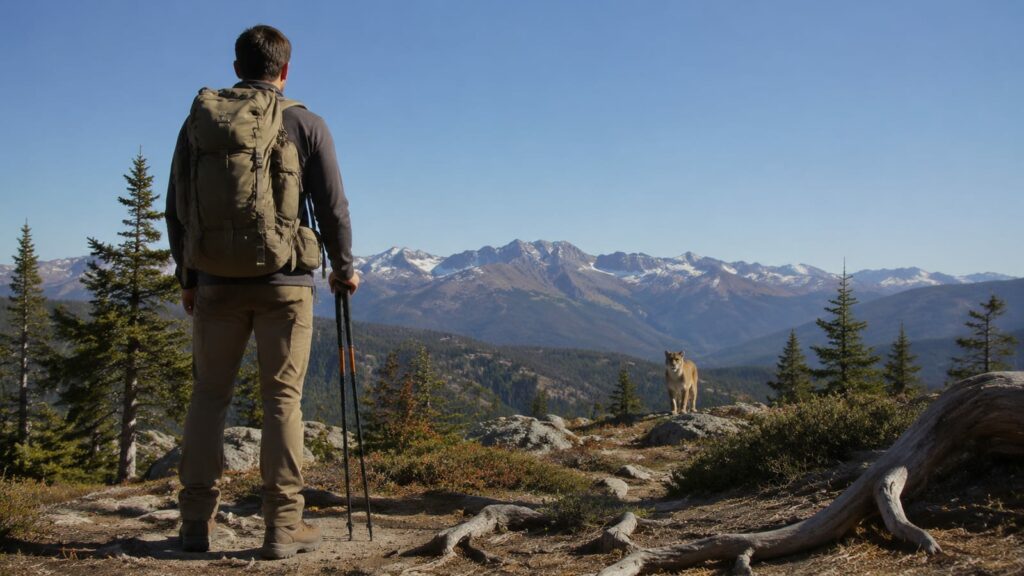
Protect yourself from a mountain lion by staying upright, facing it, making yourself look larger, and backing away without running. That’s the useful answer to how to protect yourself from one on the trail. Keep children close, leave the animal an escape route, and get louder if it advances. If it attacks, fight back. Playing dead is the wrong move.
How to protect yourself from mountain lions?
Most encounters end without an attack. However, you still need a plan that works when your heart rate jumps and the trail suddenly feels too narrow.
Follow these steps in order:
Stop and stay upright. Don’t run, crouch, or bend over. Running can trigger pursuit, while crouching makes you look smaller and more like prey.
Face the mountain lion. Keep it in view without moving toward it. The Washington Department of Fish and Wildlife puts the advice plainly: face the cougar, talk to it firmly, and slowly back away.
Bring your group together. Adults should stand close rather than scattering. Pick up small children without turning your back or dropping into a deep crouch.
Give it room to leave. Don’t block the lion against a cliff, fence, dense brush, or narrow drainage. Your goal is to leave, not win an argument over the switchback.
Back away slowly. Move toward an open area, vehicle, building, or busier part of the trail. Watch your footing so loose rock doesn’t turn a controlled retreat into a fall.
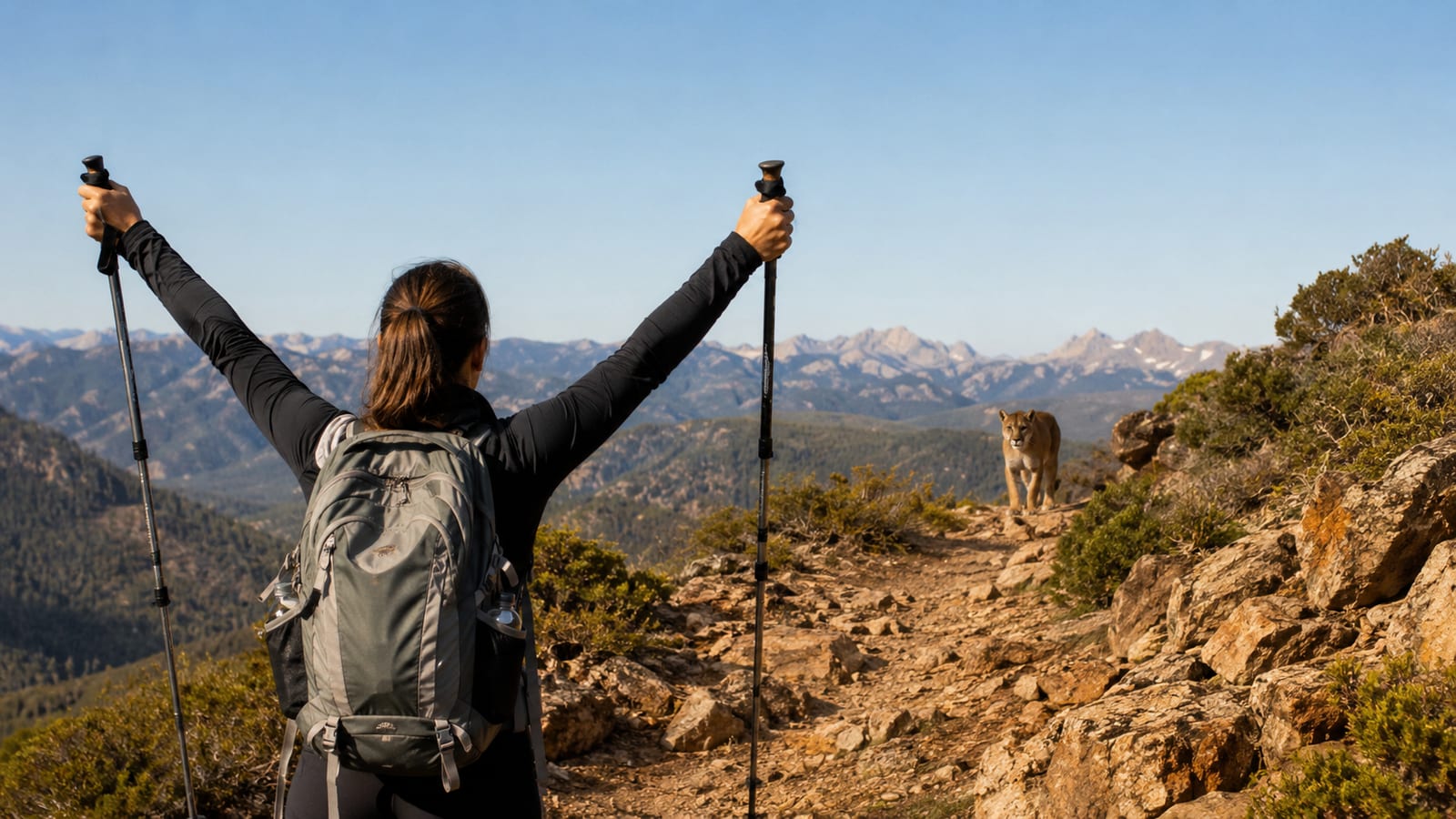
Make yourself look larger. Raise your arms, open your jacket, and hold trekking poles overhead. The National Park Service advises people facing a mountain lion at Lassen Volcanic National Park to make themselves look larger.
Speak firmly. Use a deep, steady voice. Don’t squeal, shriek, or make high-pitched prey sounds if you can help it.
Escalate if the lion advances. Shout, wave your arms, throw rocks, and use trekking poles or a branch. Don’t crouch to gather ammunition. Use what you can reach while staying tall.
Use deterrent spray if you carry it. Keep it accessible, not buried below lunch and a spare fleece. Check the wind before spraying, because a face full of your own deterrent makes a poor bailout plan.
Fight back if it attacks. Protect your head and neck. Strike the eyes and face with rocks, poles, a bottle, or your fists. Stay on your feet if possible, and don’t pretend to be dead.
Face the lion, stay upright, make yourself look large, and back away slowly. If it attacks, fight back with anything you can reach.
What lowers the risk before an encounter?
Learning how to protect yourself from a mountain lion starts before one appears. Group size, children, dogs, visibility, and trail noise matter more than buying another bright object for your pack.
Keep the group together
Hiking with other people gives you a larger outline and more help during an emergency. However, a group stretched across several switchbacks is a group mostly in theory.
Keep children between adults or within arm’s reach in brushy terrain. Don’t let them run ahead around blind corners. Their size and quick movement can draw the wrong kind of attention.
Keep dogs close
A loose dog can chase a lion, corner it, or bring it back toward you. A leash gives you control and stops the dog from vanishing into brush where you can’t read the trail conditions.
If you’re hiking where mountain lions live, skip the retractable leash. It offers the illusion of control right up until the cord wraps around brush.
Stay aware around cover
Mountain lions use rock ledges, gullies, trees, and thick vegetation as cover. Pay attention near blind turns and places where prey animals gather.
That doesn’t mean shouting through every mile. Normal conversation is enough to keep your group connected without treating the forest like a stadium.
For broader trip planning, review these common trail hazards and ways to avoid them. Mountain lions deserve respect, but dehydration, falls, weather, and bad route choices remain more routine problems.
What should you do if the lion follows you?
Keep backing away while facing it. Don’t sprint because the lion pauses, looks aside, or moves behind brush.
A long encounter can grind down your judgment. Kyle Burgess’s mountain lion encounter in Slate Canyon near Provo, Utah, lasted approximately six minutes. That’s a long time to keep your feet under you, watch an animal, and avoid making a panicked move.
If the lion follows, focus on simple jobs:
- Keep children and dogs behind the adults.
- Stay upright and keep your chest facing the lion.
- Move toward open ground or other people.
- Speak in a firm, low voice.
- Raise your arms or jacket.
- Prepare rocks, poles, or spray without crouching.
- Don’t chase the lion if it starts to leave.
A following lion may be defensive, especially near kittens or a feeding site. However, you can’t safely diagnose its mood from the trail. Create distance and leave it a clear exit.
How can you tell when behavior is getting aggressive?
An approaching lion needs a stronger response than one standing at a distance. Watch the whole animal rather than waiting for a movie-style roar.
Concerning signs include repeated advances, close following, flattened ears, tail twitching, low crouching, or focused attention that doesn’t break as you retreat. If it closes distance, stop being quiet. Get large, get loud, and prepare to defend yourself.
| What the lion does | What you should do |
|---|---|
| Watches from a distance | Face it, gather your group, and back away |
| Moves across the trail and continues away | Give it space and don’t follow |
| Stays near kittens or a carcass | Retreat along your route and leave the area |
| Follows as you back away | Get larger, speak firmly, and ready a deterrent |
| Advances or charges | Shout, throw objects, and stand your ground |
| Makes contact | Fight back and protect your head and neck |
Don’t approach for a photo. A better camera angle isn’t worth closing the animal’s escape route.
What should you carry in mountain lion country?
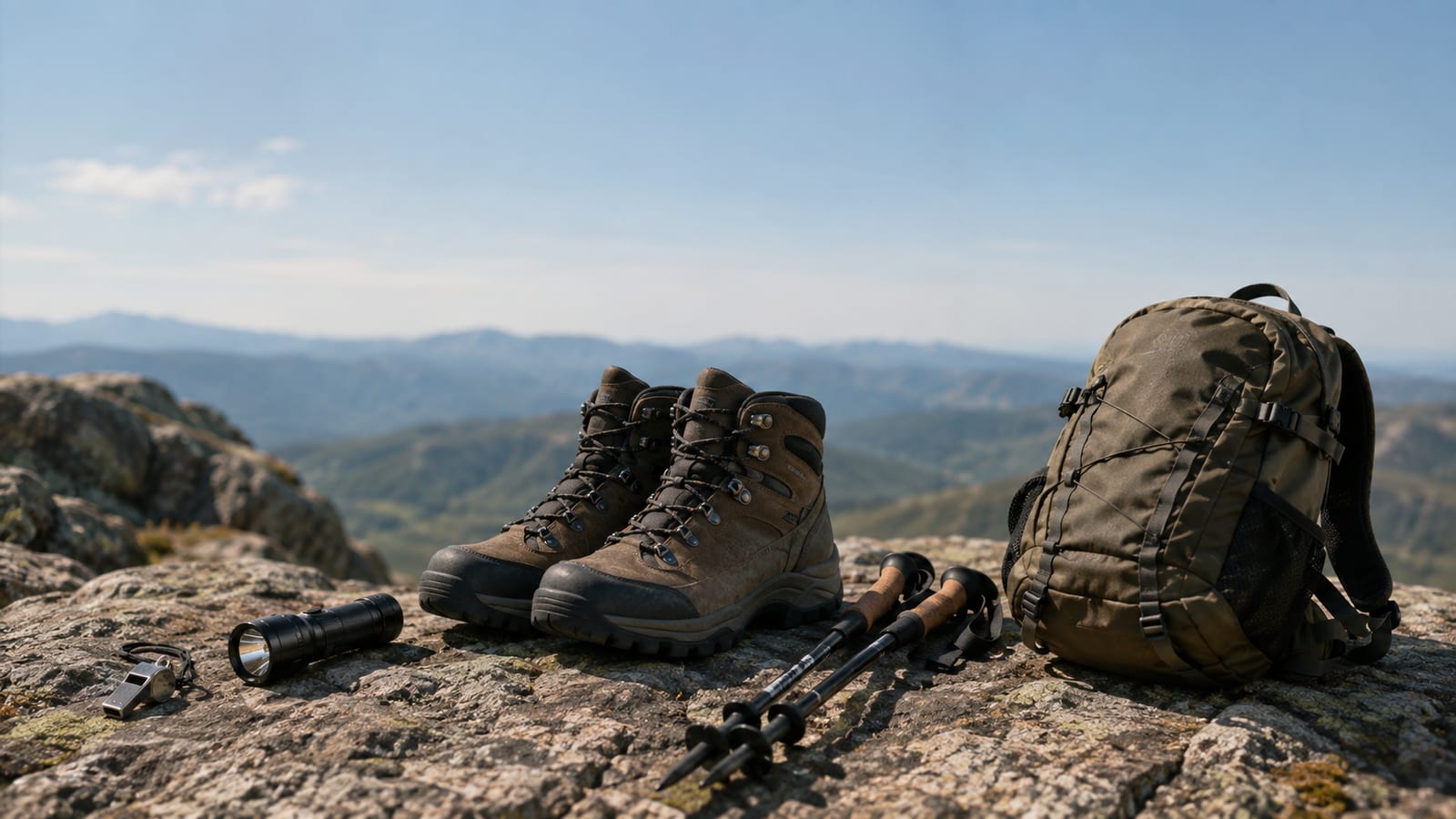
You don’t need specialized lion gear for an ordinary hike. You need basic items that remain usable under stress.
- Trekking poles: They add reach, make your outline larger, and give you something solid to swing.
- Deterrent spray: Carry it on a belt or shoulder strap. Check local rules and learn how the safety works before the trip.
- Whistle: It can alert nearby hikers, though it shouldn’t replace a firm human voice during the encounter.
- Phone or satellite communicator: Use it to call for help after an attack or report aggressive behavior where service is poor.
- First-aid supplies: Pack what you need to control bleeding and cover wounds.
- Headlamp: It helps you keep track of children, dogs, and the trail when daylight runs out.
A pocketknife buried in a pack is less useful than a trekking pole already in your hand. Access beats the spec sheet here.
If you’re camping, store food and manage your site for bears and other wildlife. The details are covered in this guide to camping safely in bear country. Mountain lions aren’t bears, so don’t assume bear behavior and lion behavior are interchangeable.
What should you do during an attack?
Fight back hard and stay standing if you can. Cover your head and neck, but don’t curl up and wait for the attack to stop.
Use rocks, trekking poles, branches, bottles, or your hands. Target the face and eyes. If another adult is present, they should strike the lion rather than pulling on you and turning the scene into a pile of people.
Travis Kauffman was 31 years old when he fought back during the mountain lion attack near Fort Collins, Colo. His case is a useful reminder, not a script. The ground, your position, the lion, and whatever you can reach will decide how that fight unfolds.
After the animal leaves:
- Move to a safe place without chasing it.
- Call emergency services.
- Control bleeding with firm pressure.
- Keep the injured person warm and still.
- Note the location and direction the lion traveled.
- Report the attack to the local wildlife agency.
Even small punctures need medical care because bites and claws push dirt and bacteria deep into tissue. For evacuation basics, use this guide to handling a hiking emergency.
Which common reactions make things worse?
Panic creates most of the bad options. Several instincts feel natural but work against you.
- Running: It can trigger pursuit, and you’re not going to win that race.
- Turning your back: You lose sight of the lion and look more vulnerable.
- Crouching: You make yourself smaller and may resemble four-legged prey.
- Scattering: A split group leaves children, pets, or slower hikers exposed.
- Cornering the animal: A trapped lion has fewer choices and may choose you.
- Approaching kittens: The adult may be close even when you can’t see it.
- Stopping for video: Your phone won’t make you larger or help your footing.
- Relying on a weapon you haven’t practiced with: Stress, wind, brush, and moving companions complicate every shot or spray.
The practical answer to how to protect yourself from a mountain lion is mostly unglamorous. Stay together, stay tall, keep facing it, and leave without acting like prey.
FAQ
Can mountain lions climb trees?
Yes. Climbing a tree doesn’t put you beyond their reach, and the attempt leaves you turned away and off balance. Stay on the ground unless getting into a secure building or vehicle is an immediate option.
Should you report every mountain lion sighting?
A distant lion moving away may only need to be logged under local agency guidance. Report animals that approach people, linger near homes or busy trails, act aggressively, appear injured, or have contact with a person or pet.
Do bells keep mountain lions away?
Don’t count on them. A bell may announce movement, but it doesn’t tell an animal that several adult humans are approaching. Conversation and close group spacing give you better awareness.
Will a tent protect you from a mountain lion?
A fabric tent hides your outline but isn’t a physical barrier. Keep children and pets inside with you, use a headlamp before leaving the tent, and investigate strange sounds from a safe position rather than stepping barefoot into the dark.
Should you follow tracks to see where the lion went?
No. Tracks tell you an animal passed through, not that it wants company. Photograph them from where you found them, keep your group close, and continue in the opposite direction if the sign looks fresh.
