
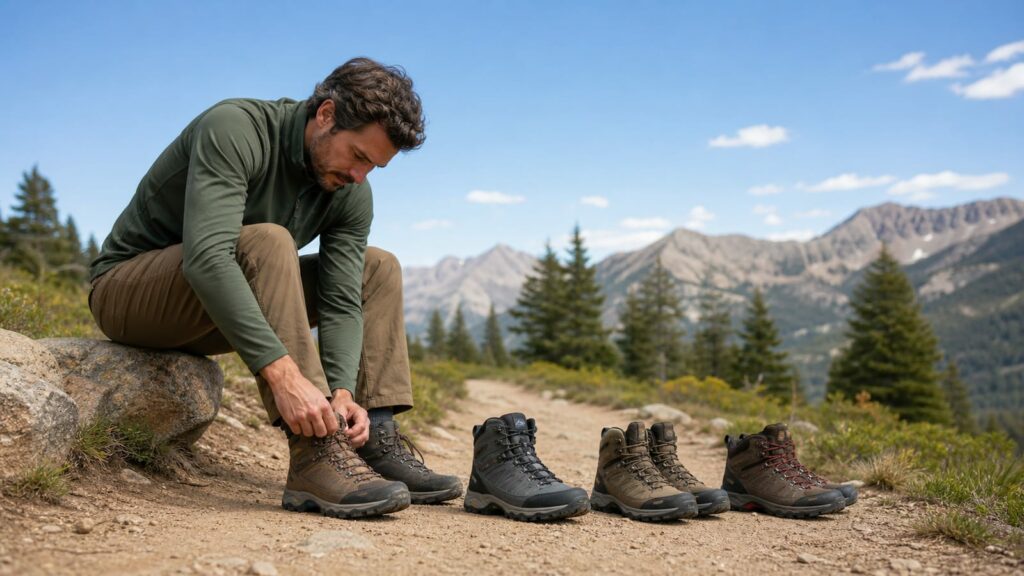
Wide feet don't need a special category of boot so much as a boot that admits wide feet exist. The fix is a genuinely wide last and a roomy toebox, not a "wide" size that just adds length. For most hikers with broad feet, start with a boot built on a foot-shaped last like the Topo Athletic Trailventure 2 or an Altra, or a proven wide-friendly model like the KEEN Targhee line. Get the toebox right first. Everything else is secondary.
Why does toebox shape matter more than a wide size label?
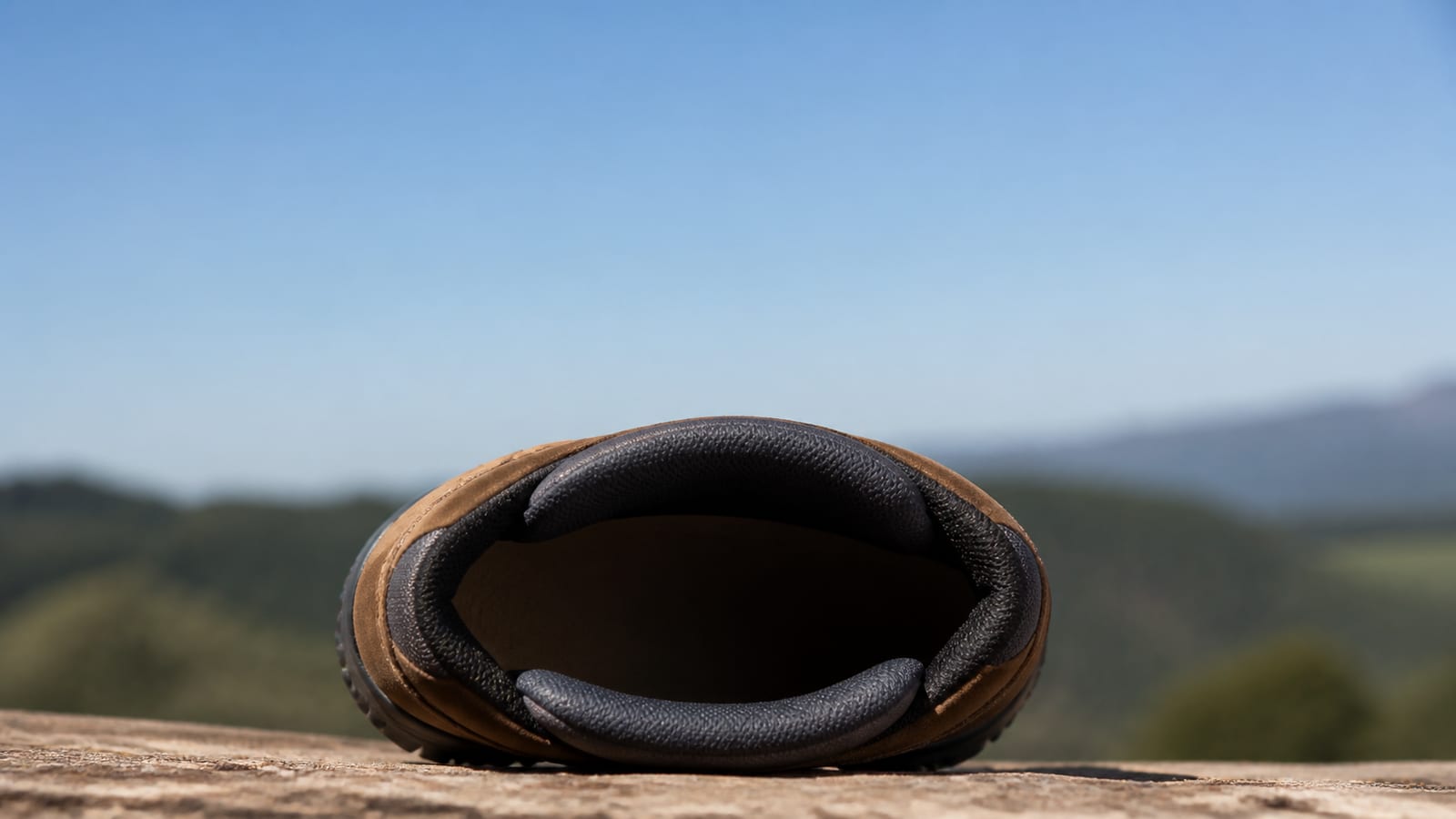
Length and width are not the same problem. A lot of "wide" boots just scale the whole shoe up, so your heel swims while your toes finally get room. That trades one blister for another.
What you actually want is a boot shaped like a foot: wider at the toes, snugger at the heel. Your toes should splay when you load the boot on a downhill. If they're still pressed together late in a long day, the size label lied to you.
This is where foot-shaped brands earn their keep. Altra and Topo build on a wide, anatomical last by default, so the room is in the right place. KEEN goes a different route with a big rounded bumper up front. Both work. A narrow-lasted boot offered in a "wide" width often doesn't.
The picks worth your time
Six boots, and I'd happily hike in any of them. The differences show up on the descent and in your wallet, so here's the short version before the details. Prices move, so treat them as ballpark.
| Boot | Rough price | Weight | Best for |
|---|---|---|---|
| Topo Athletic Trailventure 2 WP | around $185 | – | Wide, foot-shaped fit with waterproofing |
| KEEN Pyrenees | around $170 | – | Roomy toebox, heavier support |
| Oboz Katabatic LT | – | 19-22 oz per pair | Lighter miles without a narrow toebox |
| KEEN Targhee III Waterproof Mid | – | – | Wet trails, proven wide fit |
| Altra Lone Peak 9 Waterproof Mid | – | 14.7 oz | Barely-there weight, max toe splay |
| Merrell Moab Speed 2 Mid GTX | – | – | Do-everything wide fit |
The Topo Athletic Trailventure 2 is the one I'd point most wide-footed hikers to first. The waterproof version runs around $185. You get a wide toebox and a lower drop than most boots, so your foot sits more naturally. Keep it if you want room without going full minimalist.
KEEN Pyrenees leans burly, and costs about $170. It's more boot than the Topo, with that classic KEEN front room. Worth the money if you carry weight or want more underfoot protection. Skip it if you want something light and quick.
For lighter miles, the Oboz Katabatic LT comes out of Bozeman, Montana, and lands at 19 to 22 ounces per pair. That's a real weight saving without cramming your toes. Oboz also makes the heavier Bridger if you want more boot.
The KEEN Targhee III Waterproof Mid is the safe pick for wet forests, and it's waterproof as sold. The newer Targhee IV carries the same wide reputation. Both are the boot I'd hand someone who wants proven room and doesn't want to experiment.
Which pick fits which hiker?
Featherweight honors go to the Altra Lone Peak 9 Waterproof Mid at 14.7 ounces, with a toebox that lets your foot spread all the way. It's a trail runner that grew a collar. Good for fast, dry-to-damp days, less so for heavy loads.
Merrell's Moab Speed 2 Mid GTX picked up an Editors' Choice Award, and the plainer Moab 3 is the boot half the trail is already wearing for a reason. Both come in wide and both just work.
Lighter and minimalist options
If you like ground feel, look at Altra and Lems. The Altra Olympus 6 HIKE stacks more cushion than the Lone Peak while keeping the wide toebox. The Lems Boulder Boot goes the other way: soft, flexible, almost slipper-like, with a huge toebox and no real support.
The Lems suits easy trails and travel, not scree or a loaded pack. Know which you're buying. A minimalist boot on rocky terrain will let you feel every rock, which is either the point or a mistake depending on your route.
Where wide boots fall short
Waterproof membranes are the usual weak spot. A Gore-Tex liner keeps splashes out, but once water tops the collar it stays in, and wide boots hold a lot of water. On hot, dry trails a non-waterproof boot breathes better and dries faster.
Fit still varies foot to foot. "Wide" from one brand isn't "wide" from another. The adidas Terrex Free Hiker 2 and Salomon Quest 4 GTX both come in wider versions and get recommended a lot, but Salomon in particular runs narrow at the heel. Try before you commit.
Break-in matters too. Stiffer boots like the KEEN Durand II need real miles before a long trip. Don't take a fresh pair straight onto a big hike and expect your feet to forgive you.
Who should skip a dedicated wide boot
If your feet are only slightly broad, a standard boot from a naturally roomy brand may fit fine. The NORTIV 8 Men's Wide Toe Box boots, for example, carry a strong 9.2 average and cost little, which makes them a low-risk test before you spend big.
Good socks and lacing fix more fit problems than people expect. A heel-lock lacing trick and the right sock can turn a slightly loose boot into a good one. Our tips to prevent blisters on long hikes and guide to long-distance hiking socks cover both.
If you're still deciding between styles or widths in general, our complete guide to choosing hiking boots walks through fit basics. And if you're shopping for a woman's wet-weather boot specifically, the waterproof boots for women roundup is the better starting point.
How boots are actually measured
Toebox width gets thrown around loosely, so it helps to know the terms. Foot width is usually graded in letter widths, and the standard sizing system most US brands follow traces back to the Brannock Device, the metal foot-measuring tool at every shoe store. Measure both feet late in the day when they're at their largest, and fit the bigger one.
FAQ
How much room should I leave in the toebox?
Enough that your longest toe never brushes the front when you stand up and let your weight settle in. Feet spread under load and puff up over the miles. So a boot that feels dialed at 8am in a carpeted store can feel like a vise on the afternoon descent.
Do I size up for width or buy a wide version?
Buy the wide version if the brand makes one. Going up half a size gives you length you never asked for, and your heel starts pistoning on climbs, which is how hot spots begin. Width and length are separate measurements, so fix the one that's actually wrong.
Are waterproof boots worth it for wide feet?
Only for genuinely wet trails. Waterproof liners trap sweat and slow drying, and roomy boots hold more water once flooded. For hot or dry routes, breathable non-waterproof boots keep your feet cooler and dry out by camp.
How long is break-in for a stiff wide boot?
Give a stiff pair a few short local hikes before the trip that matters. Soft models like an Altra or a Lems are basically ready out of the box. However, a traditional leather-and-membrane boot needs the most patience, so don't let a multi-day walk be its first real outing.
Can gaiters help with a roomy boot?
Yes. A wider opening is also a wider door for grit, and one sharp bit of gravel under the arch can end a good day. Low gaiters close that gap at the ankle. Our guide to hiking gaiters covers which style fits which conditions.
