
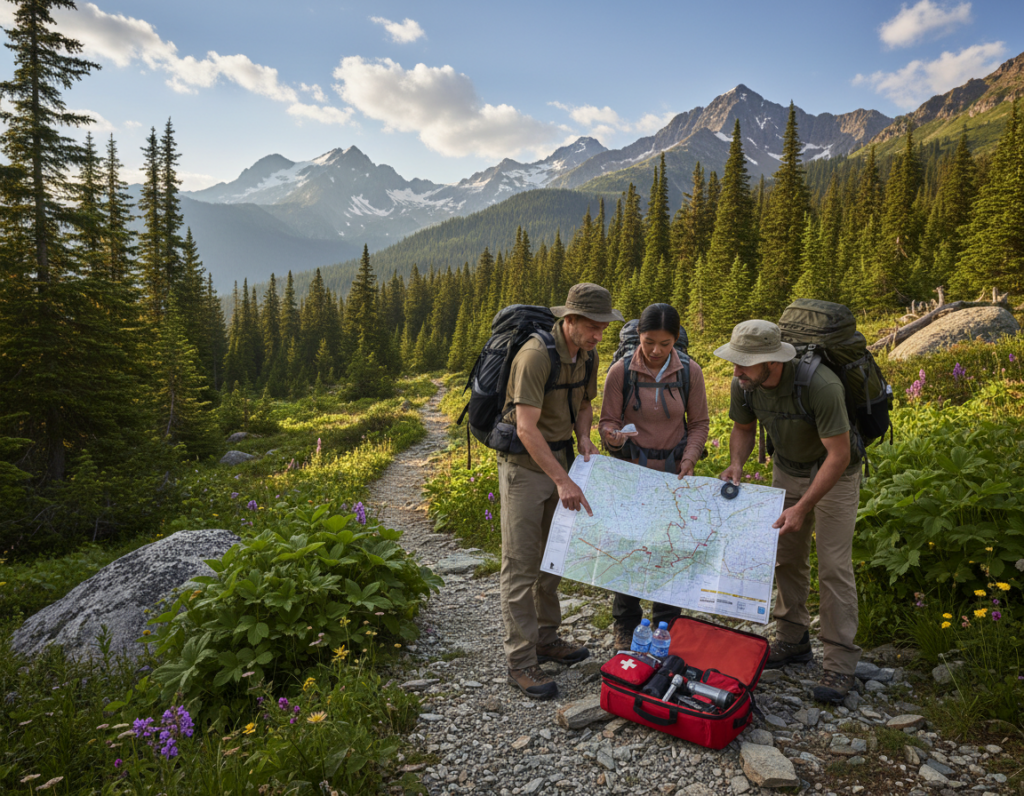
Did you know that most search and rescue missions in wilderness areas involve people who didn’t expect to need help? National parks remind us that your safety is your own responsibility out there. I’ve learned that a successful adventure starts long before you step onto the path.
True confidence on the trail comes from solid preparation. It’s about being ready for anything, from a sudden storm to a twisted ankle. If you’re heading into the backcountry, knowing how to be self-sufficient is non-negotiable.
Building a backup strategy isn’t about fear. It’s about freedom. It lets you focus on the stunning views, not the “what-ifs.” This means developing clear steps for if someone gets lost or hurt. Consider learning wilderness first aid and CPR—these skills are invaluable.
This guide walks you through creating those essential plans. You’ll get practical tips drawn from park services and seasoned explorers. Let’s build the knowledge that turns potential crises into manageable situations.
Key Takeaways
- Your safety in nature is ultimately your responsibility.
- Effective preparation begins before you reach the trailhead.
- A backup plan provides confidence and freedom to enjoy your surroundings.
- Develop a clear emergency protocol for injuries or getting lost.
- Basic wilderness first aid knowledge is a powerful safety tool.
- Even day trips require thoughtful planning for changing conditions.
- Practical strategies from experts help you make smart decisions outdoors.
Assess Your Experience and Understand the Trail
Before lacing up your boots, take a moment to assess both yourself and the terrain you’ll face. This honest evaluation is your first layer of safety. It ensures you pick a path that matches your capabilities for a great day outdoors.
Evaluate Your Fitness and Skill Levels
Ask yourself some tough questions. How often do you hike? Can you carry a full backpack for several hours? Have you practiced on steep hills, or do you stick to flat paths?
Knowing your limits is smart, not weak. It lets you choose adventures you’ll truly enjoy. You avoid unnecessary struggle in remote areas.
Examine Trail Terrain and Environmental Factors
Research the specific trail conditions. Look at elevation gain and surface type. Temperature and humidity affect your stamina.
At high elevations, above 8,000 feet, the air gets thin. Your body needs time to adjust. Altitude sickness is a real risk for all hikers.
If you’re with a group, consider everyone’s ability. Match the trail to the least experienced person. This keeps the whole team safe and together in the backcountry.
Always check the park’s website for current trail reports. Rangers offer the best advice for changing conditions.
Plan Your Gear and Prepare Emergency Equipment
What you carry in your backpack can mean the difference between a minor setback and a serious crisis. Your collection of items is your primary safety net. I always focus on two categories: core essentials and specialized tools for the journey.
Gather the 10 Essentials and Extra Supplies
The “10 Essentials” are non-negotiable. They include water, high-energy food, and a first aid kit. You also need a map, fire starter, emergency shelter, and extra clothing.
Pack these in a comfortable, supportive bag. Choose moisture-wicking shirts and quick-dry pants. Sturdy boots with good ankle support are crucial for rough ground.
| Item Category | Day Hike Essentials | Overnight Additions | Why It Matters |
|---|---|---|---|
| Navigation | Map & Compass | GPS Device | Prevents getting lost |
| Hydration | 2L Water | Water Filter | Fights dehydration |
| Protection | Rain Jacket, Sunscreen | Tent, Sleeping Bag | Manages weather exposure |
| Tools | Knife, Headlamp | Stove, Repair Kit | Solves common problems |
Always bring extra food and thick socks. Moleskin for blisters is a lifesaver.
Include Navigation and Communication Tools
Never rely only on your cell phone. Batteries fail, and service disappears in forests. A paper map and compass are reliable backups.
For remote areas, I carry a satellite messenger. This device sends a distress signal with your exact location. It connects directly to emergency services when you need help most.
Establish Clear Hiking Contingency Plans
The most confident explorers I know don’t just hope for the best—they script their ‘what-ifs’. A clear backup strategy turns panic into procedure. It gives your group a shared script to follow if the day goes sideways.
This isn’t about complex documents. It’s about writing down a few key decisions before you leave.
Set Defined Route, Timing, and Turnaround Points
Start with a complete trip plan. Document your exact path, start and end times, and everyone’s contact info. Leave this itinerary with a trusted person at home.
Calculate your total trek time realistically. Uphill sections take at least double the time of downhill ones. Factor in breaks and your group’s slowest pace.
Set a firm turnaround time based on daylight. If you haven’t reached your goal by then, you must head back. Getting caught in the dark multiplies risks.
Identify decision points on your route. These are spots to assess energy and weather. They tell you when to continue or activate your backup.
Prepare for Unexpected Injuries or Emergencies
Your emergency plan needs specific actions. Decide who provides first aid and when to call for help. For a lost person, establish a ‘stay put’ protocol and signaling method.
Research critical contact numbers before you leave. Write them down. In the U.S., call 9-1-1. In Europe, dial 1-1-2. In Australia, use 0-0-0.
Don’t assume you’ll have internet access to find these. Having them physically written is a simple, lifesaving step.
Practice makes perfect. Review these steps with your team so everyone knows their role. For a longer plan a multi-day adventure, this process is even more vital.
The best strategies are simple, specific, and rehearsed. They ensure nobody has to think under pressure.
Monitor Weather and Environmental Conditions
The sky can turn from friend to foe in minutes when you’re on the trail, making weather your most unpredictable companion. I never hit the trail without a clear picture of what the atmosphere has in store. This vigilance is your primary shield against sudden changes.
Check Forecasts and Seasonal Changes before Hiking
You must check the forecast the night before and again the morning of your trip. Conditions evolve rapidly, especially in mountains. A sunny trailhead can hide icy slopes just a mile up.
Plan for the season. Through fall and winter, carry Microspikes for snow. Spring often brings rain and deep mud. Summer sun demands sunblock and extra water.
Plan for Severe Weather and Sudden Temperature Shifts
Always pack a waterproof jacket, even if rain isn’t predicted. Sudden precipitation can soak you fast. Wet clothes lead to hypothermia, even in cool temperatures.
Monitor severe weather alerts for lightning or floods. Have a backup route ready to exit quickly. Know when the sun sets to avoid being caught in the dark.
Fog, rain, or snow can hide trail markers. Storms create lightning risks on open ridges. Your awareness of these conditions keeps you safe and on course.
Inform Others and Set Your Emergency Contacts
Your adventure’s safety net extends beyond your backpack to the people you trust back home. Clear communication protocols are your lifeline when you’re far from any cell signal. I always make this step non-negotiable before any trek.
Share Your Itinerary and Contact Details
Leave a detailed trip plan with a reliable person. Include your exact route, start/end times, and vehicle description.
Provide physical descriptions and clothing colors for everyone in your group. This information is crucial for search teams.
| Device/Tool | Primary Use | Reliability in Backcountry | Key Action |
|---|---|---|---|
| Satellite Messenger | Send location pings & SOS | High, works globally | Schedule regular check-ins |
| Personal Locator Beacon (PLB) | Distress signal only | Very high, no subscription | Register device before departure |
| Cell Phone | Voice calls, maps | Low, often no signal | Keep charged, use airplane mode |
| Whistle & Flashlight | Audible/visual distress signals | Always works | Three blasts = universal call for help |
Establish Communication and Evacuation Procedures
Don’t rely on your cell phone as a primary tool. Batteries drain fast searching for a signal.
Use a satellite device to ping your location at set times. This creates a digital trail for others.
If someone gets lost and you have no cell service, stay calm. Try to flag down other hikers to notify rangers.
Write down local emergency contact numbers. Include the park ranger station, not just 911.
Practice First Aid and Backup Response Skills
When you’re miles from the nearest road, the most valuable thing in your pack isn’t gear—it’s the knowledge in your head. I’ve seen how practiced skills turn panic into purposeful action. This preparation builds real confidence for any outing.
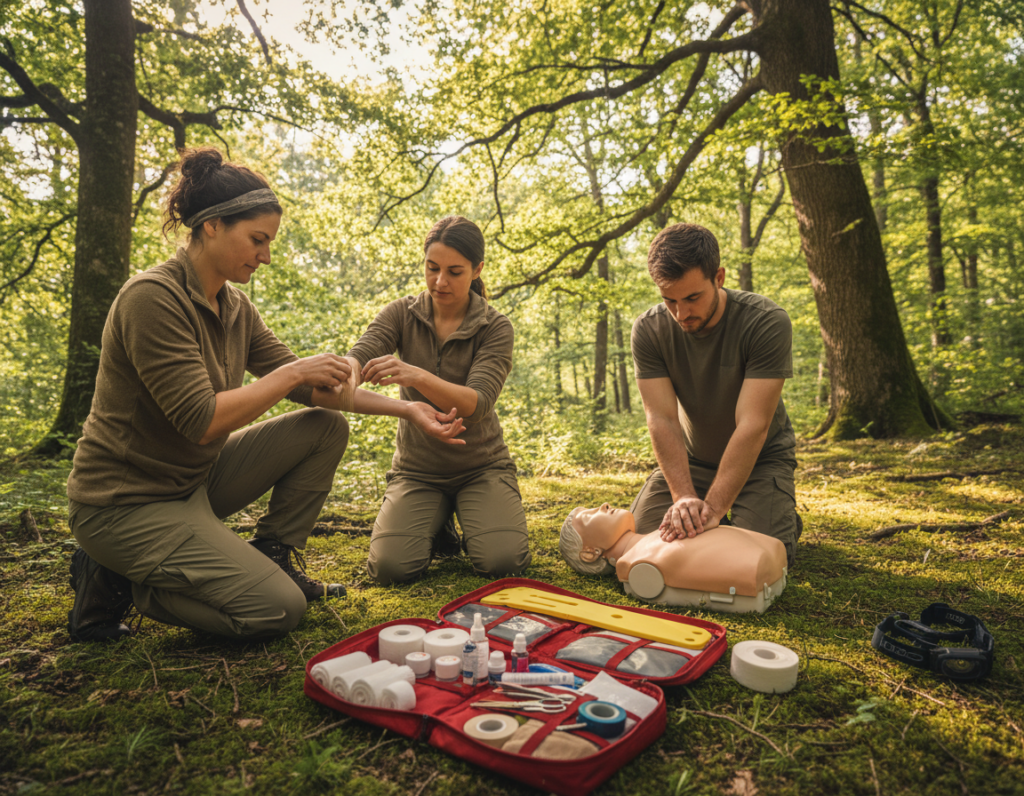
Attend CPR and Wilderness First Aid Training
I always recommend a wilderness first aid course. These classes take just a few hours. You learn to treat burns, fractures, and allergic reactions using limited resources.
CPR training is equally vital. In the backcountry, professional help can be hours away. Your knowledge could save a life.
| Item | Primary Use | Secondary Use | Why It’s Essential |
|---|---|---|---|
| Tweezers | Remove ticks | Clean debris from wounds | Prevents infection from small injuries |
| Athletic Tape | Prevent blisters | Stabilize a sprained ankle | Multipurpose support and protection |
| Sanitized Gauze | Stop bleeding | Pad a wound or splint | Handles most bleeding situations |
| Emergency Blanket | Retain body heat | Signal for help | Fights hypothermia, aids rescue |
| Water Filter | Purify drinking water | Prevent gastrointestinal illness | Critical for hydration safety |
Review Basic Wilderness Survival Techniques
Water safety is a top priority. Always treat backcountry water through boiling, filtration, or chemicals. Dehydration sneaks up fast during exertion.
Pack more water than you think you need. Drink regularly throughout your day. This keeps your body temperature stable and your mind clear.
Learn to build an emergency shelter and signal for help. Carry a medical ID card with your name, conditions, and emergency contact. Practice these skills with your group before you need them.
Conclusion
The true mark of a prepared adventurer isn’t just knowing what to do—it’s having done it. You now have a complete framework. Transform these steps into action before your next trip.
Your safety on the trails is your responsibility. Solid preparation turns fear into freedom. It lets you handle changing conditions and know when it’s time to call for help.
Start small. Pick one thing to improve, like checking weather more carefully or sharing your route with others. This mindset is what separates seasoned hikers from the rest.
Make sure you have a clear plan. With it, you can explore new areas with real confidence and return home safely from every adventure.
