
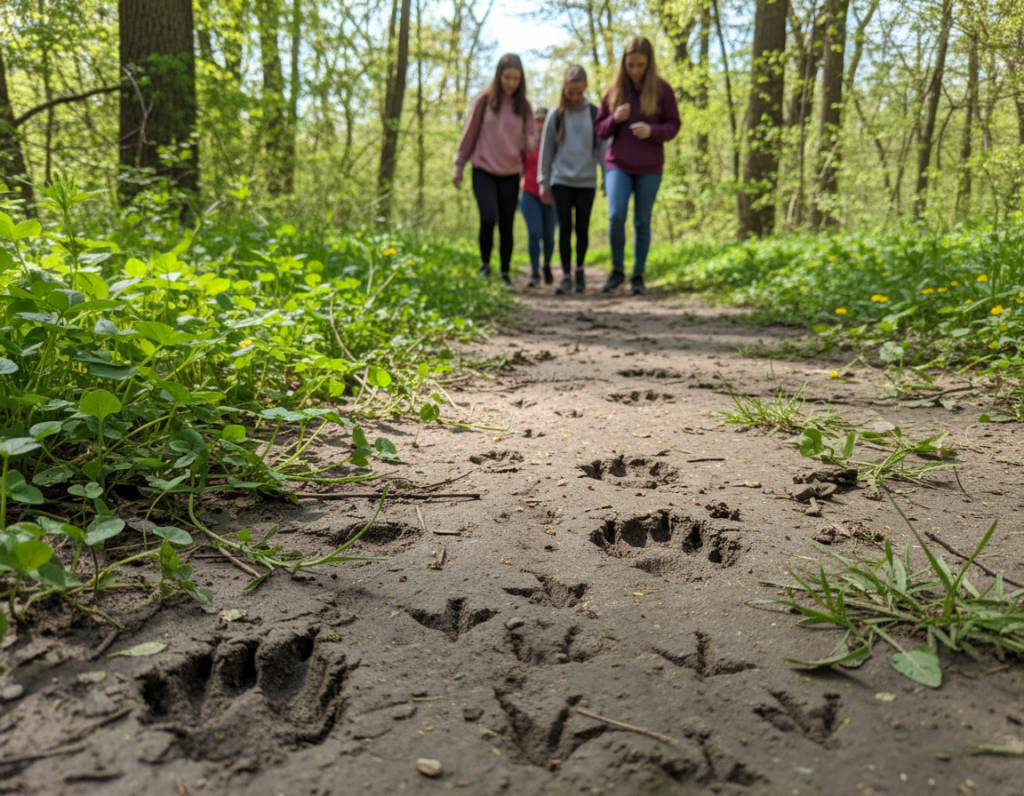
Have you ever paused on a trail and wondered which animal left those prints—and whether you should follow them?
I remember my first clear find: morning mud on a creek bank, a line of prints, and a sudden decision to slow down. I teach a repeatable checklist so you don’t guess. Start wide: notice pattern and context. Then check details like toes, pads, claws, and size.
On real hikes you’ll see prints in soft soil, sand, snow, or muddy edges. Early light and low shadows make impressions pop. I set clear expectations: messy substrate or partial prints limit confident IDs. That keeps you honest and safe.
Prioritize safety: keep your bearings, watch surroundings, and avoid following prints off-trail into risky terrain. This guide gives practical tips and a simple workflow you can use on muddy trail edges, sandy washes, snowy roads, and creek crossings.
Key Takeaways
- I show a checklist approach for wildlife tracks identification you can repeat on any hike.
- Start with pattern and context, then move to toes, pad, claws, and size.
- Substrate matters—mud and snow reveal more than rocky ground.
- Stay safe: keep your bearings and don’t follow prints into danger.
- This guide applies to common U.S. trail settings and offers quick, practical tips.
Where to find animal tracks on a trail
Good prints hide in plain sight—along muddy edges, sand bars, and thin snow patches.
Best ground conditions for clear prints
Look first at soft edges of the path: muddy dips, sandy bars, and soft garden soil. These surfaces hold shape well.
Mud shows depth. Sand gives sharp toe edges. Snow can show an entire line of prints from a distance.
When to look: morning and late-day light
Plan your search for early morning or late day. Low light casts shadows inside a print. That makes detail pop and helps you read prints faster.
How to scan when the trail vanishes
Mark the last clear print. Then stop and scan outward in a widening circle until you find the next one.
Check nearby signs: disturbed soil, a drag line, or a slide mark near water. Creek crossings, puddle edges, and gateways act as natural traps for prints.
| Ground | Best detail shown | Where to look on trail |
|---|---|---|
| Mud | Depth and claw marks | Muddy dips, puddle edges |
| Sand | Crisp toe and edge detail | Sand bars, dry washes |
| Soft soil | Overall print shape | Trail edges, garden patches |
| Snow | Full trail line and stride | Thin snow patches, creek banks |
Wildlife tracks identification method you can use on any hike
Start every field check by scanning the step pattern before you crouch for a close look. I use a quick checklist you can run in under two minutes.
- Pattern first: Read the trail rhythm. Pattern narrows animal groups fast, even with partial prints.
- Measure length and width: Use a ruler, trekking pole mark, or phone note. Size separates look-alikes.
- Count toes: Four vs five is a big split. Count toes before other details fade.
- Check claw marks: Look for nail impressions, but know cats often hide claws on firm ground.
- Front vs hind: Compare shape and size—fore feet can be larger or differently shaped than hind feet.
- Depth and context: Use depth only within the same ground patch to estimate relative weight.
- Look for webbing: Near water or muddy banks, webbing between toes signals swimmers.
| Feature | Front | Hind |
|---|---|---|
| Typical size | Often larger | Often smaller |
| Shape | Broader, rounder | Longer, narrower |
| Claw visibility | May show | May show |
Read track patterns to narrow the animal group fast
Step back and read the whole line before you lean in—pattern tells the story fast. I scan the run of prints to see rhythm, width, and repeat spacing. That zoom-out saves time and prevents wrong guesses.
Perfect walkers (register)
Perfect walkers place the hind foot into the front print. The trail looks tidy and zig-zagged.
Waddlers
Waddlers leave four prints per cycle. The line is wide. Left and right prints often splay outward.
Bounders
Bounders land in paired sets: front feet, then a leap, then hind feet together. Look for tight pairs with a space between sets.
Hoppers
Hoppers show big hind prints ahead of smaller front prints. It looks like a leapfrog pattern along the trail.
- I zoom out first: read the whole line of prints, then close in.
- Register: hind lands in front—common in slow walkers.
- Waddler: four-print rhythm—broad straddle and short stride.
- Bounder: paired sets—tight hind pair after the leap.
- Hopper: hind ahead of front—large hind impressions.
| Term | Plain meaning | Quick note |
|---|---|---|
| Trail | Path of prints | Write it down |
| Stride | Heel-to-heel distance | Measure for size |
| Straddle | Overall width of the line | Wide = waddler |
| Dragline | Tail or belly mark | Shows body position |
Identify canine and feline tracks by pad shape, toes, and claws
Read a paw like a map: pad shape, toe placement, and claw clues narrow the field fast. I teach a quick visual split that works on many U.S. trails.
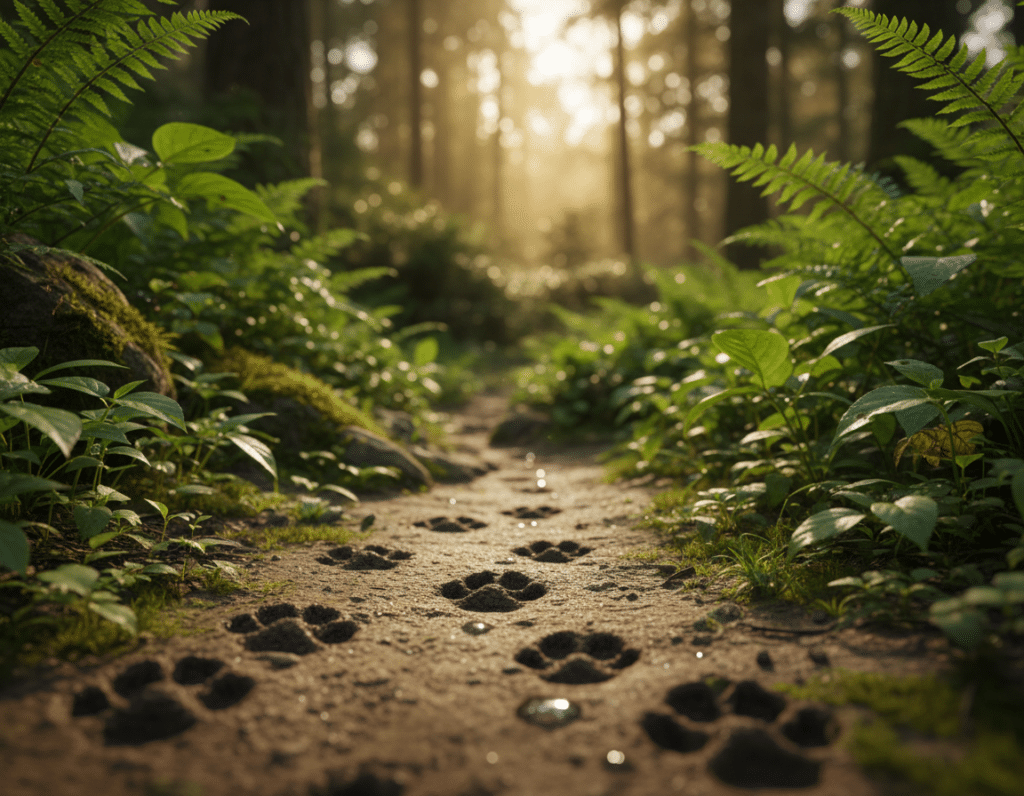
How to spot the dog family: oval pad and the “X” space
Look for an oval pad with four toes and claw marks. An empty X-shaped space often sits between the toes and the pad.
Dogs usually leave more splayed toes and visible claw marks. Domestic dogs also tend to wander, so their travel line may zig-zag.
Coyote vs dog: straight line and toe splay
Check travel: coyotes often move in a straight, purposeful line. Dogs zig and circle more.
Compare toe tightness: coyotes keep toes close; dogs often splay outward. Use that as a quick difference test.
Fox clues in snow
Fox prints are small and may look soft or fuzzy in snow. Fur and a light drag can blur edges, so expect a gentler outline.
How to spot the cat family: round pad and the “C” space
Cats leave rounder prints. The pad tends to show a C-shaped empty space behind four toes and usually no claw marks.
Bobcat vs coyote and cougar size
Bobcats rarely show claws and have a heel pad with three lobes on the rear edge. That three-lobed pad is a clear cat-family mark.
Cougar prints are large and round—often over 3 inches across on U.S. trails. If a print is big, round, four-toed, and lacks claw marks, suspect a cougar.
- Fast split: dog family = oval + X; cat family = round + C.
- Check for four toes, then note claw presence or absence.
- Use travel line and toe splay to separate coyotes and dogs.
| Feature | Dog family | Cat family |
|---|---|---|
| Pad shape | Oval with X space | Round with C space |
| Toes | Splayed more; claws often visible | Tighter; claws usually retracted |
| Travel pattern | Meandering (dogs) or straight (wild canines) | Direct, fluid strides |
| Typical size notes | Varies; small to large (dogs variable) | Bobcat ~2″; cougar >3″ |
Hoof prints and deer tracks: shape clues you can see at a glance
Hoof prints read fast: the toe tips and overall shape narrow the likely animal in seconds. Ungulates leave a split hoof—two toes forming a paired print you can scan without tools.
Split-hoof basics and quick reads
Two clear toes usually mean a hoofed animal. A pointed, heart-like tip often equals deer; a rounder tip leans toward elk.
Deer versus elk: size and tip shape
Deer prints typically range about 2–3.5 inches and taper to a narrow tip. Elk prints sit larger—about 3–5 inches—and show blunter toe tips.
Dewclaws, snow, and fast movement
Deep snow or a fast run can reveal dewclaw marks behind the main print. Those extra small marks help you know the foot hit hard or slid.
Wild hogs versus deer: what to watch
Hog toes are wider and blunter. Dewclaws on hogs often sit offset outside the main print, not tucked behind like deer.
- I read hoof prints in one glance: two toes = hoof; tip shape narrows the ID.
- Check habitat, nearby water, and trail use to confirm your read without guessing.
| Feature | Deer | Elk / Hog |
|---|---|---|
| Typical size | 2–3.5 in | 3–5 in (elk); similar but blunter (hog) |
| Toe shape | Pointed, heart-like | Rounder (elk); blunt & wide (hog) |
| When dewclaws show | Deep snow, fast runs | Same for elk; offset on hogs |
Small animal tracks that hikers confuse on the ground
Don’t ignore small prints—those little signs are common and easy to learn. I keep a short routine: count toes, read the pattern, then hunt for drag marks or slides near water.
Raccoon clues
Raccoons leave a tiny hand shape with five toes. In snow the hind print can sink deeper. Look for side-by-side pacing and small handlike prints near creek edges or backyard streams.
Rabbit pattern
Rabbits are hoppers. Two large hind prints land ahead of two small front prints. The result looks like a Y: hind feet forward, front feet close behind.
Squirrel, mouse, skunk, and water mammals
Squirrels and mice make tight four-print clusters. Mice often drag a thin tailline between steps.
Skunks show five toes with visible claws; front and hind can be similar in size.
Otters leave five-toed prints near water and belly-slide troughs. Muskrats show alternating prints and a clear tail dragline.
- I use toes first, pattern second, then look for draglines or slide signs.
- Practice in backyard edges, park trails, and creek paths to build confidence.
| Animal | Key sign | Where to look |
|---|---|---|
| Raccoons | Small handlike prints, five toes | Creek banks, backyard edges |
| Rabbits | Y-shaped hop pattern; big hind prints | Trails, fields, brush edges |
| Squirrels / Mice | Four-print clusters; tail drag (mice) | Treesides, park paths |
| Otter / Muskrat | Five toes; slides or tail dragline | Water margins, mud |
| Skunk / Bear | Five toes; claws visible (skunk); big pad (bear) | Near logs, trail crossings, streams |
How to identify tracks in snow versus mud
Before naming an animal, I check the ground: snow or mud changes almost everything you see. That quick scan tells me what details I can trust and what I must treat as suspect.
What fresh, thin snow shows best and what deep or dry snow hides
Fresh, thin snow is the best canvas. It holds the whole print shape and many toe edges. You can often read stride and print size from a single impression.
Deep snow blurs toe tips and collapses edges. Prints look wider and shallower. Dry, wind-scoured snow can erase claw marks fast, so use time as a clue: crisp edges mean recent activity.
How snow changes print edges, toe detail, and claw visibility
Snow softens fine detail. Even dog-family prints may lose visible claw marks if the foot did not cut cleanly through the crust. If edges are rounded, trust pattern and stride more than tiny toe detail.
How mud changes depth and can make smaller animals look larger
Mud exaggerates depth and can slump at the rim. A small animal on saturated ground may leave a big-looking print. Compare depth only when two prints sit in the same patch of ground and look equally fresh.
- Do this: check freshness, note substrate, and use pattern and direction when detail is poor.
- Avoid guessing size from depth alone across different ground or time.
| Condition | What it shows | What to trust |
|---|---|---|
| Fresh thin snow | Clear shape, toes, stride | Print outline and size |
| Deep snow | Blurred toes, collapsed edges | Pattern and direction |
| Saturated mud | Deep, slumped rims | Relative depth in same patch |
Conclusion
Start with the big picture—the full line often tells you more than one print. I read the run first, then confirm toes, claws, and size. That habit is the top way to avoid quick mistakes.
Take one practical next step on your next hike: find a muddy patch or a thin snow area, pick one clear example, and run the checklist from Section 3. Measure, note substrate and time, and avoid firm claims from a single damaged print.
Also scan the surrounding area for supporting signs—drag lines near water or a straight travel line can clinch your read. Noticing these signs helps you observe wildlife without seeing the animal and deepens your connection to nature.
For simple safety tips and respect on the trail, read this short guide to protect wildlife while hiking.
FAQ
Where are the best places on a trail to find animal tracks?
What ground conditions give the clearest prints?
When is the best time of day to look for prints?
How do I scan the area when a trail of prints disappears?
What’s the first thing I should note when I find a print?
How do measurements help narrow down the animal?
How many toes should I count, and why does it matter?
How important are claw marks in identification?
How do I tell front feet from hind feet?
Can depth of a print tell me anything useful?
How do I spot webbing in tracks near water?
What are “perfect walkers” and how do their tracks look?
How do waddlers, bounders, and hoppers differ in trail patterns?
What key trail terms should I record in the field?
How do I recognize dog family tracks?
How can I tell coyote tracks from domestic dog tracks?
What do fox tracks look like in snow?
How do cat family tracks differ from canids?
How do I tell bobcat prints from coyote prints?
How large are cougar tracks on U.S. trails?
What are the basics of split-hoof prints?
How do deer tracks differ from elk tracks?
When do dewclaws show up in prints?
How can I tell wild hog tracks from deer?
How do raccoon prints look like small hands?
What pattern do rabbit tracks form?
How do squirrel and mouse tracks appear?
What do skunk tracks show?
How can I identify otter and muskrat signs near water?
How do bear prints look and how variable are claws?
How does snow change the appearance of prints?
How does mud alter track details?
Related: Hatfield mccoy trails: Top Picks, Prices, and What to Avoid
