
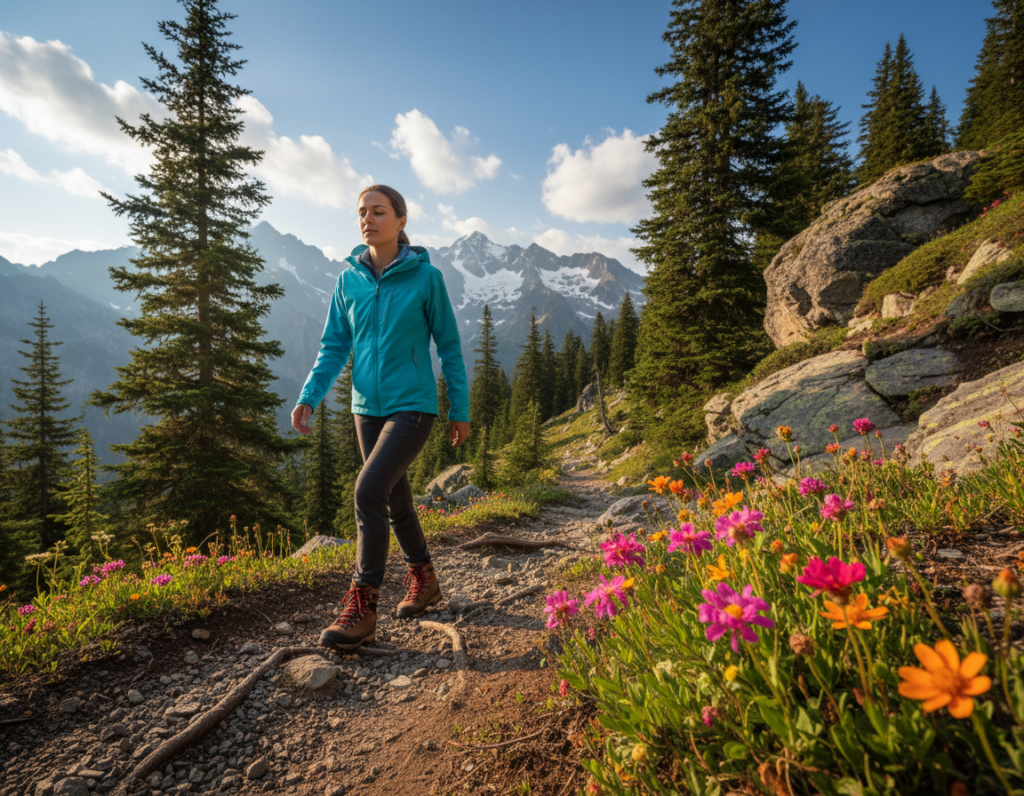
Have you ever watched experienced hikers move along a path with an almost effortless grace? They aren’t necessarily the fastest, but they possess a steady, sustainable cadence that carries them mile after mile. That’s the power of a good hiking rhythm—it’s the secret to enjoying long days on the trail instead of just enduring them.
Think of it like cruise control for your body. Starting too fast burns precious energy, often causing your pace to plummet later. A consistent effort, however, uses energy more efficiently, much like a car on the highway. This guide is built on real trail experience, offering practical advice to help you find your personal cadence.
We’ll explore how to sync your breathing with your steps and adjust your stride for different landscapes. You’ll learn to move comfortably from sunrise to sunset, arriving at camp feeling strong and ready to relax. The goal isn’t speed; it’s sustainability, allowing you to fully embrace the adventure.
Key Takeaways
- A steady, consistent pace conserves energy more effectively than frequent speed changes.
- Your personal rhythm combines pace, breathing, stride, and mental focus.
- Avoid starting too fast, as it leads to significant fatigue later in the day.
- Proper rhythm protects your joints and makes the journey more enjoyable.
- These strategies help you cover distance efficiently while having energy left at camp.
- The right cadence is sustainable, not necessarily fast.
Setting a Steady Pace on Varied Terrain
The key to lasting all day is learning to adjust your movement to the path under your feet. A rigid approach will drain your energy quickly. Instead, think of your pace as something fluid that changes with the slope.
Your goal is smooth, continuous motion. This prevents the exhausting cycle of sprinting and stopping.
Adapting Your Stride on Uphill and Downhill Sections
When the trail angles upward, shorten your steps. This maintains balance and reduces stress on your joints. Keep your step frequency the same, but cover less ground with each footfall.
On descents, also use shorter steps. This gives you more control and protects your knees. On flat sections, you can safely lengthen your stride to cover more distance efficiently.
Matching Your Breathing with Your Steps
Your breathing pattern directly controls your sustainable effort. Start by breathing in for three steps, then out for three steps. This creates a natural, meditative cadence.
As you work harder on a steep hill, adjust the ratio. Breathe in for two steps and out for two steps. At peak effort, match each breath to a single step. This synchronization keeps your cardiovascular system in check.
This table summarizes the adjustments for different conditions:
| Terrain Type | Stride Length | Breathing Pattern | Key Benefit |
|---|---|---|---|
| Flat Ground | Longer | In for 3 steps, Out for 3 steps | Efficient distance coverage |
| Moderate Uphill | Shorter | In for 2 steps, Out for 2 steps | Balanced energy use |
| Steep Uphill | Shortest | In for 1 step, Out for 1 step | Manages peak exertion |
| Downhill | Shorter | In for 3 steps, Out for 3 steps | Joint protection and control |
Practice this on easier paths first. Your body will learn the pattern, making adjustments automatic. This way, you conserve energy for the entire journey.
Using Trekking Poles and Quality Equipment
The right equipment choices, particularly trekking poles and supportive footwear, work together to create a sustainable movement system. These tools aren’t luxuries—they’re fundamental to maintaining your flow over varied terrain.
Adjusting Poles for Optimal Balance
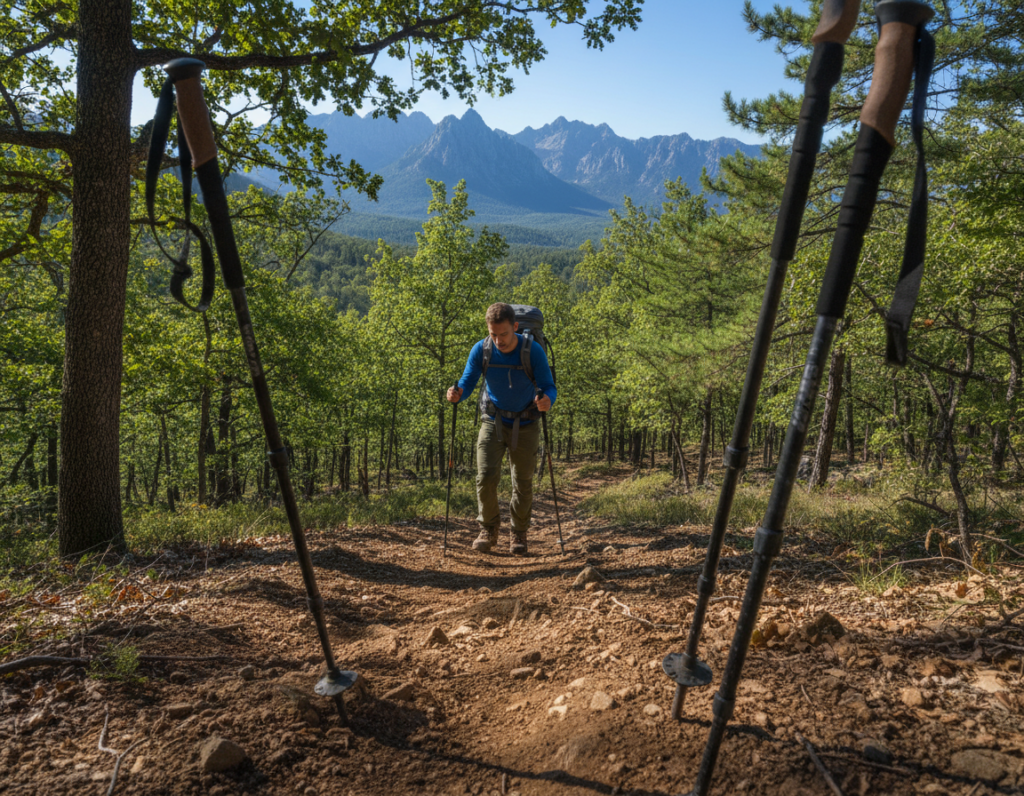
Proper pole setup starts with length. When standing upright, your elbow should form a 90-degree angle with the pole tip on the ground. This positioning allows for efficient pushing without shoulder strain.
For uphill sections, shorten your poles slightly. On descents, lengthen them a bit. These small adjustments make a big difference in stability.
The movement pattern becomes natural quickly. As your right foot steps forward, plant the left pole at an angle behind you. Push off as you transfer weight, then plant the right pole with your left foot.
| Scenario | Pole Length | Planting Position | Primary Benefit |
|---|---|---|---|
| Flat Terrain | Standard (90° elbow) | Beside or slightly behind | Maintains momentum |
| Steep Uphill | Shortened 2-3 inches | Directly beside feet | Better leverage |
| Steep Downhill | Lengthened 2-3 inches | Slightly ahead of feet | Impact absorption |
| Uneven Ground | Standard | Wherever needed for balance | Stability assurance |
Maintaining Joint Safety on Descents
Poles help most when going downhill. They absorb impact before it reaches your knees. Plant them slightly ahead and let them take weight before your foot lands.
Before any descent, tighten your boot laces. This prevents feet from sliding forward and jamming toes. Also snug your pack’s hip belt to minimize weight shift.
Quality boots with good ankle support create stability. Cheap footwear undermines your entire system because you’ll constantly adjust for discomfort.
Effective Hiking Rhythm Tips for Long Trails
After years on the trail, I’ve discovered that the most overlooked skill for distance walking is internal timing. This isn’t about speed—it’s about finding a sustainable motion that carries you comfortably.
Discovering Your Personal Pace
Your ideal speed depends on fitness, pack weight, and trail conditions. On maintained paths, expect 2-3 miles per hour on flat ground.
Elevation changes everything. Add 50 minutes for each 1,000 feet climbed. Descending adds 20-25 minutes per 1,000 feet due to knee stress.
I check my body about 30 minutes into any trek. This tells me if my current speed will work for hours ahead. Adjust early to avoid exhaustion later.
Synchronizing Body Movements with Terrain Changes
The rest step technique revolutionized my steep climbs. As you step up, briefly lock your back knee. This transfers weight to your skeleton.
Your leg muscles get a micro-rest with each movement. The pause can be half a second—barely noticeable but incredibly effective over distance.
Coordinate everything: breathing matches steps, poles match footfalls. Your upper body leans slightly into slopes while legs drive upward. This coordinated motion feels mechanical and efficient.
Practice these movements on shorter routes first. Your body will internalize the patterns. This preparation becomes crucial during hot weather adventures when energy conservation matters most.
Mental Focus and Energy Management Along the Trail
Your mind is your most powerful tool when your body starts to protest on a long trek. Managing your mental state and physical resources is what separates a grueling march from a rewarding journey.
This part of the adventure requires a different set of skills. We’ll look at how to stay positive when fatigue sets in and how to fuel your body smartly.
Staying Positive and Mindful During Fatigue
Mental fatigue often hits harder than physical tiredness. Around mile eight or ten, doubts can creep in. I counter this by breaking the remaining distance into small, manageable goals.
Focus on reaching the next bend in the trail or a distinctive tree. This technique keeps forward momentum strong. Matching your breath to a simple song lyric also creates a helpful, meditative state.
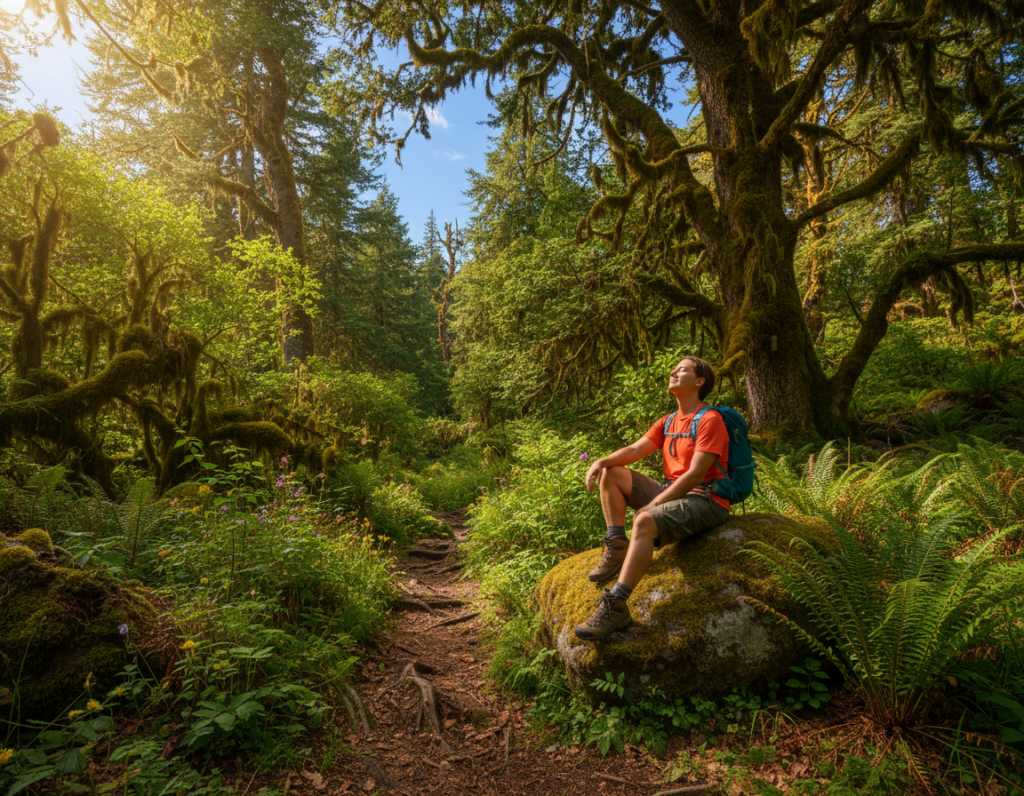
Observing your surroundings with gratitude is another great way to stay engaged. It shifts focus from discomfort to the beauty of the experience.
Hydration and Rest Strategies for Endurance
Strategic breaks are essential for energy management. I take short stops every 60 to 90 minutes. These pauses should last about five minutes to prevent muscles from cooling down.
During these brief rests, consistently drink water. Don’t wait until you feel thirsty. By then, you’re already mildly dehydrated.
It’s best to leave your pack on during quick breaks. This saves energy and helps you get back into your flow quickly. Only take it off if you need to adjust the load or grab something.
Watch for warning signs like headaches or dark urine. Address them immediately with water and shade.
| Situation | Action | Time | Key Focus |
|---|---|---|---|
| Mental Fatigue | Set small goals, focus on breathing | Continuous | Maintain positivity |
| Scheduled Break | Hydrate, minor gear adjustments | 5 minutes | Energy replenishment |
| Dehydration Signs | Drink water, rest in shade | Immediately | Health and safety |
| Tough Trail Section | Break distance into chunks | As needed | Sustained momentum |
Training Strategies for Endurance and Strength
The difference between struggling and thriving on multi-day adventures often comes down to smart training before you even hit the trail. Your preparation should mirror the actual demands you’ll face outdoors.
Building a Routine with Stairs and Trail Logging
Stair climbing with a weighted pack trains your cardiovascular system effectively. Start with 15-20 minutes using 10-15 pounds. Gradually increase both duration and weight over several weeks.
This approach builds leg muscles exactly the way long uphills demand. Establish a breathing pattern on the stairs—in for two steps, out for two steps. This rhythm becomes automatic when you hike.
Log your actual hiking data throughout the season. Record mileage, elevation gain, time taken, and how you felt. This creates a personal database showing your realistic pace.
Adapting to Elevation Changes with Planned Adjustments
Your data reveals valuable patterns. You might slow down after three hours or struggle above certain elevations. This information helps plan future trips realistically.
Start your hiking days early, especially in summer. Beginning at dawn lets you warm up gradually. Training over consecutive days teaches your body to recover while moving.
This multi-day experience is essential for backpacking trips. You’ll learn to maintain energy when full rest isn’t possible.
Adapting the Pace for Group Hiking Dynamics
Group dynamics can make or break a multi-person adventure, especially when everyone has different natural speeds. I’ve learned that the slowest member sets the sustainable pace for safety reasons. This prevents anyone from getting separated on unfamiliar terrain.
Some people sprint ahead before warming up properly. Others stop frequently to adjust gear. Both patterns disrupt the group’s flow and can lead to problems.
Managing Different Pacing Needs in a Group
Positioning matters significantly. I place the slowest person second or third in line. This lets them establish a comfortable cadence that everyone can match.
Alternatively, sandwich a less experienced hiker between two stronger companions. The middle person focuses on matching footsteps ahead rather than thinking about fatigue.
Tips for Balancing Fast Starters and Slow Starters
Fast movers need to understand that going too slowly can cause issues. Muscles don’t warm up properly with constant stopping. This increases injury risk.
When abilities vary widely, consider splitting into smaller groups. Designate meeting points at trail junctions. Everyone stays safe while moving at their ideal speed.
Joining a group means accepting that personal preferences take a back seat to collective safety. If you’re unwilling to adjust, solo adventures might suit you better.
Conclusion
When all the elements of efficient trail movement click into place, you’ll discover a new level of outdoor enjoyment. Your personal pace becomes automatic, letting you focus on the scenery rather than your fatigue.
The system works together: breathing matches steps, stride adapts to elevation changes, and quality boots protect your feet. Strategic rest breaks and consistent water intake maintain your energy throughout the day.
Building your endurance through consistent practice makes these adjustments feel natural. Consider incorporating targeted cardio exercises into your training routine to enhance your trail performance.
Give yourself time to learn these patterns. Within a few trips, sustainable movement becomes second nature, transforming challenging distances into rewarding accomplishments.
