
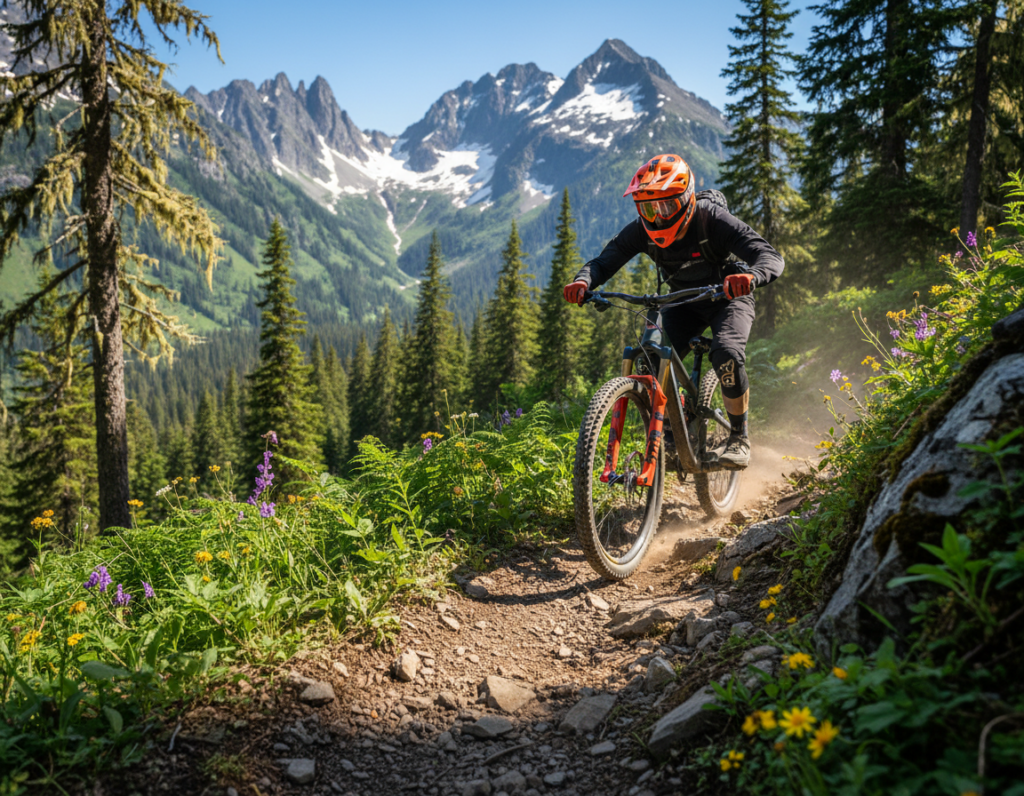
Ever watch a pro rider fly down a steep mountain trail? They make it look effortless, almost like they aren’t even using their brakes. That smooth, controlled speed isn’t about avoiding your levers—it’s about mastering them. It’s the secret to transforming a white-knuckle descent into a confident, flowing ride.
True control on a bike isn’t just about going fast. It’s about knowing you can slow down safely when you need to. This skill is the foundation that lets you explore new trails with confidence. When you know you can manage your speed, you stop hesitating at the top of a challenging section.
We’ve learned from years on the trail that the right methods build this confidence progressively. This guide will help you understand your bike’s brakes and apply pressure smartly. You’ll learn to maintain momentum without sacrificing safety, opening up a whole new world of riding.
Key Takeaways
- Proper braking is the foundation of control, not just a way to slow down.
- Mastering your brakes transforms tentative riding into confident exploration.
- The fastest riders brake smarter, not less, to maintain momentum.
- Good technique directly impacts your safety and allows you to progress.
- These skills connect to every other aspect of mountain biking, from cornering to obstacle navigation.
Understanding the Basics of Mountain Bike Braking
The confidence to tackle steep trails starts with understanding how your bike’s braking system actually works. Modern mountain bikes use sophisticated technology that transforms a simple lever pull into reliable stopping power.
How Brakes Function on a Mountain Bike
Today’s mountain bikes almost exclusively use hydraulic disc brakes. When you squeeze the lever, it pushes fluid through sealed lines to the calipers. This fluid pressure then clamps brake pads against a rotor attached to your wheel.
The system creates incredible stopping power with minimal effort. Unlike older rim brakes, disc systems perform consistently in wet or muddy conditions. This reliability is crucial for mountain riding where conditions change rapidly.
| Component | Function | Key Feature | Common Sizes |
|---|---|---|---|
| Brake Lever | Initiates braking action | Ergonomic design | One-size fits most |
| Brake Caliper | Holds and moves pads | Hydraulic piston system | 2-piston or 4-piston |
| Brake Rotor | Surface for pad contact | Heat dissipation | 160mm, 180mm, 203mm |
| Brake Pads | Create friction | Organic or metallic compound | Standard shapes |
Different Brake Types and Components
Not all braking systems feel the same. Brands like SRAM and Shimano have distinct characteristics. SRAM brakes often provide more initial bite, while Shimano systems offer progressive modulation.
Rotor size significantly affects performance. Larger rotors (180mm vs 160mm) provide more stopping power and better heat management. This becomes critical during long descents where heat buildup can reduce effectiveness.
Brake pad compounds also matter. Organic pads bite quickly but wear faster. Metallic pads last longer and handle heat better. Understanding these differences helps you choose the right gear for your riding style.
Essential Downhill Braking Techniques
The difference between a controlled descent and a white-knuckle experience often comes down to how you apply pressure to those brake levers. Proper application transforms your ride from tentative to confident.
Front vs Rear Brake Dynamics
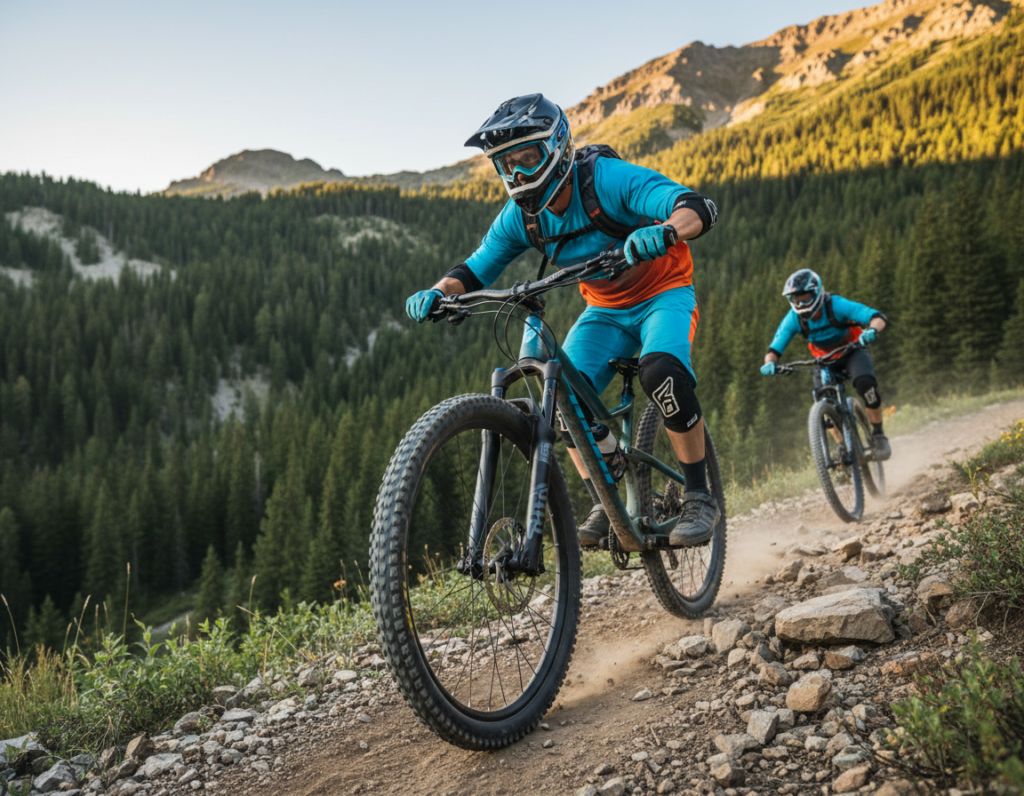
When you squeeze your levers, physics takes over. Your body weight shifts forward, loading the front wheel with extra grip. This makes your front brake your primary stopping tool.
The front brake provides about 60-70% of your total stopping power. Use it as your main control for managing speed. The rear brake adds stability and helps fine-tune your pace.
Keep your wheels straight during hard braking. This prevents skidding and maintains maximum traction on steep terrain.
Effective Modulation of Brake Pressure
Think of brake modulation as a volume knob rather than an on/off switch. Apply progressive pressure instead of grabbing hard. This gives you smooth control as conditions change.
Use light pressure for “control braking” to maintain your current speed. Apply firm pressure for “deceleration braking” when you need to scrub off speed quickly.
Practice feeling the difference between maximum stopping force and the point where wheels start to lock. This fingertip sensitivity becomes crucial on technical trails.
Practicing Brake Familiarization and Control
Building true confidence with your brakes starts with dedicated practice in safe, controlled environments. You don’t need a mountain trail to develop essential skills. A quiet parking lot or empty street provides the perfect space to learn your bike’s personality.
Setting Up a Safe Practice Environment
Choose a flat, open area with good visibility. This gives you room to experiment without pressure. Start at walking pace to build muscle memory gradually.
Wear your regular riding gear for authentic feel. Practice during daylight hours when you can clearly see your surroundings. This focused time investment pays dividends on actual trails.
Progressive Application for Consistency
Begin by rolling at comfortable speed. Gently squeeze one lever, increasing pressure slowly. Notice when the pads first engage—this is the “bite point.”
Continue applying pressure until the wheel locks. Repeat this process with each brake separately. Then practice using both levers together.
This method builds consistent control. You’ll develop instinctive responses rather than reactive grabbing. The skill becomes automatic through repetition.
Adjusting Technique for Varied Trail Conditions
Mastering different trail conditions separates confident riders from those who hesitate when the terrain gets tricky. The same approach won’t work on every surface you encounter.
Your bike responds differently to each type of ground. Learning to read the trail ahead helps you prepare for what’s coming.
Braking on Loose, Rocky, or Wet Surfaces
Wet surfaces demand a light touch. Keep your wheels rolling to maintain grip. This allows fresh rubber to cut into the ground.
On loose rocks, use firm pressure. This shifts rocks aside so you reach solid ground. Timid pressure makes you skate uncontrollably.
For slippery obstacles like wet roots, try split braking. Release pressure as you cross, then reapply immediately after. This maintains momentum while avoiding slides.
| Surface Type | Braking Approach | Weight Distribution | Tire Pressure Tip |
|---|---|---|---|
| Wet/Muddy | Light, rolling pressure | Centered balance | 5-10 psi lower for grip |
| Loose Rock | Firm, decisive pressure | Slightly back | Standard pressure |
| Wet Roots | Split braking technique | Neutral position | Moderate pressure |
| Hardpack | Progressive modulation | Forward leaning | Firm for speed |
Your tyres play a big role too. Aggressive tread patterns dig into soft surfaces. Lower pressure increases contact area for better control.
Watch for surface changes before corners. Identify high-grip zones like compressed dirt. Avoid braking heavily on low-grip areas like wet leaves.
Adapting your technique this way builds confidence. You’ll handle whatever the mountain throws at you with better control and less fear.
Maximal Braking for Short, Intense Deceleration
For those moments requiring rapid deceleration, a different set of skills comes into play. When gravity’s pull becomes too strong for light pressure, you need maximum stopping force.
Using Body Movement and Pumping to Shift Weight
Shift your weight back aggressively during hard stops. This counters the forward rotation from stopping forces. It keeps both tires firmly planted.
Use a “pumping” motion by pressing down into your bike. This increases tire pressure against the ground. The result is significantly improved grip and power.
Combine these movements into an “L-shaped manual” position. It looks like starting a wheelie but serves a different purpose. This position maximizes your control for brief, intense efforts.
Avoiding Wheel Lock and Lost Control
Practice this method on flat, loose surfaces first. You can safely test your limits here. This builds confidence before hitting steep trails.
Time your hardest stops for high-grip sections like smooth, compressed dirt. Avoid slippery areas where wheels might slide. A strong physical foundation helps execute these moves effectively.
Make your actions brief and decisive. Apply maximum force to scrub speed quickly. Then release to let the bike flow through the terrain.
Advanced Braking Skill Development and Muscle Memory
The real secret to mastering control isn’t found on the hardest trail, but in the quiet, consistent practice that makes good habits automatic. This is where advanced skills are born. You build a reliable foundation that works when you need it most.
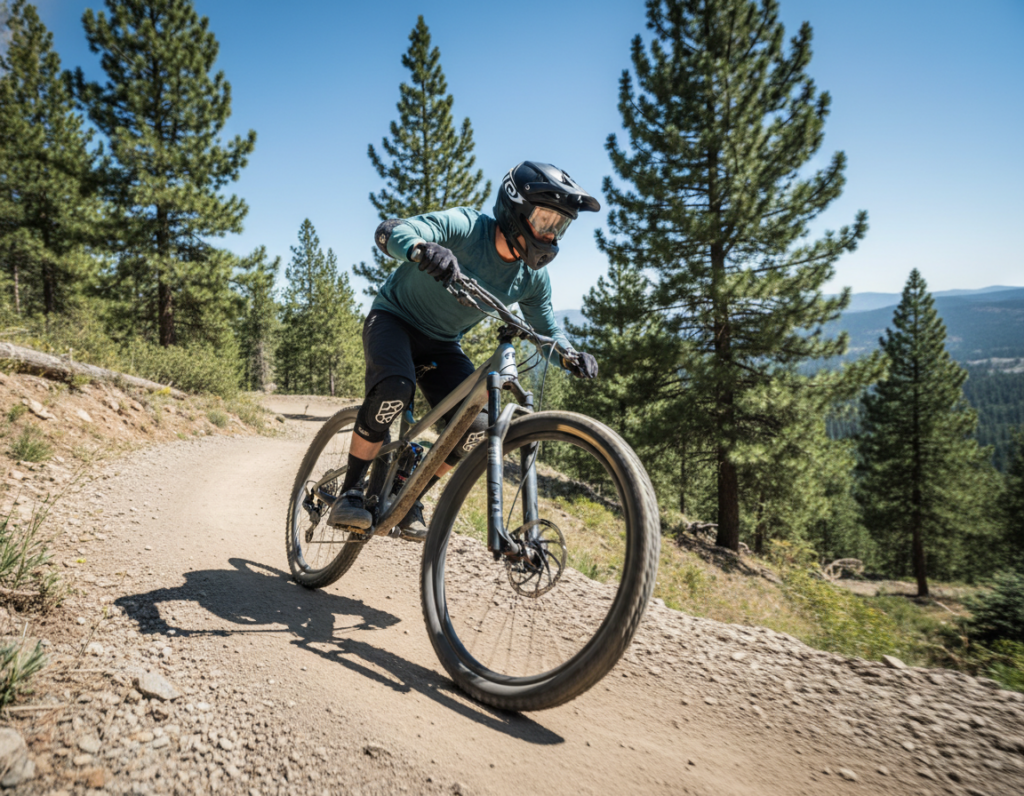
Think of repetition as your best training partner. The things you do at a slow pace on easy ground become second nature. When the trail gets steep and fast, those ingrained skills take over without you having to think.
Building Confidence Through Repetition
Start by finding a simple, safe area. Practice your lever control until it feels natural. This dedicated time pays off hugely later on.
Good habits get better with speed. Bad habits, however, can become risky. Consistent practice on mellow rides, even your commute, builds the muscle memory for technical mountain riding.
The core skill is looking ahead. If you can read the terrain, you can plan your moves. You stop reacting and start anticipating.
Elite riders practice sections many times. They find the perfect spot to start slowing down—the braking point. They experiment to balance speed and control.
| Practice Scenario | Primary Focus | Skill Benefit | Progression Tip |
|---|---|---|---|
| Empty Parking Lot | Basic Modulation | Muscle Memory | Start at walking speed |
| Gentle Green Trail | Looking Ahead | Anticipation | Identify one feature per ride |
| Repeated Trail Section | Braking Points | Efficiency | Try braking later each run |
| Technical Descent | Habit Application | Real-World Confidence | Add speed only after control is solid |
This approach turns practice into powerful, automatic skill. You’ll handle challenging situations with more confidence and control.
Conclusion
True trail mastery isn’t about avoiding challenges, but knowing you can handle whatever comes your way. The skills you’ve learned here form the foundation for confident mountain biking.
Remember that control comes from practice, not just knowledge. Spend time on familiar trails working on one skill at a time. You’ll notice your confidence growing with each ride.
Even experienced riders continue refining their approach. The right application of pressure and weight distribution makes all the difference. Get out there and enjoy watching your skills progress.
