
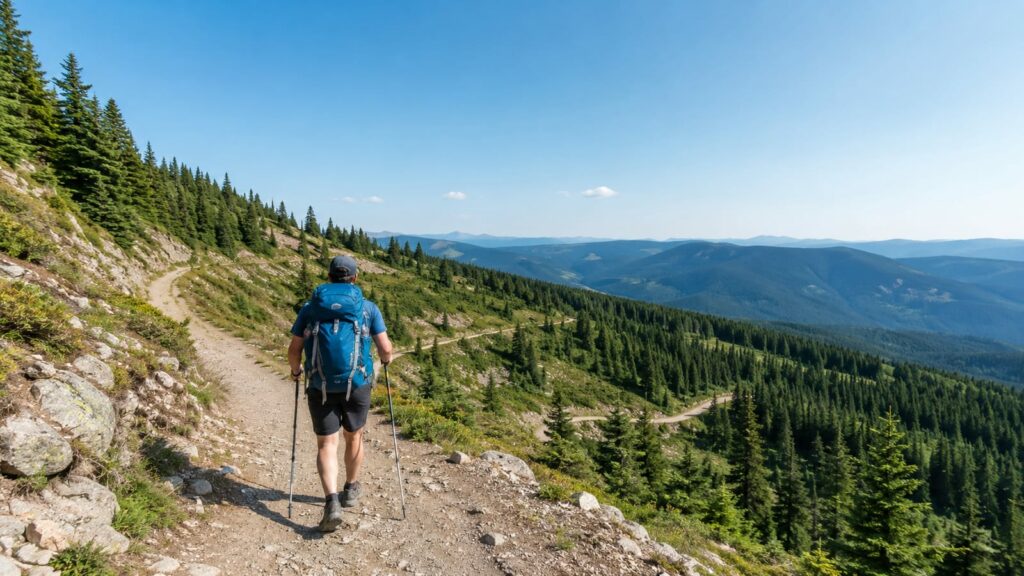
Switchbacks are the safest, least damaging way to turn a steep climb into a manageable trail. That explains why trails use switchbacks and how to hike them: follow the zigzag at a steady pace, keep your feet on the built tread, and never cut the corners. You’ll walk farther, but your legs, footing, and the hillside will take less punishment.
Last updated: 2026-08-13
Trail switchbacks explained
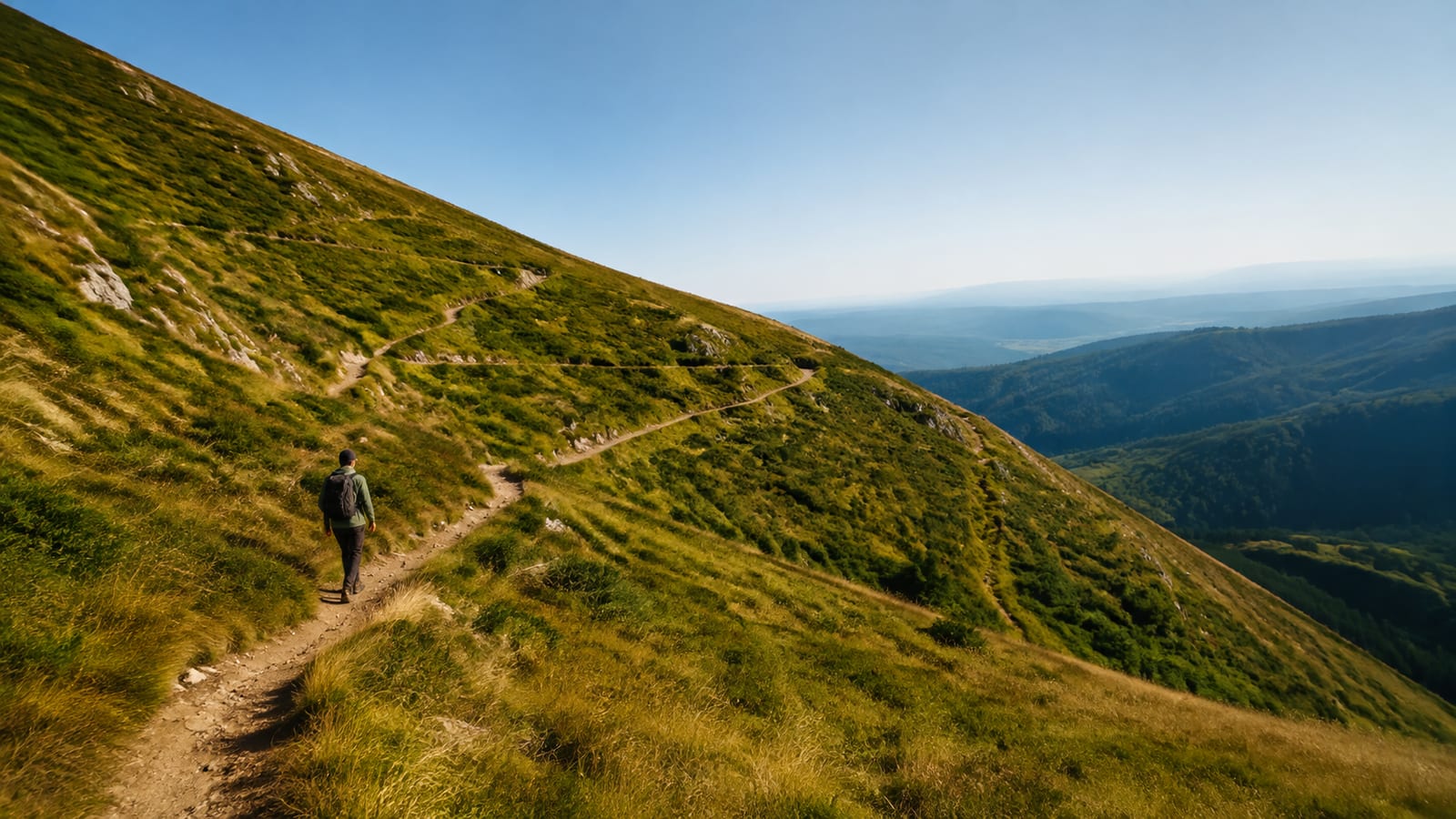
A switchback is a zigzagging trail that crosses a slope instead of climbing straight uphill. The trail travels across the hillside, turns through a tight corner, then crosses back in the other direction.
The turn usually sits on a relatively level constructed landing. That landing gives you room to change direction without stepping onto loose slope or pushing straight through a steep bank.
A switchback isn’t the same as every winding trail. Trail designers also use climbing turns, which have smoother curves and typically sit on grades of 15 percent or less. Their sideslopes are 7 percent, with a smooth turning radius of 1.5 to 3 meters, or 5 to 10 feet.
Switchback turns have pretty tight corners. They’re used where the underlying slope is usually steeper than 15 percent and a straight trail would be too hard to walk or too easy to wash out.
Why do trails use switchbacks and how should you hike them?
Trails use switchbacks to spread elevation gain over a longer route. The angled traverses reduce the effective grade, so you can climb with shorter steps and less strain instead of attacking the slope head-on.
Hike them at a steady pace. Stay on the constructed tread, slow down before each turn, and don’t cut across the inside corner. The longer route is the point. Removing the turns only gives you a steeper climb and a damaged trail.
The longer route helps
A straight line up a steep slope forces your calves and thighs to work hard on every step. It also makes loose rock, mud, and wet roots harder to manage.
A switchback lets you:
- Keep a more even pace.
- Use shorter, controlled steps.
- Reduce the strain of steep uphill steps.
- Control your speed better on descents.
- Keep more traction on loose or wet ground.
- Spread water flow across a designed trail surface.
The trail still gains the same elevation. It simply asks your body to pay the bill in smaller installments.
For example, the famous Walter’s Wiggles in Zion National Park show the idea clearly. The 21 switchbacks gain 250 feet of elevation, from 5,100 feet to 5,350 feet, and begin about 1.8 miles into the Angels Landing hike. The route still climbs at a 19% grade in that section, so switchbacks don’t make a hard trail easy. They make it possible to manage.
You can see the same logic on the Mount Whitney Trail in California. Sources describe the route with different counts, including 17, 27 or so, 97, and 99 switchbacks, while the hike is 21 miles round trip. The count matters less than the lesson: a long climb needs repeated direction changes when a direct route would be rough on hikers and the slope.
Trail design choices
A trail needs switchbacks when a direct route becomes too steep, unstable, or damaging for its expected use. Slope grade matters, but it isn’t the only decision.
Trail designers also study:
- Soil that slips or erodes easily.
- Rock outcrops and cliffs.
- Drainage patterns.
- The shape of the hillside.
- Snow, mud, and seasonal runoff.
- Pack animals, maintenance equipment, or rescue access.
- How many people use the route.
- The space available for a stable trail bench.
A straight path can work on a firm, dry slope with little traffic. However, put that same path on loose soil with heavy rain and regular foot traffic, and it can turn into a gully.
The U.S. Forest Service gives accessible trail guidance that uses 1:8 (12 percent) in the situation covered by that guidance. No more than 30 percent of the total trail length may exceed 1:12, or 8.33 percent. Resting intervals are required when the running slope exceeds 1:12, or 8.33 percent, and resting intervals are required at least every 200 feet, or 61 meters, for grades between 1:20, or 5 percent, and 1:12, or 8.33 percent.
Those figures don’t dictate every backcountry trail. They do show why trail builders break steep terrain into sections, landings, and turns. A trail is not designed for the view from a map. It’s designed for feet, water, tools, and bad weather.
Erosion control
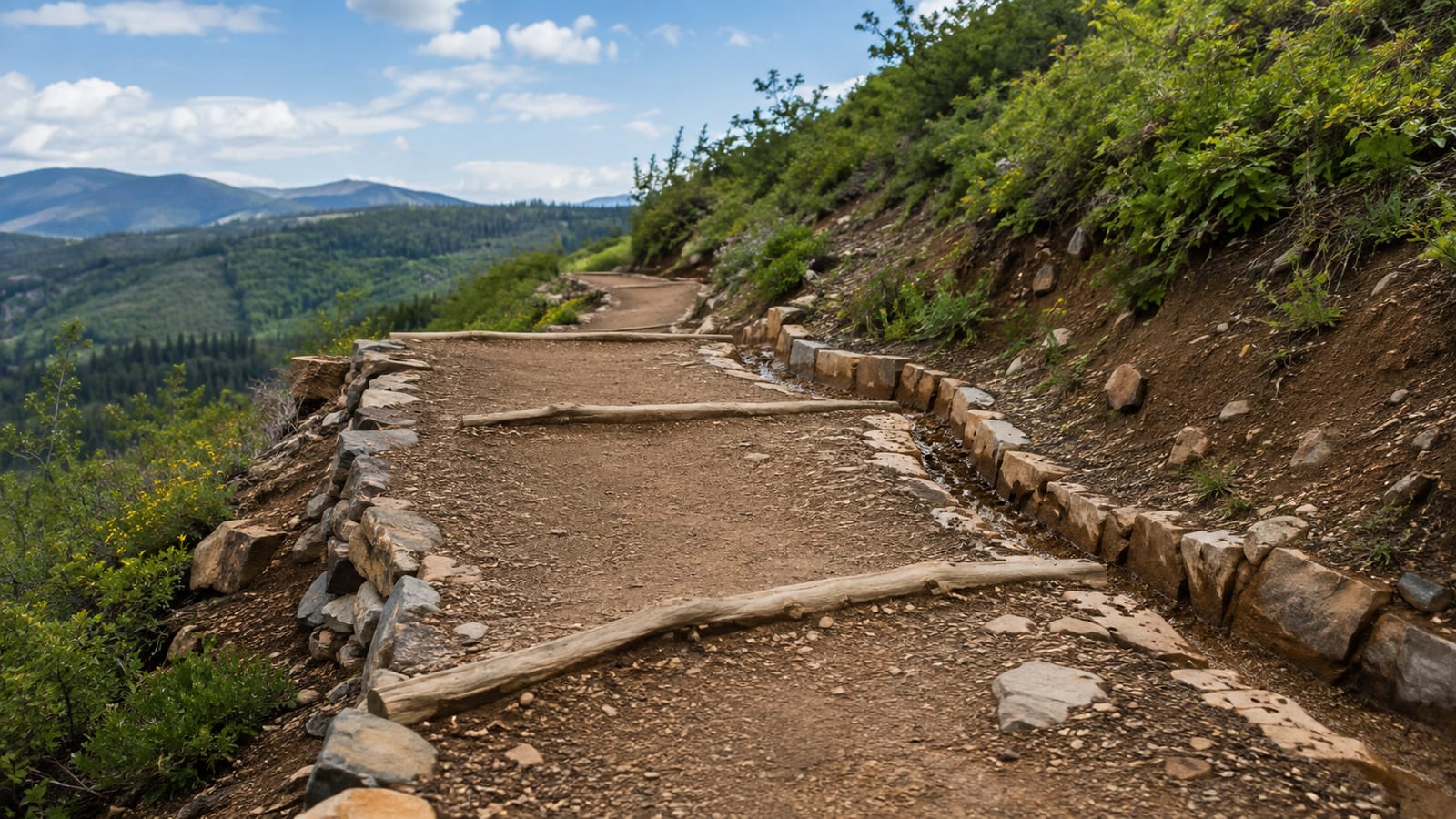
Switchbacks slow and redirect water. That’s the main reason they protect a hillside.
A straight trail up a steep slope gives rainwater a clean downhill channel. Water picks up speed, strips soil, and cuts a rut. Hikers then step around the rut, widening the damaged area. The trail gets rougher, and the water gets a bigger trench to follow.
A well-built switchback changes that pattern. The trail crosses the slope at a lower grade, and drainage features move water off the tread before it gathers force.
Good switchback drainage may include:
- Outsloped tread that sheds water toward the downhill edge.
- Water bars or grade reversals that interrupt flow.
- Ditches that move runoff away from the walking surface.
- Stable rock or gravel on wet sections.
- Retaining structures that hold the trail bench in place.
- Vegetation left undisturbed above and below the trail.
The goal isn’t to keep the trail dry in every storm. That sounds better on a hang tag than on a wet mountain. The goal is to keep water from turning the trail into a pipe aimed downhill.
For more on the same problem, see this guide to what causes trail erosion.
Trail crews and maintenance
Land agencies usually manage the route, standards, permits, and long-term plan. Trail crews then build or repair the tread, drains, turns, and retaining work.
Conservation groups and trained volunteers often handle clearing, drainage repairs, tread work, and small reroutes. Their work can look minor from the trail, but a blocked drain can send the next storm across the tread.
Maintenance crews watch for:
- Washed-out turns.
- Loose retaining rocks.
- Deep ruts.
- Clogged drains.
- Fallen trees and branches.
- Slumping soil on the downhill edge.
- Informal shortcuts between turns.
- Trail widening from hikers avoiding mud.
A reroute may be needed when the original alignment cannot shed water or hold a stable bench. Closing the old route also matters. If crews leave it open, hikers may keep using it and defeat the repair.
Switchback construction
Construction starts with the hillside, not the desired view. Crews choose an alignment that can hold a stable tread and move water without sending it into the next turn.
The main work usually follows this order:
Plan the route.
Crews study slope grade, soil, rock, drainage, exposure, access, and expected use. They mark turns and landings before cutting into the hillside.Cut the bench.
A bench is a trail platform cut across the slope. Crews remove enough soil and rock to create a stable walking surface, while avoiding unnecessary disturbance.Shape the tread.
The trail needs a firm, predictable surface with enough slope to shed water. A flat, soft tread can collect mud. A steep, loose tread can become a chute.
What makes a switchback turn hold up?
Build the turns.
Each turn needs a stable landing and a corner that can handle foot traffic. A sharp corner with no room to stand becomes a bottleneck and invites people to step outside the tread.Add drainage.
Crews install drains, water bars, grade reversals, or outsloping as the terrain requires. Drainage is not an optional finishing touch. It’s what keeps the first heavy storm from undoing the work.Support weak slopes.
Retaining walls, rock structures, and other support may hold the downhill edge. These features keep the trail from slumping when soil moves or water rises.Surface the trail.
Crews may use packed soil, rock, gravel, or local materials that match the conditions. The surface must handle boots, mud, runoff, and repeated traffic.Maintain the alignment.
Drains clog. Rocks shift. Vegetation grows into the tread. Crews return to clear, rebuild, and close shortcuts before small failures become expensive repairs.
The finished trail should feel almost obvious under your feet. That’s the mark of good construction. You notice the climb, not the engineering.
Why hikers cut switchback corners?
Cutting a corner feels faster because the next section looks close. The turn may also feel slow, especially when you can see the trail above you.
Common reasons include:
- Impatience with repeated turns.
- A belief that the shortcut saves meaningful time.
- A dry-looking slope that appears strong enough.
- Following another hiker who already left the tread.
- Avoiding mud, snow, or a puddle on the official path.
- Mistaking the shortest line for the easiest line.
That last mistake causes plenty of trouble. The direct line is usually steeper than the trail, and it often has worse footing. Loose dirt slides under your shoes. Rock breaks away. Wet grass hides holes. The shortcut can cost more effort than the turn.
One person stepping across a corner may not seem serious. Repeated foot traffic strips away plants and exposes soil. After that, rain has an open route downhill.
Damage from cutting corners
A shortcut widens the trail beyond the designed tread. It also creates a second route for water, which can become an erosion channel.
The damage builds in stages:
- Boots crush plants and loosen the surface.
- Bare soil loses root support.
- Rainwater follows the new path.
- The shortcut deepens into a rut.
- Hikers step wider to avoid the rut.
- The damaged area spreads across the slope.
- Crews must rebuild, block, or reroute the section.
Cutting can also destabilize the inside and outside edges of a turn. On steep ground, that means loose rock, collapsing soil, and a greater risk of slipping.
A shortcut may save a few steps. It can force crews to carry tools, stone, and fill back to the site for repairs. That’s a poor trade for your feet and an even worse one for the trail.
Keep your boots on the marked tread. For more trail-conservation guidance, read how to reduce erosion while hiking.
Safe and efficient hiking
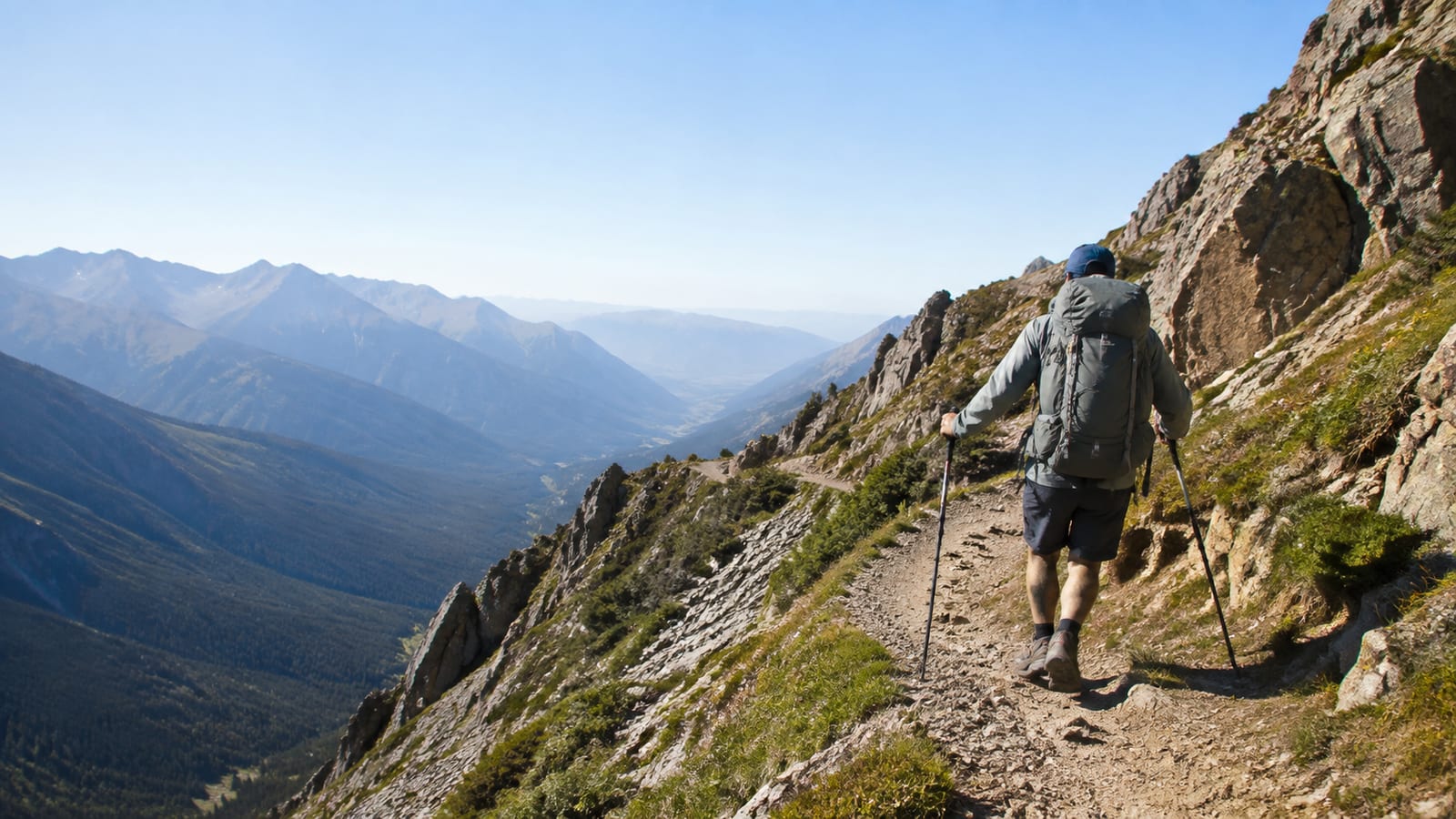
Use these steps on both climbs and descents:
What should you do on each turn?
Settle into a steady pace.
Start slower than your trailhead enthusiasm suggests. A pace you can hold across many turns beats a hard opening effort followed by long stops.Take short steps.
Short steps keep your center of balance over your feet. They also reduce slipping when the tread is loose, wet, or covered in small rock.Stay on the tread.
Walk the full turn, including the landing. Never cross the inside corner, even when the shortcut looks dry and harmless.Watch the surface before the view.
Scan for mud, roots, loose rock, ice, and exposed edges. Look up often, but don’t let the scenery choose your next foot placement.Use traction that matches the trail.
Shoes with a secure fit and useful tread matter more than stiff-looking footwear. In mud or wet rock, slow down before your feet start sliding.Use poles with control.
Plant them where they won’t roll or punch into loose soil. On a descent, poles can help with balance and braking, but they won’t fix poor foot placement.Lean into the slope when appropriate.
Keep your body balanced over the trail instead of reaching downhill around a turn. On exposed sections, face the direction of travel and keep your steps deliberate.Give uphill hikers room.
If you’re descending, move to a safe widening or landing and let climbers pass. Don’t stop on the outside edge of a narrow turn.Pause in safe places.
Stop on a landing or a wider section, not in the middle of a blind corner. Keep your pack and poles clear so others can pass.Reassess at each turn.
Check your breathing, footing, weather, and remaining water. A switchback can hide what comes next, so don’t assume the next section matches the last one.
Steady steps and a clean line are the efficient way to hike switchbacks. Rushing the corners creates slips, pack rub, and trail damage without giving you a useful return.
For steep descents, use these downhill hiking techniques. If the tread turns rocky, these foot-placement techniques matter more than buying stiffer boots.
When a switchback feels too steep or exposed
Stop before you lose control. Put both feet on stable ground, slow your breathing, and decide whether the problem is fatigue, trail conditions, exposure, or a poor equipment choice.
Then use the simplest fix available:
- Shorten your steps.
- Tighten your shoe laces if your feet are sliding.
- Put on traction if conditions call for it.
- Use poles for balance.
- Wait on a safe landing for another hiker to pass.
- Avoid stepping onto loose outside edges.
- Turn around if the route exceeds your comfort or ability.
Don’t let a visible upper section talk you into a bad move. A trail that feels manageable on dry rock may feel different with wind, mud, ice, heat, bugs, or a heavy water carry.
A switchback isn’t a test of stubbornness. If you can’t keep your feet, pack, and breathing under control, reach a safe bailout point and turn back.
Lessons from trail design
Switchbacks show the difference between a trail that looks direct and one that works. The shortest route often creates the steepest grade, the worst drainage, and the most strain after mile 10.
Good trail design gives you:
- A climb you can pace.
- A surface that sheds water.
- Turns with room to stop and pass.
- A route that holds up under regular use.
- Fewer reasons to step onto fragile slope.
That’s why trails use switchbacks and why you should hike them as built. The turns protect the hillside, but only if hikers use the full alignment.
FAQ
Are switchbacks harder than walking straight uphill?
They take longer because they add distance, but the grade is easier to manage. Most hikers find the steady effort less punishing than a direct climb with the same elevation gain.
Should you walk across the entire width of a switchback?
Stay within the maintained tread, but don’t hug one edge without a reason. Use the firmest surface available and avoid brushing against the downhill edge or widening the trail.
Can you run downhill on switchbacks?
Running is a poor choice on steep, loose, or exposed turns. It reduces your time to react and makes a slip more serious. Walk until the surface is wide, firm, and predictable.
Why do some switchbacks have stone walls?
Stone walls support the trail bench where the hillside cannot hold the tread alone. They also help keep the walking surface from slumping downhill, but they still need drainage and regular repairs.
Are all zigzag trails called switchbacks?
No. Some are climbing turns with wider curves and gentler grades. A switchback usually has a sharper reversal and a relatively level landing where the trail changes direction.
