
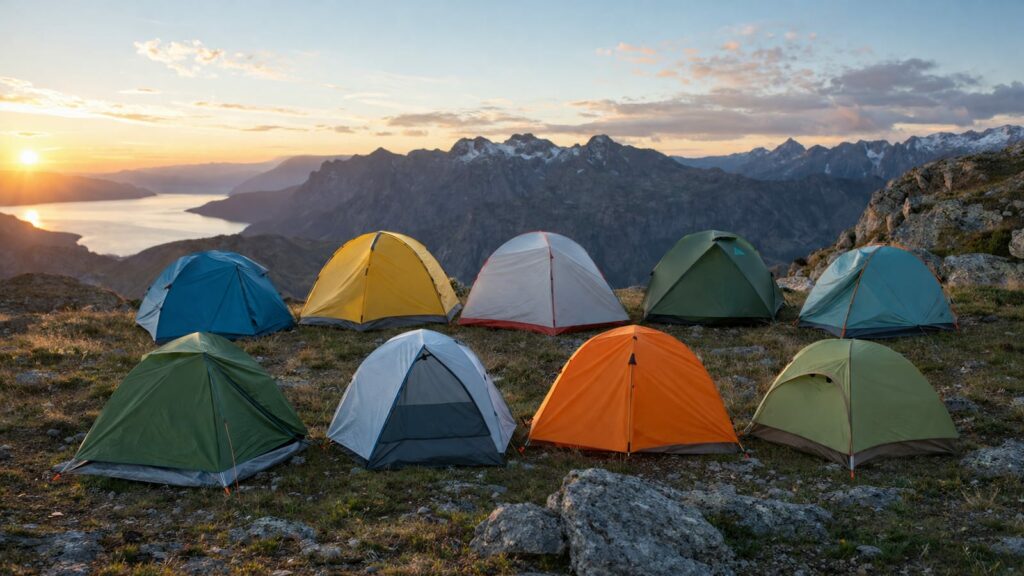
Most hikers should just buy the REI Co-op Passage 2 and stop scrolling. It's freestanding, it keeps rain out, and it packs small enough to earn its spot in a loaded bag. Of the top 10 best hiking tents under $200, it's the safest bet across the widest range of trips. Gram-counters who won't compromise on weight should grab the Naturehike Cloud-Up 2 instead, and anyone camping in real storm country needs the Marmot Tungsten 2P. Buy the wrong one and you don't just lose money. You lose sleep, which is worse after mile 10.
Last updated: 2026-07-28
Which of the Top 10 Best Hiking Tents Under $200 Earns Its Place in Your Pack?
Here's the ranking, sorted by who each tent actually suits. No tent on this list does everything. That's fine. You're not buying everything.
| Tent | Fits | Weight class | Best for | Call |
|---|---|---|---|---|
| REI Co-op Passage 2 | 2 | Moderate | Most day-and-weekend hikers | Best overall |
| Naturehike Cloud-Up 2 | 2 | Light | Solo gram-counters | Best ultralight |
| Marmot Tungsten 2P | 2 | Moderate | Ugly forecasts | Best storm tent |
| Kelty Late Start 2 | 2 | Moderate | Beginners, tired hikers | Easiest pitch |
| ALPS Mountaineering Lynx 2 | 2 | Heavier | Rocky, brushy terrain | Most durable |
| Kelty Wireless 3 | 3 | Heavier | Small groups | Best 3-person |
| Coleman Sundome 4 | 4 | Heavy | Families, base camp | Best 4-person |
| Teton Sports Mountain Ultra 1 | 1 | Very light | Through-hikers | Best solo ultralight |
| Eureka Midori Plus 2 | 2 | Moderate | Humid summer nights | Best ventilation |
| Clostnature Lightweight 2P | 2 | Light | Truly tight budgets | Best value ultralight |
The REI Co-op Passage 2 wins because it makes no dumb tradeoffs. It stands up on its own poles, so a bad campsite full of roots and rock doesn't defeat it. The fly keeps steady rain out, the two doors mean you don't crawl over your partner at 2 a.m., and it packs down without a fight. It isn't the lightest here. It's the one I'd hand a friend who wants one tent for most trips and no regrets.
What Weight and Waterproof Ratings Actually Mean After Five Miles
A waterproof rating is measured in millimeters of water pressure the fabric holds before it leaks. That's the hydrostatic head. Higher numbers hold up longer under a driving storm and under the weight of your knees and elbows on a wet floor.
For most three-season trips, a mid-range fly keeps you dry. A high-rated fly is storm insurance you pay for in dollars and, sometimes, in a slightly stiffer, heavier tent. Don't chase the biggest number for a two-night trip in June.
Packed weight is where budget tents get honest. Under $200 you carry more grams than a rich hiker does. To see the ceiling, a Big Agnes Copper Spur HV UL3 runs about $650 and a SlingFin Portal 2 about $610. A Durston X-Mid 2 weighs about 1.9 pounds. That's what real money and real weight savings look like, and it's a different budget.
So read a spec sheet like this: a low weight and a high waterproof number rarely come cheap together. Under $200, you pick which one matters for your trip. That's the whole game.
The Ultralight Picks: Light Enough Without Falling Apart
The Naturehike Cloud-Up 2 is the ultralight tent to beat under $200. It comes in just under three pounds packed, with a silicone-coated fly that sheds water better than its price suggests. The catch is the thin floor. Use a groundsheet, watch for sharp rock, and it'll last for years of careful use.
The Teton Sports Mountain Ultra 1 is the solo through-hiker's pick, coming in under two pounds. It pitches with trekking poles on some setups, which saves you carrying dedicated tent poles. That's real weight off your back on a long trail. It's snug, so tall hikers should measure before they buy. For more one-person options, see our guide to ultralight tents for solo hikers.
The Clostnature Lightweight 2-Person is the value play when the budget is truly tight. It uses thin silnylon to hit a low weight for little money, which leaves cash for food, fuel, and a permit. Silnylon sags a bit when wet, so you re-tension the guylines after rain starts. That's the tax on cheap and light. Pay it and it's a lot of tent for the price.
Which Tent Holds Up When the Forecast Turns Ugly?
The Marmot Tungsten 2P is the one I'd trust when the sky looks mean. Its reinforced pole geometry keeps the walls from caving when wind leans on them, and the high-rated fly holds off a steady soaking. Two doors and two vestibules give you room to stash wet gear without dragging it inside.
It's not the lightest here, and you feel the extra grams on a long carry. That's the trade for a tent that stays put on an exposed site when a storm rolls through. Stake it out fully and use every guyline. On sheltered summer trips you won't need all that muscle, so save it for routes where weather actually threatens you.
Room for Three Without a Morning Argument
The Kelty Wireless 3 is the three-person backpacking tent I'd actually pack. Three-person tents are where marketing lies most, but this one gives genuine floor space and two doors. Two doors means two people aren't climbing over the third to pee. It also means two vestibules for wet boots and packs.
It's heavier than a two-person tent, so split the load across the group. One carries poles and stakes, another carries the body and fly. Nobody should haul a group tent solo and resent everyone by lunch. For a trio on weekend trips, it's the right amount of tent without the price of a fancy one.
The 4-Person Question: Real Space vs Marketing Headcount
The Coleman Sundome 4 is the honest four-person tent here, as long as you're honest about what four-person means. It sleeps four adults shoulder to shoulder or two people with room to sit up and spread out gear. The headroom is the point. You can sit up and change clothes without headbutting the ceiling.
It's freestanding and heavy, so this is a base-camp or short-carry tent, not a long-haul backpacking shelter. Drive to the trailhead, walk it a mile, set up camp, and it earns its bulk. Haul it fifteen miles and you'll hate it. If you're weighing sizes, our take on two-person versus four-person tents sorts out who needs the space.
How Fast Can You Pitch These After a Long Day on Trail?
The Kelty Late Start 2 pitches fastest here, and that matters more than the spec sheet admits. Color-coded poles and a simple pole hub mean you're inside in a couple of minutes, even with cold, clumsy hands in fading light. Beginners and tired hikers should start here.
Setup speed roughly tracks pole design, and the field order looks like this:
- Easiest: Kelty Late Start 2, then Coleman Sundome 4 (dome tents pitch by feel)
- Fast once learned: REI Co-op Passage 2, ALPS Mountaineering Lynx 2
- Slower, fussier: Naturehike Cloud-Up 2, Clostnature 2P, and any trekking-pole pitch on the Teton Mountain Ultra 1
Freestanding tents forgive a bad site and a tired brain. Trekking-pole and staked tents save weight but ask for tension, tuning, and decent ground. Practice the pitch once in the backyard before you trust it in rain. A tent you can't pitch when you're wrecked is not a light tent. It's a problem.
Does the Ventilation in a $200 Tent Actually Keep You Dry Inside?
The Eureka Midori Plus 2 manages moisture best of this group. Condensation forms when warm, damp air from your breath hits a cold fly, then drips back on your bag. Dual mesh inner panels and a high-low vent design keep air moving, so the moisture leaves instead of raining on you at 4 a.m.
Most cheap tents trap condensation because the fly sits close and the vents are token. You wake up to a damp bag and blame the rain that never came. Pitch the fly with a small gap for airflow, crack a vent, and don't seal yourself in. In humid summer forests, ventilation beats a fancy waterproof number. A dry inside is the whole job.
What You Should Never Compromise On in a Cheap Hiking Tent
Cut the right corners and a budget tent is fine. Cut the wrong ones and you're wet, cold, or holding a snapped pole in the wind. Three things are not negotiable:
- Floor seams and floor fabric. A leaky floor soaks your bag from below, and you can't dry that out on trail. The ALPS Mountaineering Lynx 2 earns its weight here with a tough 68-denier floor that shrugs off rocky, brushy sites. If your tent's floor feels like a grocery bag, add a groundsheet.
- Pole material. Aluminum poles bend and can be splinted. The cheapest fiberglass poles shatter and take the trip with them. The Lynx 2 and the Marmot Tungsten 2P both use quality aluminum, and the Tungsten's reinforced geometry is why I trust it in a nasty forecast.
- Stake anchoring. Freestanding doesn't mean stakeless. In wind, an unstaked tent becomes a kite. Carry a few extra stakes and know how to guy out the fly.
Save money on trims, storage pockets, and fabric color. Never save it on the floor, the poles, or the stakes that keep the whole thing on the ground.
How Do You Match a Budget Hiking Tent to Your Actual Trip?
Match the tent to the trip, not to the review score. Start with how far you carry it and what the weather does, then work down to comfort.
- Solo, long miles, gram-counting: Teton Sports Mountain Ultra 1 or Naturehike Cloud-Up 2.
- One tent for most weekend trips: REI Co-op Passage 2. Boring, and right.
- Rough forecast, exposed sites: Marmot Tungsten 2P.
- Rocky, brushy, hard-use terrain: ALPS Mountaineering Lynx 2.
- New to this, or just want it easy: Kelty Late Start 2.
- Three people, shared load: Kelty Wireless 3.
- Family or base camp, short carry: Coleman Sundome 4.
- Hot, humid summers: Eureka Midori Plus 2.
- Broke but going anyway: Clostnature Lightweight 2P.
If you're torn on how much weight to chase, our comparison of ultralight versus regular tents lays out the tradeoffs. The short version: buy for the trips you take, not the trip you imagine. A tent that fits your real miles, your real budget, and your real weather beats any medal on a hang tag.
FAQ
Can a tent under $200 actually handle a real storm?
Yes, if you choose for it. The Marmot Tungsten 2P has reinforced poles and a high-rated fly, so it holds up when wind and rain get serious. Stake it out fully and use every guyline. A cheap tent fails in wind because people skip the guylines, not because the price was low.
How many stakes should I carry as backup?
Bring at least two or three spares beyond what the tent ships with. Stakes bend in rocky ground and vanish in the dark. A couple of extras weigh almost nothing and save a bad night when a guyline pulls loose in wind.
Is a two-person tent big enough for one person and gear?
For most hikers, yes, and it's the sweet spot. A two-person tent gives a solo hiker room to keep a pack and wet boots inside without much weight penalty. Go to a dedicated one-person tent only when you're counting every gram on long trails.
Do I need a footprint under a budget tent?
On thin-floored ultralight tents like the Naturehike Cloud-Up 2 or Clostnature 2P, yes. A groundsheet protects the floor from sharp rock and abrasion, which is the first thing to fail on cheap tents. A cut piece of polycryo or a cheap tarp works fine and costs little.
Why do budget tents get wet inside even when it isn't raining?
That's condensation, not a leak. Your breath and body heat put moisture into the air, and it collects on the cold fly, then drips. Pitch the fly with an air gap, open the vents, and don't zip yourself in tight. Better airflow keeps the inside dry.
