
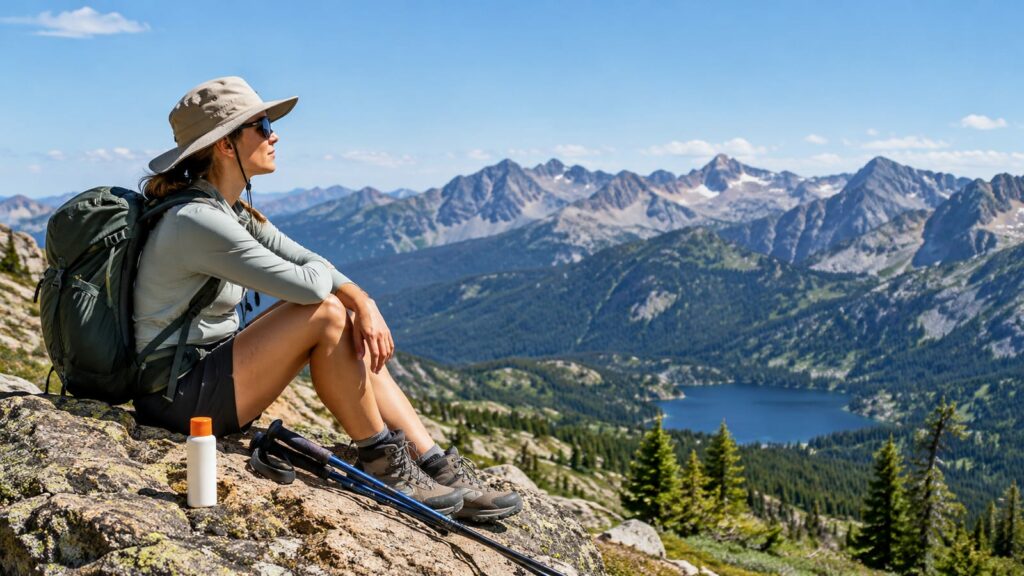
La Roche-Posay Anthelios Melt-in Milk SPF 60 is the best sunscreen for high altitude hiking, mostly because it's thin enough that you'll reapply it on a cold, windy ridge. It's water resistant and spreads fast over sweaty skin. It also skips the thick paste feel that makes people put the bottle away after one coat. Still, one lotion can't carry an alpine day alone, so pair it with a zinc stick for your nose, ears, and hand backs, and let a sun hoodie cover the rest.
What Is the Best Sunscreen for High Altitude Hiking?
Pick a water-resistant, broad-spectrum lotion you don't mind smearing on several times a day, then add a stick for the small spots. Broad-spectrum means it blocks both UVA rays, which age skin, and UVB rays, which burn it. Melt-in Milk is the top pick. Coppertone Sport is the budget workhorse, and the Neutrogena stick handles the parts lotion misses.
| Sunscreen | Format | Best for | The catch | Verdict |
|---|---|---|---|---|
| La Roche-Posay Anthelios Melt-in Milk SPF 60 | Thin lotion | Face and body on long exposed routes | Costs more than drugstore sport lotions | Best overall |
| Coppertone Sport Sunscreen Lotion SPF 50 | Lotion | Legs, arms, cheap refills | Slick, heavier feel on the face | Best value |
| EltaMD UV Sport Broad-Spectrum SPF 50 | Lotion | Hikers who hate greasy sport sunscreen | Expensive; can leave a faint white cast | Worth it if comfort decides whether you reapply |
| Blue Lizard Sensitive Mineral SPF 50 | Mineral lotion | Skin or eyes that react to chemical filters | Thicker and slower to rub in | Good mineral alternative |
| Neutrogena Sheer Zinc Mineral Sunscreen Stick SPF 50 | Stick | Nose, ears, lip edges, cheekbones, hand backs | Visible white layer; too slow for big areas | Keep it in your hip-belt pocket |
Lotions for the whole body
Melt-in Milk wins on texture more than on its number. An SPF 30 sunscreen already blocks the vast majority of UVB rays, and higher numbers block only slightly more. So the 60 on the label is a small bonus. What you're paying for is a runny lotion that covers a sweaty neck in seconds and keeps working through a climb.
Plenty of review lists crown it the best face and body sunscreen. That's a hang tag claim until you look at why it works: thin lotion gets reapplied, and thick lotion gets carried.
Coppertone Sport is the value pick for legs, arms, and the big areas that eat product. However, it feels slicker and heavier than Melt-in Milk, so it's less pleasant on your face. On your calves, nobody cares. Buy a big bottle for home and refill a small travel bottle for the pack.
EltaMD UV Sport costs more than a sport lotion should. Even so, it's worth the money if greasy sunscreen bothers you enough that you skip the second coat. It dries down better than most sport formulas and holds up to sweat, though it can leave a faint white cast.
Blue Lizard Sensitive Mineral SPF 50 is the pick if chemical filters sting your skin or eyes. Because it's mineral-only, it goes on thicker and takes longer to rub in. Give it an extra minute at the trailhead.
The stick for the small stuff
The Neutrogena Sheer Zinc stick is the one item here you'll use more than you expect. You can swipe it on your nose, ear tops, and cheekbones without coating your fingers. As a result, your pole grips stay dry. It leaves a visible white layer, which looks a little silly in summit photos and does its job anyway.
Why Alpine Sun Burns Faster Than You Expect
High-altitude sun burns faster because there's less air between you and it, and the cold hides the warning signs. UV intensity climbs steadily as you gain elevation, a little more with every stretch of vertical. That stacks up over a big climb. Meanwhile, above treeline there's nothing overhead to break it up.
The bigger problem is that alpine sun doesn't feel strong. On a cool, breezy morning, your skin never sends the hot, prickly signal it sends at the beach. Wind also dries and reddens skin, so plenty of hikers blame windburn for what is really a sunburn.
Then there's time. Summit days start early, run long, and spend hours in open terrain. For example, the Keyhole Route on Longs Peak in Rocky Mountain National Park, Colorado, tops out on a summit far above treeline. Most of that day happens in full sun with no shade to duck into.
A bad burn also makes altitude harder. Burned skin adds to fluid loss and leaves you feeling flattened, which stacks badly on top of thin air. Check the UV Index for the nearest town before you go, then assume the summit runs higher. For the rest of the trip plan, see how to prepare for high-altitude hiking.
Match Protection to the Route, Not the Forecast
Plan sun protection around how much open sky the route gives you. A "partly cloudy" forecast tells you very little about three hours on a bare ridge. Use the terrain to decide how hard to commit:
- Above treeline: Full exposure for hours. Lotion base, sun hoodie, and reapplication on a schedule.
- South-facing slopes: In the US, these take sun most of the day. Slow climbing means more time soaking it up.
- Ridges: No shade, plenty of wind, and you'll wipe sweat off your face more often. Each wipe takes sunscreen with it.
- Forest and canyons: Shade comes and goes. It's easy to skip a touch-up, then pop out at a sunny overlook for an hour.
- Cloud cover: Thin or broken cloud still lets a lot of UV through. Overcast burns are common because nobody bothers.
Treat any route with long stretches above treeline as a full-sun day, whatever the sky looks like at the trailhead.
Snow Reflection Makes the Underside of Your Face a Target
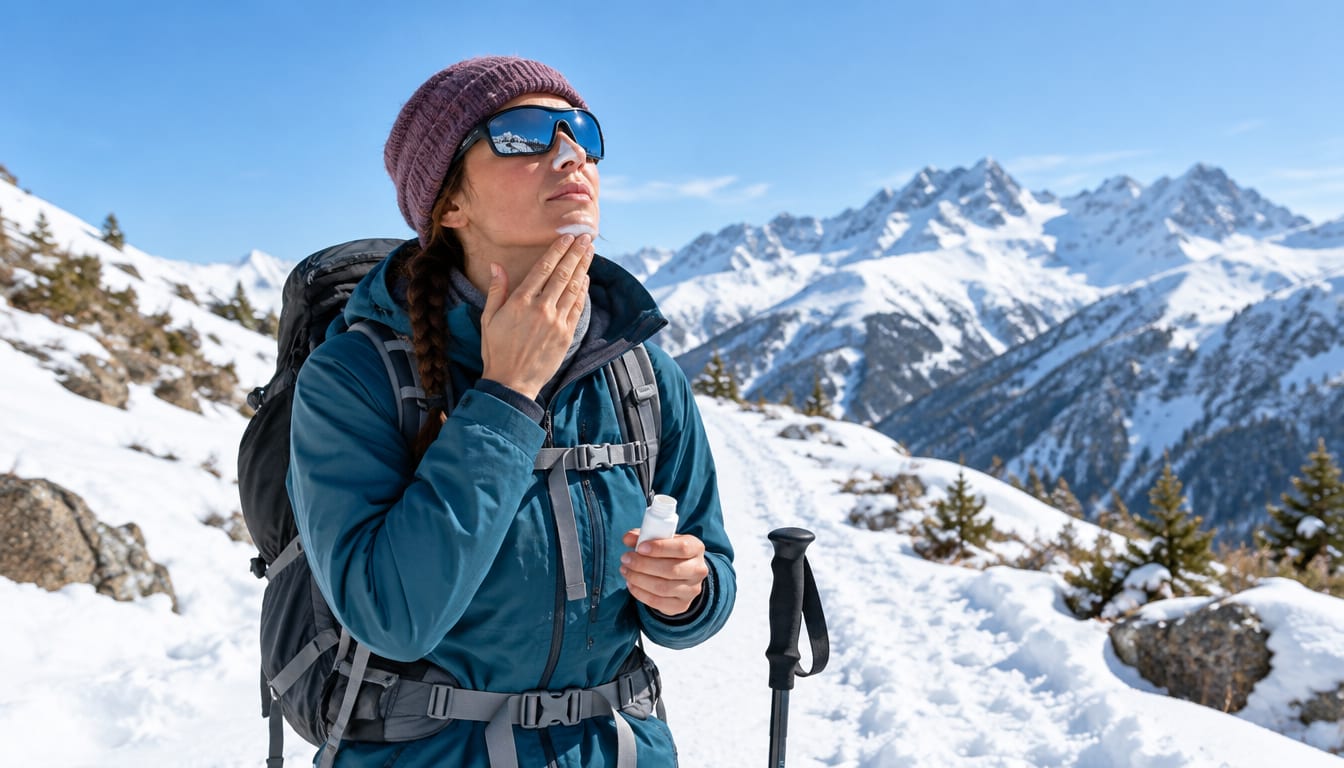
Snow bounces sunlight back up at you, so it burns places that normally sit in shadow. Water does the same thing on a smaller scale. Your hat brim does nothing about light coming from below. Cover these spots on any route with snowfields:
- Under your chin and along the jawline
- Under your nose and the edges of your nostrils
- Ear tops, ear backs, and earlobes
- The sides and back of your neck
- Lips, top and bottom
- Backs of your hands
The stick earns its weight here, since it reaches tight spots without a mess. For lips, use an SPF lip balm and put it back on after you eat or drink. Your eyes take the same reflected beating, so pair this with sunglasses that block UV on bright trails.
Lotion Is the Backbone; Sticks Solve the Trail Problems
Each format has one job, and mixing up the jobs is where coverage fails.
- Lotion: Your base layer. It covers large areas evenly, and it's easy to judge how much you used. Put it on before the hike starts.
- Stick: For small, exposed, high-burn spots. It works in wind, keeps your fingers mostly clean, and fits in a pocket.
- Spray: Skip it above treeline. Wind carries the mist away, you can't see the thin spots, and you breathe some of it in.
Sprays feel fast, which is why they're popular. On a calm day at the car, a spray on your legs is fine. Relying on a spray as your only alpine sunscreen is false economy, because you'll pay for the missed patches later.
Wind wins that argument every time.
UPF Clothing Does More Work Than Another Layer of Sunscreen
UPF stands for Ultraviolet Protection Factor, the clothing version of SPF. A long-sleeve sun hoodie covers your arms, neck, and part of your head, and it never needs reapplying. It also doesn't sweat off or smear onto your gear. That's the best trade on this whole page.
Build out from the hoodie. A collared shirt guards the back of your neck if you prefer buttons. A wide brim helps too, and our guide to hiking hats for sun protection covers which styles stay on in wind. Add a neck gaiter for snow days and light sun gloves, since your hands sit in full sun on trekking poles all day.
There's one catch. Thin fabric lets more UV through when it's stretched tight or soaked. So go loose rather than skin-tight, and pick a fabric that dries quickly. Our roundup of breathable shirts that dry fast helps if heat is your worry.
Build a Sun System That Survives Sweat, Wind, and Miles
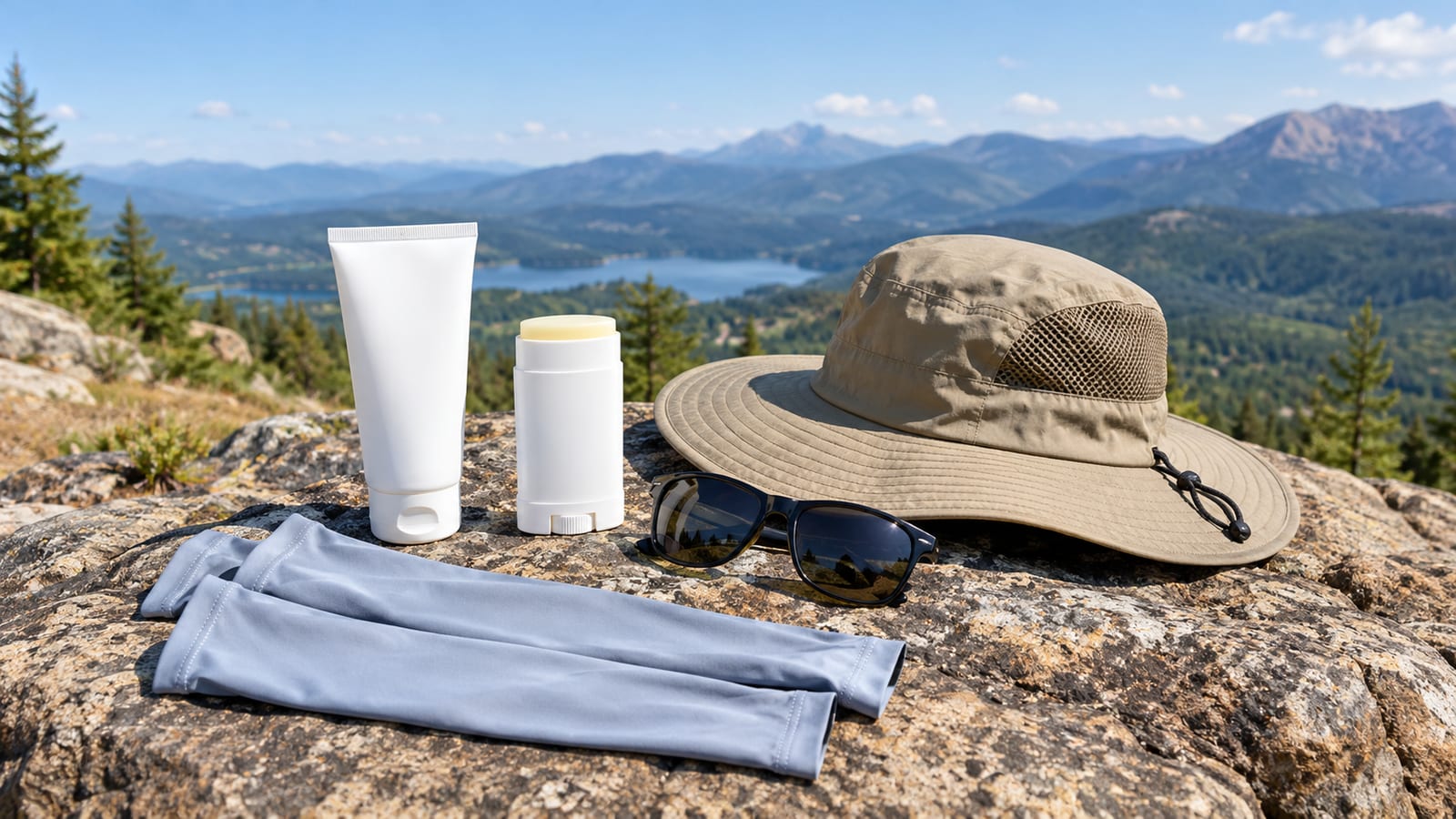
The less bare skin you leave, the less sunscreen you have to manage. Here's how to cover each zone:
- Face: Lotion at the trailhead, stick on the nose and cheekbones, and a brim or hood.
- Ears and neck: A hood or gaiter, plus the stick on ear tops.
- Hands: Sun gloves, or the stick on the backs of your hands.
- Arms and torso: A sun hoodie. No sunscreen needed under it.
- Legs: Pants solve it. Shorts mean full lotion coverage and regular touch-ups.
- Ankles and feet: The strip between your sock and your shorts hem burns easily. So do the tops of your feet if you wear sandals at camp.
This setup holds up after mile 10 because most of it is fabric. Your sunscreen only has to cover your face, hands, and whatever you left open.
How Much Sunscreen Should You Put On Before the Trailhead?
Use more than feels reasonable, and put it on before you step into the sun. Most people spread a thin coat, which gives less protection than the label promises. A rushed swipe in the parking lot also misses spots. Run this routine instead:
- Put lotion on at home or in the car, before you leave the shade.
- Do the face twice. Apply one coat, let it set while you lace up, then add a second.
- Hit the spots people forget: ears, the back of your neck, your hair part, and the tops of your feet.
- Add SPF lip balm.
- Wipe your hands before you grab poles or a steering wheel.
That second face coat matters most. It fills in what the first pass missed, and your face takes the most sun on any climb.
When Should You Reapply on a High-Altitude Hike?
Reapply at least every two hours, and sooner on snow, in heavy sweat, or after you wipe your face. The two-hour line is official. Under FDA sunscreen rules, products can't claim protection for more than 2 hours without reapplying unless they submit evidence and get FDA approval.
Water-resistant labels list a time limit. Once you've sweated hard for that long, the coat is mostly gone, so treat the label time as a reset. On snow or fully exposed ridges, touch up the stick spots even earlier.
The easiest system is to tie it to your breaks. Above treeline, every snack stop and summit photo becomes a sunscreen stop. If you hike straight through, set a timer on your watch.
How to Reapply Without Greasy Hands and Slippery Gear
Greasy pole grips slip on descents, and sunscreen fingers make trail mix taste like a pharmacy. A clean routine avoids both:
- Stop, stow your poles, and pull off your gloves.
- Use the stick for your nose, ears, lip edges, cheekbones, and hand backs.
- Use a small travel bottle of lotion for your neck, arms, and legs. Dot it on, then spread with your fingertips.
- Wipe your hands on a bandana or a wipe before you touch poles, food, or your phone.
- Keep the stick and bottle in a hip-belt or shoulder-strap pocket, so you never have to open the pack.
That last step matters more than the brand. If reapplying means digging through your pack, you'll put it off until the next stop, and then the one after that.
The Mistakes That Turn a Good Sunscreen Into a Bad Hiking Choice
Most alpine burns come from habits, and the bottle usually isn't the problem. Watch for these:
- Low SPF: Treat SPF 30 as the floor for exposed terrain. The low-SPF tanning oil from the back of the closet doesn't belong on a summit day.
- Expired bottles: Sunscreen loses strength over time. Check the date and replace anything past it.
- Spray-only coverage: It leaves gaps you won't see until they're red.
- Missed scalp and lips: Your hair part burns fast under a mesh cap, and lips crack painfully once they burn.
- A sunscreen you hate: Thick, sticky, or stinging formulas never get reapplied.
The best formula on the shelf does nothing in a closed pocket.
FAQ
Is mineral or chemical sunscreen better at altitude?
Either works if it's broad-spectrum and you keep putting it on. Mineral formulas use zinc oxide or titanium dioxide and sit on top of your skin. They tend to sting less around the eyes but feel heavier. A common split is mineral on the face and a chemical lotion on arms and legs.
Why does sunscreen sting my eyes on steep climbs?
Sweat carries lotion from your forehead down into your eyes. Try a mineral stick on your forehead instead of lotion, and wear a sweatband or a brim that keeps drips off your face. Wipe sweat outward toward your temples rather than down across your eyes.
Is a moisturizer or makeup with SPF good enough for a summit day?
No. Those products usually go on in a thin layer and rarely hold up to hard sweating. They're fine for a walk to the coffee shop. Above treeline, use a real water-resistant sunscreen underneath or skip the makeup.
Does sunscreen still work after it freezes in a cold car or pack?
Check it before you trust it. If the lotion has separated, turned grainy, or smells off, replace it. On cold mornings, carry your trail bottle in an inside jacket pocket so it stays warm enough to spread.
