
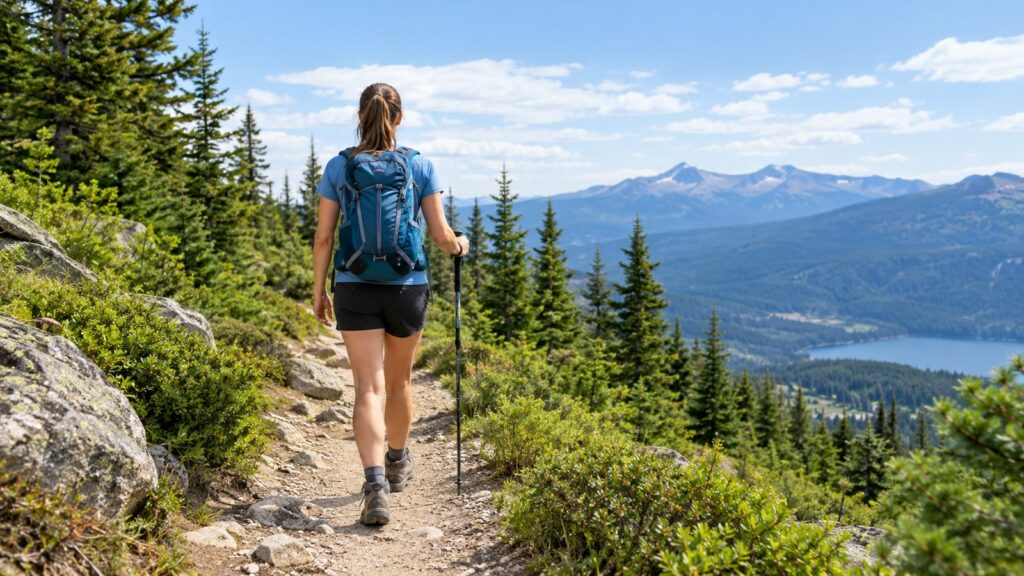
A good hot-weather hiking shirt does two things. It pulls sweat off your skin, and it dries before the wind on the next ridge makes it cold. Of the 6 breathable shirts for hiking below, the Outdoor Research Echo T-Shirt is the best all-around pick for hot, humid trail miles because it's thin, airy, and quick to dry. The Columbia Silver Ridge Utility Lite Long Sleeve is the value pick and the better choice when you want sleeves, a collar, and pockets. On open, sunny routes, wear a sun hoodie instead of asking a tee to block the sun.
Last updated: 2026-10-20
Which 6 breathable shirts for hiking are worth buying?
These six are worth your money. The ratings reflect how each shirt handles warm, sweaty miles under a daypack, because that's where most shirts fall apart.
| Shirt | Best for | Airflow | Sun coverage | Dry time | Price |
|---|---|---|---|---|---|
| Outdoor Research Echo T-Shirt | Humid climbs, shady trails | Excellent | Low (short sleeves) | Very fast | Varies |
| Patagonia Capilene Cool Daily Shirt | Everyday miles, repeat wear | Very good | Low | Fast | Around $49 |
| Columbia Silver Ridge Utility Lite Long Sleeve | Exposed trails on a budget, bugs, travel | Good, better with sleeves rolled | High | Fast | Varies, often on sale |
| Mountain Hardwear Sunshield Hoody | Desert, alpine, and snow routes | Good | Highest (hood and sleeves) | Fast | Around $110 |
| REI Co-op Sahara Shade Hoodie | Sun coverage on a budget | Good | High | Fast | Around $60 list |
| Rab Force Tee | Fast hiking at a near-running pace | Very good | Low | Very fast | Varies |
If you only buy one, choose the Echo for shade and humidity, or the Columbia for sun. The two hoodies are for trails where the sun is a bigger problem than the heat.
What makes a hiking shirt breathable and fast-drying?
A shirt breathes when warm, damp air can get out. That happens through the fabric itself and through the gaps at the hem, cuffs, and collar. A shirt dries fast when the fibers hold very little water to begin with. Wicking is the step in between: the fabric spreads sweat over a wider area so it can evaporate.
Five things decide how a shirt feels after mile 10:
- Fabric weight: Thin fabric holds less water and dries sooner. A featherweight tee can dry on a short break, while a heavier knit stays damp until camp.
- Weave or knit: Open, gridded, or slightly see-through knits let air move. Dense, flat fabric blocks air and feels clammy.
- Fit: A loose cut leaves an air gap that vents heat out the hem and collar. A tight shirt soaks against your skin and has nowhere to vent.
- Vents: Back vents only help when your pack isn't sitting on them. Side and underarm vents keep working with a pack on.
- Fiber: Polyester and nylon absorb very little water. Cotton soaks it up and holds it.
Read every "cooling technology" hang tag claim twice. Some wicking treatments are coatings that fade after enough washes. Fabric that dries fast on its own keeps doing it, which is why the best moisture-wicking hiking shirts are usually plain synthetics with no special story.
Hiking shirt material: synthetics, merino, and blends
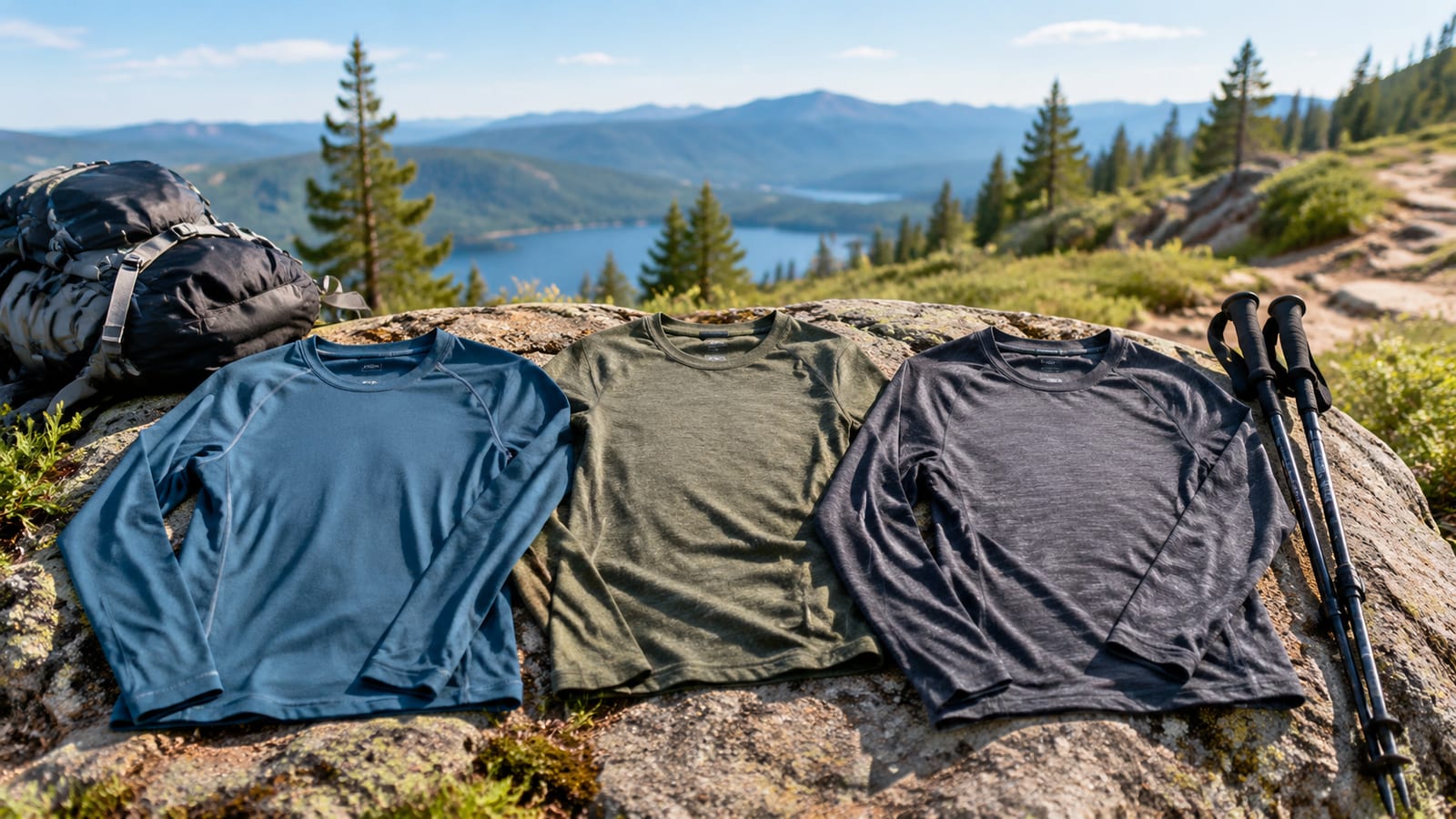
Synthetics are the right default for hot hiking. Polyester and nylon pull moisture away from your skin so it can evaporate, and they hold very little water while they do it. Polyester usually dries fastest. Nylon feels less clingy when wet and holds up a little better against brush and pack straps.
Merino is the pick for odor control. Wool wicks moisture and keeps you warm even when wet. That's great on a cold morning and less great on a humid afternoon climb, and wool dries more slowly than thin polyester.
Blends split the difference. For example, the Ibex Paradox Long Sleeve Tee mixes 45% merino, 45% Tencel, and 10% nylon, and costs close to a hundred dollars. That money buys fewer smells on day four, not faster drying.
The Smartwool Active Ultralite Short Sleeve is another merino and Tencel blend. In reviewer testing, it wicked sweat and stayed comfortable in temperatures below 83 degrees. Treat that as a useful ceiling: above it, on a sticky climb, a synthetic tee will feel better.
Cotton absorbs sweat, holds onto it, and leaves you wet. That's uncomfortable in heat and risky when a storm or a breezy summit cools you fast. Keep the cotton tee for the drive home.
Here's how the materials compare:
- Polyester knit: Fastest dry time. Smells sooner on back-to-back days.
- Nylon woven: Best for button-ups and brushy trails. Less clingy when soaked.
- Merino or merino blend: Best for multi-day trips and cool starts. Slower to dry.
- Cotton: Skip it for anything longer than a shaded stroll.
For a closer look at the wool-versus-plastic question, read our guide to merino vs synthetic base layers.
What are the most breathable hiking shirts for summer trails?
The most breathable hiking shirts for summer trails are thin synthetic tees with a loose cut, led by the Outdoor Research Echo T-Shirt and the Rab Force Tee. Both use featherweight fabric that lets air through and dries fast. The Patagonia Capilene Cool Daily Shirt is close behind and a bit tougher for everyday use.
Still, thinner isn't automatically cooler. A thin shirt that clings feels hotter than a slightly heavier one that hangs loose, because the loose one keeps an air gap. If a tee sticks to your stomach when you bend over at a water stop, size up or pick a looser cut.
Sun exposure also changes the answer. On a shaded forest trail, bare arms shed heat well, so a tee wins. On a desert or ridgeline route with no shade, a light long sleeve often feels cooler by afternoon because the sun isn't cooking your skin. Our guide on what to wear hiking in extreme heat covers that tradeoff in more detail.
Hiking shirts for heat and humidity
Humidity slows every shirt down. Sweat evaporates poorly when the air is already wet. As a result, the best shirt for sticky heat is the one that holds the least water and touches your skin the least.
Look for these in hot, humid conditions:
- Cling resistance: A slightly textured or gridded fabric sits off your skin. Smooth stretch jersey sticks when soaked.
- Underarm and side airflow: These spots stay open under a pack, so vents there keep working.
- Light colors: They reflect sunlight and feel cooler in direct sun.
- Short dry time: A shirt that's still soaked when you stop will chill you at the summit or the bailout point.
Your pack is the part nobody puts on the spec sheet. The back panel and shoulder straps cover a big chunk of your torso, so the fabric there stays wet whatever the shirt is made of. A fast-drying shirt still matters, because it recovers at every break instead of staying soggy until camp.
If you hike through steamy summers often, the Outdoor Research Astroman Air Short Sleeve Shirt deserves a look. Hikers in hot, humid mid-Atlantic states rated it ideal for the steamiest conditions. Its fabric is 85 percent recycled nylon with spandex, it doesn't pill under pack straps, and it's rated UPF 30-50+. However, it costs $105, about twice what a good tee costs, so buy it only if humid miles are your normal.
Best hiking shirts for hot weather: the picks in detail
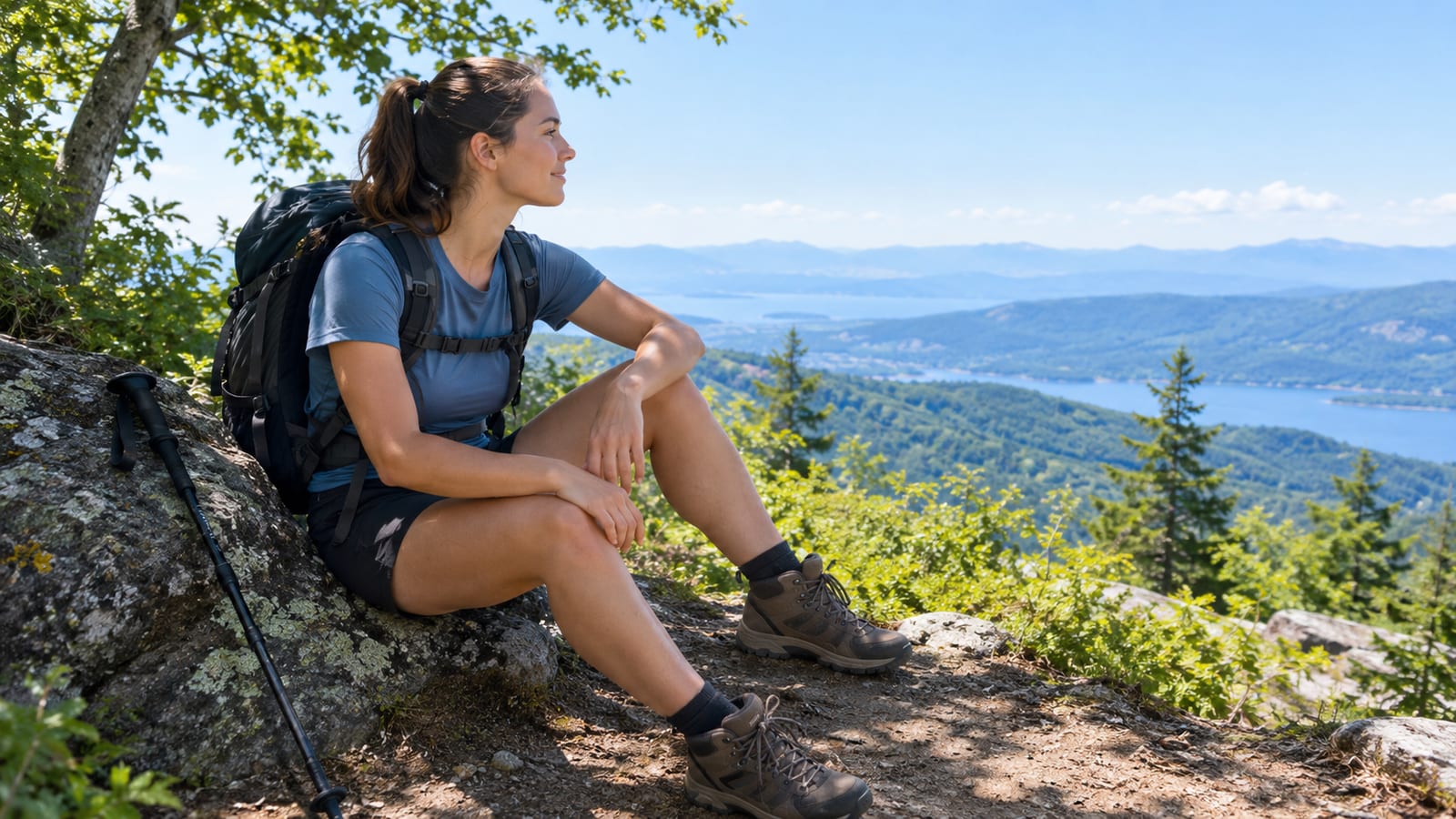
Each pick below earns its place for a specific kind of trail. None of them does everything, so match the shirt to the route.
Outdoor Research Echo T-Shirt: best overall
The Echo is the shirt to grab for hot, sweaty miles. The fabric is thin enough that you mostly forget you're wearing it, and it's one of the fastest-drying shirts you can buy. It also packs down to almost nothing, so it adds next to no pack weight.
The weak spot is sun. The Echo line is built for airflow, and even the Echo Hoodie is rated only UPF 15. On exposed routes, plan on sunscreen or a sun hoodie. The thin fabric also snags on brush more easily than a woven shirt.
- Keep it for: humid climbs, shaded trails, fast summer day hikes.
- Skip it if: your route is above treeline or in open desert.
Patagonia Capilene Cool Daily Shirt: best for repeat wear
The Capilene Cool Daily uses soft polyester that's 50 to 100 percent recycled, depending on the style. It wicks sweat and dries fast, as any good synthetic should. It also feels good against your skin on day three, which matters more than it sounds.
It has picked up a best-synthetic-tee award. Awards are only a starting point, but here the reason is simple: it does the basics well at a fair price.
There's one catch. One review lists it with no UPF rating, so don't count on it for shade. Polyester also holds odor faster than merino on back-to-back days, so rinse it at camp. It suits hikers who want one tee for the trail, the gym, and the drive into town.
Columbia Silver Ridge Utility Lite Long Sleeve: best value
A button-down gives you controls a tee doesn't have. You can open the front, roll the sleeves, and flip up the collar against the sun. The Utility Lite is 100% recycled polyester and uses Columbia's Omni-Wick fabric, which pulls sweat to the surface to evaporate. It's also rated UPF 50, and the chest pockets hold a map or a snack.
The woven fabric breathes less than a thin tee when it's fully buttoned, though. The back vent does nothing under a framed pack, and button-down shoulder seams can sit right under your straps. Check that with your loaded pack on before a long day.
- Keep it for: sunny trails on a budget, buggy evenings, travel days.
- Skip it if: you hike shaded, humid routes where a tee breathes better.
Mountain Hardwear Sunshield Hoody: best for intense sun
The Sunshield is the call for desert, alpine, and snowfield routes where the sun hurts more than the heat. It's rated UPF 50, and the hood and long sleeves cover what sunscreen misses: neck, ears, and forearms. It has also been named a top sun layer and described as airy and weightless.
"Airy and weightless" sounds better on a hang tag than on a long exposed climb. Any hooded long sleeve builds heat on a hard push, so you're trading some airflow for shade. It costs more than the REI hoodie below. If you hike exposed routes several times a summer, it earns its price. If you don't, the REI hoodie below covers most of the same ground.
REI Co-op Sahara Shade Hoodie: best value sun hoodie
The Sahara Shade uses a stretchy knit that's mostly polyester with a little spandex. It wicks sweat and dries fast. The men's version has a fabric weight of 150 grams per square meter, which makes it a little more substantial than a featherweight tee: slightly warmer, but tougher under straps. REI rates the women's version UPF 50+.
It's a good fit for slower exposed miles, paddling days, and anyone who wants sun coverage without paying for the Sunshield. Skip it for fast, humid hiking. The spandex that makes it comfortable also makes it cling a bit when soaked.
Rab Force Tee: best for fast-moving hikers
The Force Tee is a light synthetic tee for people who hike close to running pace. Sweat moves through it quickly, it weighs very little, and it leaves your shoulders free for poles and scrambling. If you count ounces and cover big trail miles with a small pack, it's a strong choice.
It gives you no real sun coverage, and very thin fabric takes a beating under a heavy pack. Try it with your loaded pack before a big trip. If it hugs your torso, size up.
How fit and range of motion affect trail comfort
Fit decides whether a good fabric actually works. A shirt that's tight across the back has no air gap, so sweat pools against your skin and stays there. In other words, the same fabric feels hotter and wetter in a size too small.
Check these before you trust a shirt on the trail:
- Shoulders: Seams moved off the top of the shoulder cause less pack rub under straps.
- Reach: Raise both arms overhead. The hem shouldn't ride up past your waistband.
- Hem length: A longer hem stays under your hip belt and keeps sun off your lower back.
- Sleeves: Long sleeves should reach your wrists when you swing poles. Short sleeves shouldn't bind at the biceps.
- Layering room: In shoulder-season, you may wear a wind shell or fleece over it, so leave a little room.
Pack rub can ruin a shirt that felt fine in the store. Always test fit with your real pack loaded the way you carry it.
Sun protection: which UPF ratings matter on exposed trails?
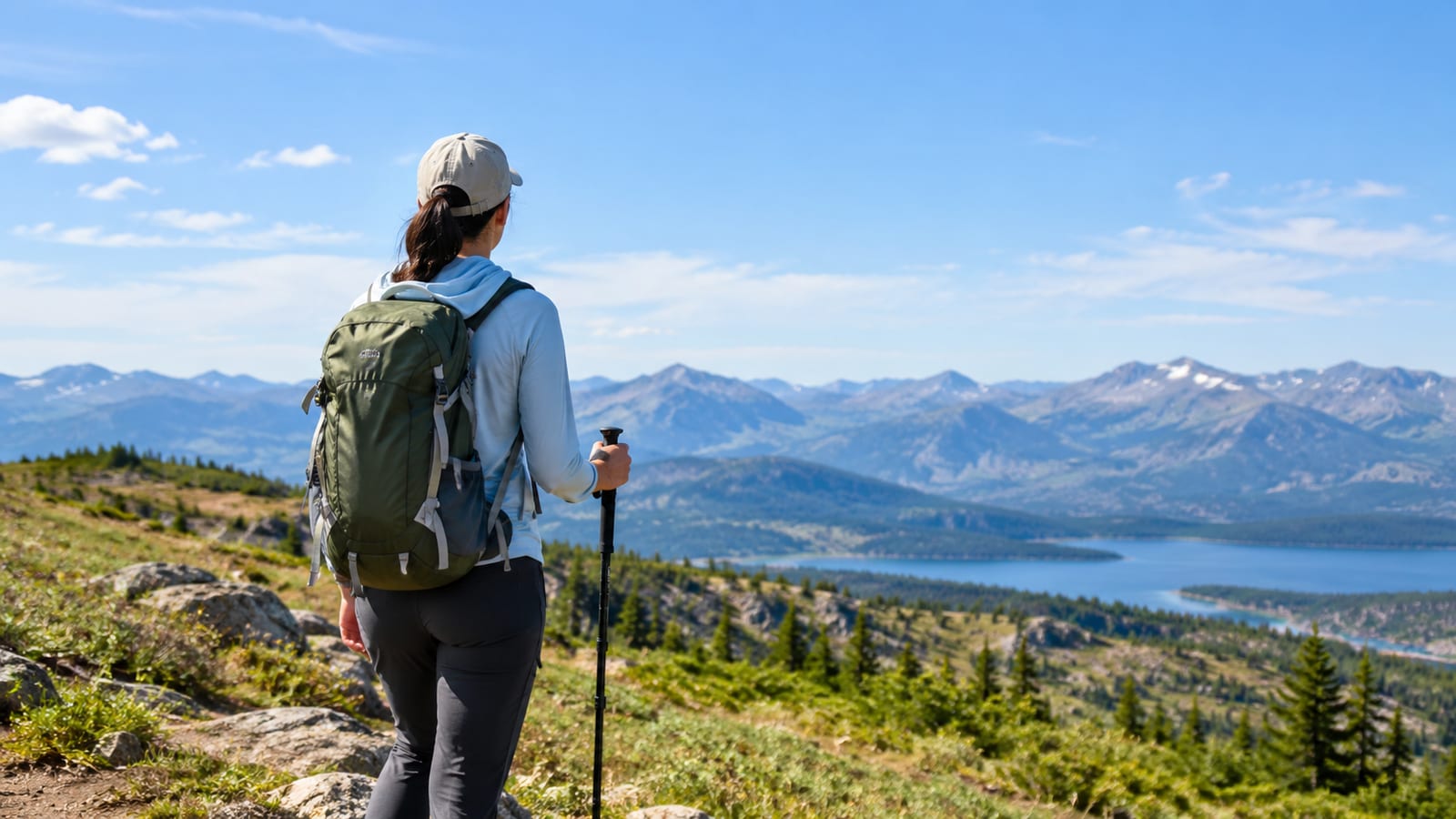
UPF stands for ultraviolet protection factor, and it measures how much UV light gets through fabric. A higher number blocks more. A shirt rated UPF 50 blocks far more sun than one rated in the teens, which matters on long, open days.
Make UPF a priority when the route has little shade: deserts, high altitude, snow, open ridgelines, and long midday miles. Under thick forest canopy, airflow matters more. Thin, light fabrics block less sun than dense ones, and fabric that's soaked or stretched tight often lets more through.
Shirts and sunscreen do different jobs. Sunscreen sweats off under pack straps, so a shirt is better protection for your shoulders and upper back. Sunscreen still covers your face, hands, and anything the shirt doesn't.
Collars protect the back of your neck, and hoods add ears and the sides of your neck. For more on UV exposure, check the EPA sun safety guidance before a long exposed trip.
Button-downs, tees, and sun hoodies
Each style trades airflow for coverage in a different way. Pick based on how much sun the route gets and how hard you'll be working.
| Style | Airflow | Sun coverage | Best for | Watch out for |
|---|---|---|---|---|
| Tee | Highest | Lowest | Humid, shaded, fast hikes | Burned shoulders and neck |
| Vented button-down | Adjustable | High with sleeves down | Exposed trails, bugs, travel | Seams under straps, stiffer fabric |
| Sun hoodie | Moderate | Highest | Desert, alpine, snow | Heat on hard climbs, hood bunching at the neck |
Some sun hoodies work harder at airflow than others. The Outdoor Research Astroman Air Sun Hoodie, for example, has laser-perforated underarm panels and weighs 5.4 ounces. It costs well over a hundred dollars, which is a lot for a hoodie, but those vents stay open under a pack.
Long sleeves also help with bugs. However, mosquitoes can bite through very thin knits. Woven button-downs stop them better than featherweight jersey.
Budget-friendly breathable hiking shirts
Cheap synthetic shirts are good enough for most day hikes. For example, 32 Degrees lightweight base layer tees usually cost under $10, breathe well, and dry quickly. That's a huge step up from an old cotton tee.
You do give some things up at that price:
- Durability: Fabric pills sooner under straps, and seams may give out after a season of hard use.
- Odor: Cheap polyester often holds smell faster.
- Fit: Cuts can run boxy or tight, so try before a big trip.
- Sun protection: Many budget tees don't list a UPF rating at all.
Cheap is fine for shaded trails, short summer hikes, and a backup shirt in the car. Saving money is a false economy on long, exposed trips, where a bad sunburn costs you more than the price gap. Polyester running shirts from a thrift store work the same way, and they're often just as good.
How to choose the right shirt for your hike
Start with the trail conditions, then pick the shirt:
- Hot and humid, mostly shaded: a thin synthetic tee like the Echo or Force Tee.
- Hot and dry, little shade: a sun hoodie or vented long sleeve. The Sunshield, Sahara Shade, or Columbia all work.
- Bugs, travel, or mixed weather: a button-down you can open and close, like the Columbia.
- Multi-day trips with no laundry: a merino blend, and accept the slower drying.
- Fast pace with a light pack: the Force Tee or Echo.
- Heavy pack and long water carries: a durable tee with smooth shoulders, like the Capilene.
- Shoulder-season starts: a merino blend under a light shell, using a simple hiking layering system.
Desert routes add sand, glare, and big temperature swings between noon and night. If that's your terrain, read our guide on what to wear for desert hiking before you buy.
Care that keeps quick-drying shirts working
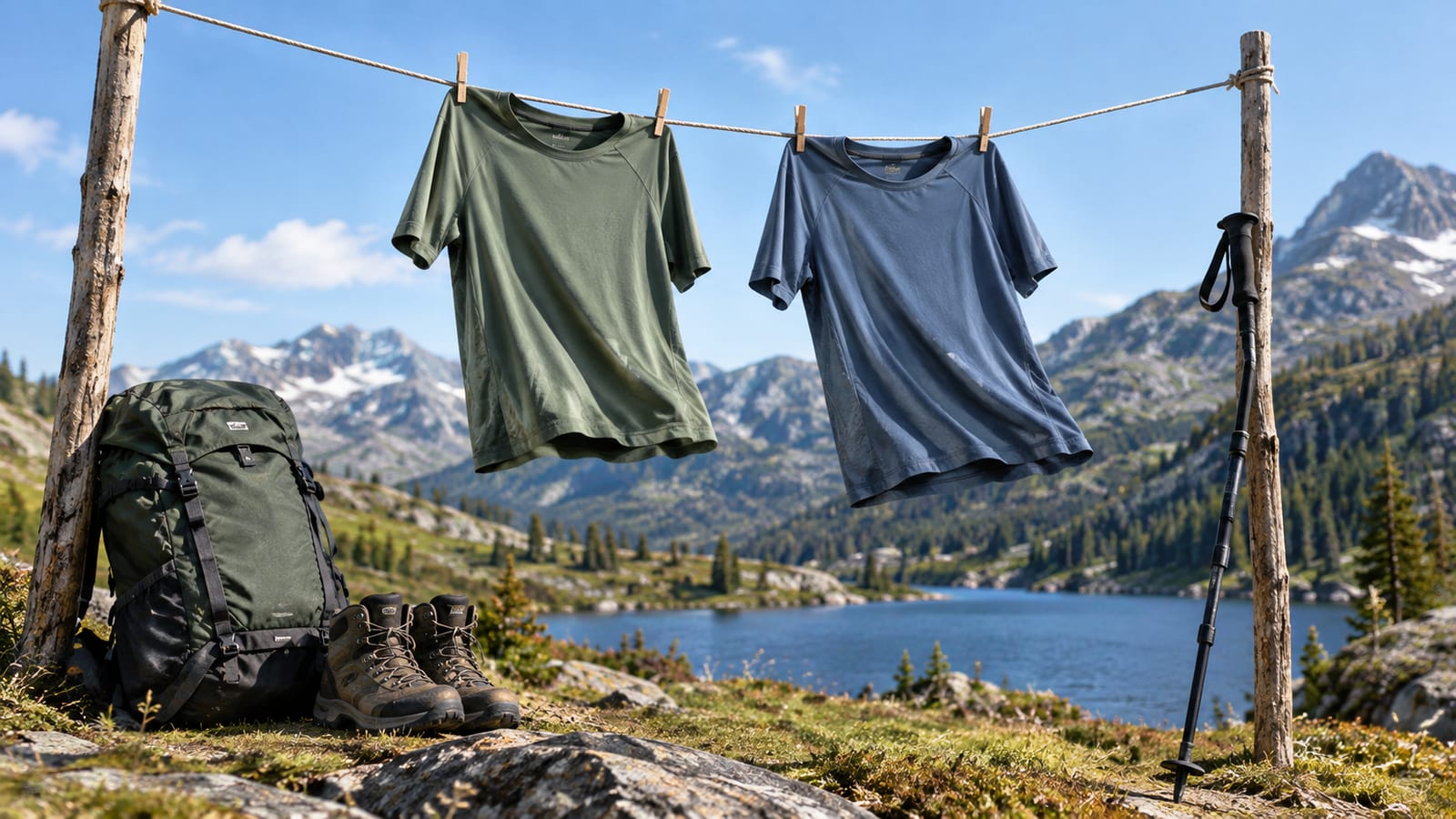
Most quick-drying shirts lose their edge through bad laundry habits rather than trail miles. A few simple rules keep them wicking:
- Skip fabric softener and dryer sheets. They coat the fibers and slow wicking.
- Wash cold on a gentle cycle. Hot water and rough cycles wear out thin fabric faster.
- Hang dry when you can. High dryer heat breaks down spandex and can shrink merino.
- Wash synthetics soon after a hike. Odor sets in when a sweaty shirt sits balled up in a pack.
- Treat merino gently. Use a gentle cycle, then hang it or lay it flat.
UPF built into the fabric lasts as long as the fabric does. Still, fabric that's worn thin or stretched out blocks less sun. Hold an old sun shirt up to a bright light, and if you can see through it clearly, replace it.
On multi-day trips, rinse your shirt with plain water well away from streams and lakes. Skip soap near water sources. A rinse at camp won't make it smell new, but it slows the funk.
FAQ
Do light or dark shirts keep you cooler?
Light colors reflect more sunlight, so they usually feel cooler in direct sun. Dark colors can block more UV, though. The women's Astroman Air Sun Hoodie only reaches a 50+ rating in its darker colors, while the lighter ones rate 30. Pick light for heat and dark when sunburn is the bigger worry.
Can I hike in a running shirt?
Yes. Most running shirts are thin polyester, which is exactly what you want for sweaty miles. Watch for two problems: shoulder seams that rub under pack straps, and very thin fabric that pills under a heavy load. Running shirts also rarely offer much sun protection.
Are women's versions of these shirts different?
Most of these shirts come in women's cuts with different shoulder width, hip room, and hem length. Pay close attention to the hem. It should sit below your hip belt without bunching, or the belt will rub the fabric against your skin all day.
How many shirts should I bring on an overnight trip?
One hiking shirt and one dry layer for camp is plenty for most trips. Wear the hiking shirt every day and rinse it when you can. Save the camp layer for sleeping, because a dry shirt at night keeps you warmer than any spare hiking shirt.
