
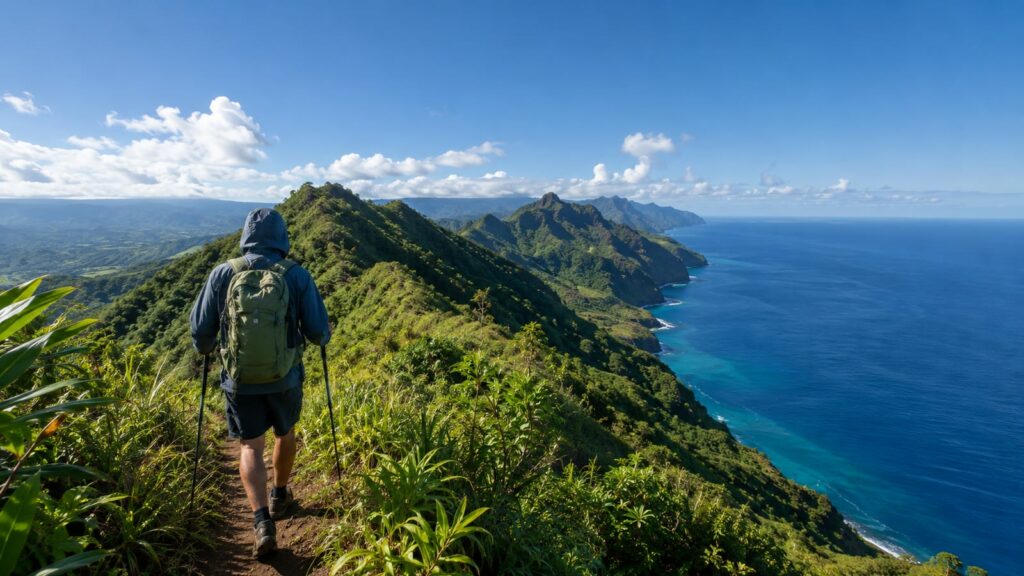
Kauai packs more good hiking into a small island than almost anywhere else in the US, and the trail everyone flies in for is one most visitors should walk only part of. Any useful Kauai hiking guide splits the island three ways: the Na Pali Coast, Waimea Canyon and Kōkeʻe up top, and the quieter hidden trails along the south and east shores. Hike the Kalalau Trail out to Hanakāpīʻai and turn around. Give a full day to the canyon country at Kōkeʻe, on the Canyon Trail to Waipoʻo Falls and then the Awaʻawapuhi Trail. Save a flat coastal walk like Mahaʻulepu or Wai Koa for the day your legs are done. That order keeps you out of trouble and still shows you the island.
Kauai hiking guide: how do you fit Na Pali Coast, Waimea Canyon, and hidden trails into one trip?
Treat the island as three hiking zones and give each one its own day. The north shore coast is wet, rooty, and weather-driven. The canyon and Kōkeʻe up top are dry, red, and sun-exposed. The south and east coasts hold the easy miles you'll want on a rest day.
Book first, plan second. Camping past Hanakāpīʻai Beach requires a state permit, and the north shore park needs an advance entry reservation for parking and the shuttle. Both come from the state parks division, and both rules shift when conditions do.
Where Na Pali advice usually goes wrong
Most write-ups sell the view and skip the mud. The Kalalau Trail is a narrow, off-camber path cut into a wet mountainside, and it does not care that you drove a long way. Rain falling miles upstream can lift the stream crossings fast. So a dry morning at the trailhead tells you very little about your afternoon.
The other common mistake is treating the whole thing as one hike. It isn't. You can walk 4 miles out and back to Hanakāpīʻai Beach, 8 miles if you add the falls, or the full 22 miles to Kalalau and back with a permit.
Most visitors should pick the first or second option and be honest with themselves about it.
How the main trails compare
Mileage is the least interesting column here. What matters is what the ground under your feet is doing, so read the right-hand column first.
| Trail | Distance | What it asks of you |
|---|---|---|
| Kalalau Trail to Hanakāpīʻai Beach, with the falls add-on | 4, 8, or 22 miles | Wet rock, stream crossings, real exposure |
| Canyon Trail to Waipoʻo Falls | 3.5 miles | Loose red dirt, sun, a few steep steps |
| Awaʻawapuhi Trail | 6 miles | Easy down, honest climb back |
| Mahaʻulepu Heritage Trail | 4 miles | Wind and sun, almost no shade |
| Wai Koa Trail | 4 miles | Flat, mellow, good on a tired day |
| Waimea Canyon Lookout | About 10 feet of gain | Parking lot to railing |
The stream crossings are the real decision point
Turn around if the water is brown and moving. That one call prevents most of the bad days on this coast. Hikers get stranded on the far side of Hanakāpīʻai when a squall lands inland, and waiting it out on an unshaded beach is a long afternoon.
The beach itself is no place to swim. There's no reef out front and the current pulls hard, so use it as a lunch stop.
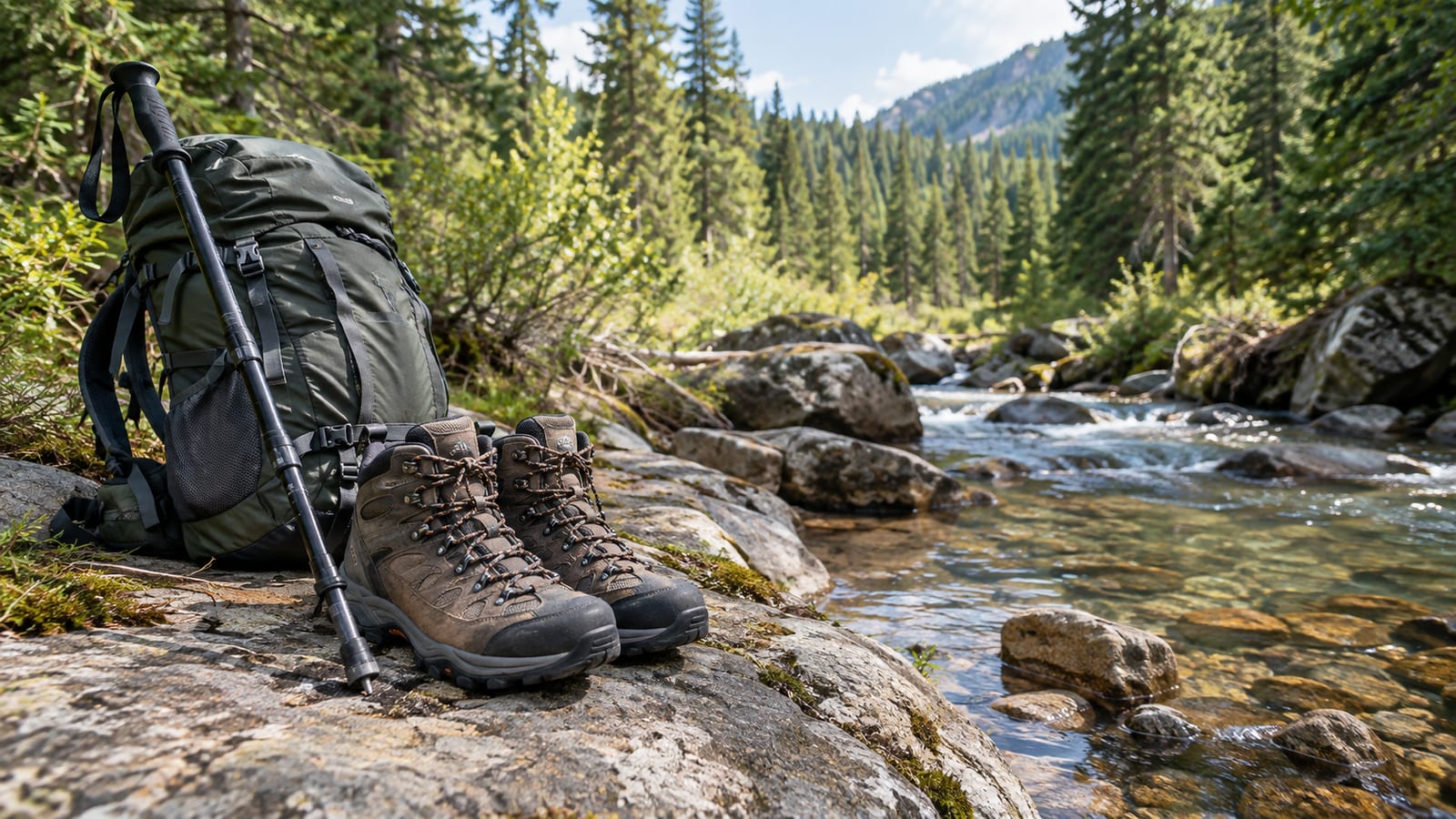
If you add the falls, expect the second half to run slower than the map suggests. You cross the stream several times and the rocks are slick. Trekking poles or even a found stick earn their keep on the way back down.
Waimea Canyon and Kōkeʻe feel like a different island
Drive up and you trade jungle for dry red dirt and open air. Waimea Canyon Lookout is a railing, not a hike, and that's fine when you have kids or an hour to spare. Everyone stops there, so go early or accept the crowd.
For actual trail miles, the Canyon Trail to Waipoʻo Falls is the best value in the park. You get canyon walls, a waterfall, and a wide view without a punishing climb. Wear something you don't mind staining, because that dirt doesn't wash out.
The Awaʻawapuhi Trail up in Kōkeʻe State Park belongs on any short list. You descend through forest to a narrow overlook above the Na Pali valleys, then climb back the way you came. Start it in the morning, since the return leg is the work.
Nearby, the Alakaʻi Swamp Trail runs on boardwalk over bog, often inside a cloud. Go if you like strange, quiet places. Skip it if you need a payoff view, because gray soup is a likely outcome.
Quieter trails for the days between
Mahaʻulepu Heritage Trail near Shipwreck Beach in the Poipu area covers 4 miles along limestone cliffs. Expect wind, seabirds, and almost no shade. Morning is better, and so is a hat.
Wai Koa Trail on the north side of Kauai runs 4 flat miles through trees and old plantation land. As a result, it works well for a rest day, a jetlagged first morning, or anyone easing into hiking. Our roundup of easy trails that still earn a view follows the same logic.
The Secret Falls trip pairs 2 miles of kayaking with 2 miles of hiking. You finish at a waterfall reached through mud and a few shallow crossings. Book it guided unless you're comfortable navigating the river yourself.
Honopu Ridge is unmarked, unmaintained, and steep. Locals hike it. Visitors get lost on it. Skip it unless you're going with someone who has been up there recently.
Polihale sits at the end of a rough dirt road that eats rental cars and voids rental agreements. Ask locally about current road conditions, and don't drive it after dark.
A week on the island, in the right order
- Book the north shore park entry and any Kalalau camping permit first. Everything else flexes around those dates.
- Pick one hard day, one canyon day, and one flat day. Three real hikes in a week beats five rushed ones.
- Put the coast hike early in your trip, so weather gives you a second chance.
- Check the mountain forecast rather than the one for your hotel. Rain lands upslope and shows up in the streams hours later.
- Leave at dawn for anything with a small parking lot. Kōkeʻe and the canyon fill by mid-morning.
- Carry more water than the mileage suggests. Coastal humidity and canyon sun both drain you faster than the distance implies.
- Set a turnaround time before you start walking, then hold to it.
- Tell someone your plan. Cell service dies fast once you leave the highway.
What to pack, and what to leave in the car
Grippy trail runners beat stiff boots here for most people. The ground is wet clay and rounded rock, so tread and drainage matter more than ankle height. Wet shoes are normal. Shoes that hold a gallon of water are not.
Bring rain protection you can vent, because a sealed shell on a humid climb turns into a sauna. A light wind shirt often does more good than a heavy waterproof one.
Pack this much:
- Two liters minimum per person, and more for the canyon, where the dry air hides how much you're sweating
- A filter or tablets if you plan on the falls hike, since the stream is the only refill and it isn't clean
- Sun hat and sunscreen, because the coastal and canyon trails offer no shade to hide in
- Trekking poles, which do their best work on wet crossings and loose red descents
- A dry bag or zip bag for your phone, because rain here arrives without a warning shot
- Real food, since bars alone leave you flat after a few hours
Leave the drone plans and the giant camera bag in the car. Weight you carry after mile 5 stops being fun.
Is a guided hike worth the money?
Sometimes, and mostly for access rather than comfort. Private trips like the Nāpali Cliff Top Waimea Canyon Hike start from around $850, which buys a lot of walking you already know how to do. However, a guide pays off in two cases: terrain you can't legally or safely reach alone, or a short trip where you want someone else reading the weather.
For a plain out and back to Hanakāpīʻai, you don't need one. Solo hikers heading anywhere unmarked should think harder.
If you like trails where weather runs the schedule, our piece on hiking the Faroe Islands covers the same habit of building plans that bend. Meanwhile, the cliff-edge walking in our Madeira trail guide will feel familiar on the Na Pali ridges.
FAQ
When is the best time of year to hike on Kauai?
Late spring through early fall gives you the steadiest ground, especially up north. Winter still works if you can move a hike a day or two when the streams come up. Shoulder-season trips trade thinner crowds for more weather roulette, which is a fine deal if your schedule is loose.
Can I drink or swim in the freshwater streams?
Treat all of it before drinking. Hawaiʻi's streams carry leptospirosis, a bacterial infection you can pick up through a cut or by swallowing water, so keep scrapes covered and don't gulp from a falls pool. A waterfall photo is not worth a week of fever. The Hawaiʻi Department of Health posts current guidance.
Do I need a four-wheel drive rental?
No. A standard car handles the highway and the climb to the canyon without complaint, and the upgrade money is better spent on an extra day. The one exception is the sand road out to Polihale, which most rental contracts flatly prohibit.
Are mosquitoes a problem?
In the wet valleys and around stream crossings, badly. Repellent belongs in your pack, not on the hotel dresser, because the worst of it starts the moment you stop moving. Higher up in the dry country they mostly leave you alone.
Is a Kauai backpacking trip realistic for a first-timer?
No, and the permit is what makes it hard. It fixes your dates whether or not the weather cooperates, the terrain is exposed, and there's nowhere to resupply once you're out there. Do a long day hike on the same coast first, then decide.
