
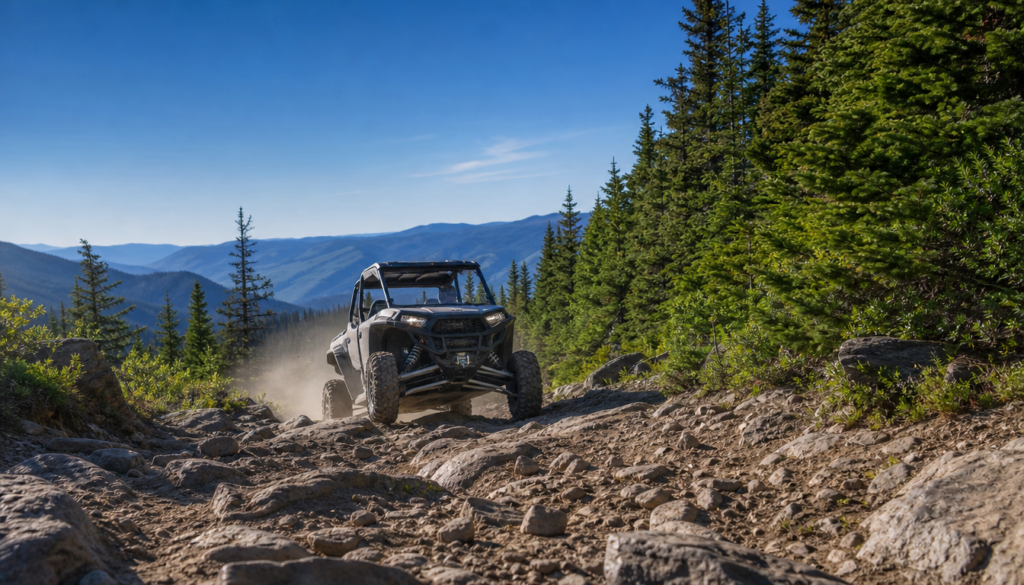
Here's the thing most pages bury: Hatfield-McCoy is an ATV and dirt bike network, not a hiking destination. If you showed up with boots and a daypack expecting a quiet forest walk, you'd spend the day dodging machines. This is a motorized trail system across southern West Virginia, built for off-road vehicles, and it's one of the largest of its kind in the country with over 1,000 miles of trails. Come for the riding, plan around the permits and the dust, and treat it as its own kind of trip.
What are the Hatfield-McCoy Trails, really?
They're a managed off-road riding system, not a network of foot trails. The main hub sits in Logan County, West Virginia, and the system spreads across several counties in the southern part of the state. It opened in October 2000 on reclaimed coal land and old logging routes, which is why the terrain runs the way it does: steep grades, loose rock, and long climbs that were cut for machines, not ankles.
If you ride a side-by-side, a four-wheeler, or a dirt bike, this is a real destination. If you hike, it isn't. There's no shame in that, but the marketing photos of ridgeline views don't tell you a UTV is coming around the next bend at speed. Walk here only where a trail system allows it and expect motor traffic.
Who should ride here and who should skip it
The trails suit riders who want mileage and variety over a long weekend, families with machines rated for the terrain, and groups who like a base-camp trip out of one town. The feud history gives the place its name, and towns lean into it, but you're paying for riding, not a history tour.
Skip it if you want a peaceful trail day on foot. Skip it too if your only machine is a stock street-leaning ATV with worn tires, because the climbs and rock will find every weakness. This is loose rock and long grades, not a smooth park loop.
- Ride here if: you have a trail-capable off-road vehicle, you want big mileage, and you don't mind sharing the trail.
- Bring the family if: your machines fit the difficulty rating and you match trails to the least experienced rider.
- Skip it if: you came to hike quietly, or your setup isn't built for steep, rocky, motorized terrain.
How do the trail systems differ?
The network is split into separate trail systems, each with its own trailhead, difficulty mix, and nearest town. You buy one permit and it covers the connected systems, so the real choice is which system you base out of, not which one you're "allowed" on.
Bearwallow, near Logan, is one of the named systems and a common starting point because of its access and range of difficulty. Other systems lean harder or easier. The honest move is to match the system to your least experienced rider and your machine, not to chase whatever a video made look exciting. A trail that films well can still be the one that flips a green rider.
| If you want… | Look for a system that… |
|---|---|
| A first trip or mixed group | Has easy and moderate trails close to a staffed trailhead |
| Long mileage days | Connects to neighboring systems without long road gaps |
| Technical, steep terrain | Is rated difficult, with rock and tight climbs |
| A short base-camp trip | Sits near lodging and fuel in one town |
Difficulty ratings here are the thing to trust more than the scenery photos. Read them the way you'd read a trail sign you shouldn't ignore: they're telling you something before the terrain does.
What does the permit cost and how do you get one?
Everyone riding the system needs a permit, and for a non-resident it runs $65.00 for the year. That's a yearly pass, not a day fee, which makes a single weekend feel pricey and a repeat-visit year feel cheap. You buy it online before you go or at a licensed vendor near the trails, and you keep it on you or on the machine as the rules require.
The permit is the cost of admission and it's not the expense that will surprise you. Fuel, lodging, a rental if you don't tow your own, and repairs after a rocky day add up faster than the pass does. Budget for the trip, not just the sticker.
Where the marketing oversells it
Three claims get repeated more than they're earned.
First, "over 1,000 miles" is real, but you won't ride a fraction of it in a weekend, and the good stuff for your skill level is a smaller slice than the number suggests. Second, the mountain-vista language is true on clear days and useless in fog or after rain, when the same overlook is a gray wall and the descent is greasy. Third, the feud history is a name and a theme, not an on-trail experience; you're riding reclaimed mining land, which is interesting in its own right but isn't a living history exhibit.
None of this makes the place bad. It makes it a riding trip that behaves like a riding trip, with weather, dust, crowds on holiday weekends, and machines that break.
What to pack and plan for
Plan around the machine and the weather more than the map. Trails can close for conditions or maintenance, and a wet day turns clay-heavy sections slick and rutted. Check current trail conditions before you tow anything, and have a second system or a rest day in mind. It helps to build a backup plan before the trip rather than improvise it in a parking lot.
- Helmet, eye protection, gloves, and over-the-ankle boots. Non-negotiable on motorized trails.
- A basic recovery and repair kit: tow strap, tire plugs, a small compressor, spare fuel, and basic tools.
- More water than you think, plus food that survives a hot cargo box.
- Layers and rain gear. Ridgelines get cold and wet fast even when the trailhead is warm.
- A paper map or the official app downloaded offline, because signal drops in the hollows.
If you're riding with kids, keep them on trails rated for the least experienced rider and match the machine to their size and skill, the same principle behind any family-friendly outdoor trip.
When to go and what closes
Riding is best in the milder shoulder-season stretches of spring and fall, when the dust is down and the heat is off. Summer brings heat, bugs, and holiday-weekend crowds at the popular trailheads. Winter riding happens, but cold, ice, and mud raise the stakes and close some sections.
Closures happen, and they're not a conspiracy against your trip. Weather damage, maintenance, and land-use agreements all pull sections offline, and riding a closed or washed-out trail is how you get hurt or get the access pulled for everyone. When a gate is shut, there's usually a good reason a trail is closed.
For the current permit rules, system status, and safety regulations, the West Virginia state government's official trail authority page is the primary source to check before you commit to a date.
FAQ
Can you hike or mountain bike the Hatfield-McCoy Trails?
It's a motorized system first, so foot and pedal traffic mix with fast machines and isn't the point of the place. Some areas and towns have separate walking options, but don't plan a hiking trip around this network. If quiet miles on foot are what you want, pick a dedicated hiking area instead.
Do you need your own machine, or can you rent?
You can rent. Outfitters near the trail towns rent side-by-sides and ATVs, which saves you towing and lets you match the machine to the terrain. Book ahead for holiday weekends, confirm what's included, such as helmets and fuel, and check the age and license rules before you arrive.
How many days do you need to make the trip worth it?
Two to three riding days is a sensible first trip. That's enough to learn one or two systems without burning the whole time on travel, and it justifies the yearly permit better than a single day does. Add a buffer day for weather, since a rained-out morning is common and a slick descent isn't worth forcing.
Is it beginner-friendly?
Parts of it are, if you stick to trails rated easy and ride within your limits. The steep, rocky sections are not, and difficulty ratings here mean what they say. New riders should start on green-rated trails, keep speeds down on loose rock, and treat a wet day as a reason to ride easier terrain, not to prove a point.
What's the terrain actually like underfoot?
Most of it is former coal and logging land, so expect loose rock, clay, steep grades, and long climbs rather than smooth groomed track. That surface is fun on the right machine and punishing on the wrong one. Tires and suspension matter more here than raw power, and a fresh set of tires is cheaper than a recovery.
