
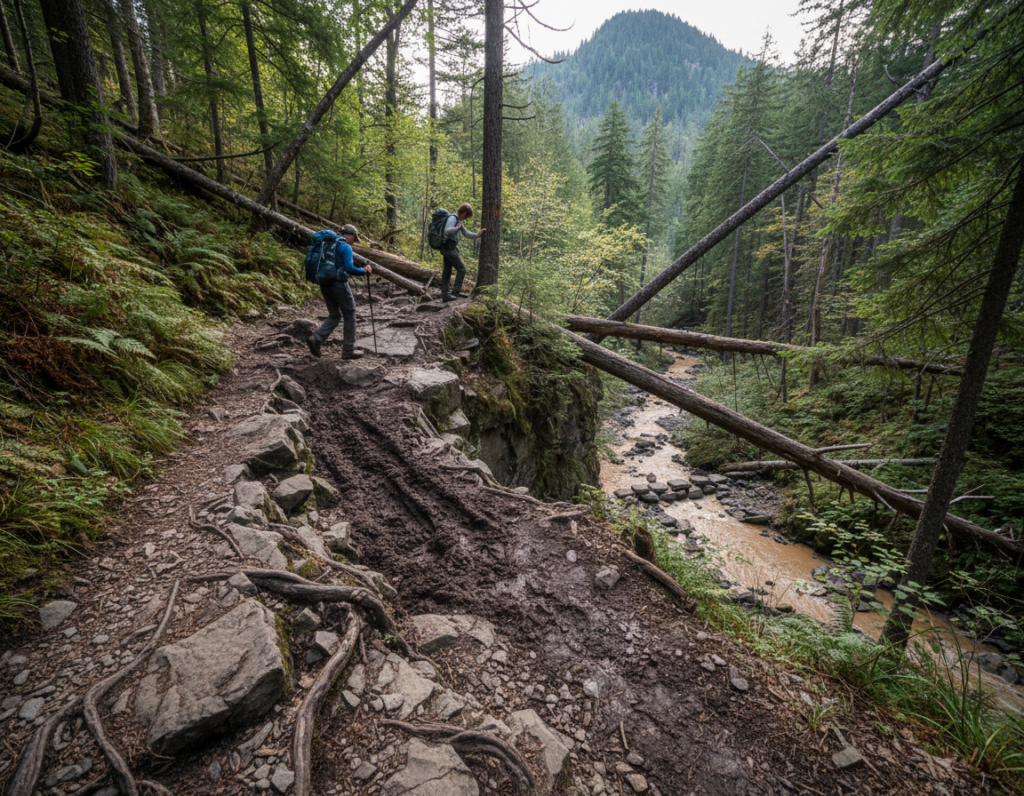
Common Trail Hazards and How to Avoid Them

trail hazards to watch for

Have you ever wondered which small choices make the biggest difference on a hike?

I’ll name the most common dangers you can meet on a typical day and give simple habits that stop most accidents.

Not wearing proper footwear is a top cause of injury, according to the National Park Service. Nature sets the rules: expect downed trees, eroded tread, swollen streams, and sudden weather shifts. Rescue in the backcountry can take hours, so planning matters.

I’ll give you a mental checklist you can run before you step off the pavement: footing, weather, water, navigation, and wildlife. I’ll also explain why when you leave, what you wear on your feet, and when you turn around often matter more than “toughing it out.”

Think of safety as a group skill. People make better choices when they talk through the plan and stick together. Next, I’ll show how terrain changes the game and which things to keep in mind on every outing.

Key Takeaways

  • Check footwear and pack basics before you head out.
  • Run a quick mental checklist: footing, weather, water, navigation, wildlife.
  • Respect terrain—loose rock and eroded tread can end a day early.
  • Plan exit times and share the plan with people in your group.
  • Small choices—when you leave, when you turn back—reduce danger most.

Plan your route, gear, and communication before you leave

Before you step onto the route, spend ten minutes planning the day and you’ll cut risk dramatically.

I check current warnings and closures for the area first. Look for washed-out bridges, fire activity, ice, and storm impacts. Match your route choice to what local managers list as closed or unsafe.

Pick a route that fits your group

Choose a trail that matches people’s skills: mileage, elevation gain, and surface type matter. Plan an out-and-back if daylight or weather is uncertain.

Leave a trip plan and set a turnaround time

Write a simple trip plan: trailhead, route, who is hiking, vehicle details, and expected return time. Pick your turnaround time first; hike to that limit even if the summit looks close.

Prepare for limited cell service

Treat the backcountry like your phone will fail. Carry a personal locator beacon if you need one, use airplane mode to save battery, and share a written plan with someone who can act if you do not return.

  • Pack a headlamp, layers, extra food, and water for delays.
  • Let the slowest hiker set the pace and confirm turns at intersections.
  • Have a Plan B so the day still counts when you turn around early.

Trail hazards to watch for on the ground and along the route

A single slippery step can end a day; reading the ground saves you time and trouble.

I scan the route ahead and tell my group what I see. Short steps and steady balance cut most falls.
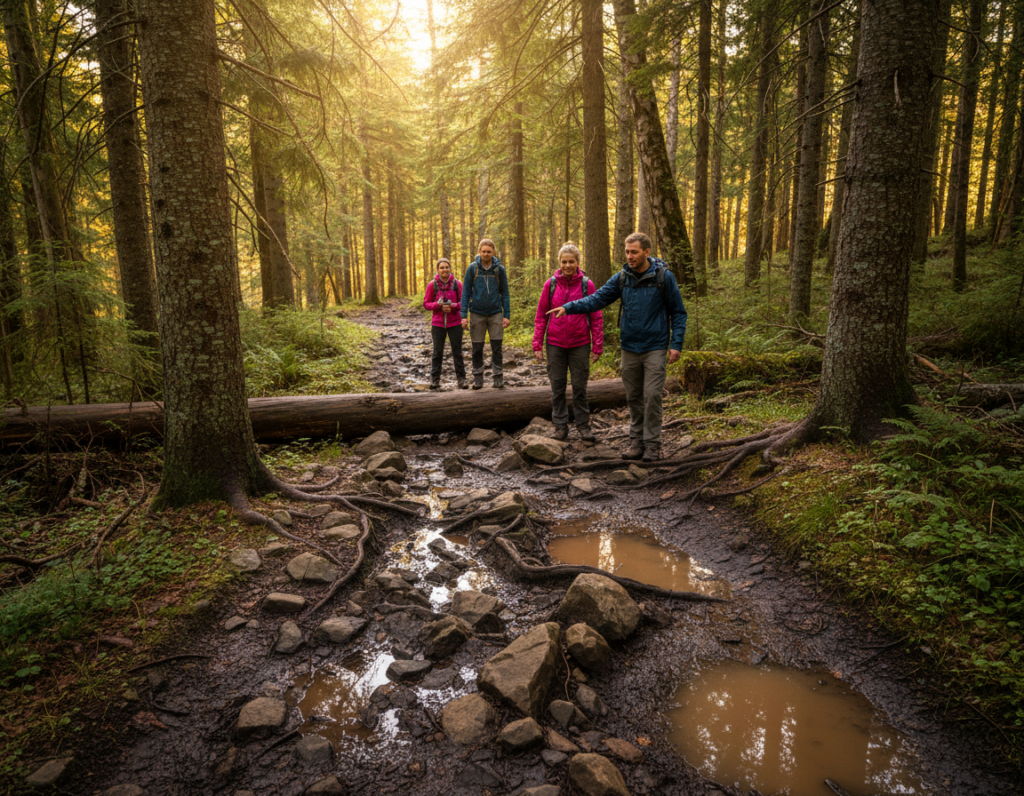
A detailed hiking trail winding through a dense forest, showcasing various ground hazards. In the foreground, scattered rocks and slippery roots pose potential tripping hazards, while patches of muddy terrain reflect recent rainfall. The middle ground reveals hikers in modest casual clothing, carefully navigating the trail, their expressions focused yet relaxed. A fallen tree partially blocks the path, illustrating another common hazard. In the background, towering trees with sunlit leaves filter soft, golden light onto the scene, creating a warm and inviting atmosphere. The angle is slightly elevated, capturing the depth of the trail and the surrounding landscape, evoking a sense of adventure and caution.

Slips, trips, and falls on rocks, wet leaves, and eroded edges

Look for slick rocks, wet leaves, loose gravel, and eroded edges. Slow down and test any unsure foothold before you commit weight.

Footwear and traction that reduce injury risk

Wear ankle-supporting boots on rough terrain. Carry traction devices in winter or on icy sections of trails.

Downed trees and unstable limbs

Step over logs — don’t climb on them. Before you rest, scan for dead branches that could fall. A leaning tree is a sign to move out of that spot.

Getting lost at intersections and in low visibility

Summit spurs and busy intersections confuse people most. Use a compass bearing at the top, and slow down to confirm the way. Treat cairns as hints, not orders.

When to turn back instead of pushing on

  • Rising fall risk, worsening terrain, or growing fatigue are clear signals.
  • If your mind makes excuses, stop and re-check the plan.
  • Quick self-check: “Can I keep this pace safely back down?” If no — turn around.

Water and stream dangers that change fast

Water can change the plan in minutes; know the clear signs that mean “do not cross”.

Swollen streams after rain and when you must avoid a crossing

Heavy rain can swell creeks very fast. The NPS warns: do not cross flooded channels. If the current is fast, water reaches mid-shin, footing is poor, or one slip puts a person in the flow—backtrack or wait.

Stream-crossing steps that protect your feet and balance

Keep shoes on. Use a sturdy stick and face slightly upstream as you step. Loosen your waist strap so you can shed the pack quickly if you fall.

Flash flood signs in canyons and drainages

Watch for debris lines, fresh water stains, and a sudden roar. Move to high ground if water becomes muddier, deeper, or carries branches and rocks. Storms miles upstream can trigger a flash flood in your area.

Untreated drinking water risks and reliable ways to treat it

Treat every source. Giardia can ruin a trip weeks after exposure. Boil for one minute at a rolling boil. Or use a filter rated to remove 1 micron or smaller particles.

  • If one person feels uneasy about crossing, choose the safer way out together.
  • Check weather for the whole drainage, not just your sky.
MethodEffectivenessPros / Cons
Boiling (1 minute)Removes pathogens reliablySimple, needs fire or stove; heavy fuel use in cold cases
Filter (≤1 micron)Removes protozoa and particulatesFast, reusable; some viruses may pass if not combined with chemical treatment
Chemical (iodine/chlorine)Good against bacteria and viruses with contact timeLightweight; less effective on protozoan cysts like Giardia without long wait

Weather, temperature, and time-of-day hazards

Heat, cold, and fading light shape the safety of your day. I pay attention early and set simple rules with my group so choices stay clear when weather shifts.

Heat: signs and prevention

Know heat exhaustion signs: heavy sweating, weakness, dizziness, nausea, headache, and cool, clammy skin. Heat stroke is an emergency: confusion, slurred speech, hot red skin, rapid pulse. In that case call 911.

Drink steadily — aim near 3–4 quarts on a hard, hot day. Slow your pace, rest in shade, and start early to avoid the hottest hours.

Hypothermia in cool, wet, windy weather

Wet clothing, sweat, and wind cool a person fast, even in summer. Wear moisture-wicking layers, avoid cotton, put rain gear on before you get soaked, and change into dry clothes quickly.

Winter cues, night hiking, and UV

High cirrus, a moon ring, or a sudden drop in cloud deck can mean incoming snow or storms — plan a conservative way back. Night hiking raises fall and wildlife risk; bring a reliable headlamp and finish before dark.

At elevation and on snow your skin burns faster. Use SPF 30+, lip balm with SPF, and wraparound eyewear that blocks at least 99% UV.

Conclusion

I close most outings with one clear rule: spot risk early, pick the safer way, and save energy for the return.

Before you go, run a short checklist: pack food securely, set a turnaround time, and confirm the route with your group. While you hike, stay together, speak up fast, and give any animal plenty of space.

When signs of trouble appear — garbage, scratch marks, or scat — move your camp and avoid that area. Carry an EPA-registered bear spray (1%–2% capsaicin) and never discharge it on people, tents, or gear.

Want more on camping safely around bears? Read this guide on how to safely camp in bear country. Stay curious, stay prepared, and enjoy the wild with confidence.

FAQ

What are common hazards on the path and how can I avoid them?

Slips, trips, and falls are the most frequent issues—wet rocks, loose gravel, and eroded sections cause most injuries. I pick sturdy footwear with good tread, watch my step on mixed terrain, and slow down on descents. Use trekking poles for balance and step where the ground looks compact and dry. If a section looks unstable, I find an alternate line or turn back.

How should I plan my route, gear, and communication before I leave?

Start by checking maps and recent trip reports for closures and conditions. I pack layers, a headlamp, extra water, a first-aid kit, and a charged phone with a portable battery. Share a trip plan with a friend: route, expected return, and turnaround time. Choose a route that matches your group’s experience and daylight available. In remote country, add a personal locator beacon or satellite messenger.

Where can I find current warnings and closures for my area?

Check official land-manager websites like the National Park Service, U.S. Forest Service, or state park pages. Local rangers, visitor centers, and social media pages from reputable groups also post timely updates. I always confirm with a ranger if I’m unsure about recent weather or wildfire impacts.

How do I pick a path that matches my group’s skills and the day’s conditions?

Match distance and elevation gain to fitness and experience. On wet or hot days, pick a shorter, lower‑exposure route. I scale plans down rather than push people through risky sections. Factor in pace, breaks, and any slower hikers when estimating time and turnaround.

What should I include in a trip plan and turnaround time?

Leave your start location, route, planned checkpoints, and expected return time with a trusted contact. Set a firm turnaround time—when you’ll start heading back regardless of progress. That deadline keeps you safe when conditions shift or everyone feels tired.

How do I prepare for limited cell service in backcountry areas?

Assume no reception. Download offline maps and waypoints, carry a physical map and compass, and know basic navigation. For added safety, I bring a satellite messenger or PLB and learn how to use it before hitting remote areas.

What causes most slips and trips on rocks, wet leaves, and eroded ground?

Wet surfaces, loose scree, and hidden roots are common culprits. I slow my pace, test footholds before committing weight, and avoid stepping on shiny rocks or slimy leaves. Proper shoes and mindful foot placement reduce ankle rolls and falls.

How does footwear and traction reduce injury risk?

Shoes with aggressive tread, ankle support, and a stiff sole help on rocky, uneven ground. Microspikes or crampons are essential for ice. I replace worn shoes and test traction in safe spots before trusting them on steep sections.

How should I handle downed trees and unstable limbs along the way?

Assess from a distance: don’t crawl under hanging limbs. If a log is safe to cross, check for rot and plan stable handholds. If the obstacle looks risky, find a detour or turn back—no summit is worth an avoidable injury.

What are common causes of getting lost at intersections or in low visibility?

Missing signs, multiple junctions, and fog or dusk increase confusion. I mark decision points mentally, use a map and compass, and backtrack to the last known landmark if uncertain. When visibility is poor, stick to well-marked routes or delay travel.

How do I know when to turn back instead of pushing on?

Turn back when daylight is tight, someone is injured or overly fatigued, weather worsens, or navigation becomes uncertain. I set emotional distance from goals—safety beats reaching the summit. Use your pre-set turnaround time as a firm rule.

When are streams unsafe for crossing after rain?

Streams can swell quickly after storms. If water is fast, murky, or reaches above mid-calf, don’t cross. I monitor upstream weather and avoid drainages during heavy rain. When in doubt, find a higher route or wait it out.

What steps protect my feet and balance when crossing a creek?

Face upstream, use trekking poles for a three-point stance, unclip your pack’s hip belt, and test each step. Wear shoes with good grip and avoid stepping on algae-covered rocks. If current is strong, find a longer, shallower crossing or a bridge.

What are flash flood warning signs in canyons and drainages?

Rapid rises in water level, sudden debris flow, distant thunder, or a change from clear to muddy water are red flags. If you hear water increasing or see floating debris, move to higher ground immediately—flash floods move fast and without warning.

Is untreated drinking water safe and how should I treat it?

Untreated water can carry bacteria, protozoa, and viruses. I use a filter rated for protozoa and bacteria, add chemical tablets, or boil water for at least one minute (three at altitude). Carry a backup method and follow manufacturer guidelines.

What signs indicate heat-related illness and how can I prevent it?

Early signs include heavy sweating, weakness, and dizziness; severe cases show confusion, nausea, and fainting. I drink regularly, pace myself, rest in shade, and wear light clothing and a hat. Start hikes early to avoid peak heat.

How can I avoid hypothermia in cool, wet, or windy conditions?

Layer clothing, stay dry, and carry an insulated jacket. Change out of wet clothes immediately and eat and drink to keep energy up. I monitor team members for shivering and confusion—early action prevents progression.

What winter ice, snow, and storm cues should I watch that affect safety?

Look for cornices, unstable slopes, wind-packed snow, and rapidly dropping temperatures. Whiteout conditions hide terrain features—avoid complex routes and carry crampons, an ice axe, and avalanche info if traveling in avalanche terrain.

Why does hiking at night increase fall and wildlife risk?

Reduced visibility hides obstacles and changes your perception of distance. Wildlife is more active at dawn, dusk, and night. I use a reliable headlamp, slow my pace, and make noise near brush and water crossings to avoid surprising animals.

How does sun and UV exposure on snow and at elevation affect me?

UV intensity rises with altitude and on reflective surfaces like snow. I wear sunscreen, sunglasses with UV protection, and a wide-brim hat. Sunburn and snow blindness make travel harder and increase dehydration risk.
Category:

Latest Blog

Our Blog
Lorem ipsum dolor sit amet, consectetur adipiscing elit, sed do eiusmod tempor incididunt ut labore et dolore magna aliqua