
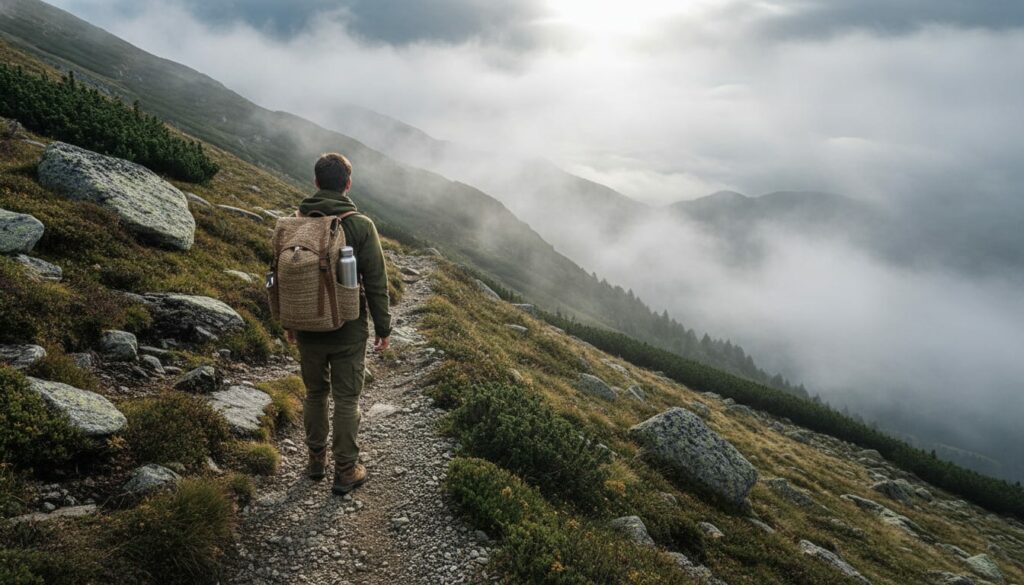
Most trail waste is decided at home, before your boots touch dirt. The single biggest thing you can do to cut waste on a hike is repackage your food and drop the single-use stuff into a reusable container in your kitchen, not the trailhead parking lot. Everything else – solid soap, a real water bottle, packing out what you carry in – matters, but it stacks on top of that first move. Below is the order I'd actually do it in.
Last updated: 2026-07-15
What does "low-waste hiking" really mean?
It means you finish the hike carrying out roughly what you couldn't eat or drink, and nothing gets left in the dirt. That's it. Not zero waste, which is a marketing word. Low waste.
The backbone here is the seven principles of Leave No Trace: plan ahead and prepare, travel and camp on durable surfaces, dispose of waste properly, leave what you find, minimize campfire impacts, respect wildlife, and be considerate of others. Most of the list is common sense. The one people skip is the first one, and it's the one that does the heavy lifting.
The Pacific Crest Trail sums the waste part up in four words: pack it in, pack it out. Good rule. Works everywhere, not just there.
How do I plan a hike that makes less trash?
Do the boring prep. Waste is mostly a packaging problem, and packaging is a decision you make before you leave.
- Check your trail's rules first. Some places want you to carry out human waste. Some ban fires. Knowing this before you pack saves you from hauling gear you can't use.
- Write a real packing list and cut it. Every extra item is extra weight and usually extra wrapper. Pack what earns its place.
- Repackage food at home. Pull snacks out of their retail plastic and into reusable bags or containers. This is the highest-value five minutes of your prep.
- Fill your water bottle before you go. Skip the flat of single-use bottles entirely.
- Pack a small trash bag. One zip bag for wrappers you can't avoid keeps them out of your pockets and off the ground.
Do those five and you've handled most of it. The rest is fine-tuning.
Which food choices cut the most packaging?
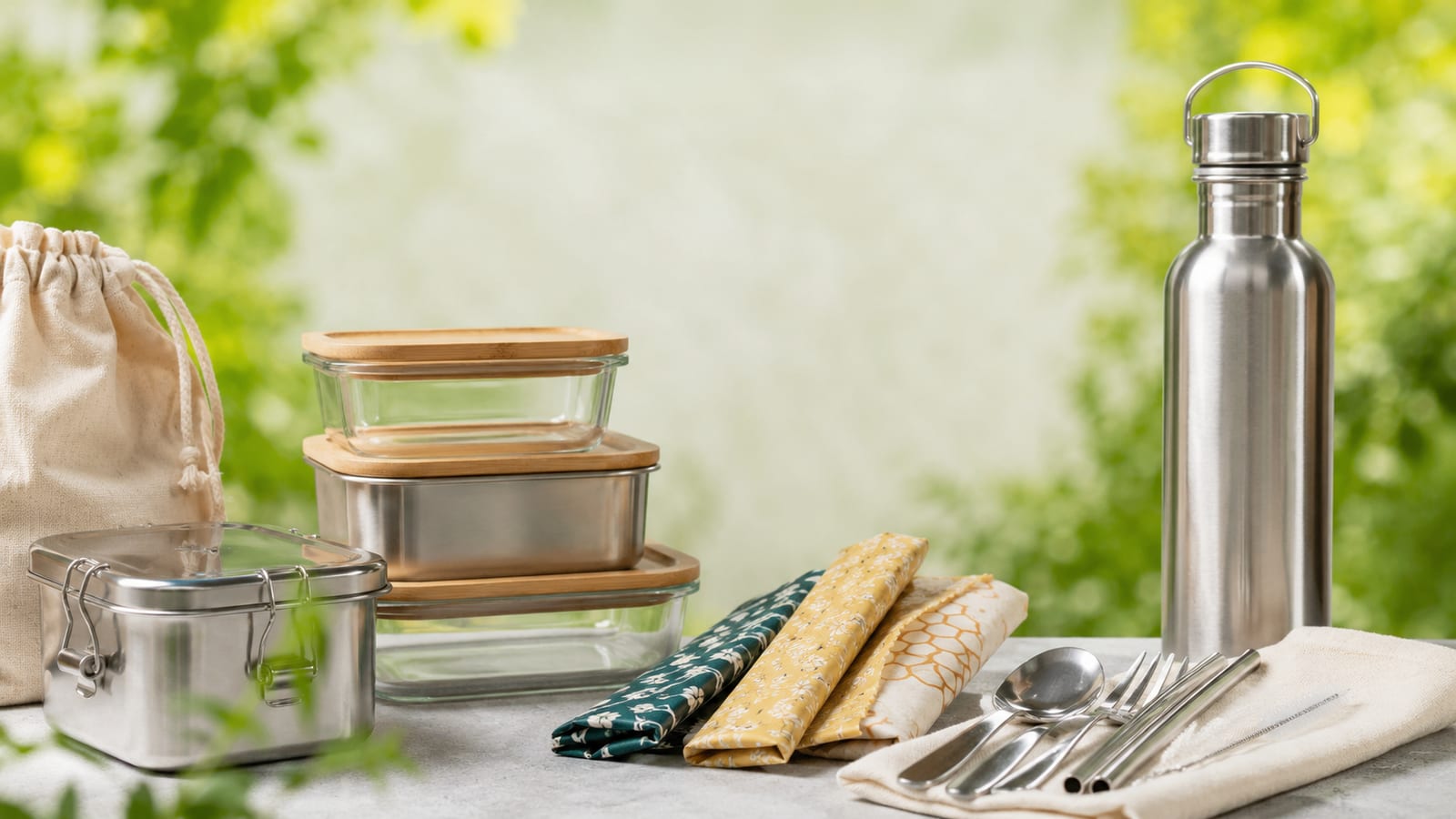
Buy in bulk and make your own trail food. Both crush the wrapper count, and both are cheaper than the fancy resealable pouch snacks sold as "hiking food."
Bulk oats, couscous, nuts, and dried fruit travel well and cost less per calorie. Dehydrate your own dinners if you've got a dehydrator sitting unused. If you don't, a bag of instant beans and rice from the bulk bin does the same job for a couple of dollars.
- Repackage snacks into reusable silicone or cloth bags instead of buying individually wrapped bars.
- Use a beeswax wrap or a small container for cheese, sandwiches, and anything squishable.
- Skip single-use cutlery. One titanium or stainless spork lasts years. Bamboo is fine too, though it stains and eventually splits.
One honest warning: "compostable" packaging rarely composts on a trail or in a backyard bin. Most of it needs an industrial facility to break down. Pack it out like any other trash and don't let the label talk you into leaving it.
Is eco-labeled gear actually worth it?
Sometimes. The greenest gear is the gear you already own, so fix and reuse before you buy anything with a green hang tag.
When you do buy, a few certifications carry more weight than a vague "sustainable" sticker. Patagonia has been a certified B Corporation since December 2011, which means its practices get audited, not just advertised. REI Co-op is Climate Label certified and has committed to a 47% emissions cut by 2030 and net-zero by 2050. Those are numbers a company can be held to. "Eco-friendly" on a swing tag is not.
Smaller stuff counts too. The BUFF Original EcoStretch neck gaiter is built from 95% recycled material, and a gaiter is one of those cheap items you'll actually use on every hot, dusty, sunny climb.
Still, buying new gear to be greener is often a false economy. Borrow, rent, or repair first. A patched jacket beats a recycled one you didn't need.
Where the "sustainable brand" pitch falls short
A recycled water bottle you lose in three months is worse than a plain one you keep for a decade. Durability is the real green metric, and no hang tag prints it.
What's the best reusable water bottle for the trail?
A hard bottle you won't crush and won't leak. Nalgene's wide-mouth bottles come in HDPE (labeled #4) and Tritan, a plastic that falls under the #7 "other plastics" category. Both refill forever and survive being dropped on rock, which is more than a thin single-use bottle can say.
Soft flasks and bladders weigh less and pack down small, but they puncture and grow funk faster. Pick based on your trip: hard bottle for abuse and cold soaking, soft flask for counting grams. Either one beats buying cases of throwaway plastic.
How do I stay clean without leaving a mess?
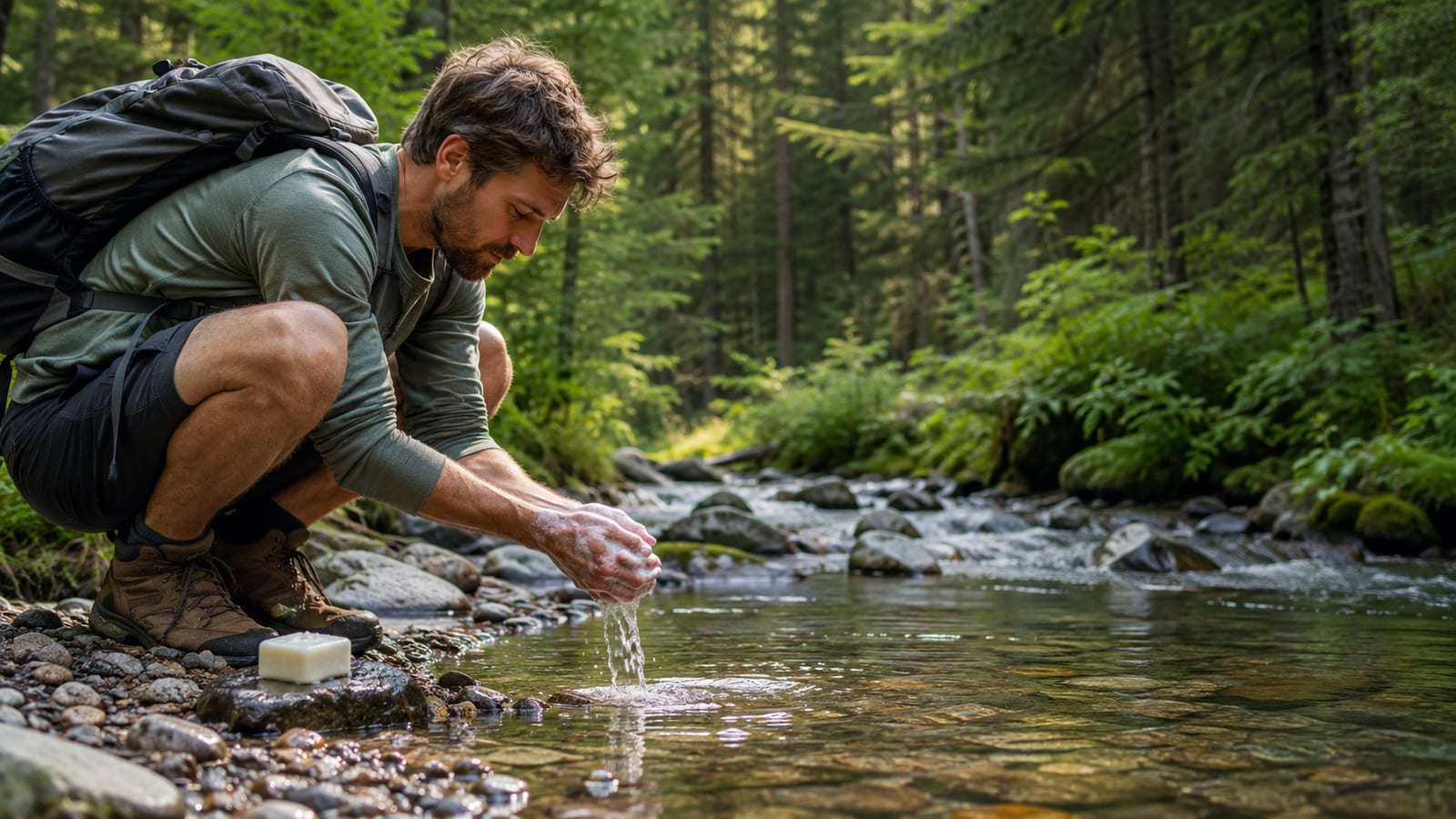
Swap anything disposable for a bar or a cloth. Trail hygiene is where a lot of hidden waste hides – wipes, mini plastic bottles, wrappers.
- Solid soap and shampoo bars ditch the plastic bottle and won't spill in your pack. Use them well away from water sources, biodegradable or not.
- A small quick-dry cloth replaces a whole pack of wet wipes. Rinse it, wring it, reuse it.
- Reusable menstrual gear – a cup, cloth pads, or period underwear – cuts a surprising amount of packed-out trash on longer trips.
"Biodegradable" soap still doesn't belong in a stream. It breaks down in soil, given time and distance, not floating in the water you're about to filter.
How do I deal with human waste the right way?
Match the method to the ground. Get this wrong and you pollute water and spread nasty stuff like giardia. For a deeper walkthrough, see this guide on disposing of waste while hiking and camping.
In soil with active dirt and bugs, dig a cathole 6 to 8 inches deep and 4 to 6 inches wide, at least 200 feet from water, trails, and camp. Do your business, bury it, and pack out the toilet paper.
In deserts, alpine zones, and heavily used areas, the ground can't break waste down. There you carry it out. A WAG bag – a sealable bag with powder that gels the waste – handles this without drama. Build a small kit: trowel, bags, hand sanitizer, and a zip pouch to hold used TP. Full details in this pack-out-waste guide.
Pack out toilet paper and wipes everywhere. Buried paper gets dug up by animals and blows around. Not a maybe.
Who this is for, and who can skip the fuss
If you hike a smooth local loop a few times a year, the whole program is: reusable bottle, repackaged snacks, one trash bag. Don't overthink it.
If you're doing overnights, remote routes, or long trails, the human-waste and hygiene steps stop being optional. On something like the Te Araroa, which runs about 3,000 km across New Zealand, small habits compound over weeks into either a clean trail or a trashed one.
The point isn't buying a shelf of green gear. It's making a few decisions at home so the trail stays worth hiking.
FAQ
Do I need special compostable bags for my food?
No. Most compostable bags need an industrial composter to break down and do nothing useful in your pack or a backyard bin. A durable reusable bag you keep for years beats a compostable one you toss after one trip. Reuse beats disposal, even the green kind.
How should I store food to keep animals from making a mess?
Seal smells and store food away from where you sleep. Use a hard container or an odor-resistant bag, and hang it or use a canister where required. A raided food bag means scattered wrappers and a bear that's learned bad habits – waste and a safety problem in one.
Is bulk food actually cheaper, or just greener?
Both, usually. Buying oats, nuts, and dried fruit from the bulk bin costs less per serving than individually wrapped bars and skips the packaging. The catch is planning – you have to portion and repackage at home instead of grabbing pouches on the way out.
Can I burn my trash in a campfire to save carrying it?
No. Foil, plastic, and food scraps don't fully burn, leave toxic residue, and get dug up by wildlife. Pack it out. If you want to lighten the load next time, cut the packaging before you leave. Here's more on reducing plastic use while hiking.
How far from water should I wash dishes or myself?
At least 200 feet, roughly 70 big steps, and scatter the strained gray water. Even biodegradable soap harms aquatic life in a stream. Distance and soil are what actually break it down, not the word on the bottle.
Low-waste hiking isn't a purchase. It's a handful of choices you make in your kitchen, repeated until they're boring.
