
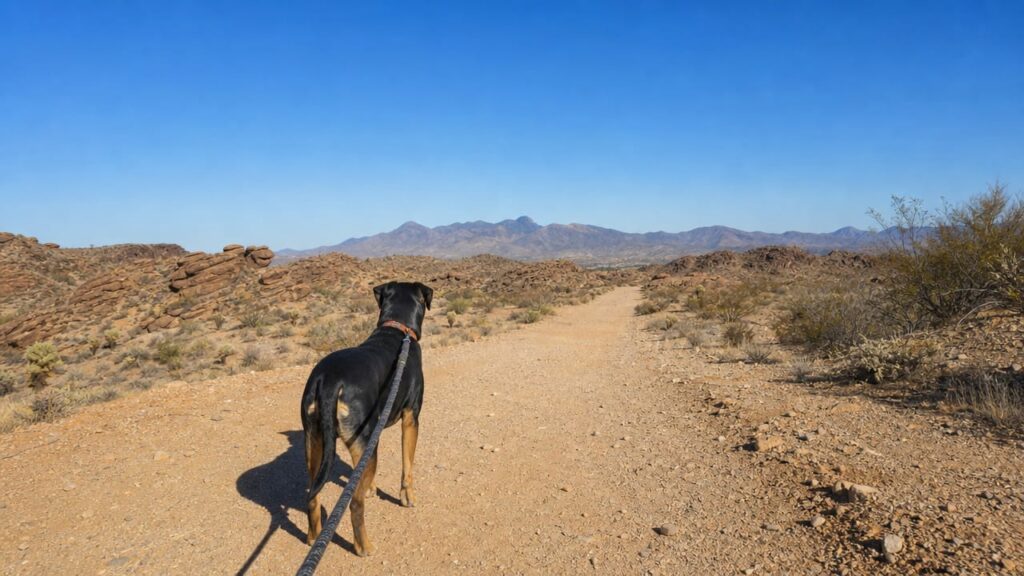
Arizona's best pet-friendly hiking trails are desert paths, not mountain climbs: wide, well-graded routes like South Mountain's Holbert and Kiwanis loops, the Phoenix Sonoran Preserve, and McDowell Sonoran's Bell Pass network. Skip Camelback and Piestewa Peak in warm months even though dogs are legal there, because bare rock and full sun cook paws fast. Carry your own water for the dog, start at dawn from April through October, and treat any trail with no name shade as a summer no-go no matter what the sign says.
Last updated: 2026-07-27
Which Arizona trails are actually good for dogs, not just legally open to them
Legal and good are two different things here. A trail earns "dog-friendly" when the footing is forgiving, there are shade pockets, water is easy to carry, and you can bail out early if your dog fades. A lot of famous Arizona trails pass the legal test and fail every other one.
Watch four things before you commit:
- Footing: sandy or graded dirt beats loose rock and volcanic scramble. Sharp rock files down pads over a few miles.
- Shade: desert shade is thin, but graded lower trails give you saguaro and ridge shadow that summit routes never do.
- Heat exposure: full-sun rock holds heat long after the air cools. That is what hurts dogs, not the forecast number.
- Water: carry the dog's supply as its own thing. Desert creeks are unreliable and often dry.
A trail that fails on footing and shade is dog-permitted, not dog-friendly. The sign won't tell you the difference, so you have to.
Where should you take a dog near Phoenix?
Start with South Mountain Park and Preserve. It holds nearly 60 miles of trails, so you can match the route to your dog instead of forcing one loop on every fitness level. The Corona de Loma Trail runs 6.4 miles and earns its distance on a cool morning. Want something shorter and calmer? The Beverly Canyon Trail stays easier on an older dog or a first-timer.
The wide, graded loops here are the reason it's my top all-around pick. You get consistent shade pockets and several points to turn back if your dog overheats. That flexibility matters more than any single scenic payoff.
The Phoenix Sonoran Preserve is the pick when you want the same desert terrain with a fraction of the weekend crowd. Same footing, same heat rules, far fewer dogs at the trailhead. If South Mountain feels like a parking-lot scramble on Saturday, drive here instead.
McDowell Sonoran Preserve, on the Bell Pass and Sunrise routes, gives you the best footing on this list. It's sandier and less of a rock scramble than the peaks, which is kinder on dogs whose pads aren't toughened up yet. Good starter desert for a soft-footed dog.
Papago Park is the low-effort pick. The sandstone buttes make for short, flat, scenic walking, and you're never far from the car. That matters more than it sounds when the sun climbs. Dreamy Draw sits close to the city center and gives you a moderate loop without a long drive. It's a solid weekday option when you want dirt under your dog's feet and you're back before lunch.
Now the two everyone asks about. Camelback Mountain, on the Cholla and Echo Canyon trails, is a skip with a dog in warm months. It's legal, but it's a rock scramble in full sun and it's the worst heat risk here. Piestewa Peak Summit Trail is winter-only for dogs. Steep, exposed, and one of the more frequent sites for dog heat trouble in Phoenix. Both are fine for you and rough on a dog.
How the Phoenix picks stack up
| Trail | Effort | Best for | Verdict |
|---|---|---|---|
| South Mountain (Corona de Loma) | Longer, moderate | Fit dogs, cool mornings | Best all-around |
| South Mountain (Beverly Canyon) | Short | Older dogs, easy days | Keep it simple |
| Phoenix Sonoran Preserve | Moderate | Avoiding crowds | Best for quiet |
| McDowell Sonoran (Bell Pass/Sunrise) | Moderate | Soft-padded dogs | Best footing |
| Papago Park | Easy, flat | Quick walks, hot months | Low-effort win |
| Dreamy Draw | Moderate loop | Weekday escapes | Good enough |
| Camelback (Cholla/Echo) | Hard, scramble | Winter only, no dog | Skip in heat |
| Piestewa Peak Summit | Hard, exposed | Winter only | Skip in heat |
Which trails work for multiple dogs or a bigger pack?
Pick wide, graded trails and go early. Two or three dogs on a narrow desert path means you're the one stepping into cactus every time another hiker passes. South Mountain and the Sonoran Preserve give you the passing width for it. The peak trails don't.
Arizona rules are leash-based, and most land managers cap leash length at 6 feet. That's per dog. A coupler that ties two dogs to one leash sounds tidy but tangles on the first switchback and pulls you off balance on loose rock. Run each dog on its own fixed leash instead.
Trailhead crowding is the real bottleneck with a pack. Weekend mornings at South Mountain and McDowell fill up fast, and a full lot plus three excited dogs is a bad start. Go on a weekday, or hit the Sonoran Preserve where the pressure is lower. Carry water per dog, not per group.
Are there weight or breed restrictions on Arizona trails?
Almost none. Arizona trail rules are leash rules, not weight or breed rules. Catalina State Park, for example, welcomes leashed dogs on all its trails and asks only that the leash stay under 6 feet. Size doesn't come into it.
The exceptions are outright dog bans on specific land, not weight cutoffs. Dogs aren't allowed on the Arizona Trail within Coronado National Memorial. The Grand Canyon keeps leashed dogs on the paved rim paths and off everything below the rim. Those are place bans, and they apply to every dog regardless of size.
So the practical limit isn't a rule, it's your dog. Flat-faced and heat-sensitive breeds struggle in desert heat no matter what the sign allows. That's a judgment call you make, not one the land manager makes for you. Check the National Park Service pet guidelines before any park visit, since rules vary trail to trail.
Do any Arizona hiking trails allow cats?
Legally, a leashed cat is treated like any leashed pet on most Arizona trails, so yes, it's allowed where dogs are. Whether it's a good idea is another matter. Desert heat, cactus, coyotes, and hawks make Arizona a rough place to walk a cat, and most cats want no part of a 90-degree rock trail.
If you're set on it, stick to short, shaded, low-traffic walks like Papago Park in the cool season, use a harness and a fixed leash, and turn back at the first sign of stress. Treat it as a novelty outing, not a hiking plan. A carrier backpack for the parts your cat won't walk is more realistic than expecting trail miles.
How do you find a pet-friendly trail near where you're staying?
Match the trail to your region instead of trusting a directory app. Each part of Arizona has a different heat and terrain profile, so where you're based changes the answer.
- Phoenix: South Mountain, the Sonoran Preserve, McDowell, Papago, and Dreamy Draw cover you. Desert rules apply: dawn starts, carry water, skip the peaks in heat.
- Tucson: Catalina State Park is the standout, with leashed dogs on every trail and several routes off one trailhead so you can shorten the day if your dog fades.
- Sedona: Bell Rock Pathway is the best flat, dog-easy option outside Phoenix. Minimal elevation gain and reliable multi-use width for passing other dogs. It's my pick for a low-stress red-rock walk.
- Flagstaff and the north: higher elevation means cooler ground, which is the real reason to drive up in summer. Just read the rules first. Horseshoe Bend in Page runs about 1.5 miles round-trip to the Colorado River overlook. It's short, exposed, and nearly shadeless, so carry more water than you think and go early.
Northern Arizona is scenic but limited for dogs. If real trail miles with your dog are the goal, Phoenix does more for you than the famous names up north.
Where should you stay if you're hiking with your dog?
Base yourself close to the trailhead, not near the tourist strip. A shorter morning drive means you actually make the dawn start instead of hiking at 9am when the rock is already loaded with heat. That single choice does more for your dog's safety than any amenity.
Filter lodging for real pet policy, not just a "pets welcome" banner. Confirm the weight cap, the per-night pet fee, and whether they leave dogs alone in the room, because many don't. Ground-floor rooms with easy outside access save you a 5am elevator trip with a dog that needs out.
Skip the resort pet package unless it's cheap. What your dog needs after a desert hike is shade, water, and a cool floor, not a branded treat basket. A plain pet-friendly motel near South Mountain beats a fancy one across town.
What should be in your pack before you hike with a dog in Arizona?
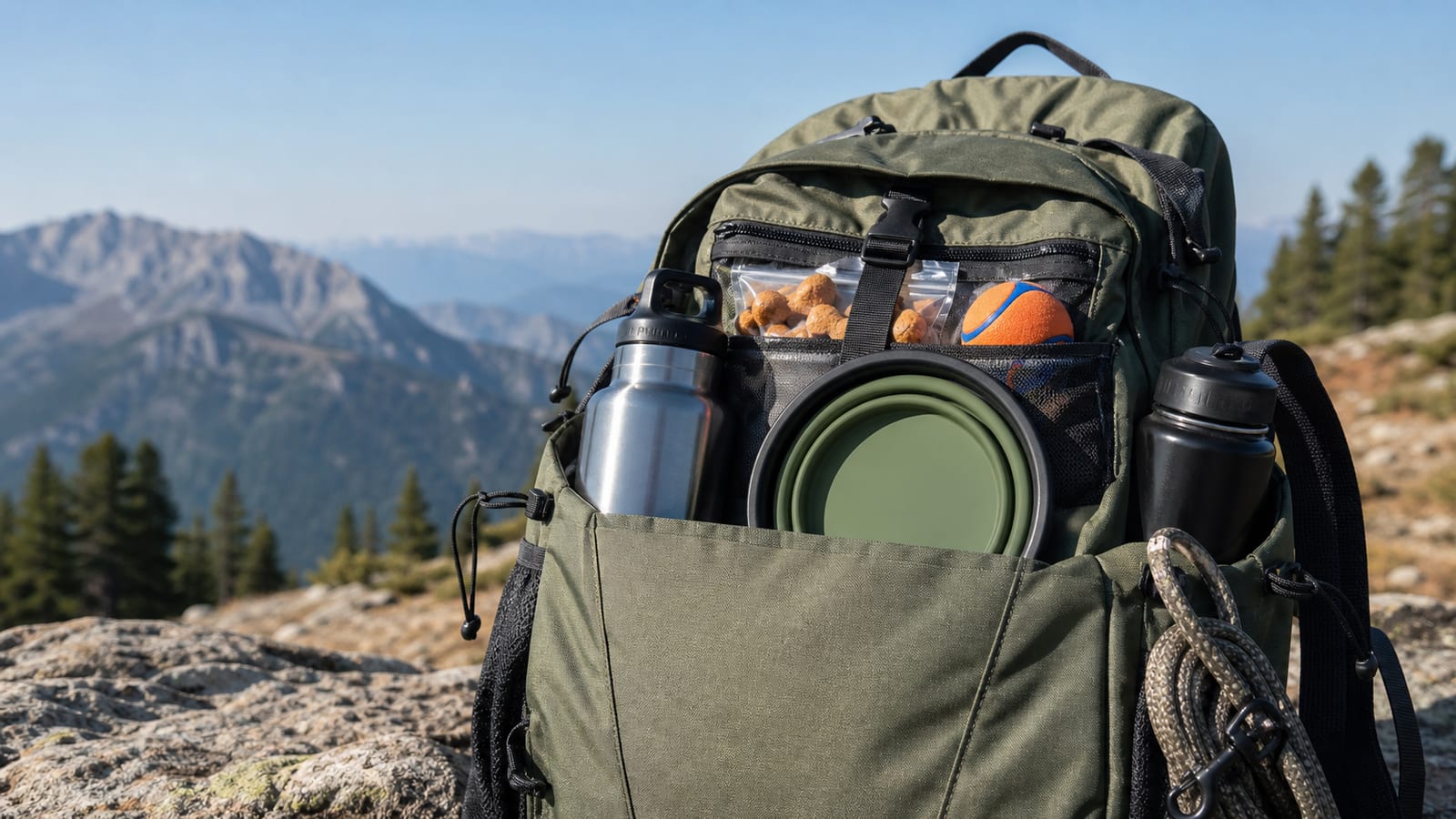
Water for the dog as its own supply is the one thing you cannot skip. Plan to carry more than you think, offer it at every break instead of waiting for a big stop, and pack a collapsible bowl that weighs almost nothing.
Then the rest:
- Extra water and a bowl. Dogs cool by panting, not sweating, so they lose fluid fast and overheat before they show it.
- Paw protection. Booties help on hot rock and sharp volcanic trails, but many dogs hate them at first. Test at home. If your dog won't tolerate them, the real fix is timing: hike when the ground is cool.
- A short fixed leash. It gives more control than a retractable on narrow desert paths. Retractables snag on cactus and let a dog wander into a snake.
- Waste bags and a small first-aid kit with tweezers for cactus spines and thorns.
On snakes: that's not a scare tactic. Rattlesnakes are active in warm months, and a curious nose finds them first. Keep your dog close, stay on the trail, and consider a snake-avoidance class if you hike here often. For the how-to of cleaning up and staying on durable ground, this guide on hiking responsibly with pets covers the parts people skip.
How hot is too hot for a dog?
Press the back of your hand to the pavement. If you can't hold it there for several seconds, it's too hot for paws. That test beats any single temperature number, because bare desert rock with no shade punishes a dog worse than a warmer day in the pines.
Hike at dawn in summer, not morning. By mid-morning the rock is already loaded with heat and stays hot long after the air feels fine. Watch for heavy frantic panting that doesn't slow on a break, bright red gums or tongue, stumbling or lagging, and flat refusal to keep walking. Turn around when you see them. Late fall through early spring is the honest desert season; summer is for dawn starts only.
FAQ
Do I need a permit to hike with my dog in Arizona parks?
Most city and county trails around Phoenix don't require a dog permit, just a leash. State parks like Catalina charge a standard vehicle entry fee that covers your dog too. Check the specific park's page before you drive, because a few fee stations and gate hours catch people out.
Can my dog go off-leash anywhere on Arizona trails?
Not on the popular hiking trails. Nearly every dog-friendly trail here is leash-required, and the leash is usually capped at 6 feet. If you want off-leash time, look for a designated dog park rather than a trail, since rangers do ticket for loose dogs and it's a real snake risk.
Is Sedona or Phoenix better for a first hike with a nervous dog?
Sedona's Bell Rock Pathway, for a nervous or soft-padded dog. It's flat, wide, and easy to turn around on if your dog gets overwhelmed. Phoenix has more mileage, but the crowded weekend trailheads and hotter rock make it a harder first outing.
What time should I actually start in summer?
Before sunrise, not "early morning." The ground holds yesterday's heat well past dawn, so aim to be finishing as the sun clears the horizon, not starting then. If you're at the trailhead at 8am in July, you're already too late for a dog.
Are there shaded trails I can use midday in summer?
Not reliably in the desert. Desert shade is thin and shifts with the sun, so no low-elevation Phoenix trail is safe for a dog midday in July. The real midday option is driving to higher, cooler ground up north, where the air and the ground both stay kinder.
