Send a beginner to Johnston Canyon and a strong hiker to Cory Pass, and you have covered both ends of Banff in one weekend. That is the honest core of any best Banff hiking trails list: 7 hikes for every fitness level, from flat canyon catwalks to lung-busting alpine passes. If you want a single trail that stretches across nearly every ability, Johnston Canyon out to the Ink Pots is the one. Hike lower than your ego wants, aim for July through mid-September, and keep bear spray on your hip.
Last updated: 2026-07-25
What are the best Banff hikes for every fitness level?
Here are the seven I would actually send people to, sorted by effort instead of by which one photographs best.
| Trail | Effort | Best for |
|---|---|---|
| Johnston Canyon to the Ink Pots | Easy | Families, first mountain hike |
| Lake Agnes Tea House | Moderate | Best payoff for the effort |
| Plain of Six Glaciers | Moderate-hard | Turquoise lake and glacier views |
| Sulphur Mountain | Moderate | A summit even when weather turns |
| Larch Valley and Sentinel Pass | Hard | Golden larches in late September |
| Cory Pass | Hard | Solitude and real exposure |
| Sunshine Meadows | Easy-moderate | Wildflowers for little climbing |
Johnston Canyon to the Ink Pots is the most forgiving trail here with a genuine payoff. The Lower Falls sit 1.2 km in on a catwalk bolted to the canyon wall, the Upper Falls run 2.5 km one way, and the Ink Pots keep going into a quiet meadow. Beginners and kids should start here.
Lake Agnes Tea House gives you the best return on effort in the park. Moderate switchbacks, a turquoise lake at the top, and a tea house that has been pouring since your grandparents were young.
Plain of Six Glaciers runs 8.7 miles round trip out of Lake Louise and ends at another rustic tea house under the ice. It is a steady grind, not a scramble, but the last stretch narrows and drops off. Earn it.
Sulphur Mountain is the reliable one because the gondola is your bailout. If the summit view socks in or your legs quit, you ride down. That is honesty, not weakness.
How much climbing and distance should you expect?
Distance lies to you in the mountains, and elevation gain tells the truth. Match the climb to your conditioning, not the kilometre count.
- Johnston Canyon: flat and paved to the falls, then a gentle forest walk to the Ink Pots. Almost no real climbing.
- Lake Agnes: a moderate, steady grade on wide trail. Most fit people manage it fine.
- Plain of Six Glaciers: 8.7 miles round trip with a long, gradual pull. The mileage is the challenge, not the steepness.
- Sulphur Mountain: a relentless uphill grind on switchbacks. Your legs feel every one.
- Larch Valley and Sentinel Pass: stiff switchbacks to the valley, then a hard, rocky final push to the pass.
- Cory Pass: the biggest climb here, plus loose ground and scrambling. This one bites.
- Sunshine Meadows: a lift does most of the climbing, so you walk gentle rolling meadows up top.
How long does each hike actually take?
Plan by the trail, not by map distance over your walking speed. Photo stops, elevation, and crowds stretch every estimate.
Johnston Canyon to the Ink Pots eats a half day if you dawdle at the falls, which everyone does. Lake Agnes is a comfortable morning. Plain of Six Glaciers wants a full half day with time at the tea house, so bring cash and do not count on cell service.
Sulphur Mountain on foot is a couple of hard hours up and a fast trip down, or a quick gondola ride if you skip the climb. Larch Valley and Sentinel Pass, plus Cory Pass, are both full days. Give yourself margin to turn around if weather moves in. Sunshine Meadows is as long or short as you want once you are up.
Where do you park and start each trailhead?
Parking is the part that ruins good plans. Lake Louise and Moraine Lake lots fill before dawn in peak season, so treat 7 a.m. as late.
- Lake Louise: start for Lake Agnes and Plain of Six Glaciers. Arrive at dawn or take a shuttle.
- Moraine Lake: the only start for Larch Valley and Sentinel Pass. No private cars anymore. You book a Parks Canada shuttle or a paid bus, or you do not go.
- Johnston Canyon: its own lot on the Bow Valley Parkway. Fills mid-morning, quieter early or late in the day.
- Sulphur Mountain: start from the gondola base near town, or ride up.
- Cory Pass: the Fireside day-use area on the Bow Valley Parkway near Banff. Small lot, few people, which is the point.
- Sunshine Meadows: you take the gondola and shuttle from Sunshine Village. That fee buys you the wildflowers without the grind.
For a wider trip, our complete guide to Canada's best hiking parks puts Banff next to the rest of the country.
Where will you see wildlife on these trails?
Grizzlies and black bears live on every one of these trails, so this is not a highlight reel. Larch Valley and Sentinel Pass sometimes enforce a minimum group size in fall because bears feed heavily there. Check the board at the Moraine Lake trailhead before you start.
The open meadows at Sunshine and the lower Bow Valley near Cory Pass are prime bear ground too. Carry spray on your hip, make noise, and hike in groups where you can. Parks Canada's bear safety guidance covers current closures and how to react. Read it before your trip, not from the trail.
When is the best window for wildflowers and larches?
Time these two payoffs or miss them entirely. The larches turn gold in Larch Valley and Sentinel Pass in late September, weather depending. Outside that window the crowds and the climb are not worth it, so skip Larch Valley the rest of the year.
Wildflowers peak in July and early August, and Sunshine Meadows is the best show in the park for the least climbing. Show up in late June and you get snow patches, not colour. If you are chasing flowers, skip Plain of Six Glaciers in high summer and put that day into the meadows instead.
Which of these hikes involve alpine passes or exposed terrain?
Three of them, and the easy label hides it. Cory Pass is the sharpest: loose rock, scrambling, and real exposure that punishes a wrong step. It is a hard day for confident hikers, not a stretch goal.
Sentinel Pass sits above Larch Valley on steep switchbacks that hold snow early and late in the season. Plain of Six Glaciers stays moderate until the final narrow section, where the trail hugs a drop and asks for attention. The lakeshore walks and Johnston Canyon forgive bad decisions. The passes do not, so respect the gap the difficulty word alone does not show you. If mountain hiking is new to you, build up on some easy and scenic beginner trails first.
What gear do you actually need for these trails?
Bear spray leads the list and it is not optional in this park. Carry it where your hand goes, not buried under a rain layer. Everything else scales to the trail.
- Layers and a wind or rain shell. Weather flips fast up high, even in July.
- More water than feels necessary, or a filter for Plain of Six Glaciers and the passes.
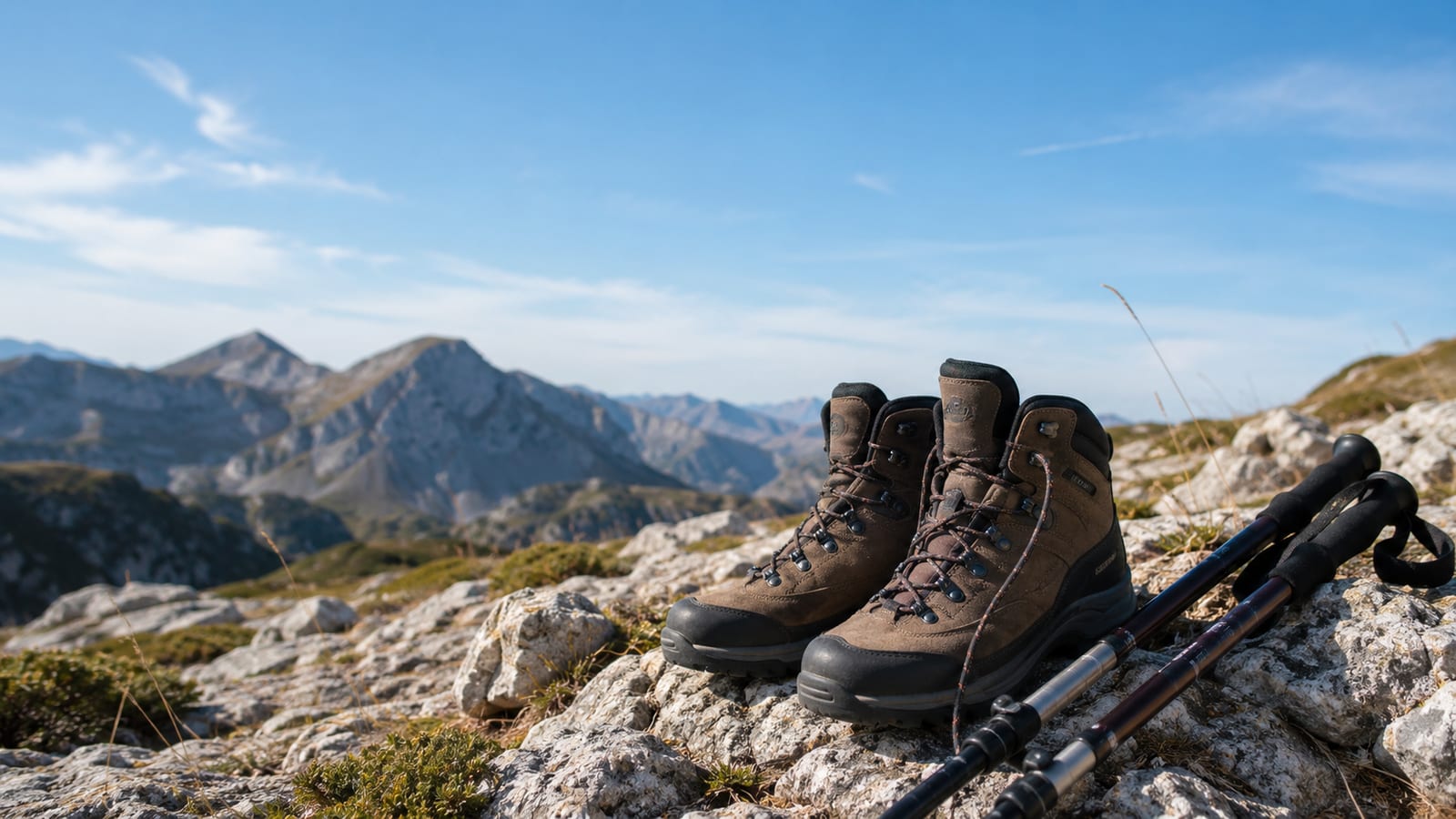
- Real shoes. Trail runners handle the canyon and lakeshores. Rocky climbs and Cory Pass want more grip.
- Sun protection. You are at altitude and it burns faster than you expect.
- A downloaded map. Cell service dies past the trailheads.
Skip the heavy boots for the flat stuff and skip the trekking-pole fetish unless your knees ask for it. Keep it simple and your feet will still like you.
FAQ
Do you need a permit to hike these trails?
You need a Parks Canada pass to enter the park, and staff check it. Day hikes on these routes need nothing extra. Buy the pass online ahead of time to skip the entrance queue, and reserve any Moraine Lake shuttle well before your trip.
Which single hike should you do if you only have one day?
Lake Agnes Tea House if you want the biggest reward for a fair effort. It hands you switchbacks, a turquoise lake, and a summit-adjacent view without a full alpine day. Add the ridge above it if your legs feel strong.
Is the water on these trails safe to drink?
Treat it, always. Glacier melt looks clean but carries silt, and animals use the same streams upstream of you. Carry enough to reach a source you trust, filter or use tablets, and do not plan on refilling at the tea houses.
Can you hike here in June or October?
Stay low and yes. Johnston Canyon and the Lake Louise trails open earlier and close later than the passes. Cory Pass, Sentinel Pass, and Sunshine hold snow into June and ice up by October. Save those for the reliable summer stretch and enjoy quieter valley trails in the shoulder months. Our notes on timing alpine hikes go deeper.
Are dogs allowed on these trails?
Leashed dogs are permitted on most Banff trails, but think hard about the passes. Bear encounters, loose rock on Cory Pass, and group-access rules in Larch Valley all make a dog more liability than company up high. The canyon and lakeshore walks suit them far better.
