

hiking clothes hot weather is more than fashion—it’s survival on exposed trails. The right kit keeps you cool, blocks sun, and stops sweat from wrecking your day.
I speak from long summer miles: choose UPF 50+ tops or sun hoodies, breathable tanks, quick-dry shorts, and convertible pants for variable conditions. Pick mesh-vented daypacks like Osprey Sirrus to cut back sweat and wide-brim hats such as the Tilley LTM6 for face and neck shade.
Footwear matters—light hikers from Salomon or Danner with Coolmax or Smartwool socks cut blisters and heat fatigue. Carry 2–3L of water, use electrolytes, and bring polarized sunglasses and a small repellent for buggy stretches.
Key Takeaways
- Prioritize UPF coverage and breathable fabrics to balance airflow and sun protection.
- Use ventilated packs and moisture-wicking layers to manage core temperature.
- Choose light, supportive footwear matched to trail distance and terrain.
- Hydrate with 2–3L and add electrolytes; sip regularly, don’t wait for thirst.
- Pack repeatable, simple gear—sun hoodie, wide-brim hat, polarized shades, and a reliable reservoir.
Know the risks of extreme heat and how clothing reduces them
On sun-baked trails your kit must cut heat load, block UV, and help your body cool fast.
Heat, UV, and dehydration: what your outfit must handle
High temperatures strain the heart and raise core temperature. Your layers should limit radiant sun load and shed heat so sweat can evaporate.
UV exposure on open ridgelines adds skin damage risk. UPF-rated pieces act like a barrier that doesn’t wash off like lotion.
Dehydration follows fast when cooling fails. Breathable materials and ventilation keep evaporation working and delay fluid loss.
Key criteria: fabric, UPF rating, fit, color, and airflow
- Fabric and materials: pick lightweight, moisture-wicking, quick-dry synthetics to move sweat away from skin.
- UPF rating: aim for UPF 50+ long sleeves or sun hoodies for dependable protection on long summer hikes.
- Fit and color: choose a relaxed but controlled cut and light colors (white, tan, pale gray) to reflect rays and boost airflow.
- Ventilation: look for mesh panels, open weaves, and zip vents—plus a ventilated pack back to cut trapped sweat.
- Conditions note: on humid days prioritize airflow and fewer layers; treat sunscreen as a supplement, not the only protection.
| Material | UPF | Ventilation |
|---|---|---|
| Polyester knit | 30–50+ | Good (open weaves) |
| Light nylon | 20–40 | Fair (zip vents) |
| Merino blend | 15–30 | Moderate (natural loft) |
| Mesh panels | Varies | Excellent (spot cooling) |
Sun-first head and face protection
A smart hat and sun kit cut glare, guard skin, and keep your vision sharp on bright summer days.
Wide-brim sun hats vs caps: coverage for face, ears, and neck
Start at the top: a wide-brim hat gives 360-degree shade to face, ears, and neck for maximum sun protection on exposed days. Models like the Tilley LTM6 use UPF 50+ fabric and hold their shape when packed.
Caps sit lower on your head and feel cooler in wind. They protect the forehead and eyes but leave ears and neck exposed. Add a neck gaiter or sun cape if you choose a cap for faster, more technical hiking.
- Look for UPF 50+ fabric and dark under-brims to cut glare.
- Choose chin cords and breathable crowns or mesh panels to reduce trapped heat.
- Pick packable designs that stay usable after being stuffed in a pack between shaded sections.
Sunglasses that block UV and cut glare on bright trails
Wear polarized lenses to block UV and reduce surface glare—Oakley Prizm is a good example. Polarized sunglasses boost contrast so you spot rocks, roots, and sand more easily on the trail.
Fit matters: grippy nose pads and temple grips keep lenses steady on sweaty skin. Bring a soft case or shirt clip so you can secure glasses without scratching them when shade returns.
| Option | Best for | Quick note |
|---|---|---|
| Wide-brim hat | Full face/neck protection | UPF 50+, good for long exposed days |
| Cap + gaiter | Active, windy terrain | Cooler airflow; add neck cover for full protection |
| Packable hybrid | Travel and variable shade | Holds shape, breathable, easy to stash |
Combine brimmed shade with SPF on sensitive spots and consider wrap frames or side shields on high-reflectivity sections to block stray rays. With the right hat and glasses, summer hiking becomes safer and more comfortable.
Hot-weather tops: tanks, tees, long sleeves, and sun hoodies
Your top layer should balance airflow, sun defense, and comfort on long summer miles.
Pick a tank when airflow is the priority and your route runs through shade or you heat up on steep climbs. Tanks maximize ventilation and cut weight. They work best when UV exposure is low or short-lived.
Choose a tee when you’ll carry a heavier pack. Short sleeves protect shoulders from strap rub and lower the chance of burns where packs press. Look for flat seams and a soft hand-feel to reduce chafing under straps.

Reach for UPF 50+ long sleeves or a sun hoodie on fully exposed days, high-altitude summer hiking, or whenever you want set-and-forget sun protection. REI sun hoodies and BALEAF long sleeves are proven options for coverage and breathability.
- Favor smooth, quick-dry fabric that sheds sweat so your shirt doesn’t cling during rest stops.
- Sun hoodies with snug, breathable hoods add neck and ear coverage without a separate gaiter.
- Consider odor-resistant weaves for multi-day trips where washing is limited.
- Choose light colors to reflect heat and a relaxed cut for free shoulder movement.
| Top Type | Best Use | Key Fabric Traits |
|---|---|---|
| Tank | High airflow, shaded routes | Open weave, quick-dry |
| Tee | Pack-heavy days, strap protection | Flat seams, soft touch |
| Long sleeve / Sun hoodie | Full sun exposure, long mileage | UPF 50+, breathable synthetic |
When you wear hiking tops in hot weather, pair your chosen layer with sunscreen on exposed arms and the back of your neck. Small choices—fabric, fit, and function—deliver the biggest comfort gains on summer trails.
Bottoms that breathe: shorts, hiking pants, and trail tights
Pick bottoms that balance ventilation, coverage, and secure storage so you can focus on the trail. Fit and features beat fabric marketing—try garments with real stretch, good cut, and smart pockets before you commit.
Shorts with secure pockets and fast-dry fabric
Choose quick-dry shorts with zip pockets so your phone, map, and keys stay put during high steps and creek play. BALEAF-style performance shorts show how useful a concealed zip can be.
Look for a soft waistband and light stretch. Waist pinch shows up fast; weight rarely does. Aim for a slightly relaxed thigh cut to boost airflow and stride comfort.
Convertible pants for shifting temps and brushy trails
Convertible pants—think Outdoor Research Ferrosi—let you zip off to shorts during the heat of the day. They’re a solid option for early starts and variable summer conditions.
Check where the zippers sit. Some hikers feel seams on long miles. Test the zips against your legs and confirm they don’t bind when you step high.
Leggings with abrasion zones and UPF for rugged terrain
On rocky approaches choose leggings with reinforced knees and seat. Fjällräven Abisko Trek Tights combine abrasion panels and UPF 50 to protect skin on scrambles.
Prefer full-length pants when mosquitoes or nettles are common—even in hot weather you can keep airflow with breathable, quick-dry fabric and gussets for unrestricted movement.
- Choose shorts with fast-dry fabric and secure zip pockets.
- Seek a soft waistband and light stretch for long-day comfort.
- For rugged terrain, pick leggings with reinforced zones and UPF protection.
- Look for gussets and articulated knees to avoid binding on steep steps.
| Option | Best use | Key features to check |
|---|---|---|
| Quick-dry shorts | Fast climbs, creek sections | Zip pockets, soft waistband, stretch |
| Convertible pants | Variable temps, brushy trails | Removable legs, zip placement, light nylon |
| Reinforced leggings | Rocky terrain, scrambling | Abrasion panels, UPF 50, gusseted crotch |
Footwear and socks for hot trails and varied terrain
Your feet do the work—choose a setup that breathes, grips, and cushions through miles in the sun. Start with a clear match between shoe type and route so you get support where you need it.
Light hiking shoes and mids for stable grip
For most trails, I pick breathable light hiking shoes from Salomon or Danner. They balance grip and airflow and handle dust, slab, and loose rock well.
If I expect steep or uneven sections, I use lightweight mids or low boots for ankle support without excess heat. Quick-lace systems keep tension steady on long hikes.
Water shoes and sandals for creek crossings
When routes include streams, a water shoe with toe protection makes footing safer. Salomon water models work well for short crossings.
Save bulkier sandals like Birkenstock for recovery after the hike—not for technical terrain.
Socks that wick, cool, and resist blisters
Wear light Coolmax or Smartwool socks to move moisture and reduce friction. Pack a spare pair and swap into dry socks on long summer days.
| Type | Best use | Key trait |
|---|---|---|
| Light hikers | Most day hikes | Breathable sole grip |
| Light mids / boots | Uneven ground, heavier packs | Ankle support, low heat trap |
| Water shoes | Creek crossings | Drainage, toe protection |
- Match fit late in the day—your feet swell on long summer hiking.
- Check insole breathability and cushioning for all-day comfort.
- Break in your pair before any big objective to avoid hot spots.
Hydration and packs that keep you cooler
A smart hydration system and an airy backpack are the simplest upgrades that make long days in the sun manageable.
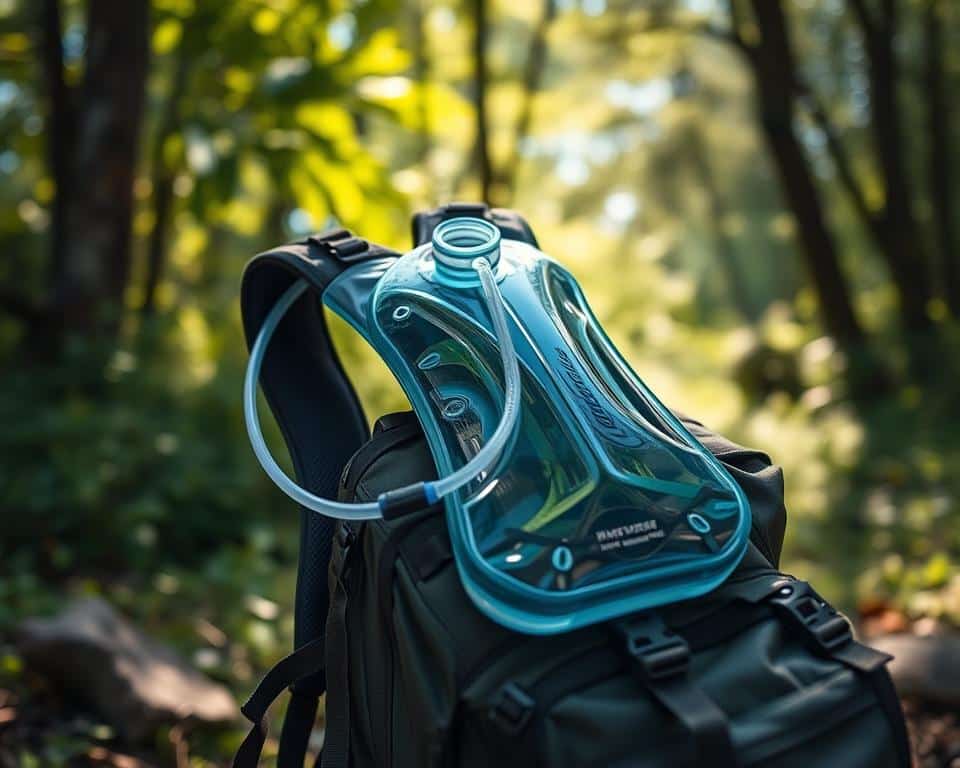
Reservoir vs. bottles: how to carry enough water
Plan capacity by route, climb, and ambient heat. Many aim for 0.5–1.0 liters per hour in peak sun, then adjust to your sweat rate.
Reservoirs (3L fits many Osprey daypacks) let you sip without stopping. That steady sipping keeps you ahead of thirst and lowers heat stress over time.
Bottles like a 32 oz Nalgene are durable and easy to refill. They make mixing electrolytes and tracking intake simple. On long days, pair a reservoir with a backup bottle for extra range or treatment.
Packs that vent and pockets that save time
Choose a backpack with a mesh-vented back panel—models such as Osprey Sirrus/Stratos 24L reduce sweaty-back syndrome on steep climbs.
Use hip-belt and shoulder pockets for snacks, phone, and lip balm so you don’t stop every time you need something. Keep weight tight and centered to cut wasted effort in the heat.
- Pre-hydrate and set a timer to sip regularly.
- Add electrolyte tablets like Nuun for longer efforts.
- Know refill points and carry a filter if you’ll use streams.
| Item | Best use | Quick note |
|---|---|---|
| 3L reservoir | All-day summer outings | Easy sipping; fits many 24L daypacks |
| 32 oz bottle (Nalgene) | Precise tracking and camp use | Durable; good backup for filtration |
| Mesh-vented pack | Steep climbs and humid days | Improves airflow; reduces sweat on back |
| Electrolyte tablets | Long efforts, heavy sweat | Helps retain fluids and prevent cramping |
Smart add-ons for sun protection and comfort
The right small items keep you protected, comfortable, and moving when the sun beats down.
Sunscreen and lip protection that stand up to sweat
Use broad-spectrum sunscreen sticks or creams rated SPF 30–50 and reapply on schedule. Fabric will block most rays, but exposed skin still needs direct care.
Carry an SPF lip balm—sun, wind, and dust dry lips fast on long summer days and can distract you from footing.
Bug repellent, head nets, and light wind layers
Apply repellent before you enter damp drainages. Sawyer formulations perform well, and a head net can save an evening when bugs hatch.
Pack a featherweight wind layer like the Patagonia Houdini. It blocks chill on ridgelines and descents without trapping heat on the climb.
- Stash a small first-aid kit with blister care—treat hot spots early.
- Keep a light sun gaiter for neck and hands where sleeves leave gaps.
- Store sunglasses safely; they keep working when glare returns after storms.
- If you follow product picks via affiliate links, know a small commission may support field testing and reviews.
| Add-on | Best use | Quick note |
|---|---|---|
| SPF stick | Face, ears, and nose | Easy reapply without greasy hands |
| Sawyer repellent | Buggy drainages and dusk | Apply before entry for best effect |
| Featherweight shell | Windy ridgelines | Packable, low weight, breathes well |
Choose add-ons that earn their place on repeat hikes. If it doesn’t improve comfort, safety, or efficiency, leave it at home. Review and refine your kit after each outing—this is how reliable hiking gear becomes truly useful on long summer days.
Heat-ready packing checklist for summer hiking
Use this as a copy-ready guide for day trips and longer summer hikes. Pack items in order of priority so essentials sit closest to your back and hip pockets.
- Clothing: UPF 50+ long sleeve or sun hoodie; breathable shirt or tank; quick-dry shorts or lightweight convertible pants.
- Head & eyes: wide-brim hat or cap with neck cover; polarized sunglasses with secure fit.
- Footwear: breathable shoes or light boots; moisture-wicking socks plus a spare pair for the halfway point.
- Hydration: 2–3L reservoir or two 32 oz bottles; electrolyte tabs (Nuun) for longer efforts.
- Skin care: broad-spectrum sunscreen, SPF lip balm, small towel or bandana for sweat management.
- Protection add-ons: Sawyer bug repellent; optional head net; compact wind shell for ridge gusts.
- Navigation & safety: map, compass or offline app; small first-aid kit and a light headlamp even for a day.
- Food & extras: salty snacks, easy carbs, trekking poles (optional), water shoes if crossings are guaranteed, and an emergency contact plan.
| Item | Best use | Why pack it |
|---|---|---|
| Ventilated 24–26L backpack | Day trips | Vented back + hip pockets keep weight stable and essentials accessible |
| 2–3L reservoir / 32 oz bottles | All-day hydration | Easy sipping, plus backup for filtration and refills |
| UPF top + wide-brim hat | Full sun protection | Set-and-forget sun defense that speeds cooling |
| Compact wind shell | Ridgelines, cool down | Blocks chill without trapping sweat |
Conclusion
Finish your kit around sun defense, airflow, and steady hydration—those three choices change the whole day. Build around UPF sun hoodies, breathable shorts, a ventilated pack, polarized sunglasses, and a hydration system sized for your route.
Choose layers that cover where you burn, then tune tops and bottoms to the sun angle, brush, and wind. Match breathable shoes and light socks to the terrain so your feet stay confident deep into the hike.
Carry the water you truly need and make sipping easy; the right system keeps you drinking on time. Keep your pack organized so sunscreen, snacks, and navigation are within reach.
Test and refine after every outing—it’s the fastest way to lock in a personal system that works for summer hiking. For tips on layering and fabric choices, see this layering guide.
